Lowercase letter writing Normal Alphabet Worksheets for Ages 6-9
3 filtered results
-
From - To
Discover our engaging "Lowercase Letter Writing Normal Alphabet Worksheets" designed specifically for children ages 6 to 9. These worksheets provide essential practice for young learners as they develop their handwriting skills, focusing on the formation of lowercase letters. Each worksheet is crafted to be both fun and educational, featuring colorful illustrations and interactive activities that keep kids motivated. By using our worksheets, children will enhance their fine motor skills and boost their confidence in writing. Perfect for home or classroom use, these resources make learning enjoyable and effective. Help your child master lowercase letter writing today!
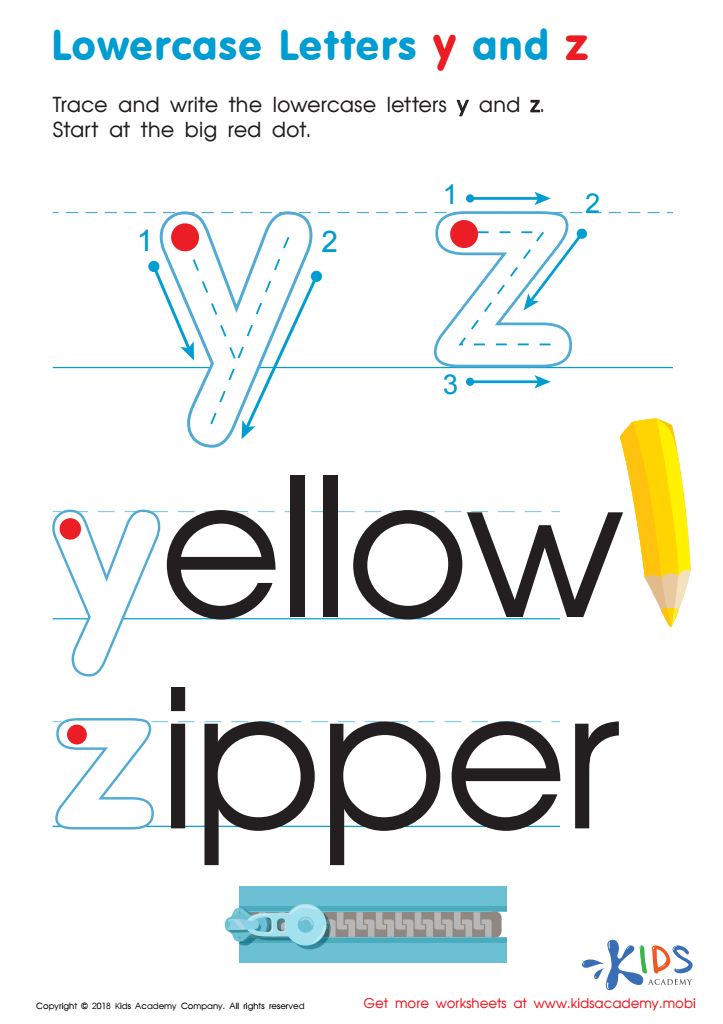
Lowercase Letters y z Worksheet
 Assign to My Students
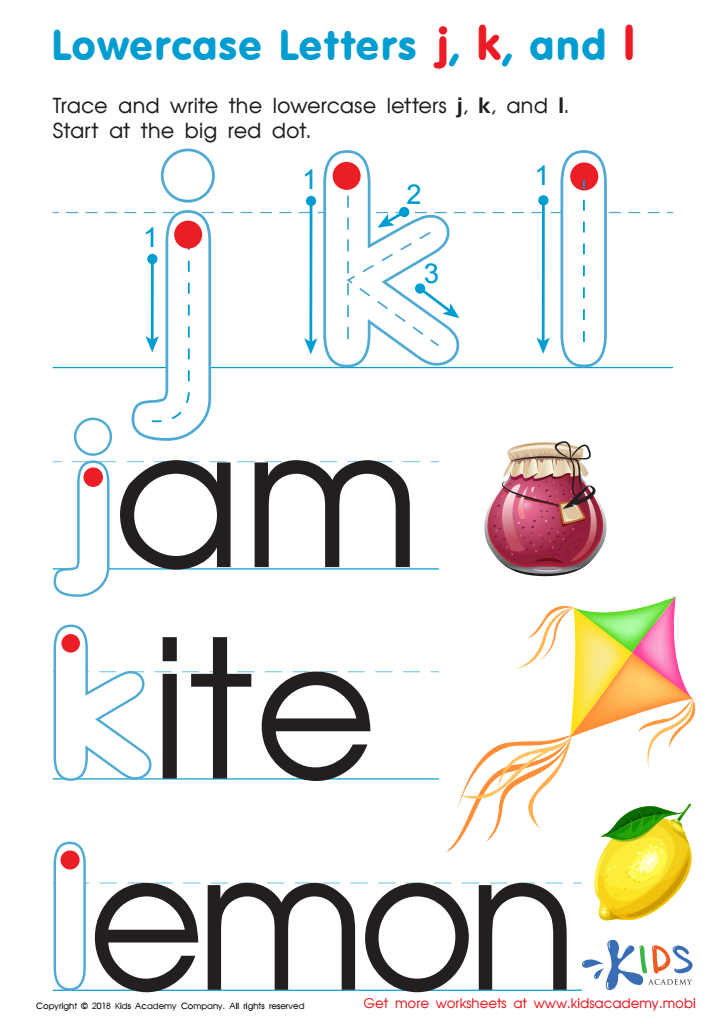
Lowercase Letters j k l Worksheet
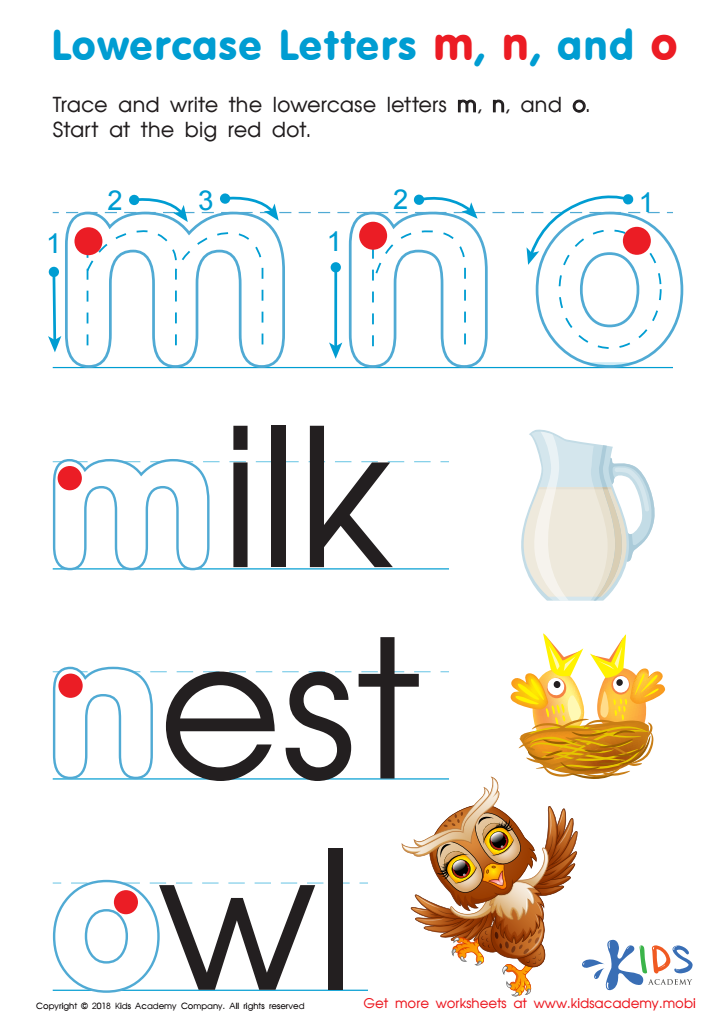
Lowercase Letters m n o Worksheet








Parents and teachers play a crucial role in fostering literacy skills in children aged 6-9, particularly when it comes to lowercase letter writing in the normal alphabet. Mastery of lowercase letters is foundational for several reasons. First, it enhances children's reading and writing abilities, as most texts contain more lowercase letters than uppercase ones. Recognizing and effectively writing these letters aids in vocabulary development and comprehension.
Moreover, practicing lowercase letter writing helps refine fine motor skills, essential for tasks beyond writing, such as drawing and using tools. The repetitive motion involved in letter formation builds muscle memory, contributing to better handwriting overall.
Lowercase letter writing also encourages confidence in self-expression. As children become proficient, they are more likely to engage in writing activities, such as journaling or storytelling, fostering creativity and communication skills.
Furthermore, encouraging proper lowercase letter formation lays the groundwork for standardized handwriting, which may enhance academic performance in future grades. In a nurturing environment, when parents and teachers emphasize this skill, they contribute to a child's overall literacy development, fostering a lifelong love of reading and writing. Ultimately, investing time in lowercase letter writing is a valuable step in supporting children's educational journey.







