Rhyming skills development Normal Alphabet Worksheets for Ages 6-9
4 filtered results
-
From - To
Enhance your child's learning journey with our Rhyming Skills Development Normal Alphabet Worksheets, designed specifically for ages 6-9. These engaging worksheets provide a fun and interactive way for children to explore phonetics and develop essential rhyming abilities. Each worksheet features vibrant illustrations and diverse activities that reinforce letter recognition and word relationships. By practicing with these rhyming exercises, children will build their vocabulary, improve their listening skills, and boost their confidence in language arts. Perfect for both home and classroom use, these worksheets are an invaluable resource for fostering a love of reading and language. Start rhyming with your child today!
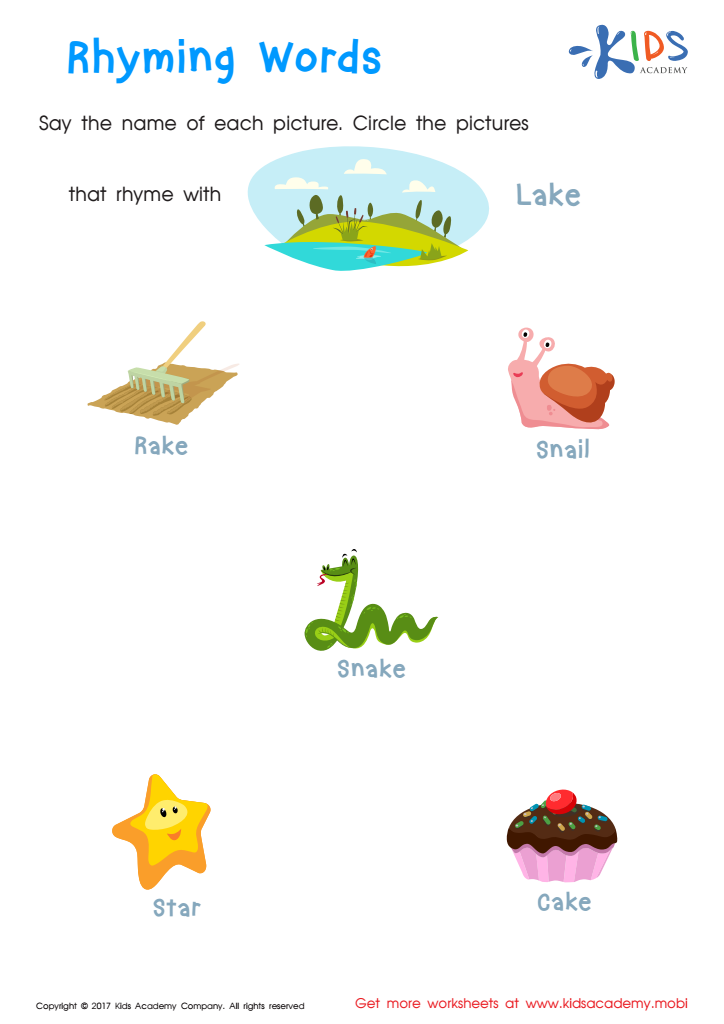
Rhyming Words Rhyming Worksheet
 Assign to My Students
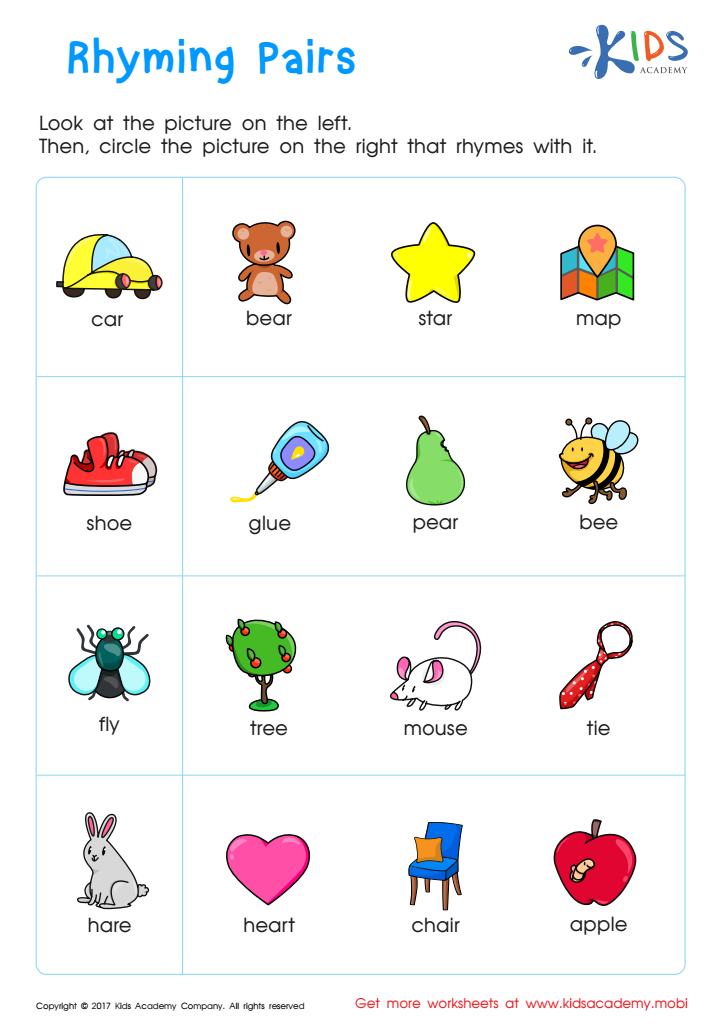
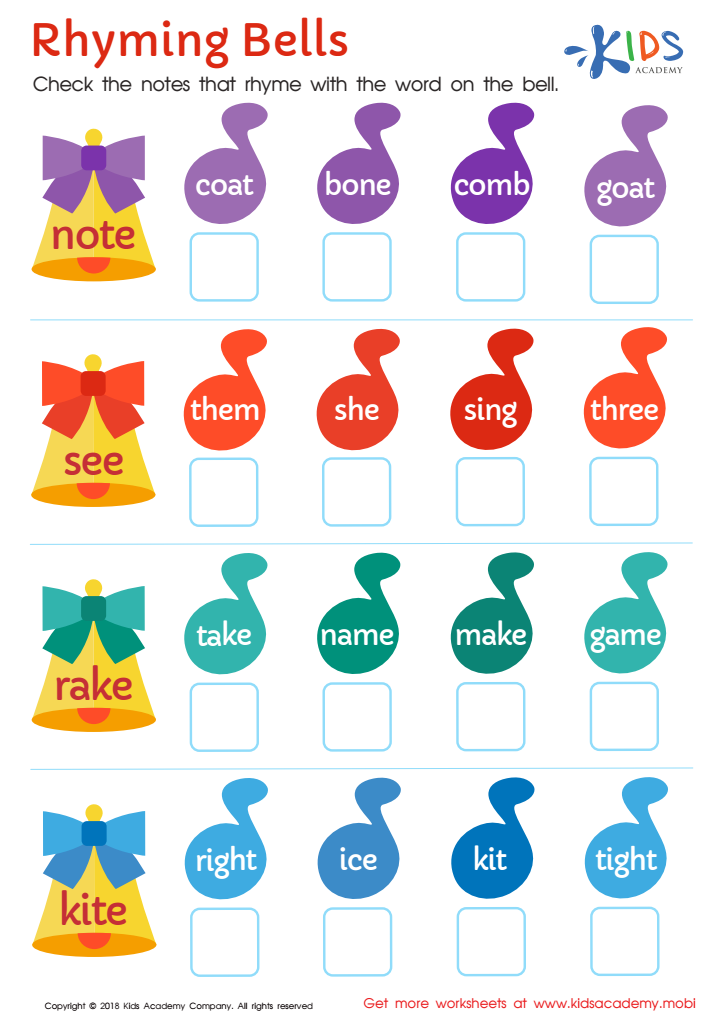
Rhyming Bells Worksheet
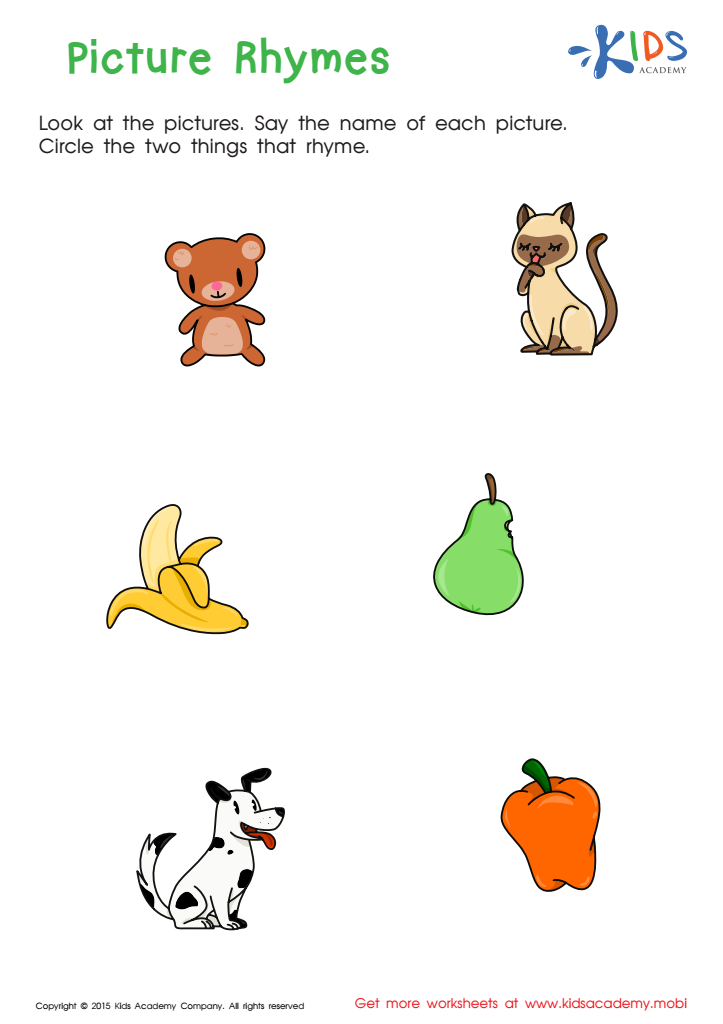
First Words: Picture Rhymes Worksheet







Rhyming skills are crucial for children aged 6 to 9 as they significantly enhance literacy development. When children engage with rhymes, they improve their phonemic awareness—the ability to hear, identify, and manipulate sounds in words. This foundational skill plays a vital role in reading and writing proficiency.
Understanding rhyme helps children recognize similar sounds, which aids in decoding words and enhances spelling abilities. Moreover, the playful nature of rhyming fosters a love for language and encourages creativity in both writing and speaking. It also boosts vocabulary as children explore new words and their meanings through fun rhyming games and songs.
Additionally, rhyming contributes to memory development. Children tend to remember rhymes easily, making them effective tools for teaching various subjects.
Furthermore, engaging in rhyming activities promotes social interaction and language development during playtime or storytime, fostering collaboration and communication skills. For parents and teachers, encouraging rhyming not only supports academic growth but also cultivates crucial interpersonal skills.
In summary, rhyme is a fundamental aspect of language development that enhances literacy, creativity, and social communication, making it essential for educators and parents to prioritize rhyming skills in children’s learning experiences.







