
Understanding vowel sounds Normal Alphabet Worksheets for Ages 6-9
4 filtered results
Difficulty Level
Grade
Age
-
From - To
Subject
Activity
Standards
"Understanding Vowel Sounds Normal Alphabet Worksheets for Ages 6-9" provides engaging, age-appropriate resources to help young learners master vowel sounds. These worksheets blend fun activities with effective learning strategies, ensuring kids improve their reading and pronunciation skills. Each sheet is designed to boost confidence and comprehension, making vowel sound recognition exciting and accessible. Tailored for kids ages 6-9, these worksheets support parents and educators in fostering language development and enhancing phonetic awareness. With colorful illustrations and interactive tasks, children eagerly explore vowel sounds, paving the way for successful reading experiences. Explore these dynamic tools to enrich your child's learning journey.
Favorites
With answer key
Interactive
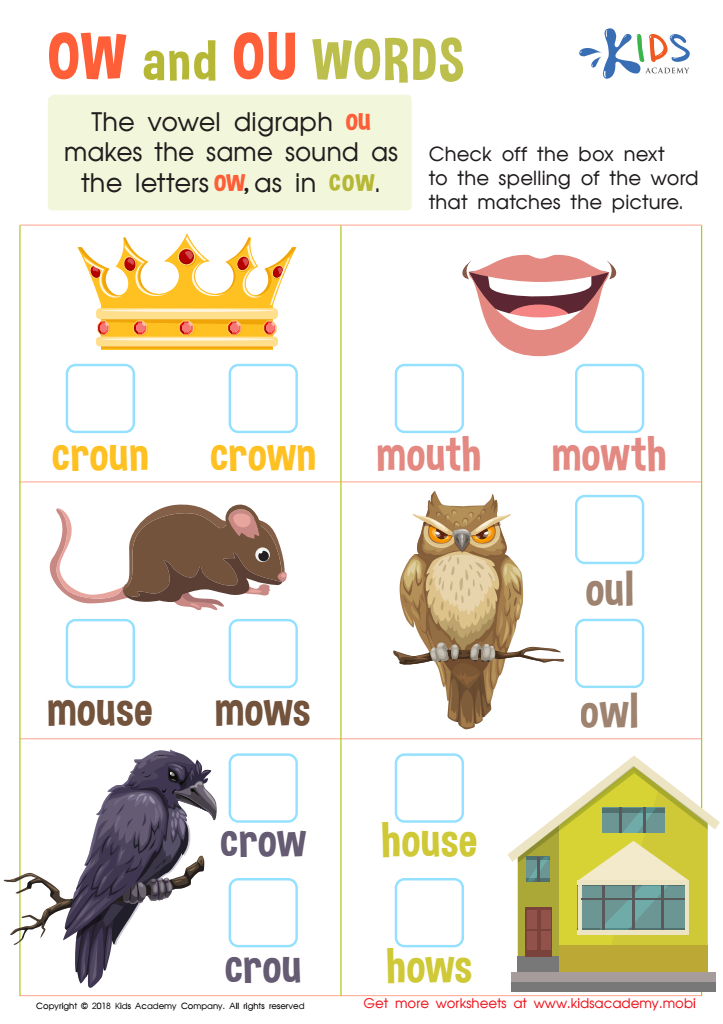
Reading: OW and OU Words Worksheet
Help your kids learn phonetics! Explain the different sounds and long/short variations. Emphasize that some vowel sounds are the same, e.g. ou = ow in cow. For practice, have them read aloud the words in the worksheet and check the box next to the spelling that matches the picture.
Reading: OW and OU Words Worksheet
Worksheet
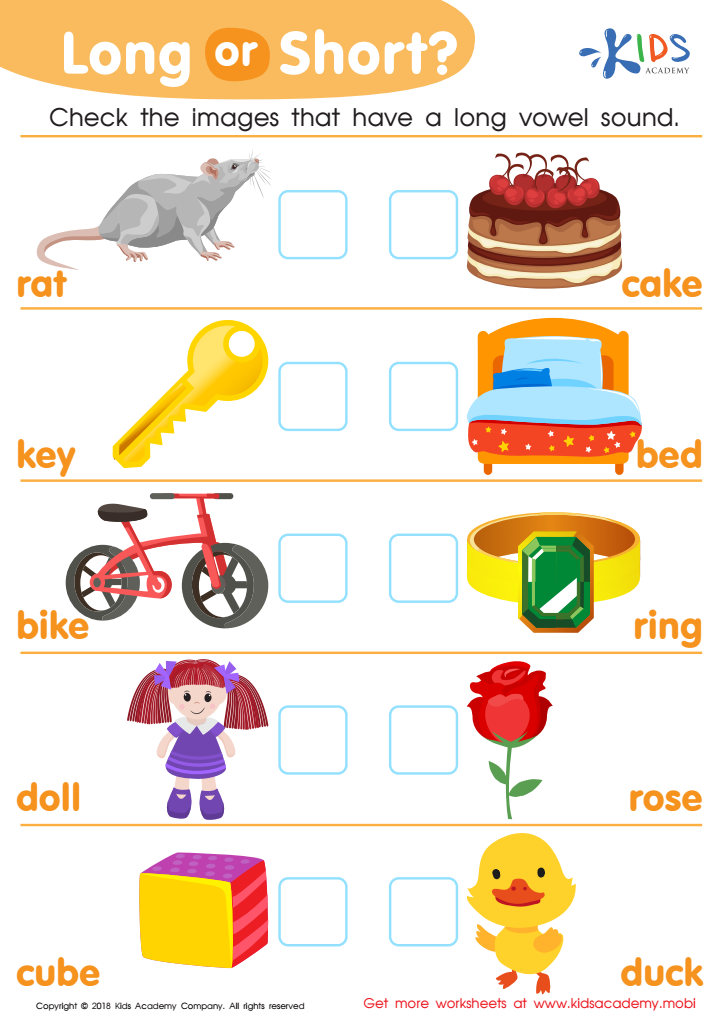
Long or Short Reading Worksheet
Every new reader needs to learn to recognize long and short vowel sounds. This phonics worksheet uses pictures of high-frequency words to help. Kids read the words and then check off images with long vowel sounds. It helps them learn to decode words and improves fine motor skills.
Long or Short Reading Worksheet
Worksheet
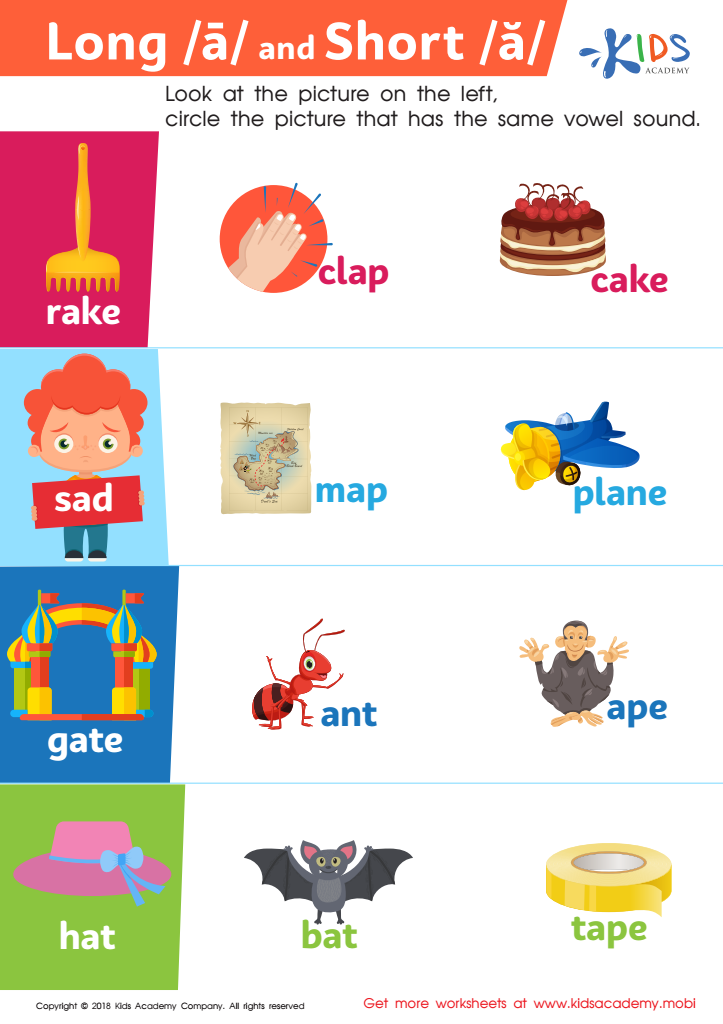
Reading: Long a and Short a Worksheet
This printable helps students practice distinguishing the long and short A sound. Pictures provide clues to read each word and students identify if it has a short or long sound. By completing this worksheet, children gain mastery of the phonics skill.
Reading: Long a and Short a Worksheet
Worksheet
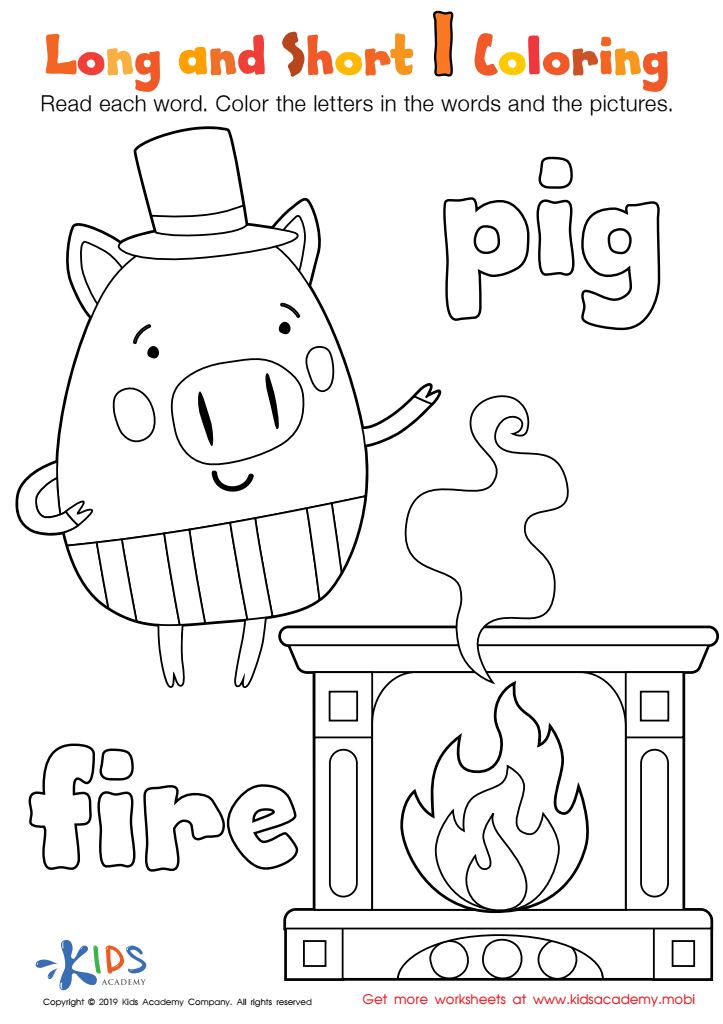
Long and Short I Worksheet
Print the worksheet and have the students read "pig" and "fire". Check for understanding the difference between long and short vowels. Color in words and pictures to make learning phonics fun! This exercise is perfect for introducing the topic to your students.
Download (PDF)
 Assign to My Students
Assign to My Students
Long and Short I Worksheet
Worksheet
Join Kids Academy for Free
Who is primarily going to use this learning content?





Understanding vowel sounds is crucial for children aged 6-9 because it lays the foundation for literacy skills, which are essential for their overall academic success and communication abilities. During these formative years, children transition from recognizing letters to reading and writing words. Vowel sounds, which include short and long sounds like "a" in "cat" and "cake," can be particularly tricky. Mastery of these sounds aids in accurate pronunciation, spelling, and reading fluency.
For parents and teachers, focusing on vowel sounds helps children decode new words more effectively and fosters confidence in reading. This understanding is pivotal for advanced language arts skills, such as recognizing patterns in words, which is essential for spelling and vocabulary building. Moreover, solidifying these basics reduces the likelihood of confusion and frustration, thereby making the learning process enjoyable.
Early mastery also equips children with tools to tackle more complex texts, improving comprehension and fostering a lifelong love for reading. Phonics games, storytelling, and hands-on activities can make learning vowel sounds engaging for young learners, setting them on a path to academic achievement.
In summary, understanding and mastering vowel sounds at this age gives children a strong linguistic foundation, easing their journey into fluent reading and clear communication, essential components for both academic and real-life situations.







