
Alphabetical order understanding Normal Letter Recognition Worksheets for Ages 6-9
3 filtered results
Difficulty Level
Grade
Age
-
From - To
Subject
Activity
Standards
Unlock the power of literacy with our "Alphabetical Order Understanding Normal Letter Recognition Worksheets" tailored for ages 6-9. These engaging worksheets help young learners master the fundamentals of letter recognition and alphabetical order. Designed to enhance reading and writing skills, each resource offers fun, interactive activities to reinforce understanding of letter sequences. Through colorful illustrations and various exercises, children will improve their ability to recognize, organize, and utilize letters in everyday language. Whether in the classroom or at home, our worksheets provide essential practice that fosters confidence and academic growth. Start building a strong foundation for future literacy success today!
Favorites
With answer key
Interactive
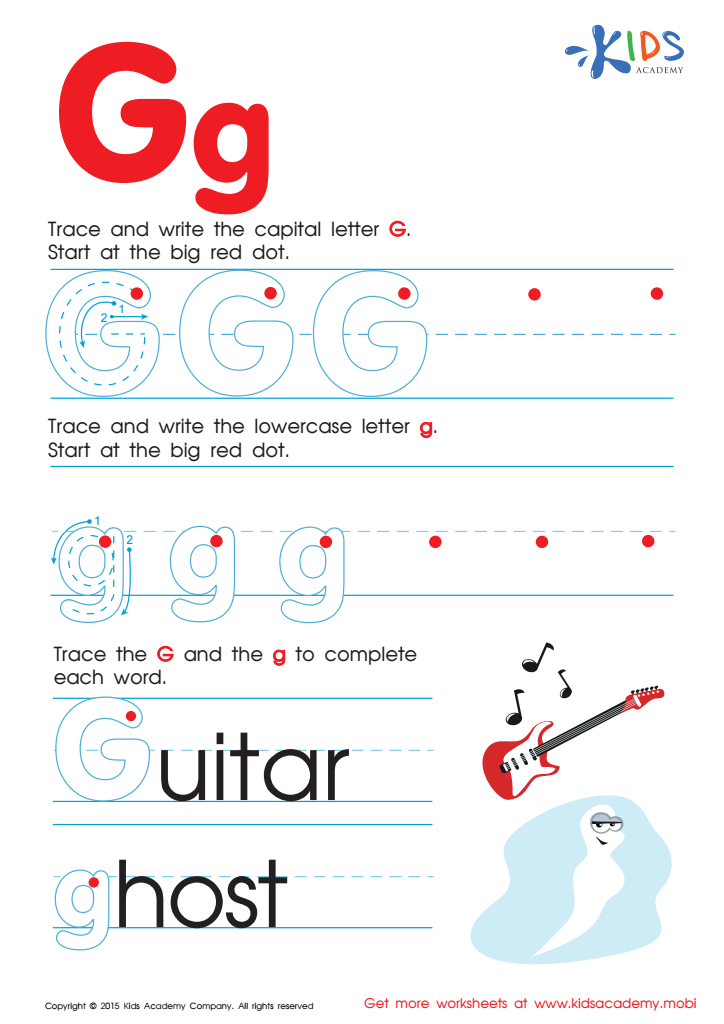
Letter G Tracing Page
Get ready to trace the letter "G" – with a big red spot as the starting point, trace the lines and watch the letter appear. Uppercase and lowercase letters are both easy and fun to write. Give it a go and finish the word "go". Play the guitar and say "hello" to a funny ghost!
Letter G Tracing Page
Worksheet
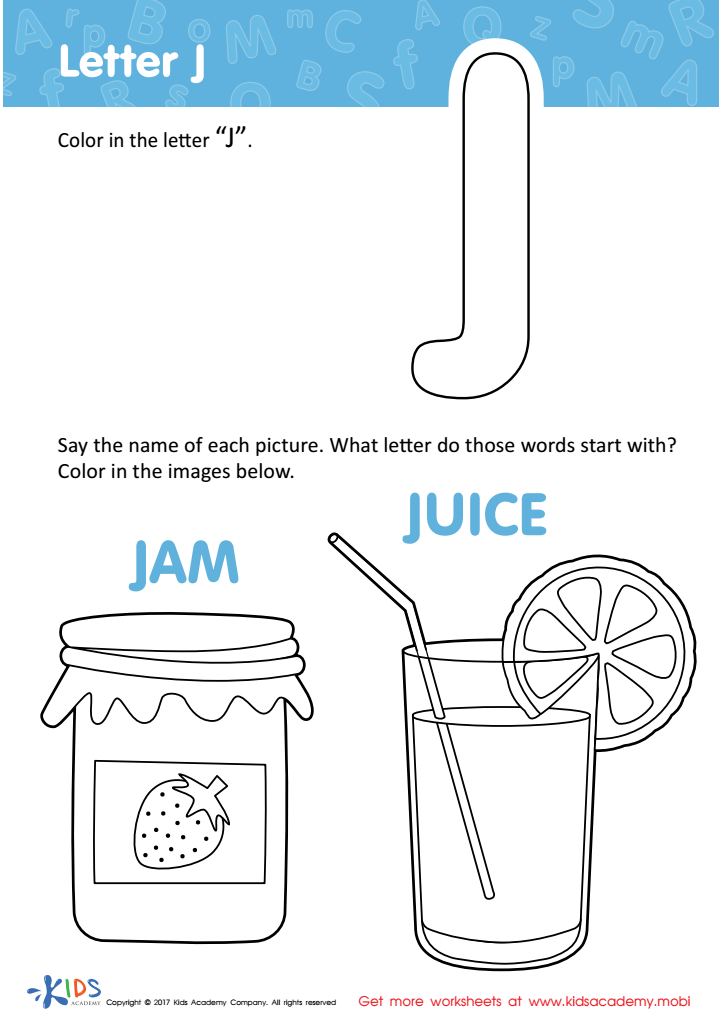
Letter J Coloring Sheet
Practice the letter 'J' with your little one with this fun coloring page! Pictures of jar, juice, jam and jelly make it an enjoyable experience for kids. Learning the letter and coloring is fun for even the youngest learners.
Download (PDF)
 Assign to My Students
Assign to My Students
Letter J Coloring Sheet
Worksheet
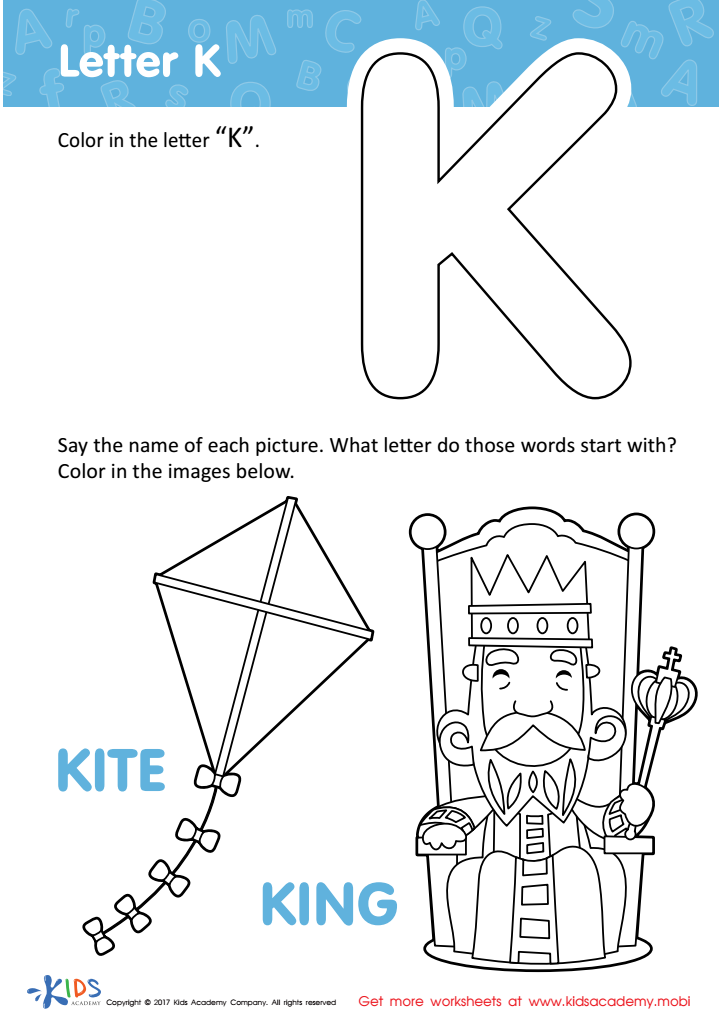
Letter K Coloring Sheet
This letter K coloring page captivates your child's creativity while learning the letter! Showcasing a king and kite, common words for their age group, it's sure to spark their imagination.
Download (PDF)
Assign to My Students
Assign to My Students
Letter K Coloring Sheet
Worksheet
Join Kids Academy for Free
Who is primarily going to use this learning content?








Understanding alphabetical order and letter recognition is crucial for children aged 6-9, as these skills form the foundation for reading and writing. When students grasp the concept of alphabetical order, they enhance their ability to organize information, thus improving their retrieval skills when seeking words in dictionaries, lists, or glossaries. This organizational skill not only aids academic success but also facilitates learning in other subjects.
Moreover, normal letter recognition is vital for literacy development. During this formative stage, children begin to recognize distinct shapes, sounds, and the relationships between letters and their corresponding phonemic values. This recognition significantly supports decoding skills—they can read more fluently, comprehend better, and express themselves in writing more effectively.
Parents and teachers should be attentive to these skills because a solid grasp of the alphabet leads to increased confidence and motivation in young learners. Comfortable readers are more likely to engage with literature, developing a lifelong love for reading. Additionally, early intervention in letter recognition and alphabetic skills can address learning challenges before they escalate, ensuring all children have the tools necessary for future academic achievements. Thus, fostering these foundational skills enhances cognitive development and sets the stage for ongoing Success in education.








