
Letter formation Normal Tracing Letters Worksheets for Ages 6-9
3 filtered results
Difficulty Level
Grade
Age
-
From - To
Subject
Activity
Standards
Explore our "Letter Formation Normal Tracing Letters Worksheets" designed specifically for children aged 6-9. These engaging worksheets provide a fun and interactive way for kids to develop their handwriting skills, helping them master the formation of both uppercase and lowercase letters. Each worksheet is thoughtfully created to encourage proper pencil grip and stroke order, essential for effective writing. With a variety of tracing activities, children can practice at their own pace while reinforcing their understanding of the alphabet. Perfect for homeschooling or classroom use, our worksheets are a valuable tool in building confident, proficient young writers. Start enhancing your child's writing journey today!
Favorites
With answer key
Interactive
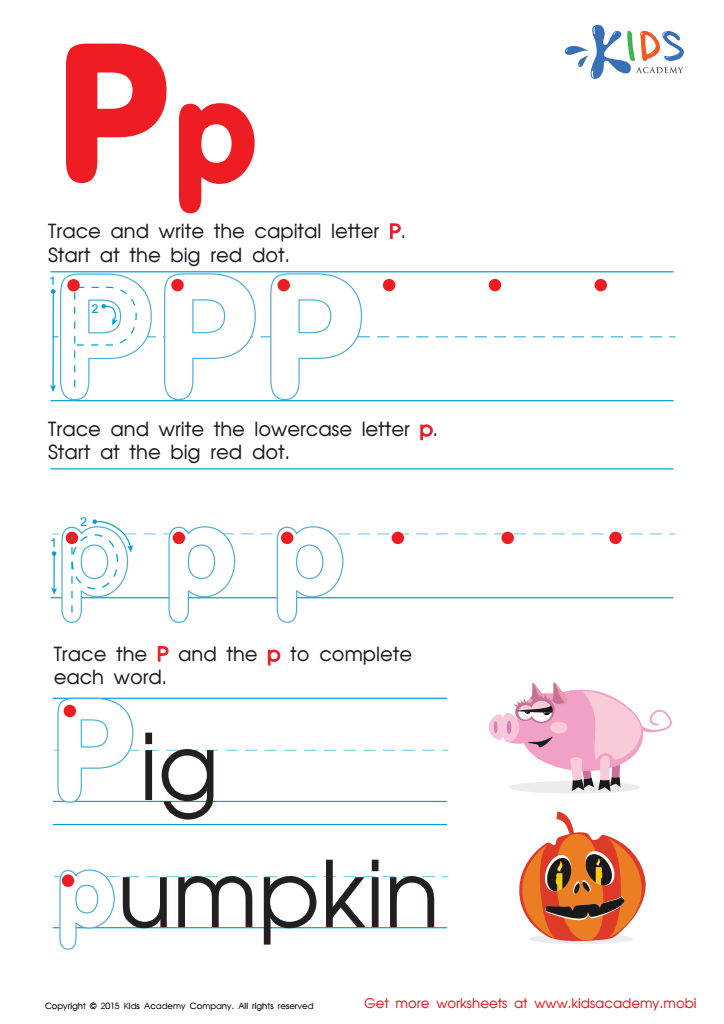
Letter P Tracing Page
Trace the lines from the red dot to learn to write "P"! Then practice this letter with the fun activities: complete the word "Pig" and "Pumpkin". Check out Kids Academy to get more free ABC worksheets.
 Assign to My Students
Letter P Tracing Page
Worksheet
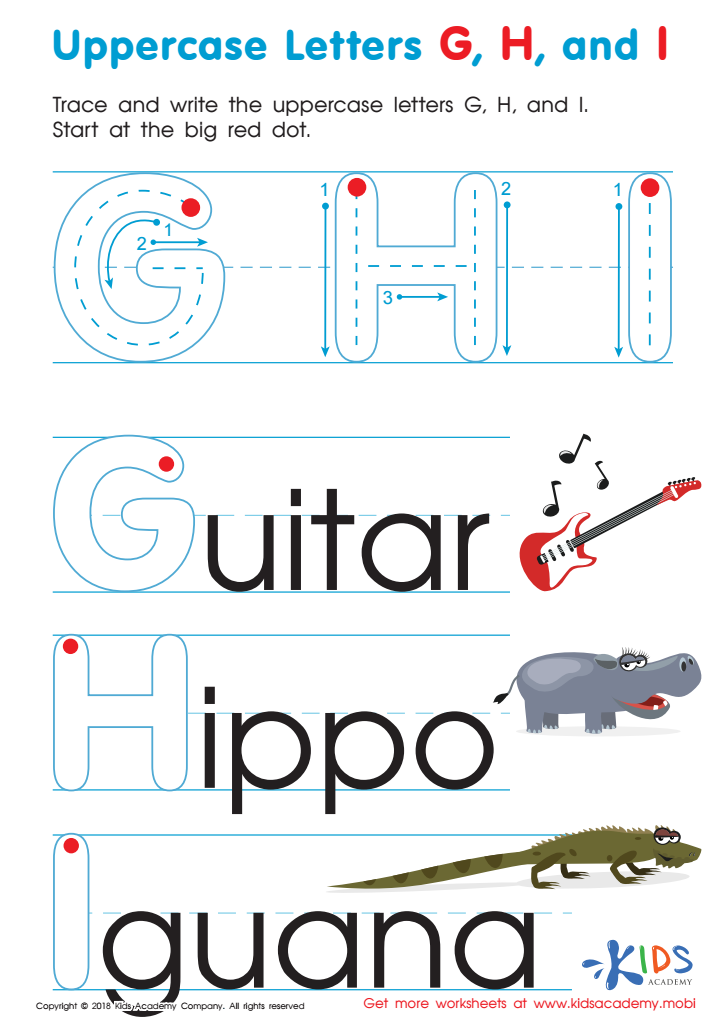
Uppercase Letters G, H, and I Worksheet
Trace each letter with the big red dot, connecting them to sounds as you go. Then write G to I. Congrats on a job well done! Rock on with a cute hippo and iguana while working on this delightful kindergarten worksheet!
Uppercase Letters G, H, and I Worksheet
Worksheet
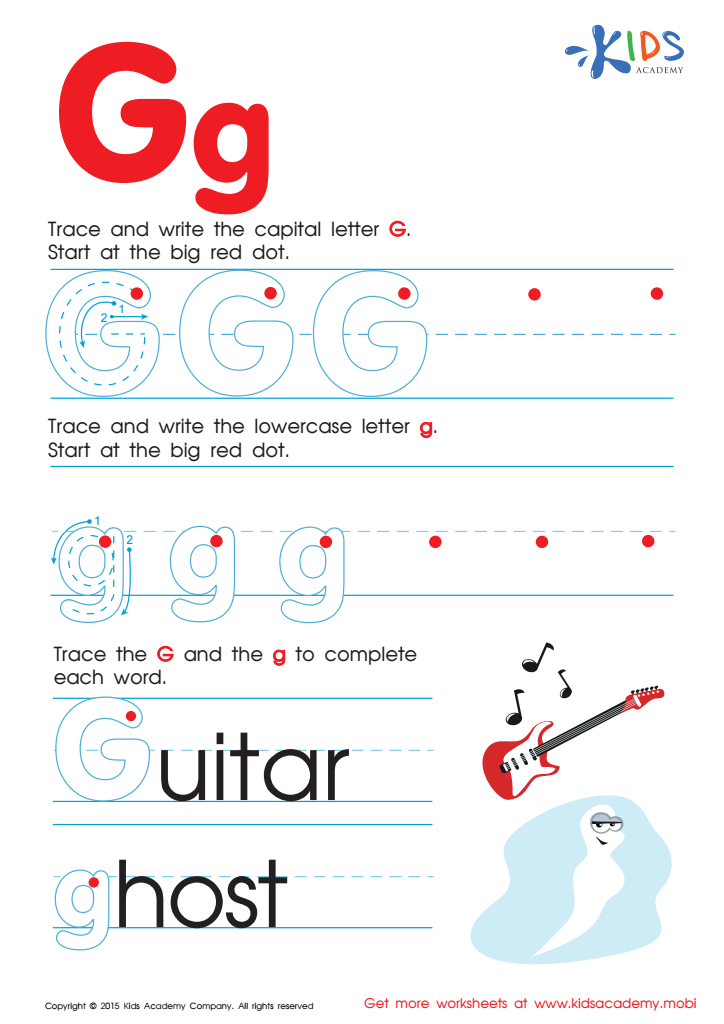
Letter G Tracing Page
Get ready to trace the letter "G" – with a big red spot as the starting point, trace the lines and watch the letter appear. Uppercase and lowercase letters are both easy and fun to write. Give it a go and finish the word "go". Play the guitar and say "hello" to a funny ghost!
Letter G Tracing Page
Worksheet
Join Kids Academy for Free
Who is primarily going to use this learning content?








Parents and teachers should care about letter formation and tracing letters for children aged 6 to 9 as it lays the foundation for effective writing and communication skills. Proper letter formation promotes legibility, which is crucial for conveying ideas clearly. In these formative years, children are developing fine motor skills; tracing letters helps refine their dexterity and coordination, essential not just for writing but for various daily tasks.
Good letter formation also aids in reading development. Familiarity with correctly formed letters helps students recognize words and understand their written structure. This recognition is particularly important as young children are often transitioning from learning letters to reading and writing more complex sentences.
Additionally, focusing on letter formation can boost children's confidence in their writing abilities. When students take pride in their legible handwriting, they are more likely to engage with writing tasks, whether it be for school assignments or personal enjoyment.
In today's digital age, where typing is predominant, handwriting remains a vital skill for note-taking, filling out forms, and other essential life skills. In essence, investing time and attention in letter formation and tracing during these crucial years supports the child's overall cognitive, emotional, and social development.








