Lowercase letter writing Normal Tracing Letters Worksheets for Ages 6-9
3 filtered results
-
From - To
Help your child master the art of writing with our "Lowercase Letter Writing Normal Tracing Letters Worksheets" designed for ages 6-9. These engaging and educational printable worksheets focus on developing fine motor skills, pencil grip, and letter recognition. Perfect for young learners, these worksheets offer step-by-step tracing activities that guide children from novice to confident writers. Each sheet provides ample practice space for tracing and writing lowercase letters, ensuring consistent improvement. Give your child a strong foundation in handwriting with these carefully crafted worksheets, making learning a fun and rewarding experience.
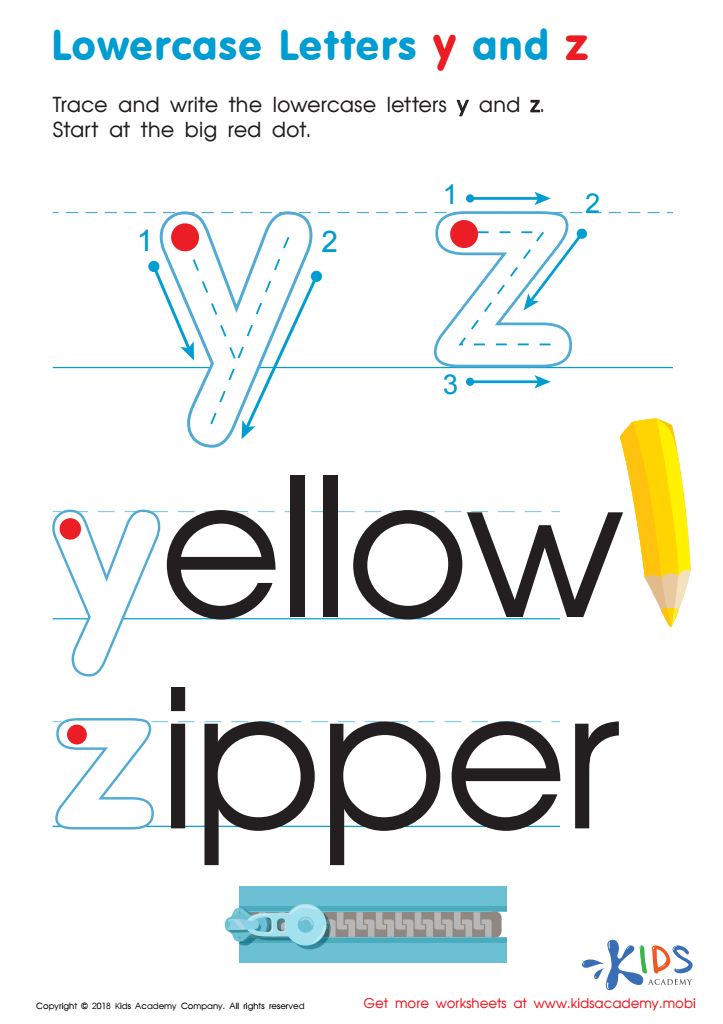
Lowercase Letters y z Worksheet
 Assign to My Students
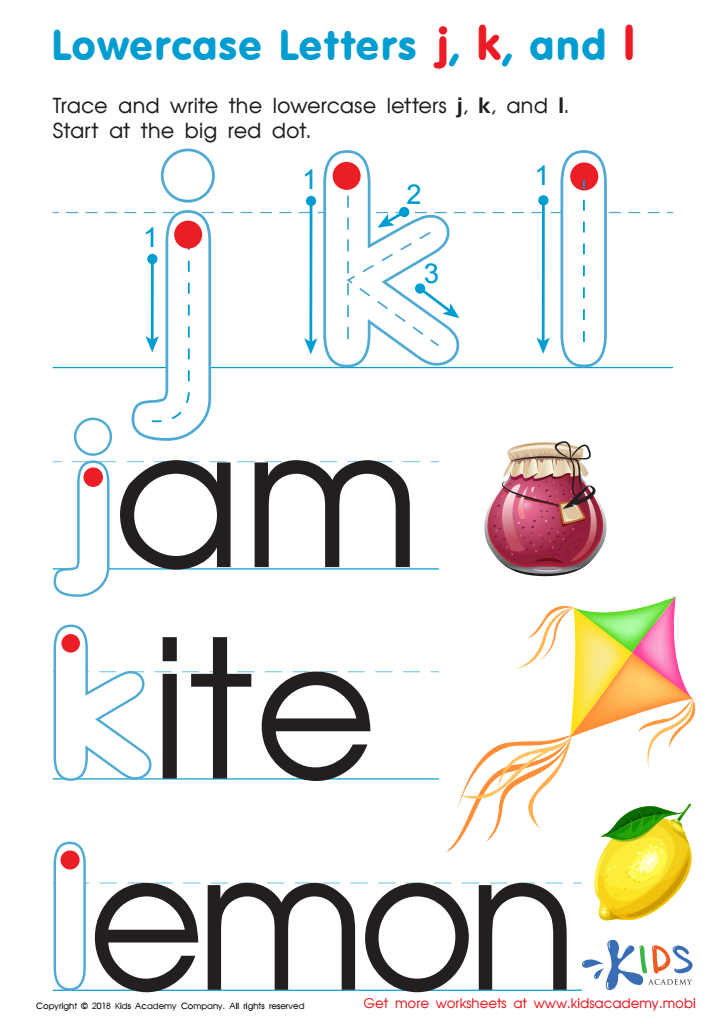
Lowercase Letters j k l Worksheet
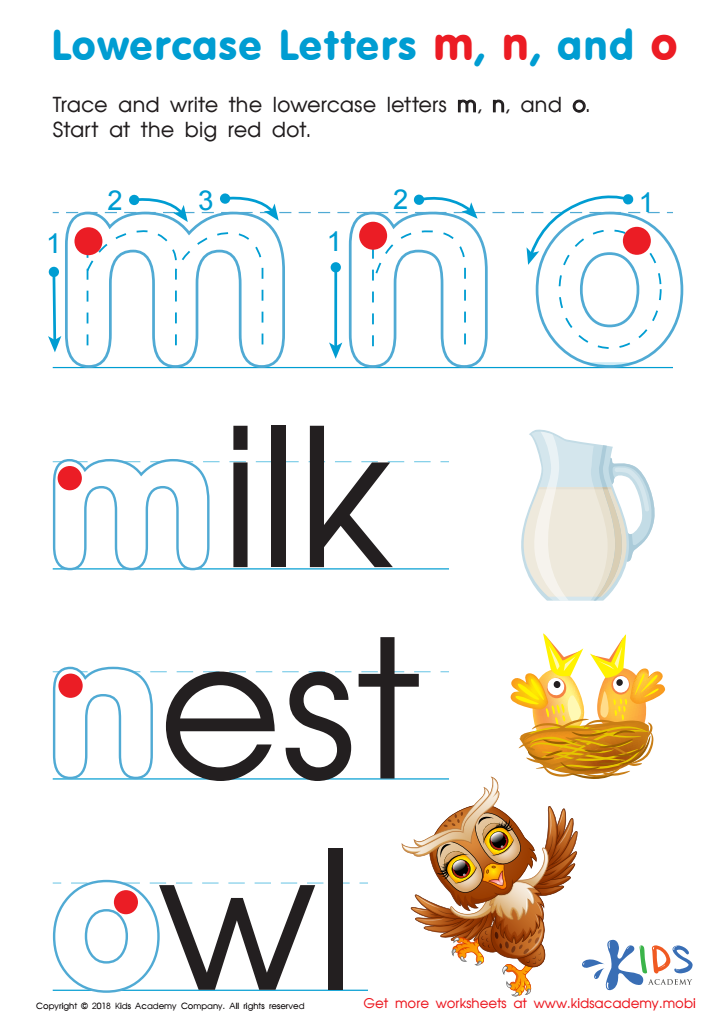
Lowercase Letters m n o Worksheet








Parents and teachers should place a high priority on teaching lowercase letter writing to children aged 6-9 because it forms the foundation for effective communication and literacy. During these formative years, children transition from recognizing individual letters to writing them in coherent sentences. Lowercase letters are more prevalent in most texts, so proficiency in writing them is crucial for reading fluency and comprehension.
Normal tracing letters—that is, standard, recognizably clear letter forms—aid children in developing consistency and accuracy in their writing. This standardization helps minimize confusion and supports later stages of learning, such as spelling, grammar, and syntax. Tracing letters also engages fine motor skills, which are essential for refined hand coordination and muscle memory.
Moreover, successful mastery of lowercase letters boosts a child’s confidence and fosters a positive attitude toward learning. When children feel competent in their writing abilities, they are more likely to engage in reading, which is foundational for academic success across all subjects.
Inculcating these skills early ensures that children are well-prepared to handle more complex tasks as they progress in their education journey. By focusing on lowercase letter writing, parents and teachers essentially provide children with the tools they need for all future written communication.








