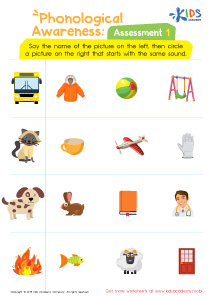
Vocabulary enhancement Normal Two Letter Phonics Worksheets for Ages 6-9
6 filtered results
Difficulty Level
Grade
Age
-
From - To
Subject
Activity
Standards
Boost your child's vocabulary with our engaging Two Letter Phonics Worksheets, specifically designed for ages 6-9! These printable worksheets facilitate interactive learning, helping young learners master essential phonics skills while enhancing their vocabulary. Our carefully crafted exercises focus on identifying and using two-letter words, allowing children to build a strong language foundation. With vibrant illustrations and varied activities, these worksheets capture the attention of young readers, making learning fun and effective. Ideal for use at home or in the classroom, our Two Letter Phonics Worksheets foster essential reading skills, boost confidence, and inspire a love for language in early learners. Explore now!
Favorites
With answer key
Interactive
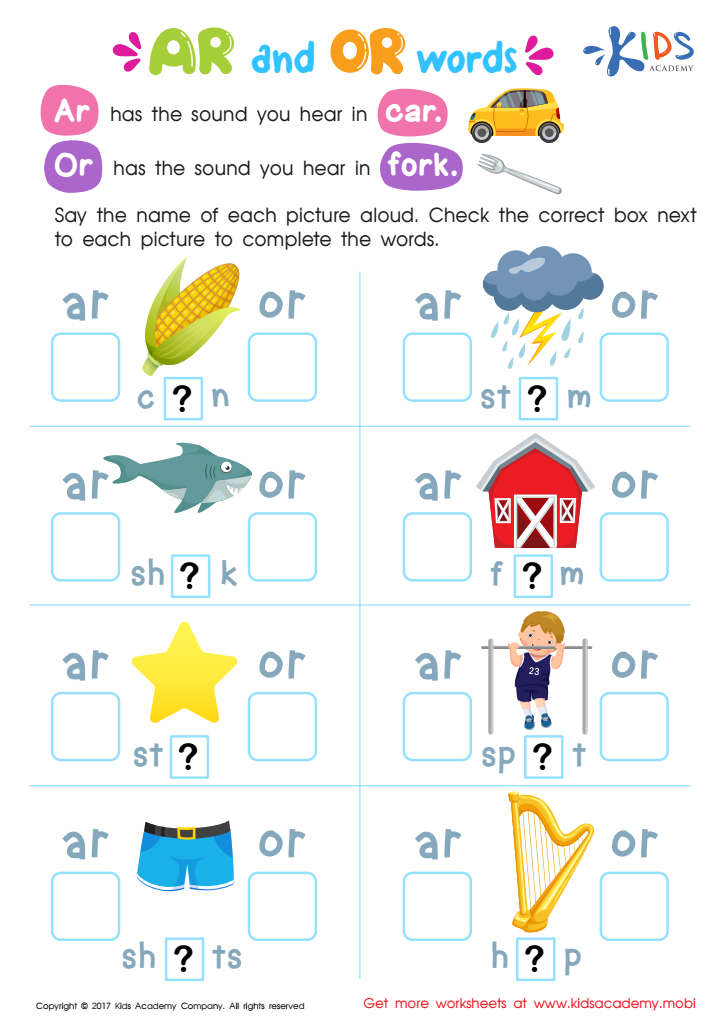
Ar and Or Words Phonics Worksheet
Master the distinct digraphs 'ar' and 'or' with this fun phonics worksheet from Kids Academy! With meaningful illustrations, it'll guide your child to choose the right one. Get ready for the great results!
 Assign to My Students
Ar and Or Words Phonics Worksheet
Worksheet
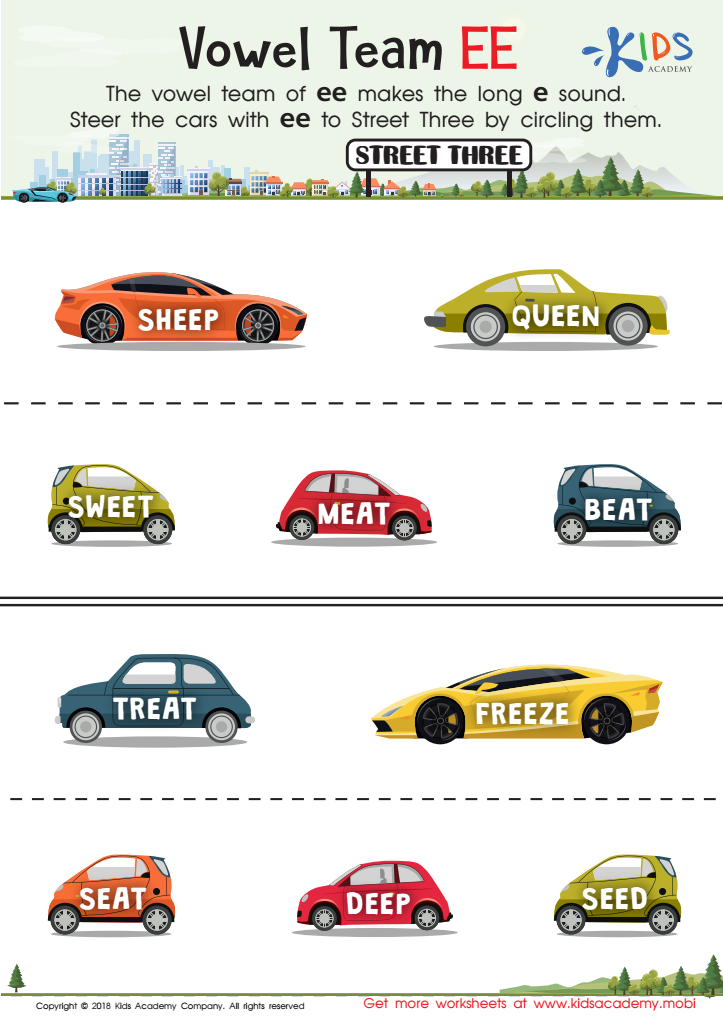
Vowel team ee Worksheet
Revised:
Kids will have a blast steering cars with the -ee digraph towards Street Three! This fast-paced worksheet reinforces that -ee makes the long -e sound while boosting fine motor skills. Kids will love the bright colors and stay engaged with this fun printable. Get ready for hours of off-road excitement!
Vowel team ee Worksheet
Worksheet
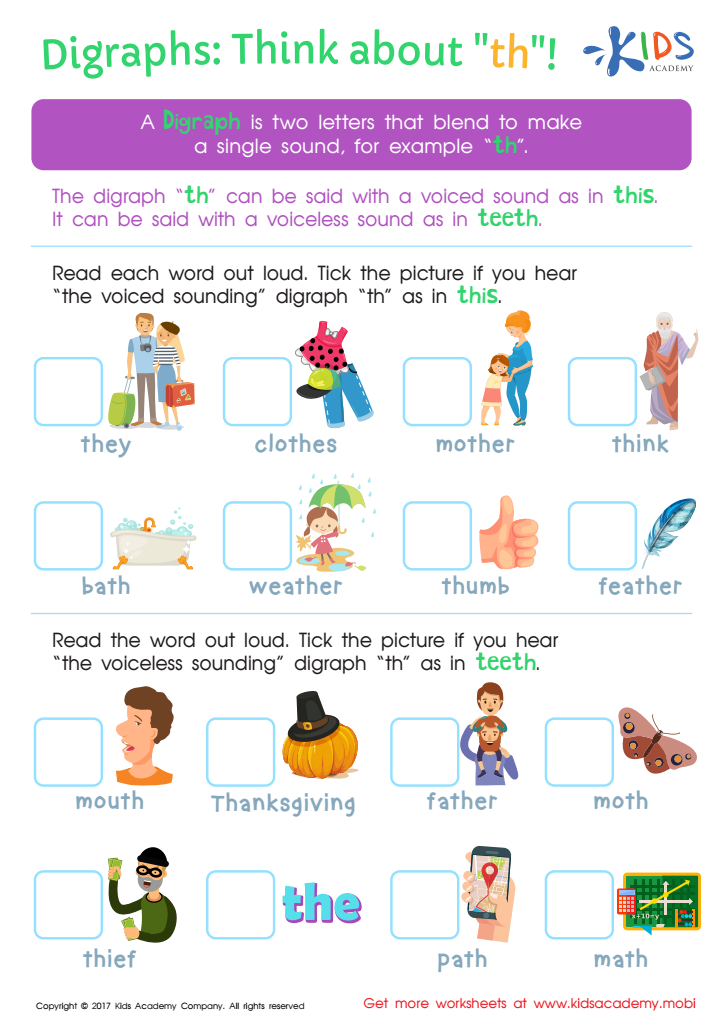
Digraphs: Think About "th" Worksheet
Help your child master phonics with this illustrated digraph Th printable worksheet. It will help recognize "Th" words, differentiate voiced and voiceless sounds and understand key concepts. Use similar words while they work to reap its full benefits!
Digraphs: Think About "th" Worksheet
Worksheet
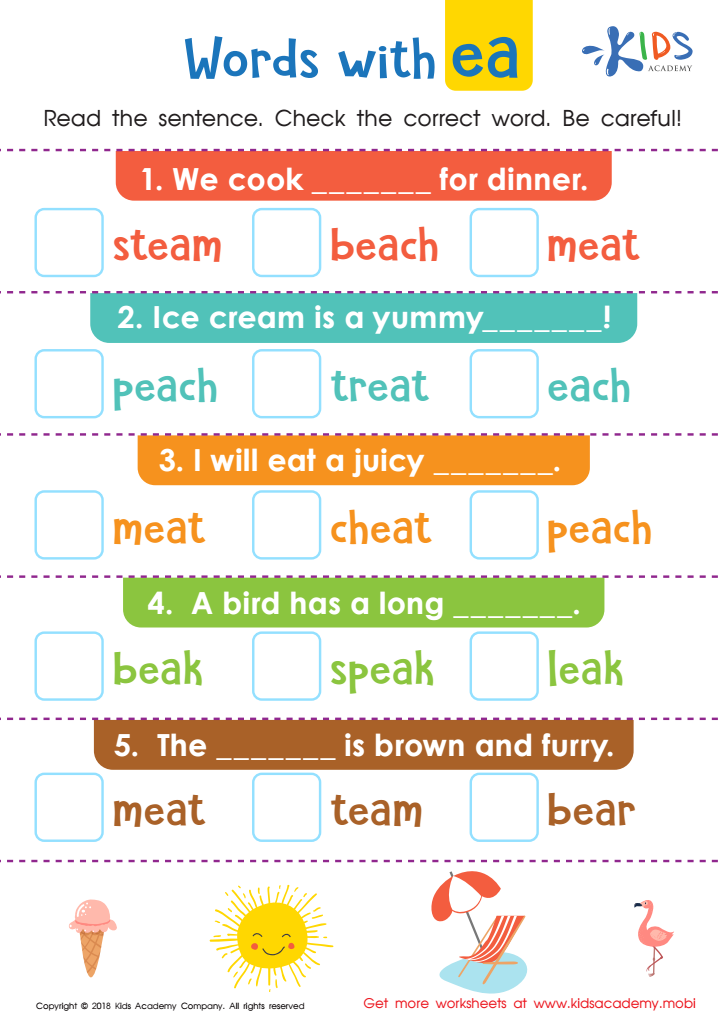
Words with ea Worksheet
Beginning readers may struggle with -ea vowel digraphs, which can have multiple sounds and be tricky to decode. This cheerful worksheet helps kids practice reading sentences with missing -ea words, using context clues to fill in the blanks. They'll also be exposed to various -ea sound examples, and build their sight word knowledge.
Words with ea Worksheet
Worksheet
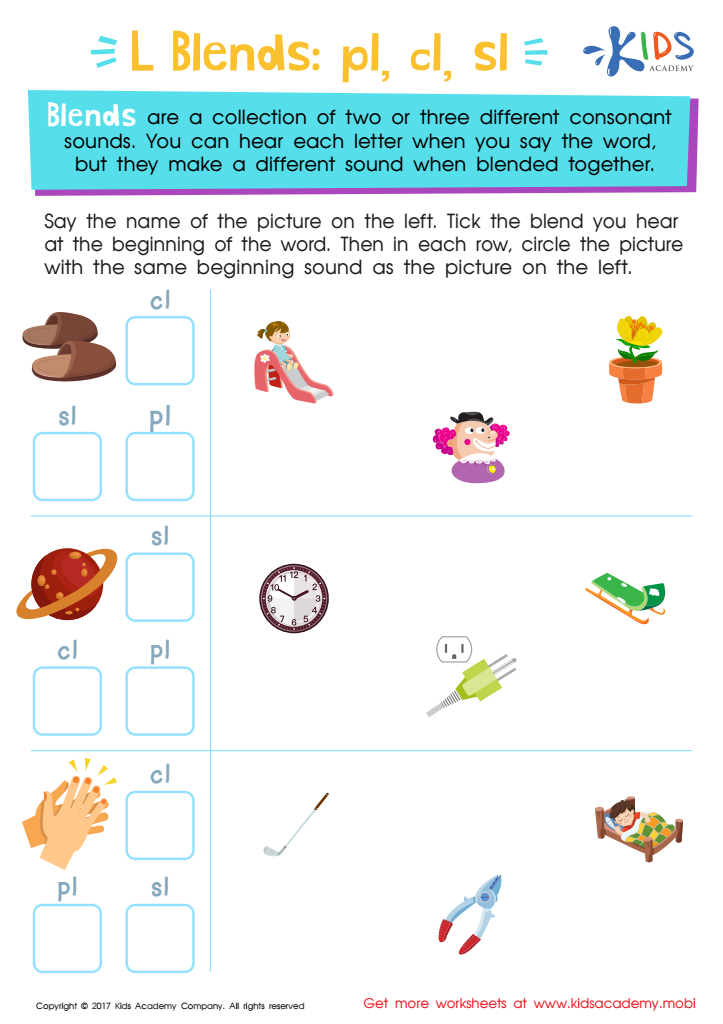
L Blends: "Pl", "Cl" and "Sl" Printable
This printable worksheet will help your child recognize and identify the Pl, Cl, and Sl consonant blends, sound them out, and identify them in print. Improve your child's reading and writing skills with fun and colorful phonics practice!
L Blends: "Pl", "Cl" and "Sl" Printable
Worksheet
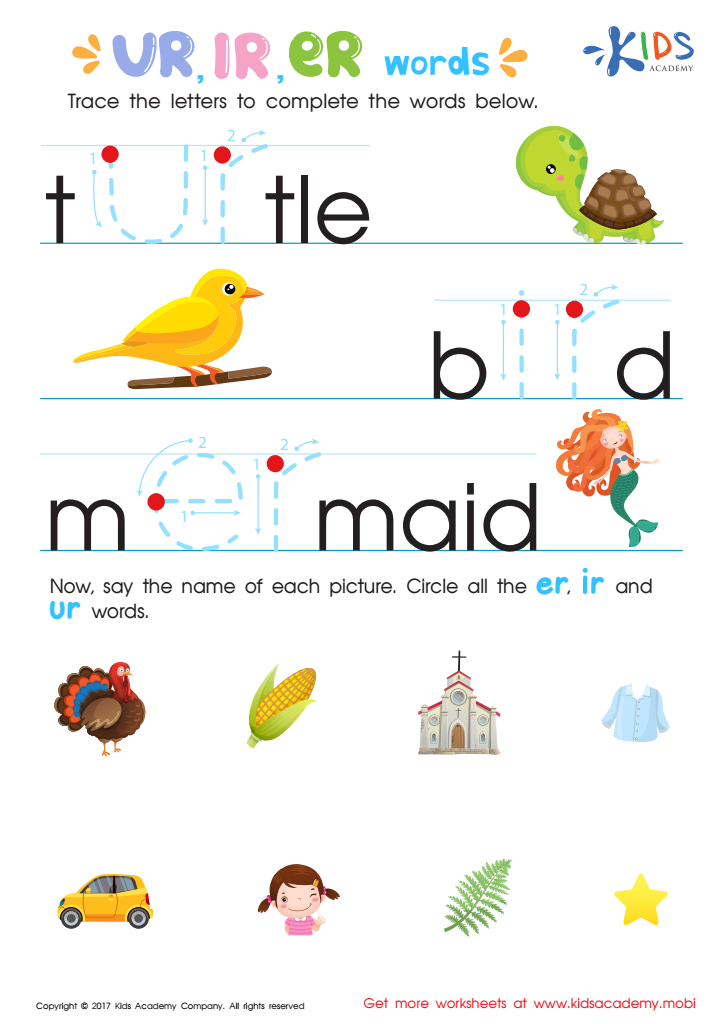
IR UR ER Words Worksheet
Trouble spelling words with the same initial vowel sound? Our worksheet is here to help! With its exercises to help your child learn to read and spell turtle, bird, and mermaid, it'll make differentiating these tricky digraphs a snap.
IR UR ER Words Worksheet
Worksheet
Join Kids Academy for Free
Who is primarily going to use this learning content?



Vocabulary enhancement through Normal Two Letter Phonics is crucial for children aged 6-9, as this foundational stage significantly shapes their reading and writing skills. Phonics instruction helps children understand how letters combine to form sounds, aiding their ability to decode words. The introduction of two-letter phonics not only streamlines the learning process but also builds confidence in young readers, setting them on a path toward fluency.
By fostering a strong vocabulary at this stage, parents and teachers equip children to grasp more complex texts and concepts as they progress academically. A robust vocabulary enhances comprehension, allows for more effective communication, and encourages expressive language skills, which are essential in all subjects.
Additionally, children who are proficient in phonics are better prepared for standardized testing and future literacy practices. Engaging in phonics activities can also promote a love for reading, making learning enjoyable and interactive. Overall, embracing Normal Two Letter Phonics in early education not only enriches children’s language skills but also lays the groundwork for lifelong learning and success in communication—skills that are vital in an increasingly interconnected world. Therefore, supporting phonics instruction is an investment in a child's academic future and overall personal development.