Alphabet familiarity Normal Uppercase Letters Worksheets for Ages 6-9
4 filtered results
Difficulty Level
Grade
Age
-
From - To
Subject
Activity
Standards
Enhance your child's alphabet familiarity with our engaging Normal Uppercase Letters Worksheets, designed specifically for children ages 6-9. These worksheets offer a fun and interactive way for students to recognize, practice, and master uppercase letters through various activities. Your child will enjoy tracing, identifying, and coloring letters, fostering confidence and enthusiasm for reading and writing. Perfect for homeschooling or classroom use, these worksheets align with early education standards, ensuring a comprehensive approach to letter recognition. Support your child's literacy skills while making learning enjoyable! Dive into our collection today and watch them thrive in their alphabet journey!
Favorites
With answer key
Interactive
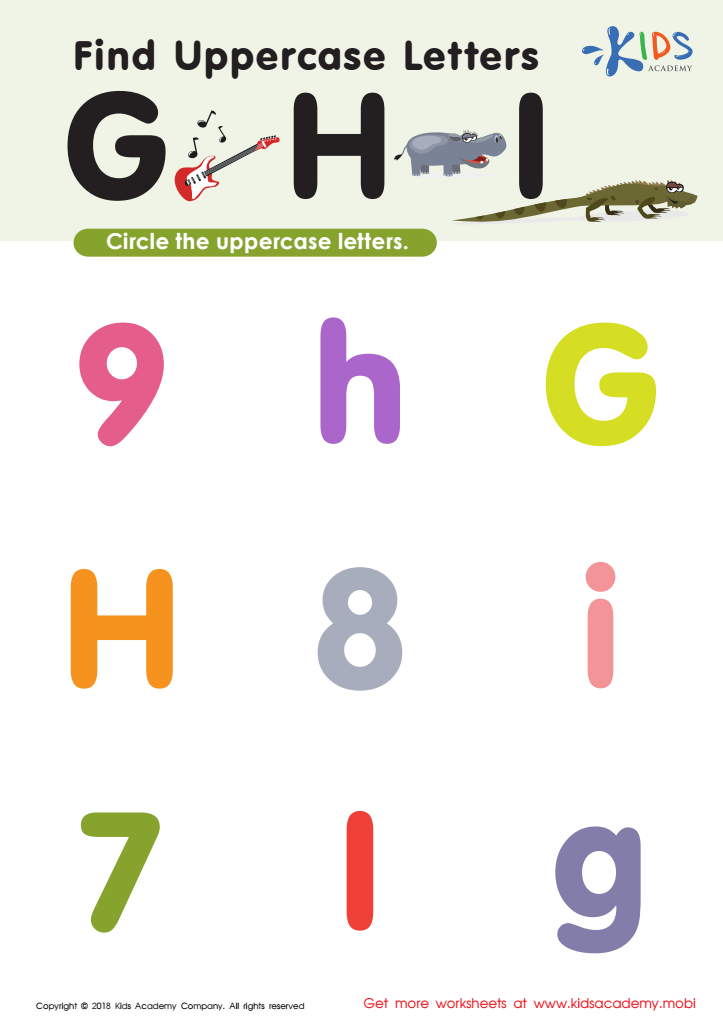
Find Uppercase Letters G, H, and I Worksheet
Find G, H, and I in uppercase with this downloadable worksheet! Numbers are included to challenge your kindergartener's letter recognition skills. Plus, practice G, H, and I sounds using the cute graphics. Perfect for learning letter case recognition!
 Assign to My Students
Find Uppercase Letters G, H, and I Worksheet
Worksheet
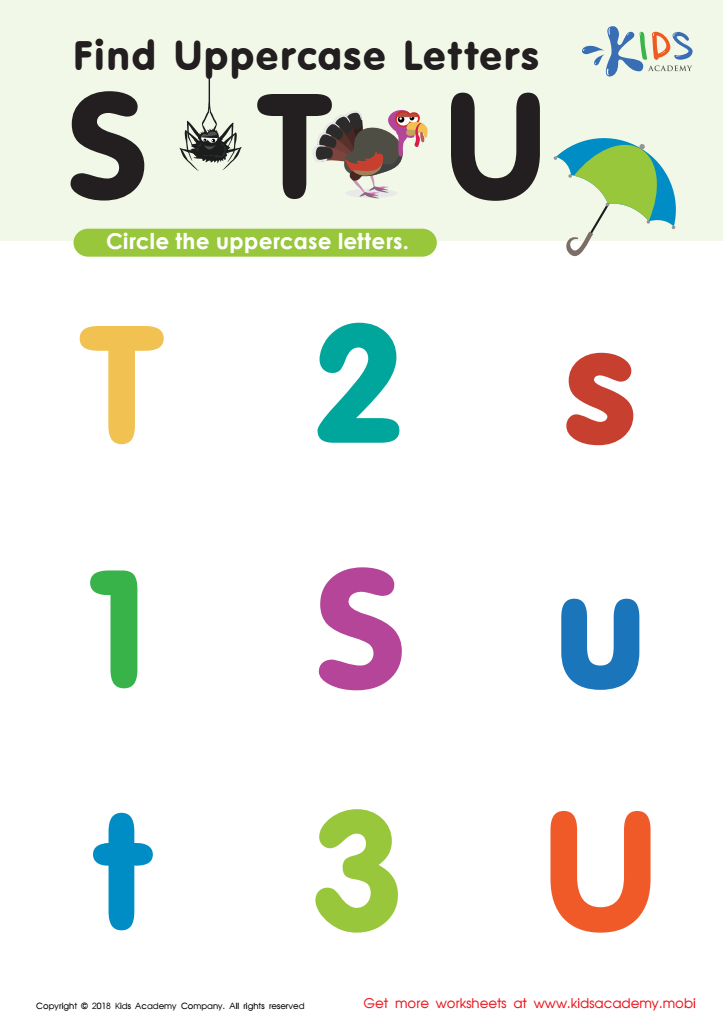
Find Uppercase Letters Worksheet
What level is your kid at now? Can they tell the difference between small and uppercase letters? Ask them to name words beginning with S, T and U, then help them find and circle the uppercase letters S, T and U in a mix of small letters, numbers and uppercase letters.
Find Uppercase Letters Worksheet
Worksheet
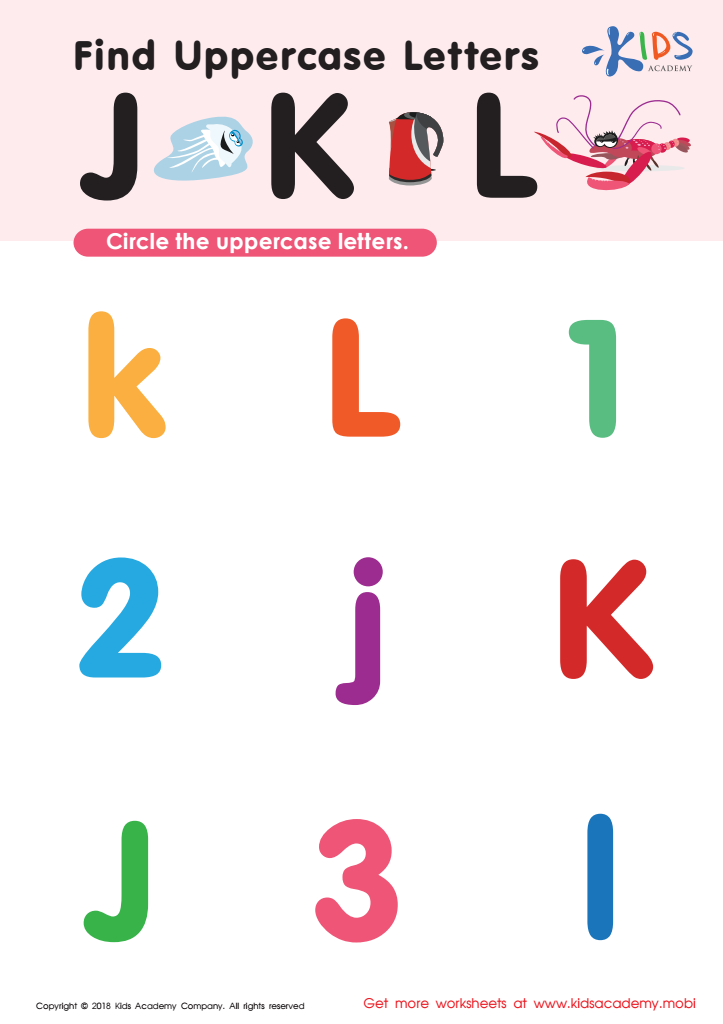
Find Uppercase Letters J, K, and L Worksheet
Search for the uppercase letters J, K, and L in this fun worksheet! Help your child identify the starting sound of each picture, then look for the letters. Keep an eye out for numbers that look like letters. Swim with the jellyfish and solve this delightful puzzle!
Find Uppercase Letters J, K, and L Worksheet
Worksheet

Find Uppercase Letters A, B, and C Worksheet
Check out this PDF worksheet and spot all the capital letters! Arranged as a puzzle, this exercise will test little learners to read and recognize uppercase letters and tell the difference between letters and numbers. To help them, use the pictures on top of the page to practice the sounds A, B and C make! 80 words.
Find Uppercase Letters A, B, and C Worksheet
Worksheet
Join Kids Academy for Free
Who is primarily going to use this learning content?








Alphabet familiarity, particularly with uppercase letters, is crucial for children aged 6-9 for several reasons. At this developmental stage, children are transitioning from learning to read to reading to learn, and a solid grasp of uppercase letters plays a vital role in this process. Uppercase letters are often used in many contexts, such as in the titles of books and important names, which children encounter regularly. Understanding these letters helps them decode and comprehend text more efficiently.
Additionally, familiarity with uppercase letters enhances children's writing skills. When crafting sentences, children use uppercase letters for the beginnings of sentences and proper nouns, making it essential for them to master this aspect of their language development. This skill builds their confidence in writing, enabling them to express ideas clearly and cohesively.
Furthermore, letter recognition fosters cognitive skills such as memory and attention. Children become more engaged with text when they can easily identify the letters, which fosters a love for reading and learning. As children gain proficiency with uppercase letters, they build the foundational literacy skills they need for success in school and beyond. For these reasons, parents and teachers should prioritize and support alphabet familiarity in young learners.