Uppercase identification Normal Uppercase Letters Worksheets for Ages 6-9
5 filtered results
-
From - To
Explore our engaging "Uppercase Identification Normal Uppercase Letters Worksheets" designed for children ages 6-9! These worksheets offer fun and interactive ways for young learners to recognize and identify uppercase letters. Tailored to enhance alphabet mastery, each activity helps improve letter recognition skills through playful exercises. Perfect for home or classroom use, these worksheets promote essential early literacy skills while keeping students engaged. Children will enjoy tracing, coloring, and matching activities that reinforce their understanding of uppercase letters. Supporting foundational reading and writing skills has never been easier! Download your worksheets today and watch your child's confidence soar in letter identification!
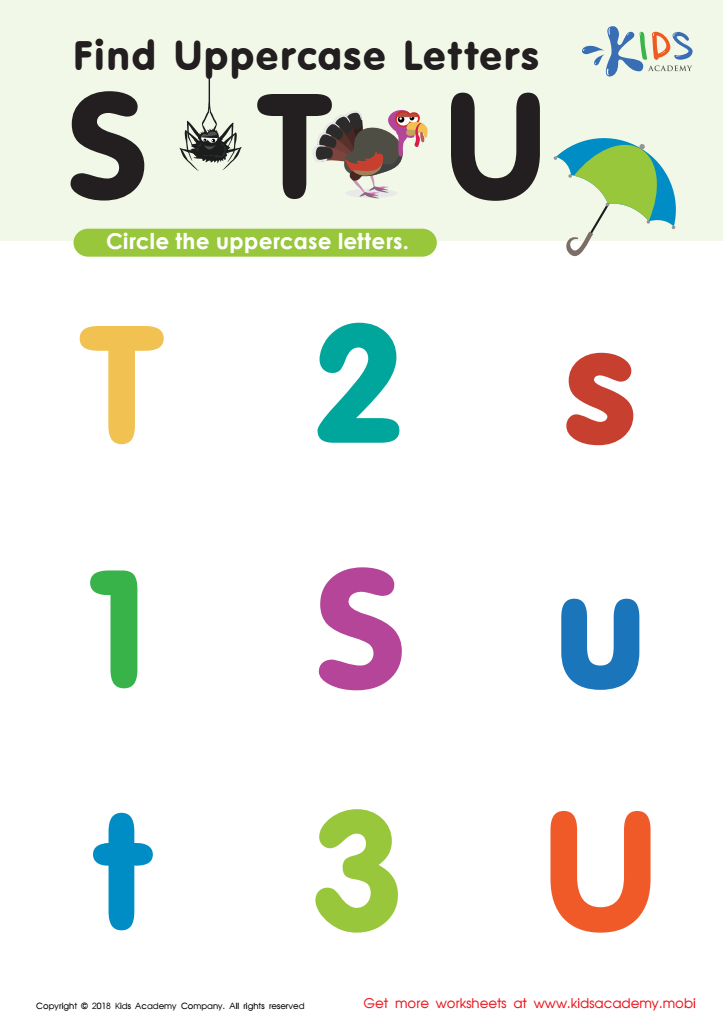
Find Uppercase Letters Worksheet
 Assign to My Students
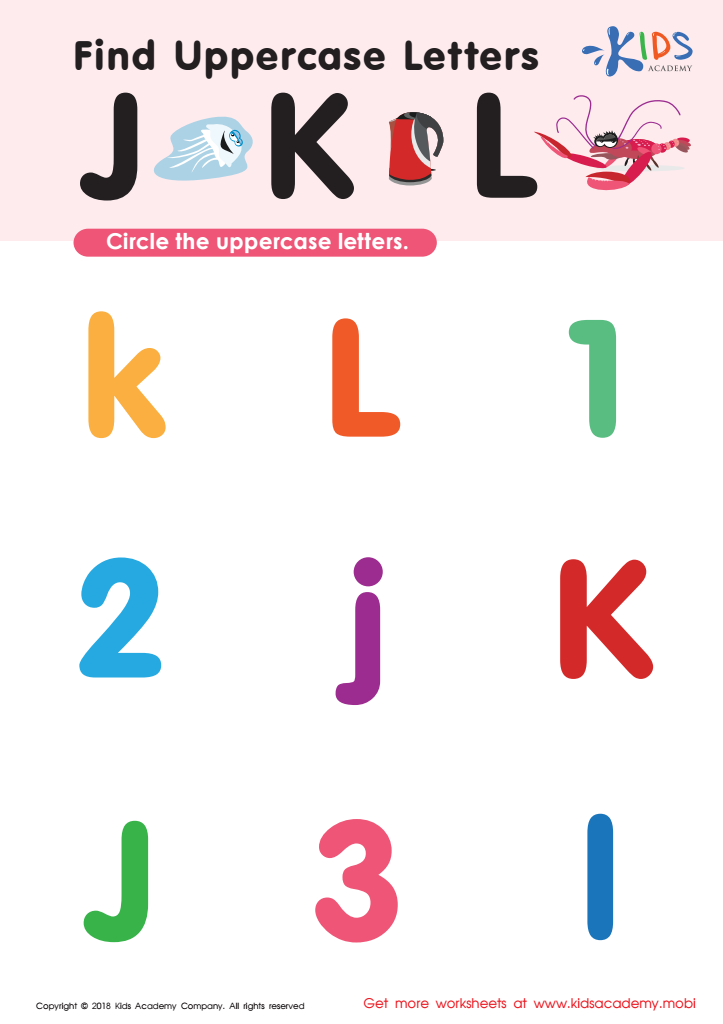
Find Uppercase Letters J, K, and L Worksheet
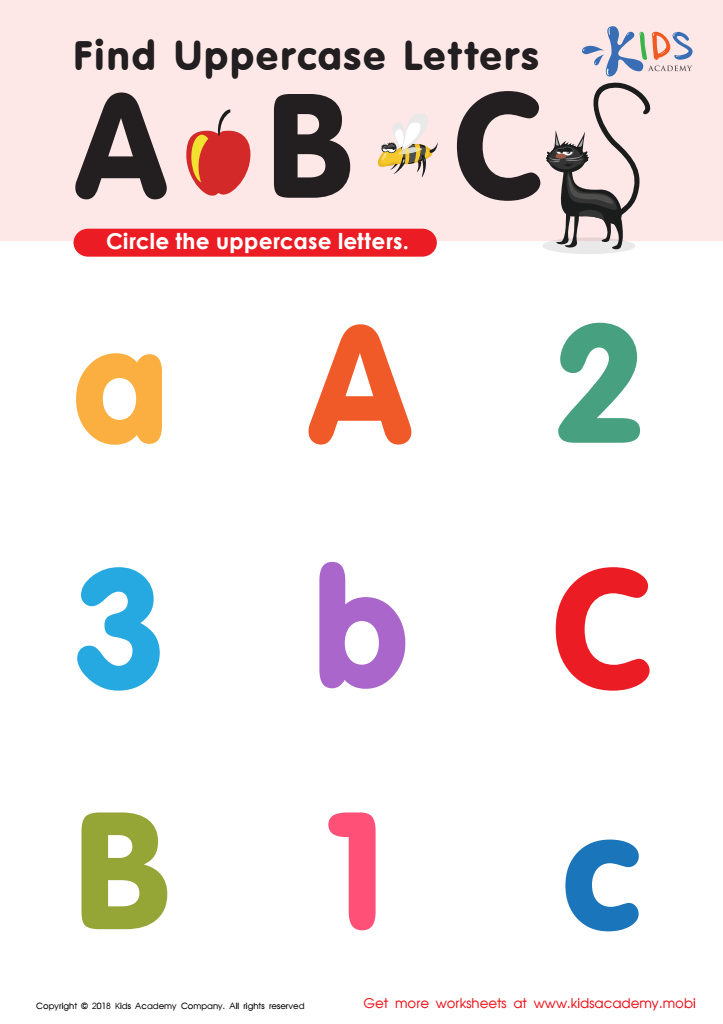
Find Uppercase Letters A, B, and C Worksheet
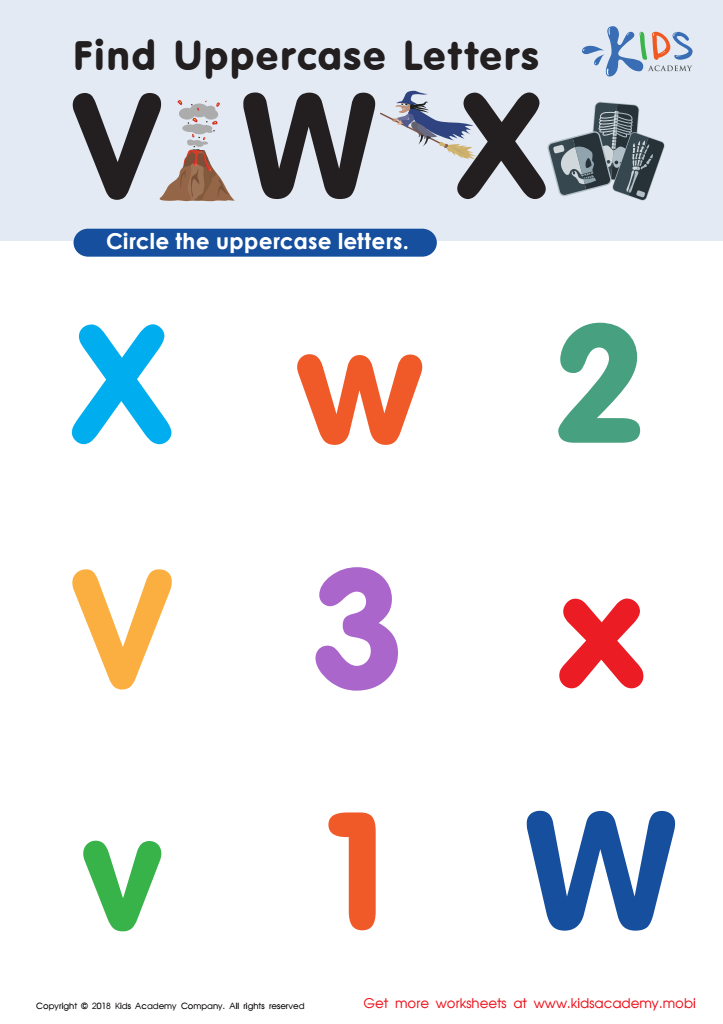
Find Uppercase Letters V, W, X Worksheet
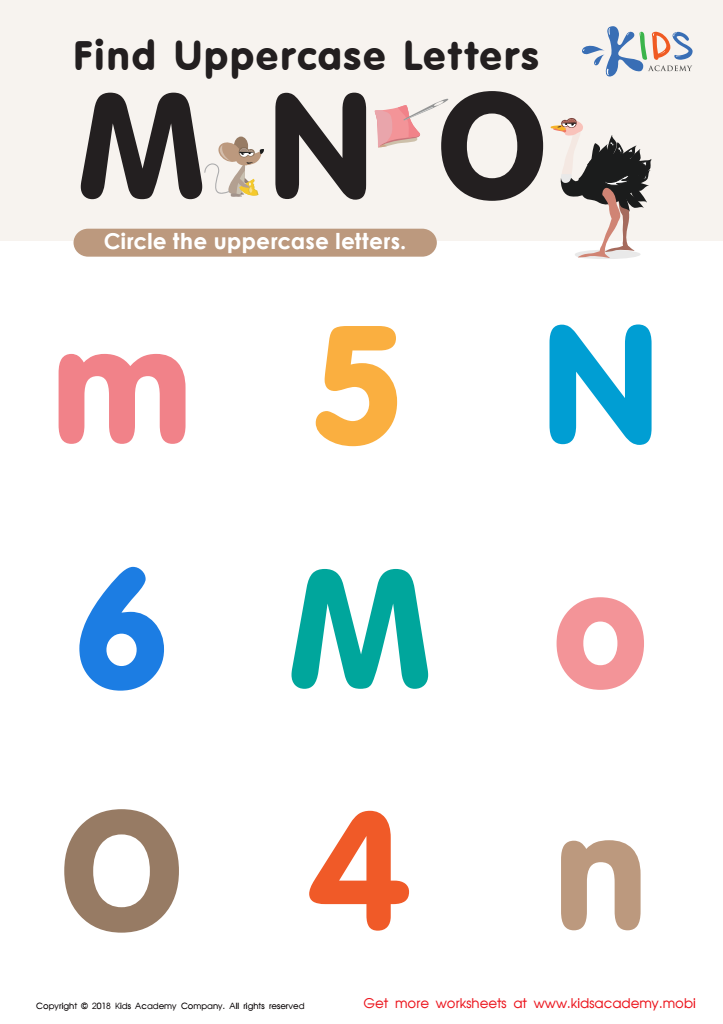
Find Uppercase Letters M, N, and O Worksheet








Uppercase letter identification is a crucial skill for children aged 6-9, and both parents and teachers should care about its development. At this stage, children transition from learning to read to reading to learn. Mastery of uppercase letters is foundational for reading comprehension and language development. Recognizing uppercase letters enables children to identify proper nouns, titles, and the beginning of sentences, which are vital components of written communication.
In addition, uppercase letters are often used in signs and labels that children encounter in their environments, helping them navigate the world around them. This recognition furthers their understanding of context and enhances their literacy skills. Further, many educational curriculums emphasize standardized assessments that include uppercase letter identification, so proficiency in this area can boost a child's academic confidence and performance.
Encouraging uppercase letter recognition can also enhance fine motor skills when children practice writing these letters. Fun activities like tracing, crafts, and games can foster an engaging learning atmosphere. By emphasizing this skill, parents and teachers aid children in building a strong literacy foundation that will benefit them in reading, writing, and overall communication throughout their academic journeys.