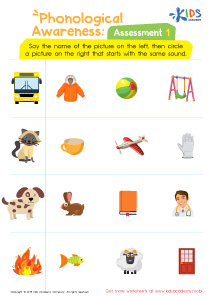
Vocabulary Building Normal Vowels Worksheets for Ages 6-9
3 filtered results
-
From - To
Discover our engaging Vocabulary Building Normal Vowels Worksheets designed specifically for children aged 6-9! These interactive worksheets offer a fun and effective way to enhance your child's vocabulary and understanding of normal vowels. Through a variety of exercises, including matching, fill-in-the-blanks, and word searches, children will learn to recognize and use vowels in words while expanding their language skills. Each worksheet is tailored to promote critical thinking and creativity, making learning enjoyable. Perfect for homeschooling or classroom settings, these resources provide a solid foundation for developing strong communication skills. Start your child's journey to vocabulary mastery today!
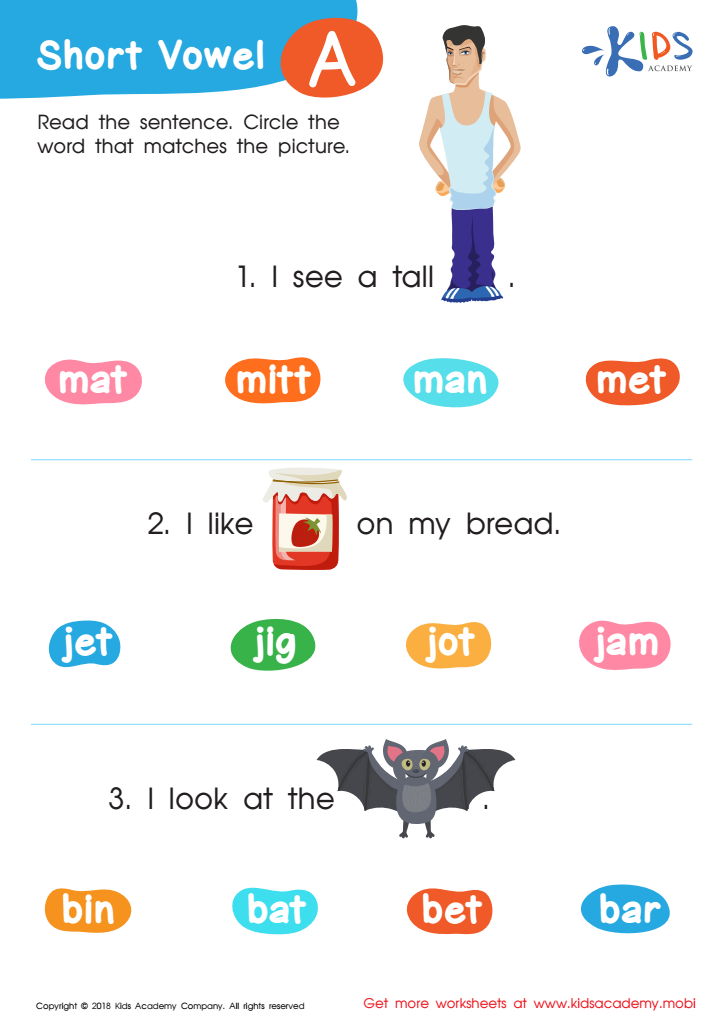
Short Vowel /a/ Worksheet
 Assign to My Students
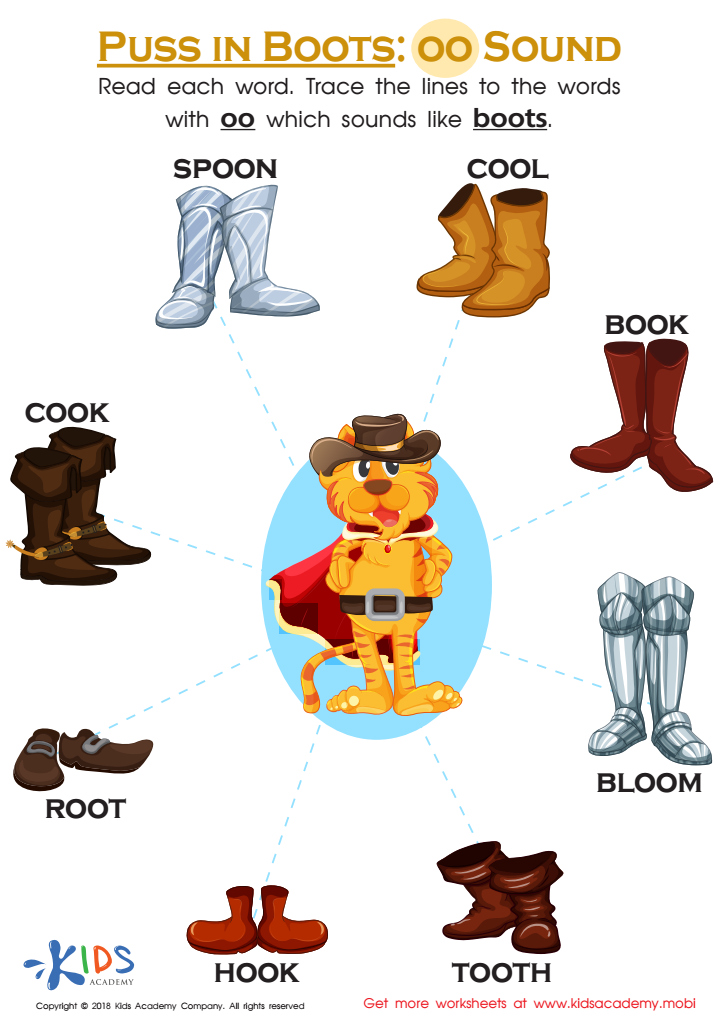
Puss in Boots: OO Sound Worksheet
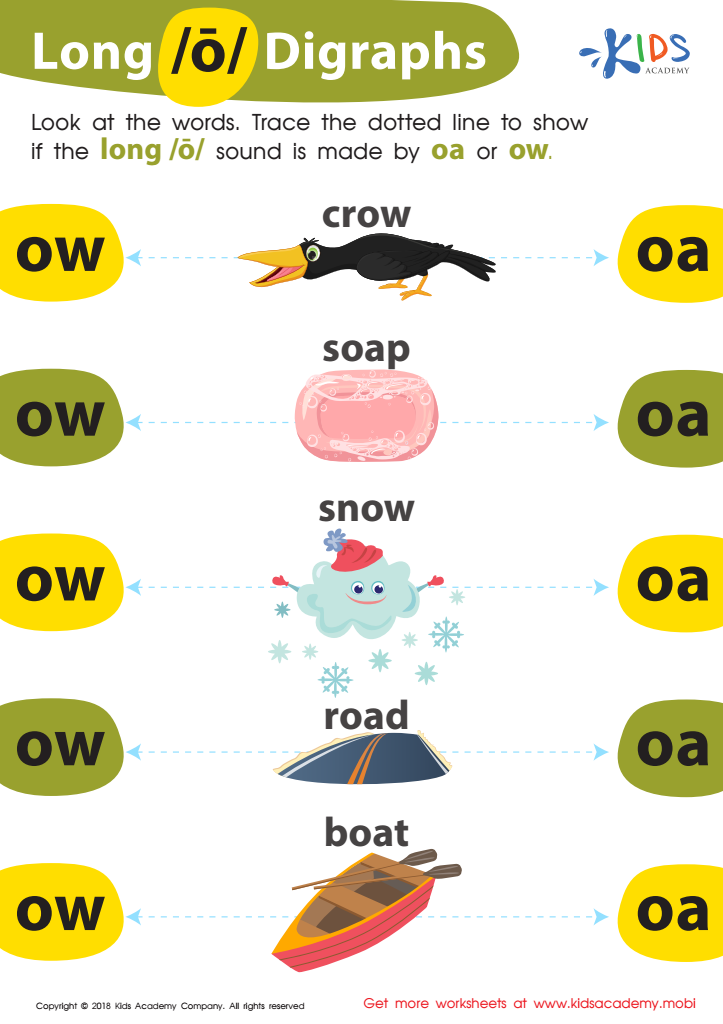
Reading: Long O Digraphs Worksheet





Vocabulary building, particularly through normal vowels, is crucial for children aged 6-9 for several reasons. At this developmental stage, children are expanding their reading and writing skills, and a strong understanding of vocabulary can drastically enhance their literacy. Normal vowels—the essential vowel sounds in words—are foundational to phonics, making it easier for them to decode words and improve their reading fluency.
By focusing on normal vowels, educators and parents can help children develop clearer pronunciation and a better understanding of word structures. This can boost their confidence in communication and lead to more robust speaking and listening skills, which are vital for academic success. Furthermore, a rich vocabulary enhances comprehension and encourages a lifelong love of reading.
In addition, an expanded vocabulary fosters critical thinking and creativity. As children learn new words, they gain the ability to express themselves more precisely and relate their ideas effectively. Investing in vocabulary enhancement not only supports academic achievement but also nurtures a child’s emotional and social development, allowing them to engage better with peers and adults. Overall, prioritizing vocabulary building through normal vowels is essential in setting the stage for a bright academic future.