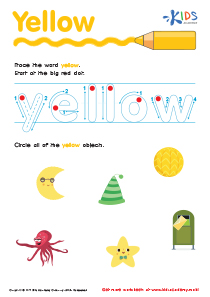
Handwriting Skills Normal English for Beginners Worksheets for Ages 6-9
5 filtered results
-
From - To
Our "Handwriting Skills Normal English for Beginners Worksheets" are expertly designed for children aged 6-9 to develop essential penmanship skills. These engaging and educational worksheets support English language learners with easy-to-follow instructions and playful activities that make handwriting fun. Each worksheet encourages proper letter formation, spacing, and neatness while enhancing overall writing fluency. Ideal for both classroom and at-home practice, these resources are perfect for parents and teachers looking to build a strong foundation in handwriting. Help your child master the art of writing with these thoughtfully crafted worksheets that are tailored to young learners' needs.
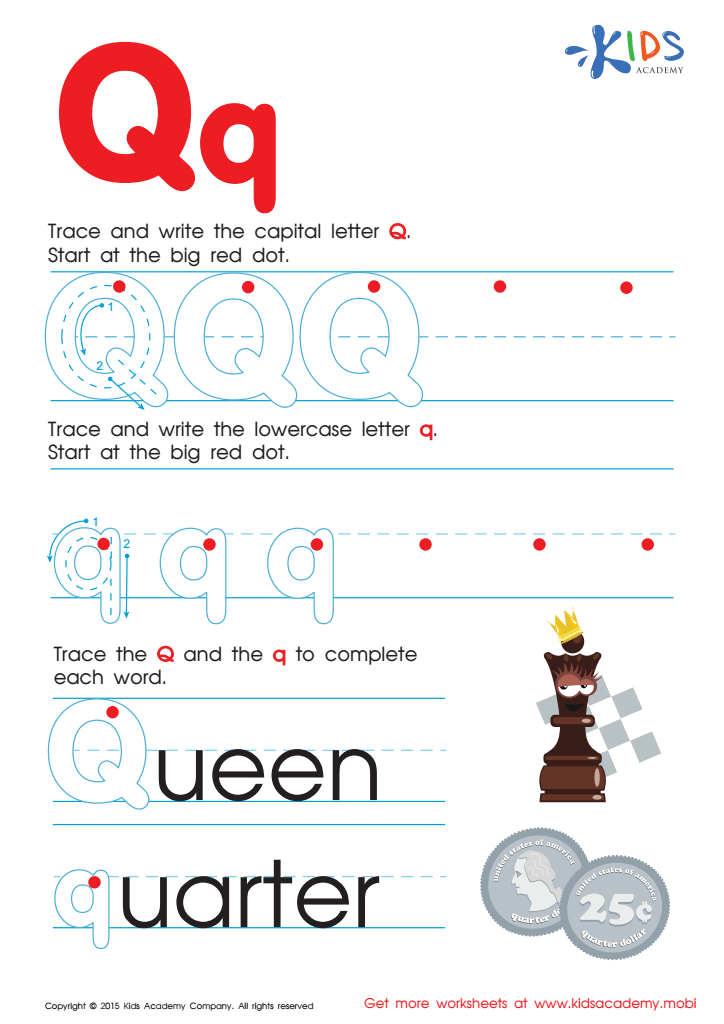
Letter Q Tracing Page
 Assign to My Students
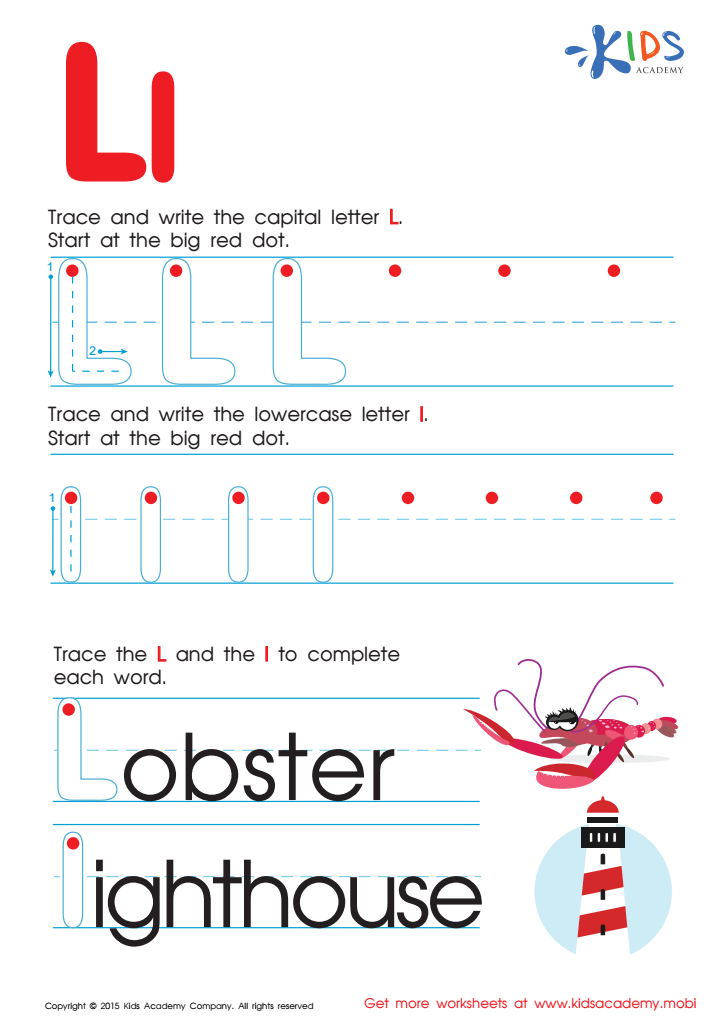
Letter L Tracing Page
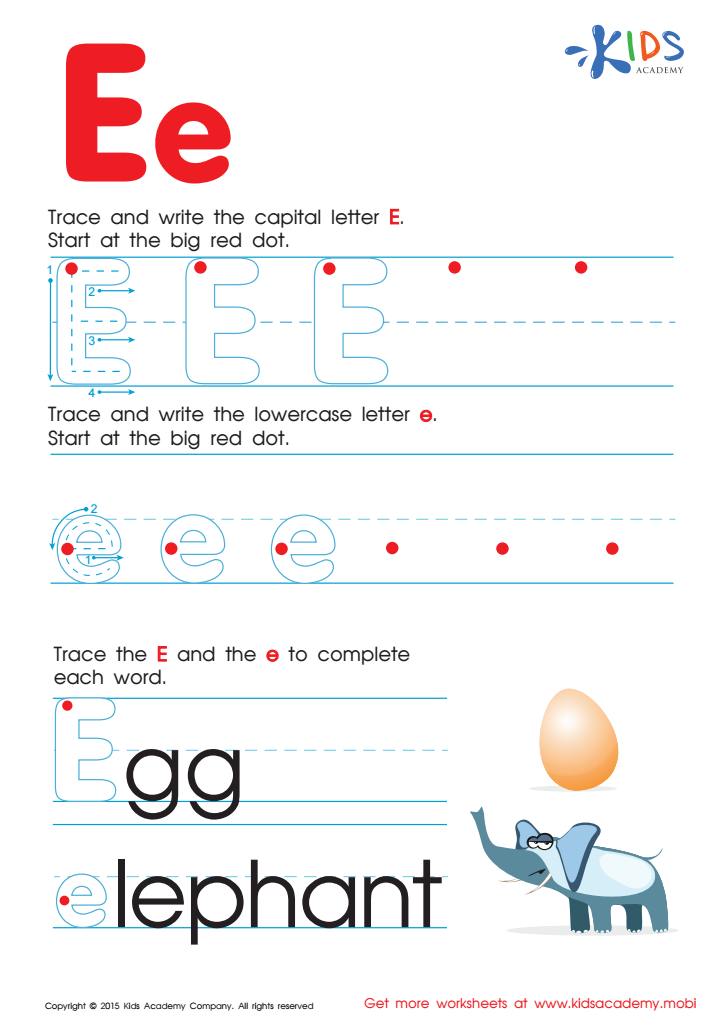
Letter E Tracing Page
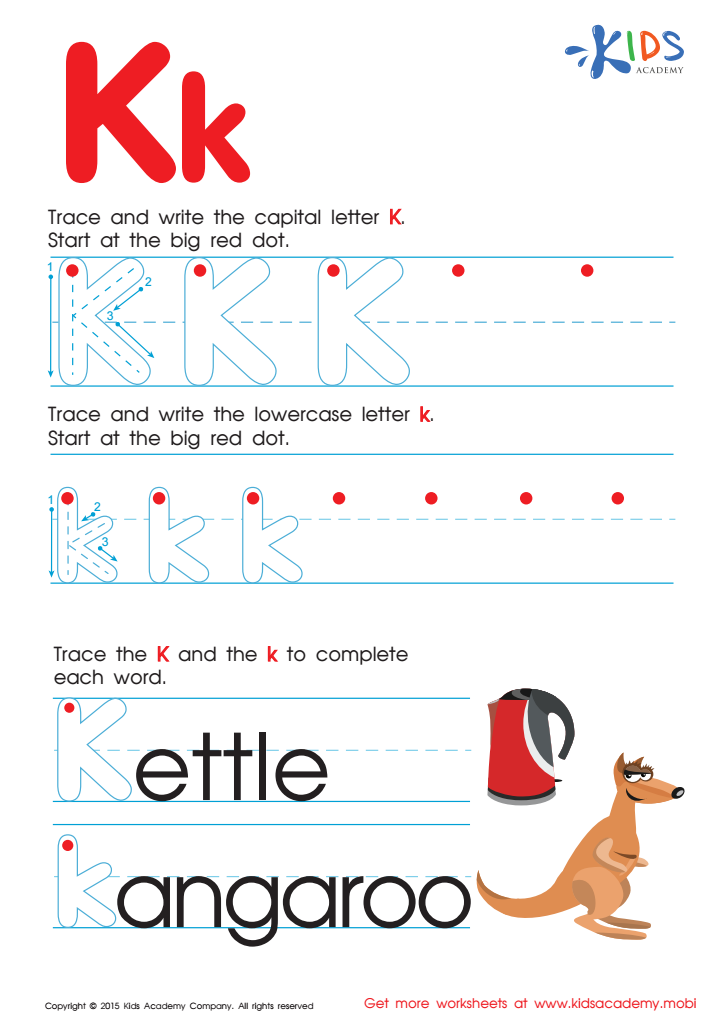
Letter K Tracing Page
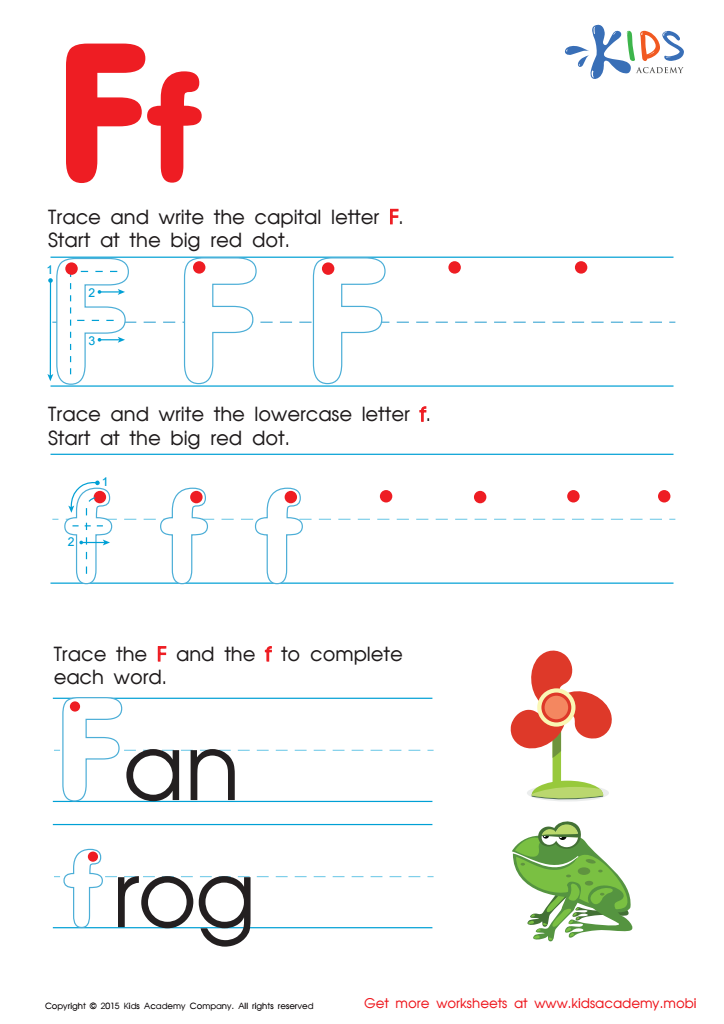
Letter F Tracing Page





Handwriting skills are a cornerstone of early education, playing a crucial role in a child's overall development and academic success. For children aged 6-9, mastering handwriting goes beyond merely forming letters; it helps develop fine motor skills, cognitive abilities, and self-discipline.
First, handwriting practice enhances fine motor control, such as coordination of finger movements, which is essential for more complex tasks later in life, like typing or playing musical instruments. A good grip and legible handwriting lay a solid foundation for these advanced skills.
Cognitively, engaging in handwriting reinforces learning. Writing by hand requires kids to process information more deeply as they formulate and write down their thoughts. This activity can improve comprehension and memory retention, solidifying their understanding of the building blocks of language.
Additionally, legible handwriting fosters effective communication. When children can express their thoughts clearly on paper, it boosts their confidence and allows for more seamless interactions with teachers and peers. Good handwriting can also reduce friction in academic assessments, ensuring that students are evaluated fairly on their knowledge rather than their penmanship.
Finally, consistent handwriting practice teaches self-discipline and attention to detail. These traits are invaluable, contributing to a child's work ethic and success in future tasks, both academic and personal.
In sum, investing in handwriting skills at this critical age benefits motor, cognitive, and social development, making it a vital area of focus for parents and teachers.