
Comparison Skills Normal Worksheets for Ages 6-9
3 filtered results
Difficulty Level
Grade
Age
-
From - To
Subject
Activity
Standards
Our "Comparison Skills Normal Worksheets for Ages 6-9" are expertly designed to enhance critical thinking in young learners. These engaging worksheets help children practice identifying similarities and differences, boosting their ability to analyze and categorize information. By comparing objects, quantities, and concepts, kids develop essential comparison skills that are foundational for math, reading, and overall cognitive development. Perfectly tailored for ages 6-9, these fun and interactive worksheets make learning enjoyable and effective. Unlock your child's potential with our comprehensive collection, supporting their educational journey with hands-on, confidence-building activities!
Favorites
With answer key
Interactive
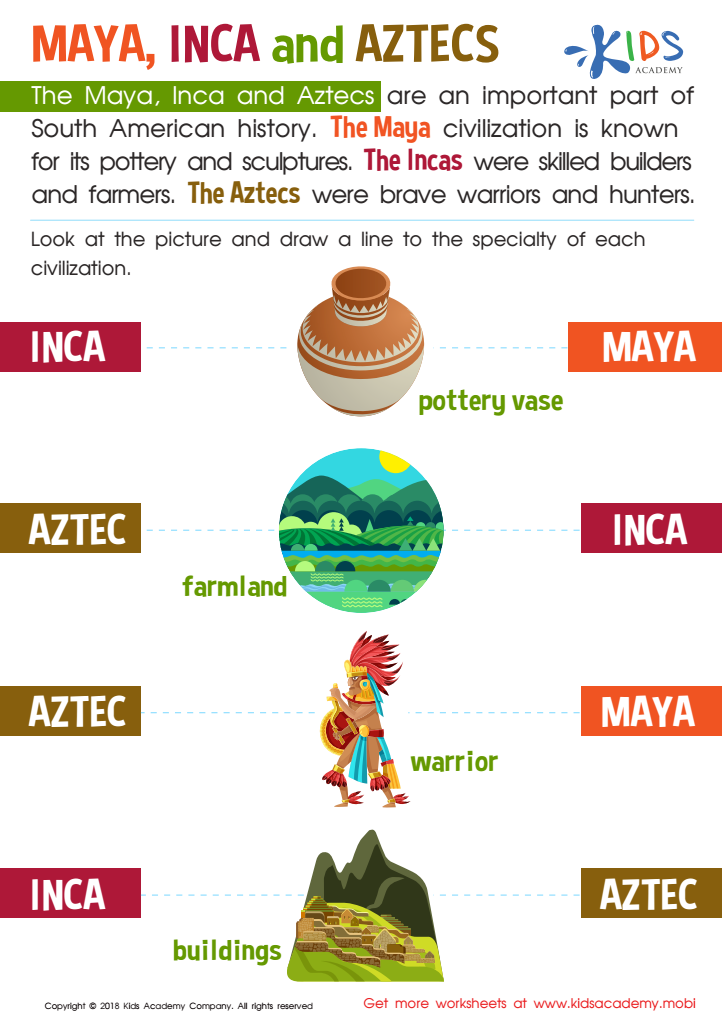
Maya, Inca and Aztecs Worksheet
This worksheet introduces your child to the thrilling histories of the Mayan, Incan and Aztec cultures, teaching them about their warriors, sculptors and farmers. With traceable lines and colorful imagery, they'll connect each culture with its correct associated picture - great for cementing concepts!
 Assign to My Students
Maya, Inca and Aztecs Worksheet
Worksheet
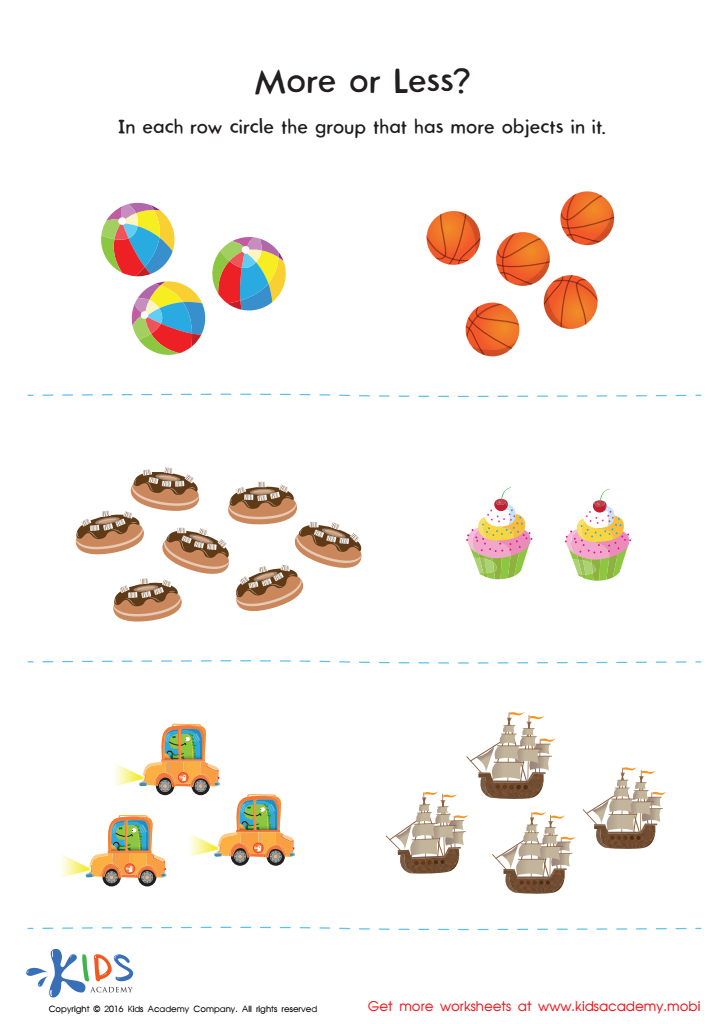
More or Less Size Worksheet
Worksheet
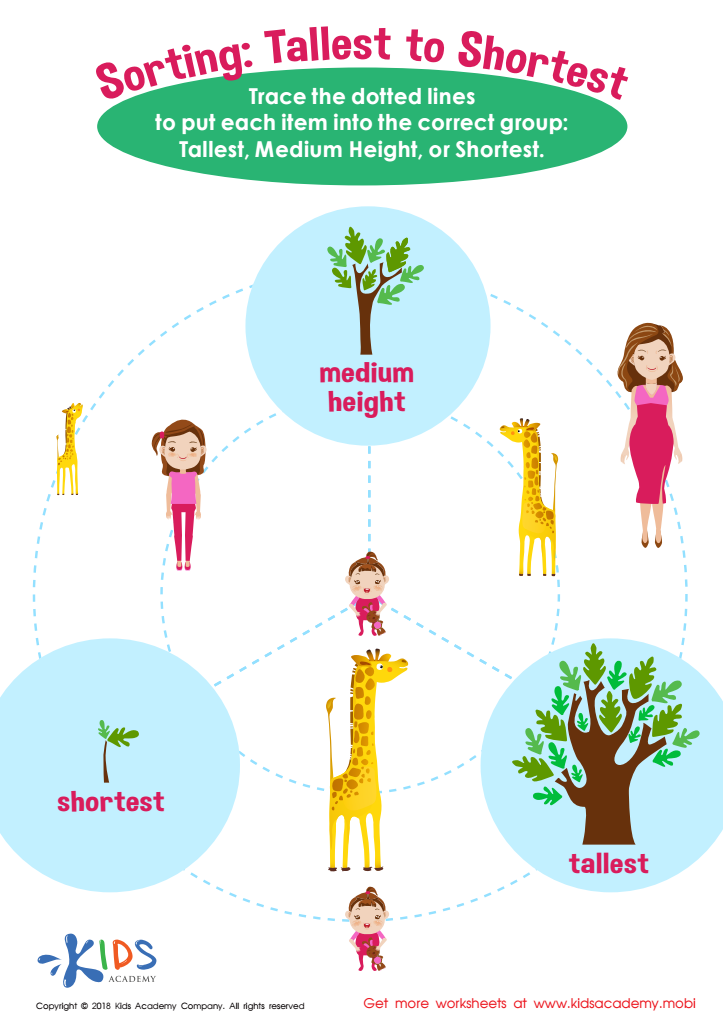
Sorting: Tallest to Shortest Worksheet
This worksheet is great for preschoolers to practice foundational measurement skills. Traceable lines help them sort pictures into Tallest, Shortest and Medium categories, giving them concrete examples to compare. Fine motor skills and understanding of relationships between sizes are also developed - perfect for preparing them for larger measurement concepts.
Sorting: Tallest to Shortest Worksheet
Worksheet
Join Kids Academy for Free
Who is primarily going to use this learning content?







.jpg)
Comparison skills are fundamental for children ages 6-9 because they lay the groundwork for critical thinking, problem-solving, and academic success. At this influential stage, children start noticing and noting differences and similarities between objects, ideas, and experiences, facilitating a better understanding of their environment.
For parents and teachers, nurturing comparison skills is vital as these abilities promote cognitive development. When children compare and contrast, they deepen their comprehension of concepts and categories, essential for language development, math, and science. Comparing numbers, sizes, and shapes supports their mathematical reasoning, while contrasting stories or characters in literature enhances reading comprehension.
Moreover, comparison skills help in moral and social development. By measuring actions and consequences, children can discern right from wrong and navigate social interactions more effectively. It boosts empathy as they compare others' feelings with their own, fostering better emotional intelligence.
Encouraging these skills can be engaging and fun, involving games, puzzles, and discussions. Parents and teachers who integrate comparison activities provide children with essential tools for higher-order thinking. Therefore, caring about and actively promoting comparison skills during these formative years ensures that children are better prepared for future academic challenges and life experiences.








