Differentiating shapes Normal Worksheets for Ages 6-9
3 filtered results
-
From - To
Discover our engaging "Differentiating Shapes Normal Worksheets" designed specifically for children ages 6-9. These worksheets offer a fun and interactive way for young learners to identify, compare, and categorize various shapes. Perfect for enhancing spatial awareness and reinforcing geometry concepts, each worksheet is crafted to suit the developmental stages of early learners. With colorful illustrations and easy-to-follow instructions, your child will enjoy mastering shapes through stimulating activities. Ideal for both classroom use and at-home practice, our worksheets make learning shapes a delightful adventure for children. Unlock your child's potential with our expertly designed resources at Kids Academy.
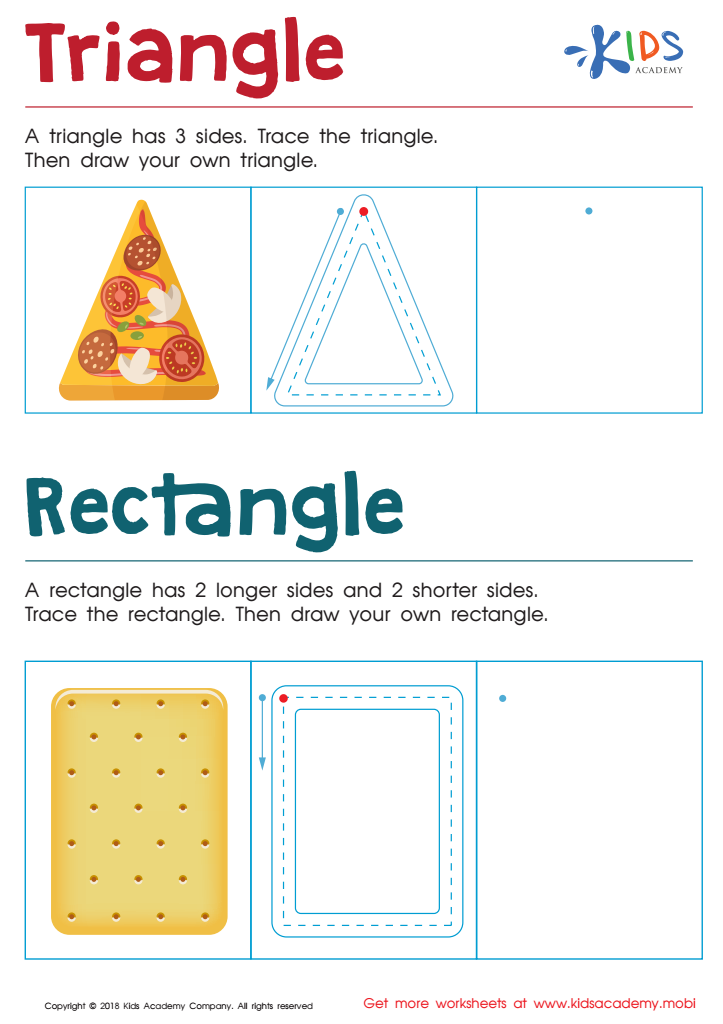
Triangle Rectangle Worksheet
 Assign to My Students
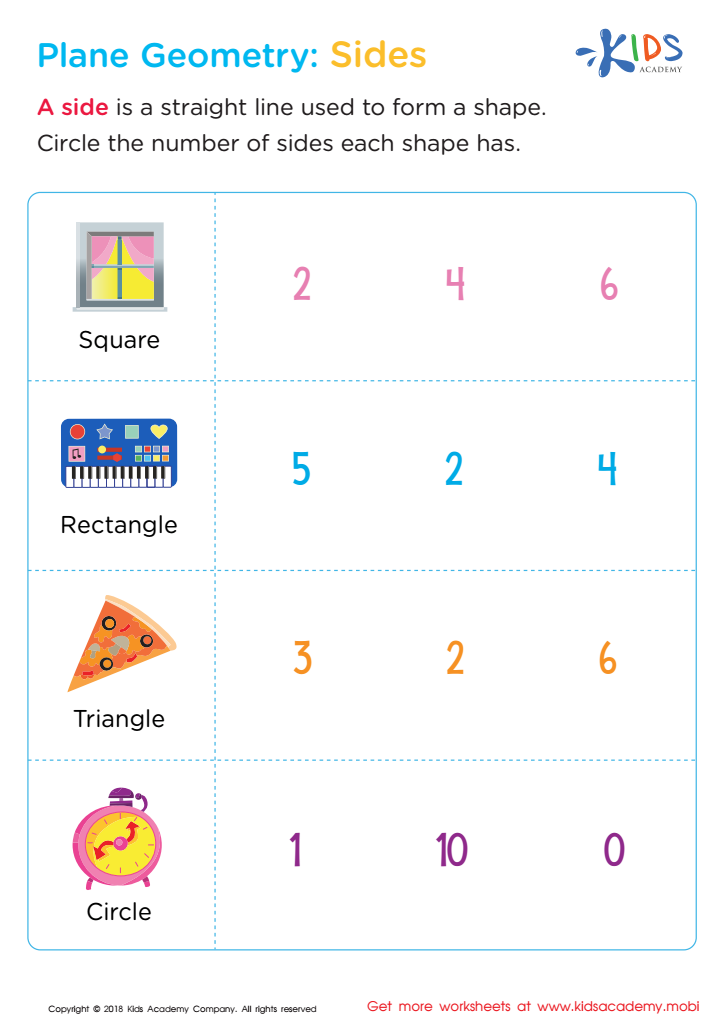
Plane Geometry: Sides Worksheet
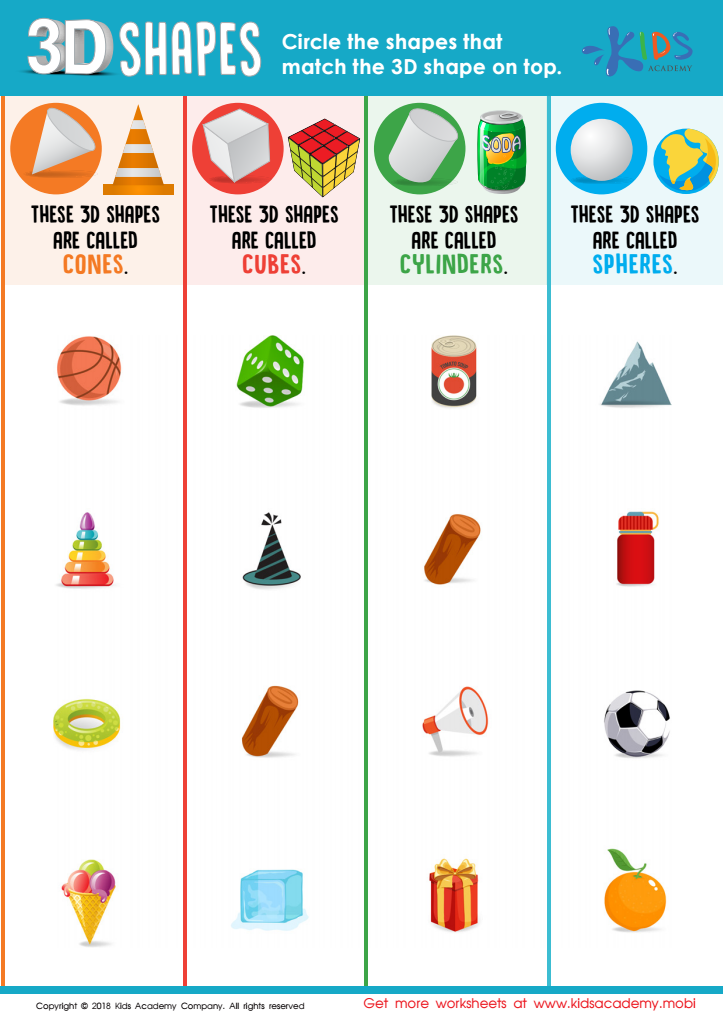
3D Shapes Worksheet








Differentiating shapes is a crucial skill for children ages 6-9 as it lays the foundation for more advanced mathematical concepts and strengthens cognitive development. This age group is in a key developmental stage where they begin to understand and organize the world around them. When children learn to identify and differentiate shapes, they enhance their visual-spatial awareness, critical thinking, and problem-solving skills. These skills are fundamental in subjects such as geometry, science, and even in everyday tasks like navigating spaces or recognizing patterns.
Moreover, differentiating shapes aids in the development of fine motor skills and hand-eye coordination. Engaging with shapes enhances their ability to draw, write, and perform activities requiring precise movements. Teachers and parents can help children make connections between shapes and everyday objects, fostering real-world applications and a deeper understanding of their surroundings.
Additionally, learning about shapes supports language development. As children describe and compare shapes, they expand their vocabulary and improve their ability to communicate mathematical and spatial concepts. This a critical skills that builds a strong foundation for future academic success.
Ultimately, prioritizing this aspect of early education ensures children develop a robust set of skills that are not only crucial for academic success but also for navigating and understanding the world around them.








