
Letter Tracing Practice Normal Worksheets for Ages 6-9
6 filtered results
Difficulty Level
Grade
Age
-
From - To
Subject
Activity
Standards
Discover our engaging Letter Tracing Practice Worksheets designed specifically for children aged 6-9! These printable resources foster essential early writing skills through fun and interactive tracing activities. Each worksheet features clear, bold letters that help young learners build fine motor skills, improve handwriting, and enhance their understanding of letter formation. Our collection is versatile, covering both uppercase and lowercase letters, ensuring comprehensive practice. Perfect for homeschooling or classroom use, these worksheets encourage independent learning and boost confidence in young writers. Give your child the tools they need to succeed in literacy with our friendly and accessible tracing worksheets! Start their writing journey today!
Favorites
With answer key
Interactive
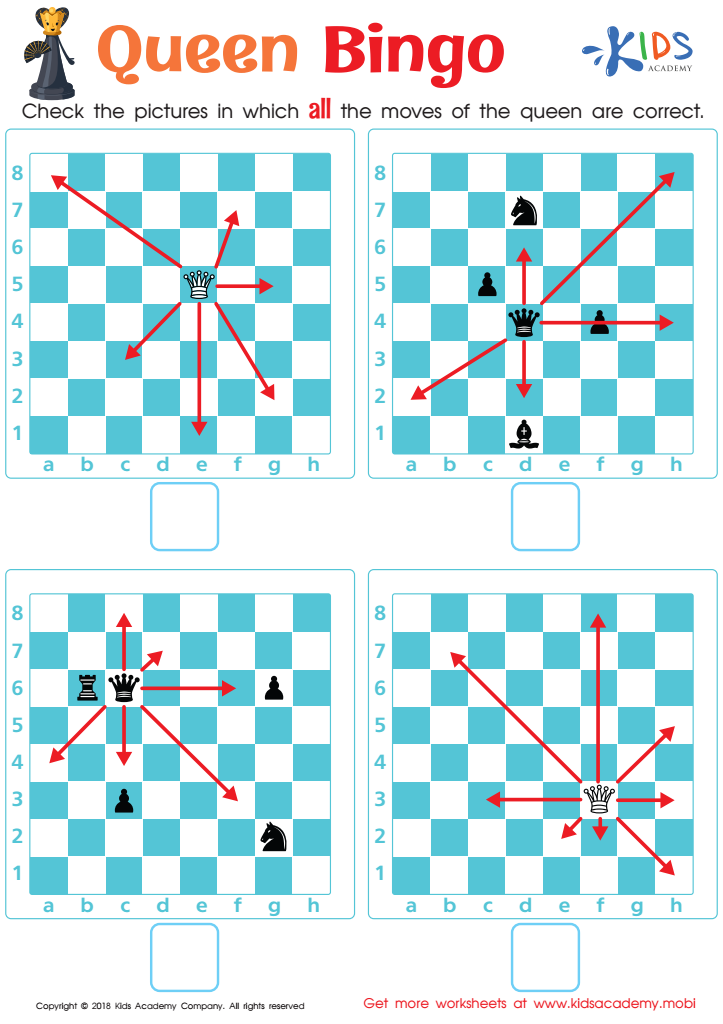
Queen Bingo Worksheet
Test your child's knowledge of chess rules and moves with this free worksheet! Kids look at four pictures and must decide if the queen moves are correct. This exercise helps hone your little one's chess skills!
Queen Bingo Worksheet
Worksheet
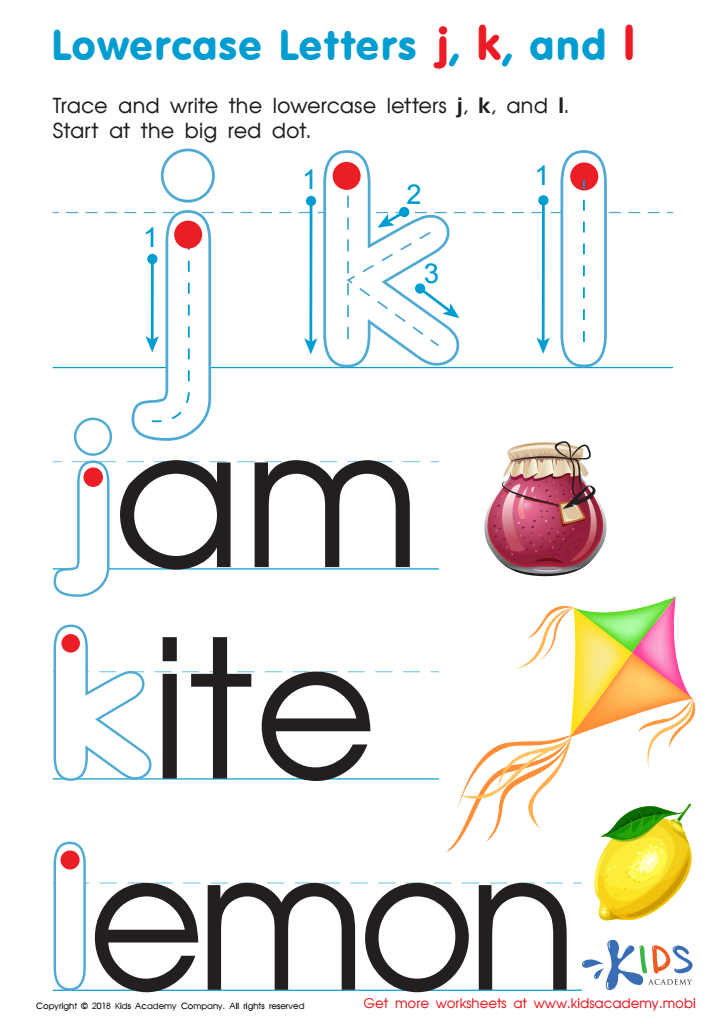
Lowercase Letters j k l Worksheet
Teach your child the difference between uppercase and lowercase letters. Have them trace and write the lowercase letters j, k, and l, starting at the red dot. Guide your child's hand to form the letters correctly.
Lowercase Letters j k l Worksheet
Worksheet
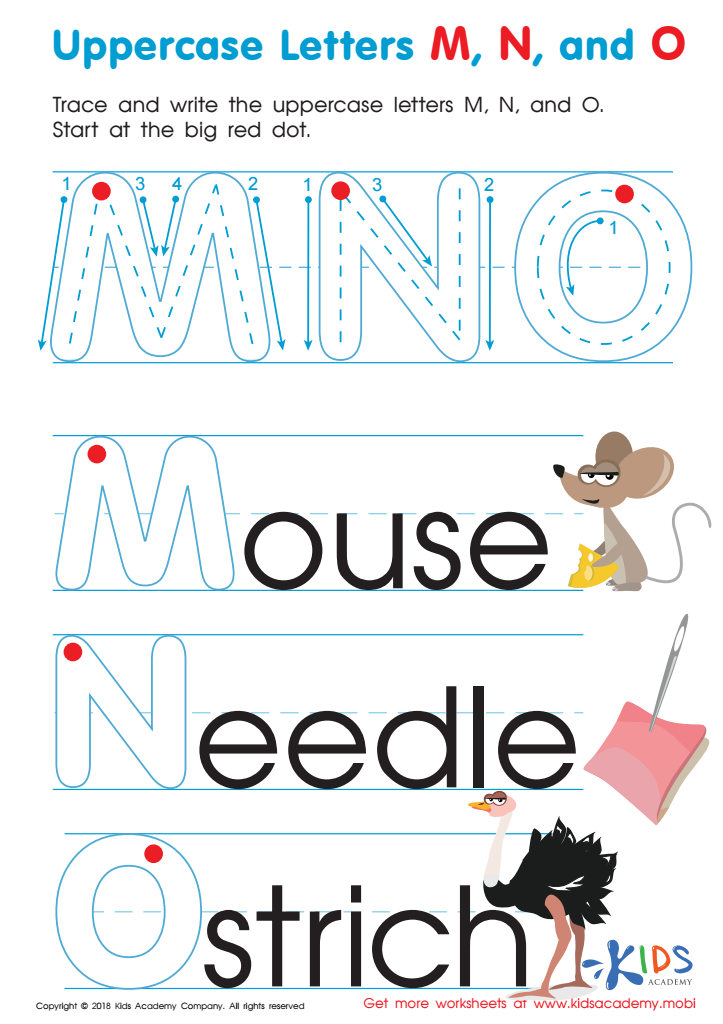
Uppercase Letters M, N, and O Worksheet
Download our easy-to-understand worksheet to help kids write M and N with ease! They'll trace dotted lines and follow arrows as they fill in the letters using a big red dot as a guide. The cute graphics will help them remember sounds too! Get your child writing quickly and confidently with this fun activity.
Uppercase Letters M, N, and O Worksheet
Worksheet
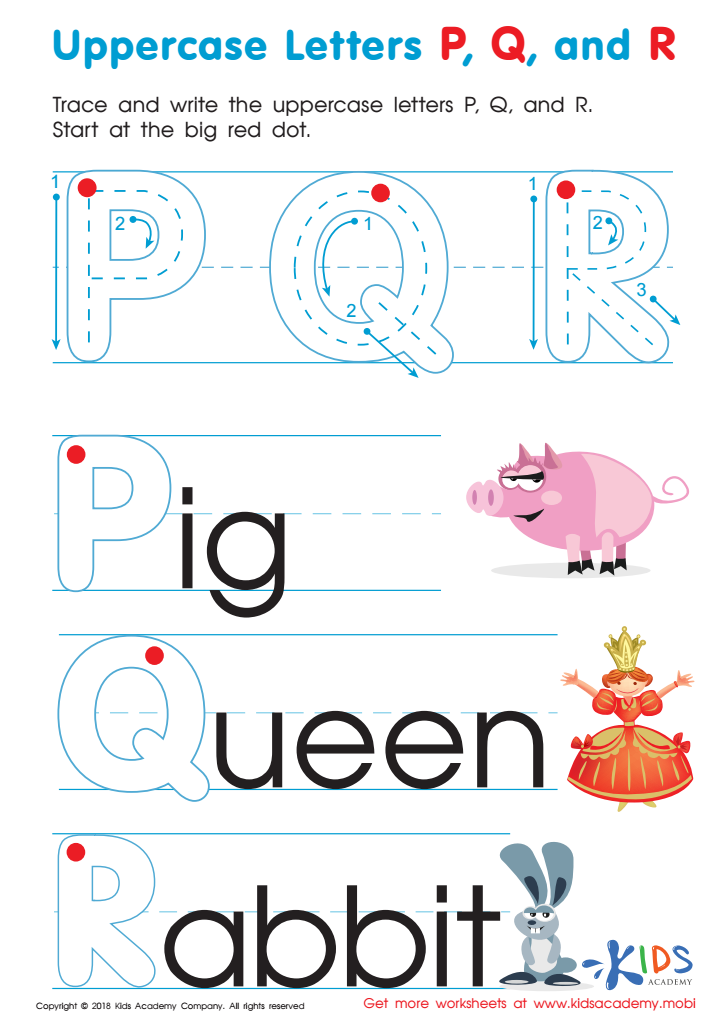
Uppercase Letters P, Q, and R Worksheet
Cute images of a pig, queen and rabbit make it fun to learn letter sounds. Follow the arrows to learn the strokes, then trace each letter from the big red dot. Perfect for kids to learn how to read and write P, Q, and R!
Uppercase Letters P, Q, and R Worksheet
Worksheet
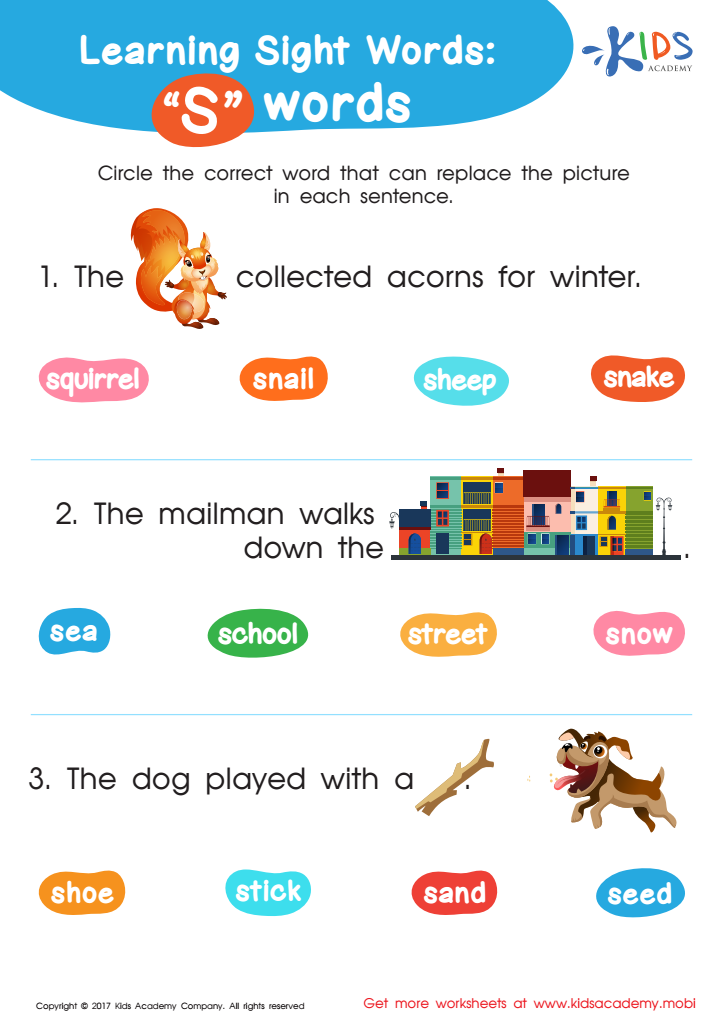
S Words Sight Words Worksheet
This 2nd grade worksheet encourages kids to practice using context clues when identifying sight words that begin with 's'. Engage them with colorful pictures to enhance the learning, helping them to understand the context of each sentence and choose the correct word.
S Words Sight Words Worksheet
Worksheet
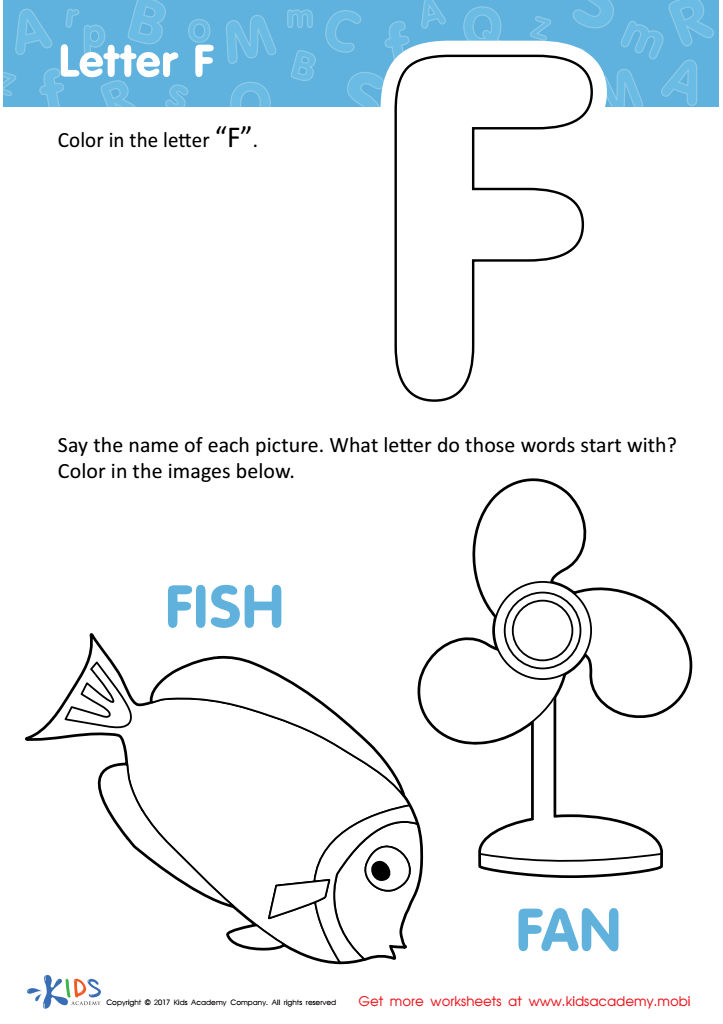
Letter F Coloring Sheet
Coloring pages help kids learn to recognize letters and sounds. Our "F" page has kids color a fish and a fan. It's a great way to introduce them to the letter "F" using words they already know.
Download (PDF)
 Assign to My Students
Assign to My Students
Letter F Coloring Sheet
Worksheet
Join Kids Academy for Free
Who is primarily going to use this learning content?








Letter tracing practice is essential for children aged 6 to 9, and parents and teachers should prioritize it for several reasons. First, this skill helps develop fine motor skills, which are crucial for writing, drawing, and effectively using tools. Improved hand-eye coordination gained from tracing letters sets the foundation for more complex writing tasks.
Second, letter tracing reinforces letter recognition and phonics skills. As children trace, they internalize the shapes of letters and connect them with sounds. This connection is a vital step in literacy development and enhances reading readiness, an essential aspect of academic success.
Moreover, letter tracing encourages focus and discipline. It engages children in a structured activity that fosters patience and persistence—key traits for future learning. By tracing letters, students build confidence in their ability to communicate through writing.
Finally, mastering letter formation through tracing can ease the transitional phase to independent writing, allowing children to express themselves creatively and academically without frustration. In summary, consistent engagement in letter tracing practice contributes significantly to children's fine motor skills, literacy development, focus, and confidence—key areas that strongly influence their educational journey and overall development.








