Reading clocks Normal Worksheets for Ages 6-9
3 filtered results
-
From - To
Enhance your child's understanding of time with our engaging Reading Clocks worksheets, specially designed for ages 6-9. These fun and educational resources help kids grasp the fundamentals of telling time using analog clocks. With colorful visuals and interactive exercises, our worksheets make learning enjoyable while reinforcing essential skills. From identifying clock hands to reading different times, these activities cater to various learning styles. Perfect for at-home practice or classroom use, our Reading Clocks worksheets ensure children gain confidence in their time-telling abilities. Download now and empower your young learners with the essential skill of reading clocks!
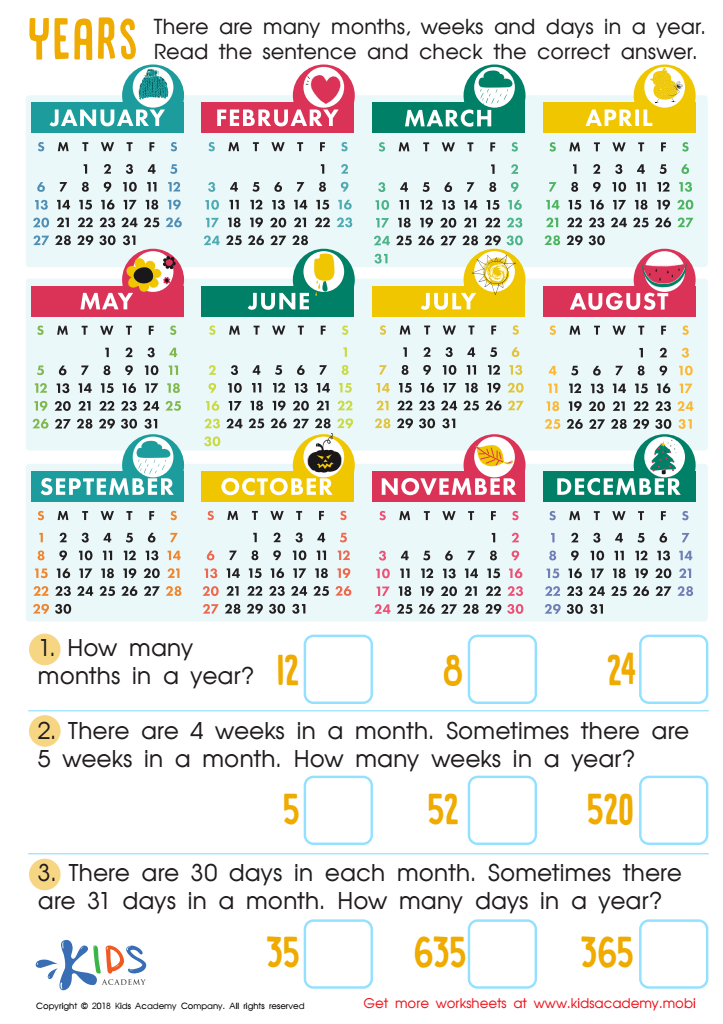
Years Worksheet
 Assign to My Students
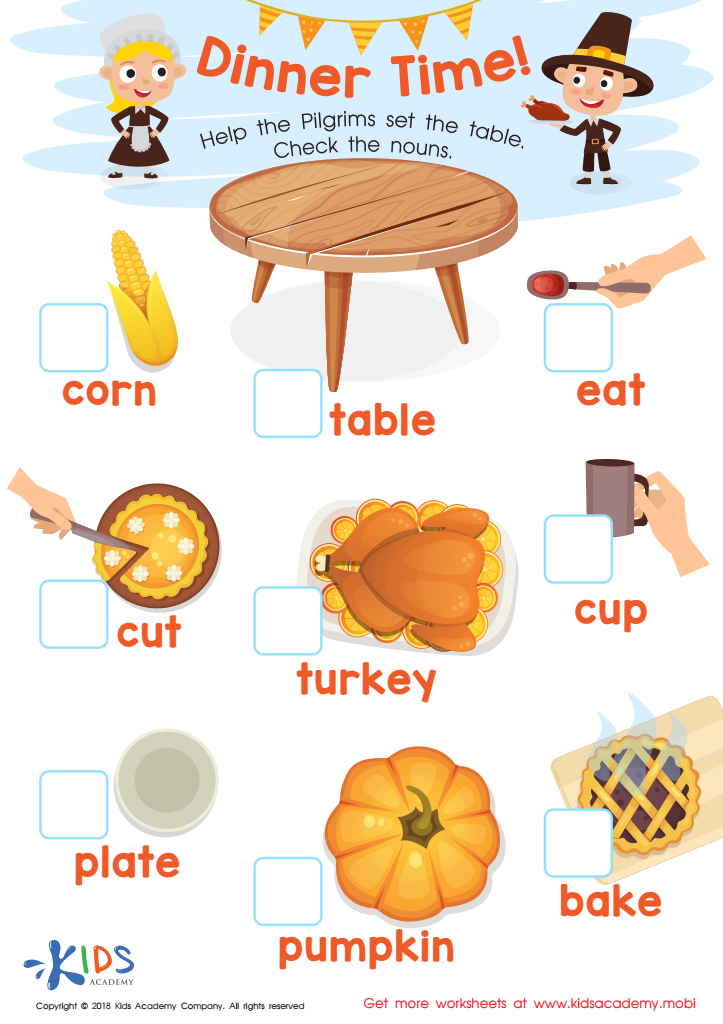
Dinner Time! Worksheet
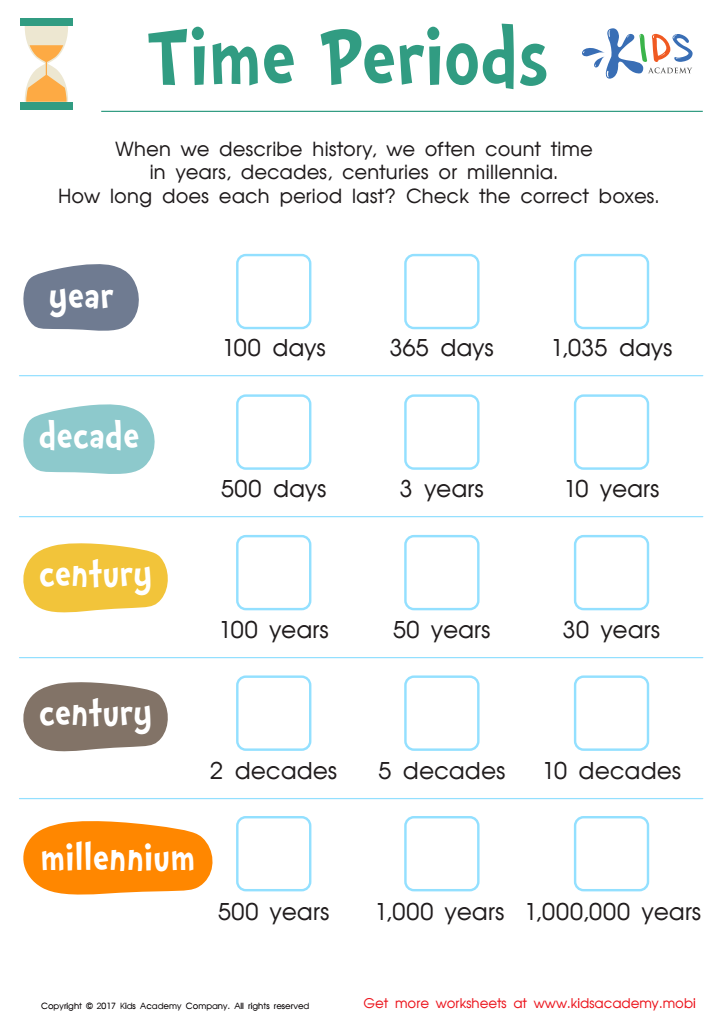
Time Periods Worksheet






Teaching children to read clocks, especially analog clocks, is a crucial skill that shapes their understanding of time, responsibility, and daily routines. For parents and teachers of children aged 6-9, mastering clock-reading empowers kids to manage their day effectively, fostering independence and self-discipline.
Understanding time helps children transition from one activity to the next, promoting punctuality and accountability. By grasping hours and minutes, they can develop better time management skills that benefit their academic and personal lives. Moreover, it enhances their critical thinking abilities; interpreting the relationship between numbers, hands, and time expands their mathematical comprehension.
In a world increasingly driven by digital technology, many children may rely solely on digital devices when learning time. Consequently, making the effort to teach them to read traditional clocks ensures that they possess a foundational understanding of time synonymous with our societal norms. Additionally, engaging activities around clocks can stimulate interactive learning, making it a fun, shared experience between parents, teachers, and children.
Ultimately, a solid grasp of time-telling lays the groundwork for responsible behavior as children grow, making it an essential focal point in early education.








