Understanding forces Normal Worksheets for Ages 6-9
6 filtered results
-
From - To
Introduce your young learners to the fascinating world of forces with our "Understanding Forces Normal Worksheets" tailored for ages 6-9! These engaging worksheets are designed to simplify complex concepts, helping children explore how different forces, such as gravity, friction, and magnetism work in everyday life. With vibrant illustrations and interactive activities, kids will enhance their critical thinking and problem-solving skills while making learning fun. Perfect for both classroom and at-home study, these worksheets encourage curiosity and support STEM education at an early age. Download now and empower your child to understand the forces that shape our universe!
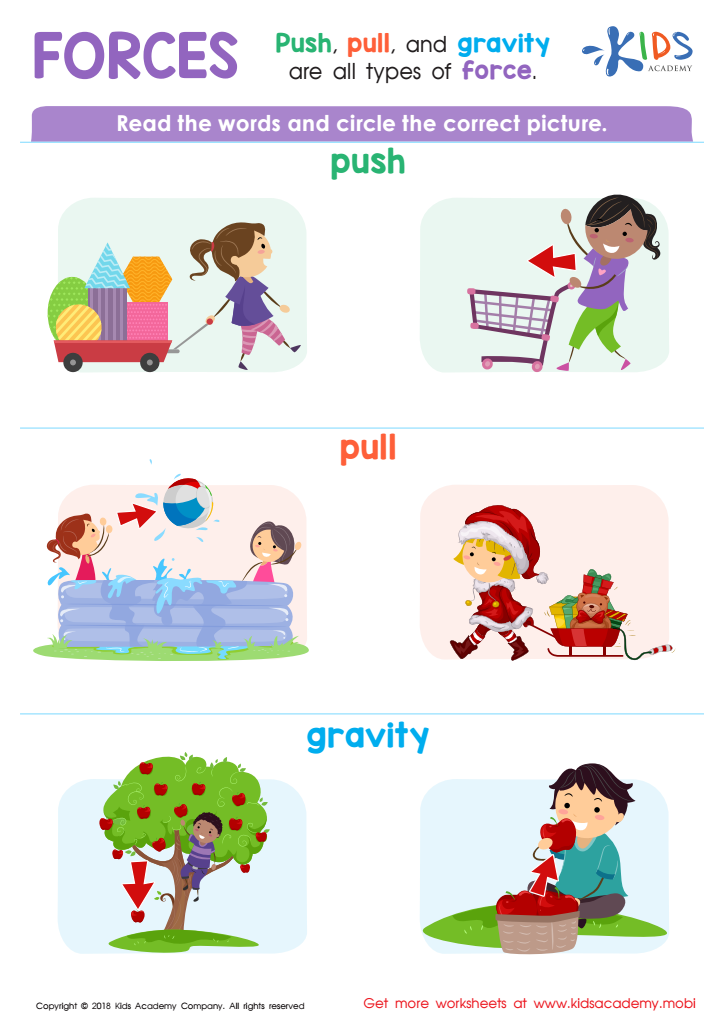
Forces Worksheet
 Assign to My Students
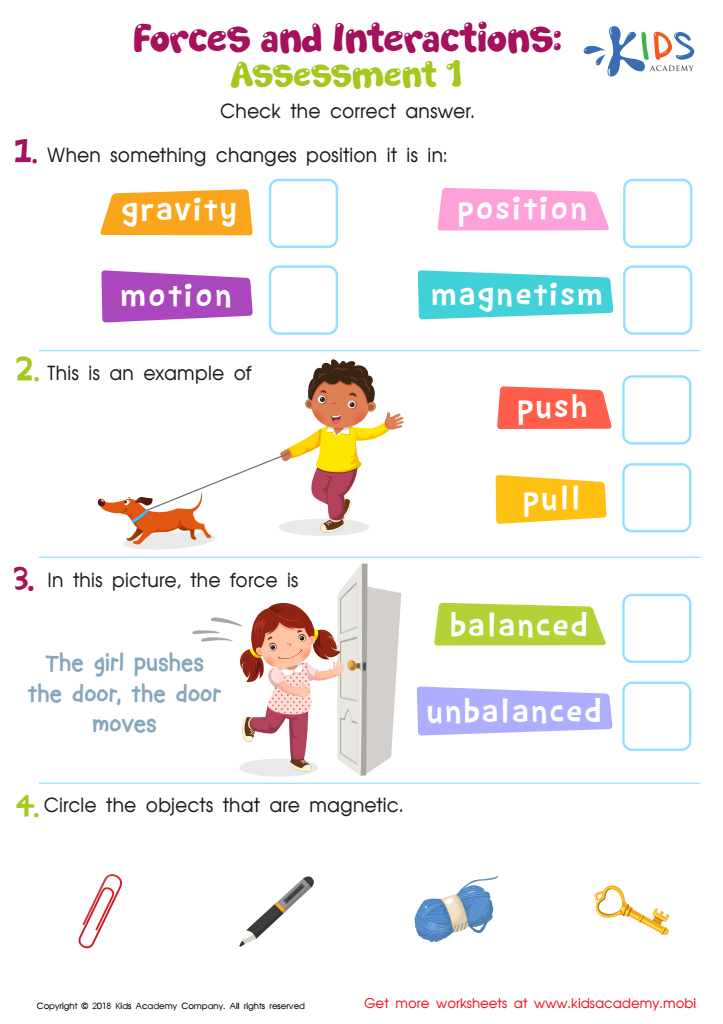
Forces and Interactions Printable
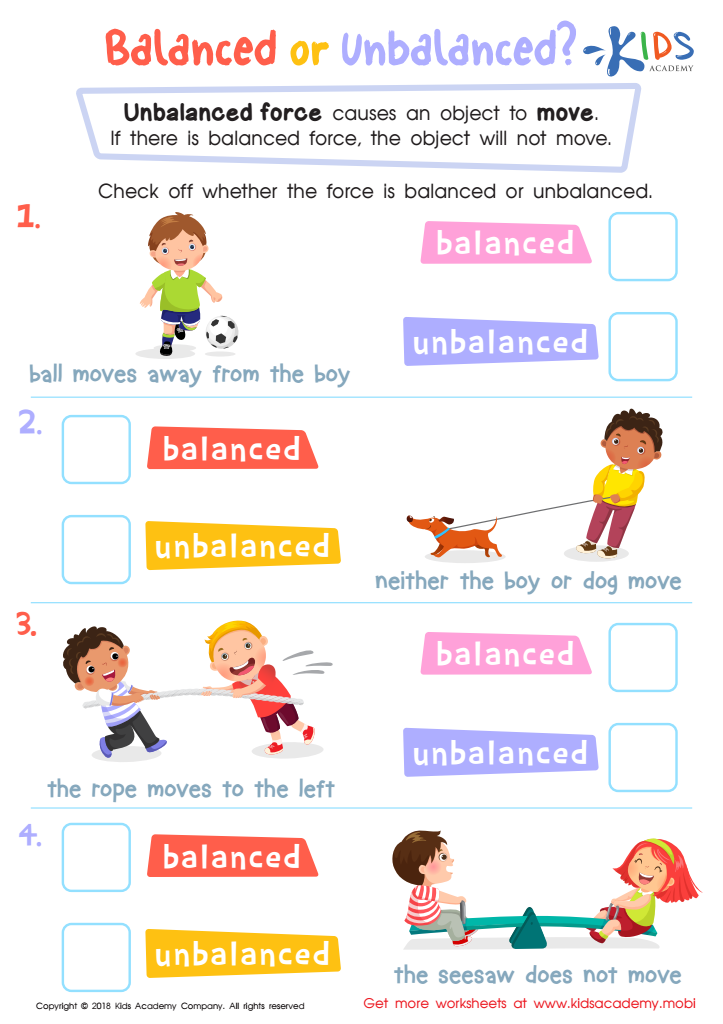
Balanced or Unbalanced Science Worksheet
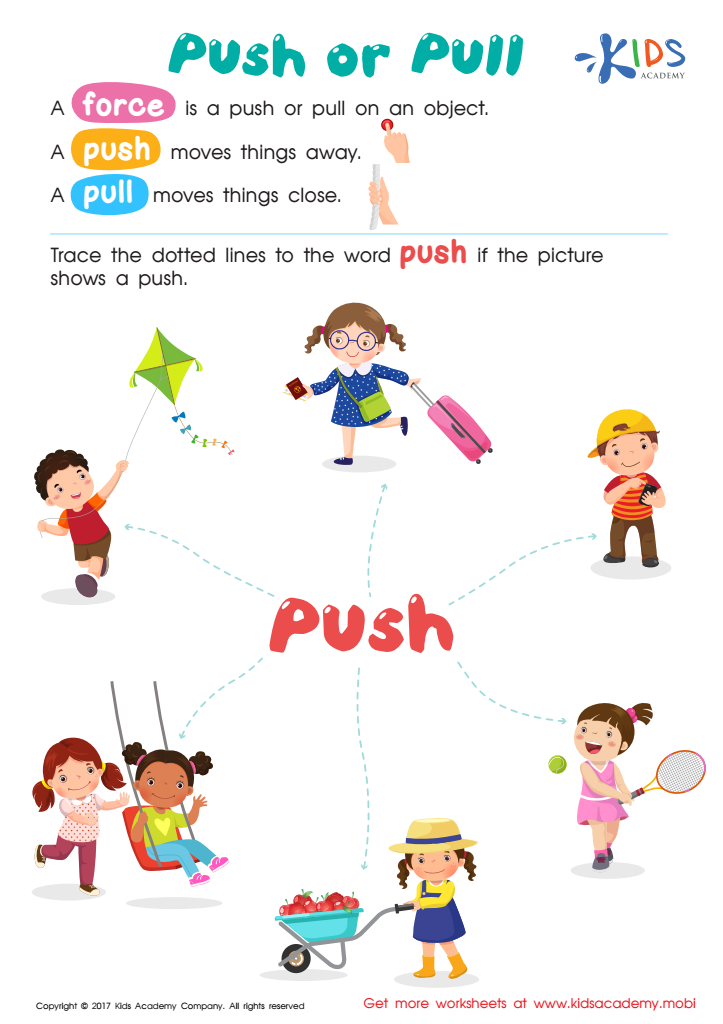
Push or Pull Worksheet
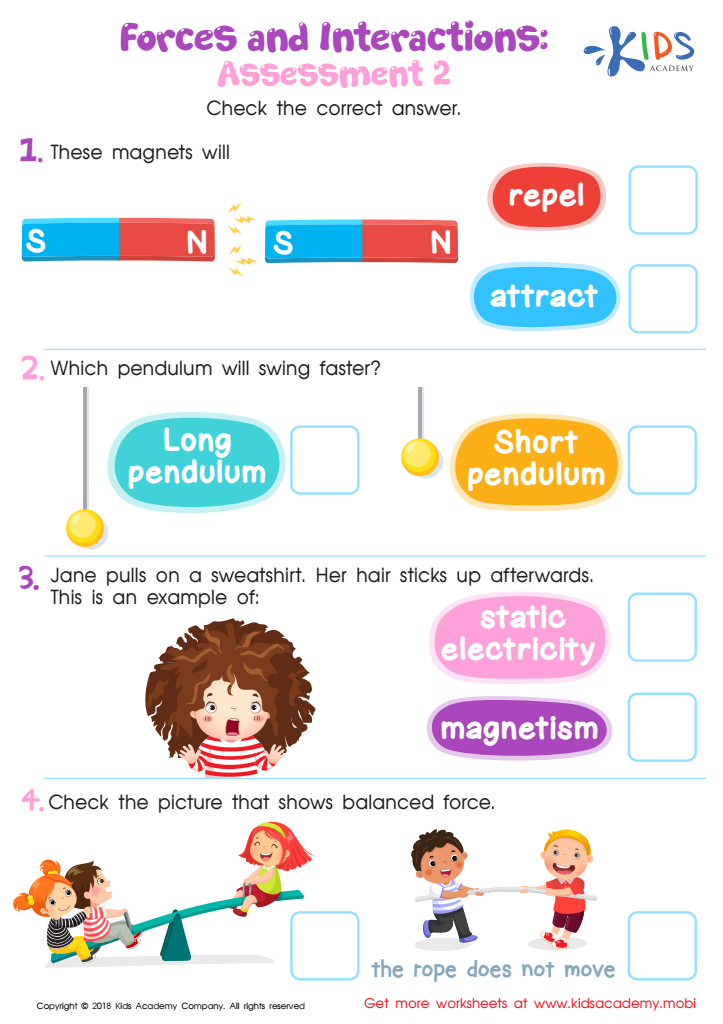
Forces and Interactions Worksheet For 3rd Grade
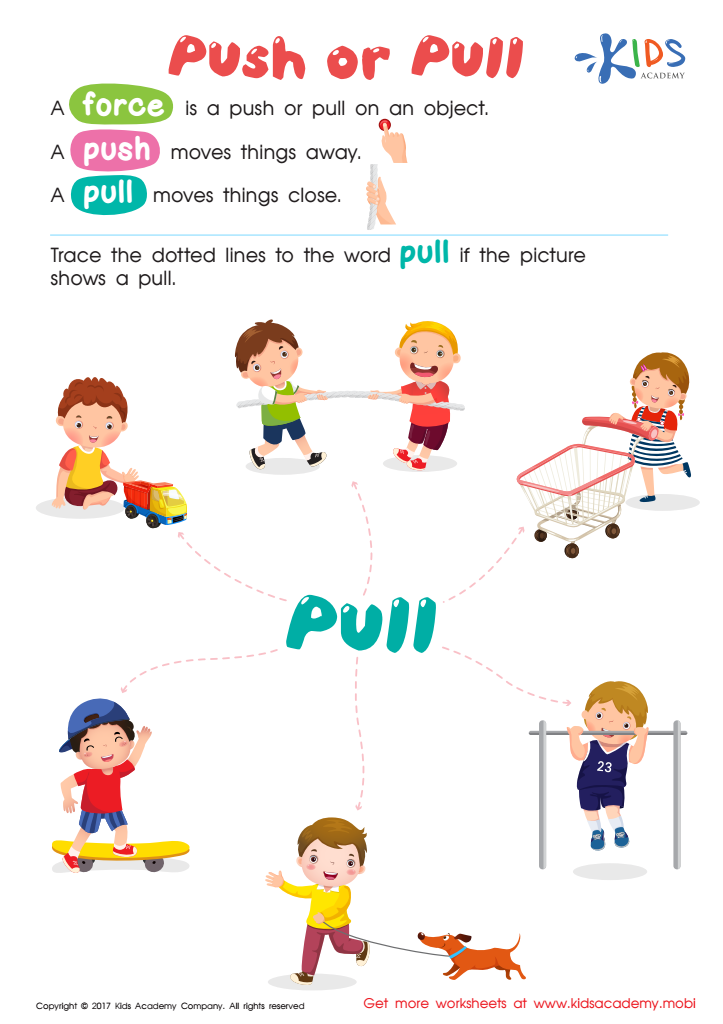
Pull or Push Worksheet






Understanding forces is crucial for children aged 6-9 as it lays the groundwork for their comprehension of the physical world around them. During these formative years, children are naturally curious and eager to explore how things work. Teaching them about forces—such as push, pull, friction, and gravity—invites them to ask questions and engage in hands-on learning experiences, which can enhance critical thinking and problem-solving skills.
Moreover, discussing everyday examples of forces helps children connect scientific concepts to their daily lives, making learning relevant and exciting. For instance, they can observe how a ball rolls down a hill or how they need to pull harder to move a heavy object. These experiences align with school curricula, allowing for interactive and experiential learning, further igniting their enthusiasm for science.
Additionally, a foundational understanding of forces supports children's safety and physical literacy. As they engage in activities like playground play, they become more aware of their movements and the forces at play, fostering greater confidence and coordination.
In conclusion, nurturing an early interest in forces equips children with valuable knowledge and skills, encouraging a lifetime of curiosity and learning in science and beyond.








