Understanding light sources Normal Worksheets for Ages 6-9
4 filtered results
-
From - To
Explore our comprehensive "Understanding Light Sources" worksheets tailored for ages 6-9. These engaging, age-appropriate resources help young learners grasp the differences between natural and artificial light sources. Through fun activities, kids will identify and categorize various sources of light, fostering their observation and reasoning skills. Each worksheet is designed to captivate children's interest while aligning with educational standards. Ideal for classroom or at-home learning, our worksheets ensure a solid foundation in basic science concepts. Brighten your child's understanding and watch their curiosity illuminate as they discover the science behind light sources! Prepare them for a lifetime of learning with Kids Academy.
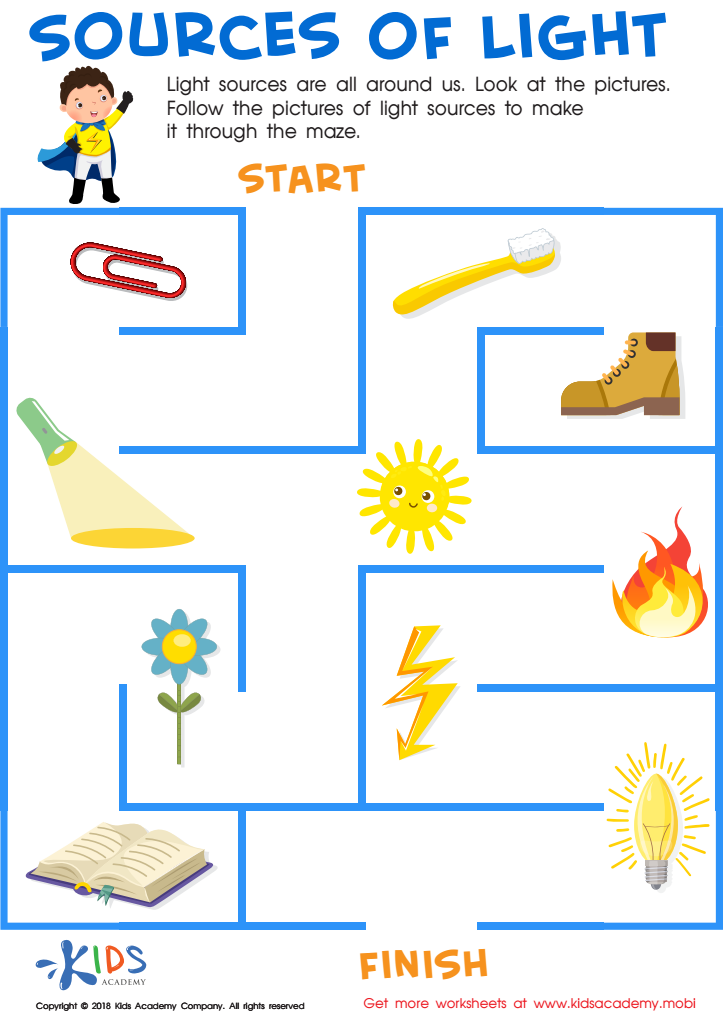
Sources of Light Worksheet
 Assign to My Students
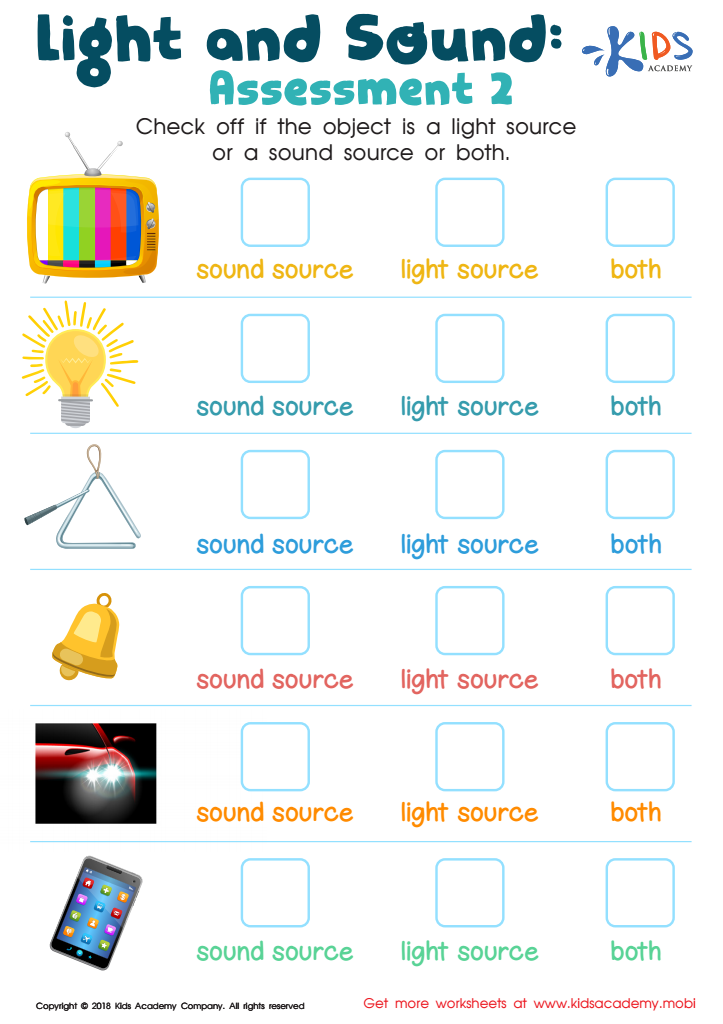
Light and Sound: Assessment 2 Worksheet
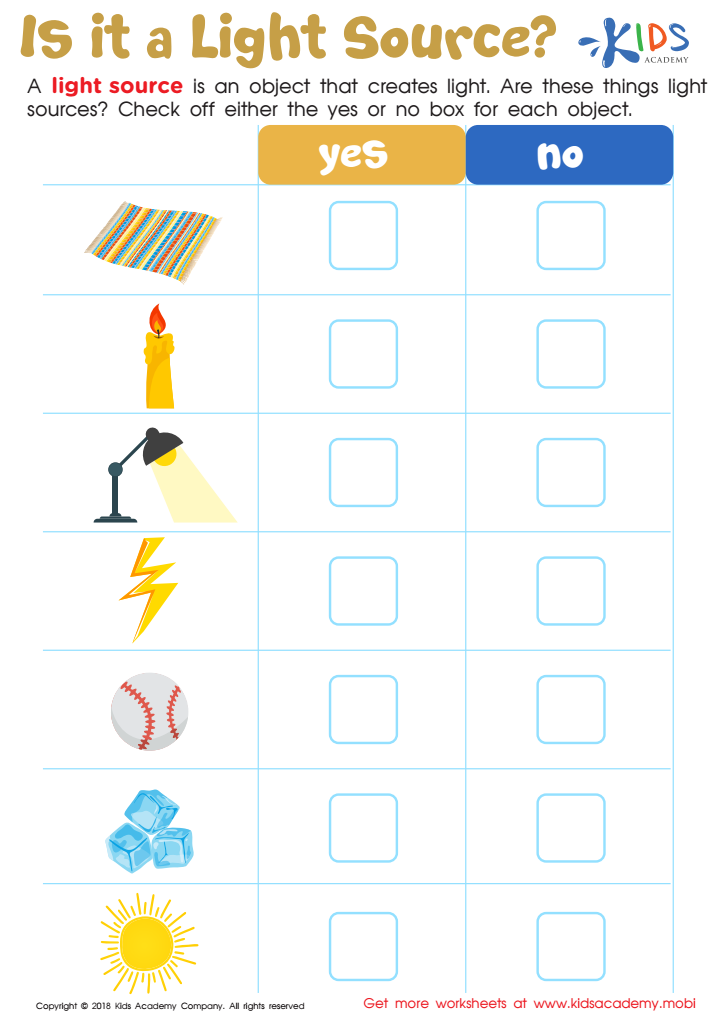
Is It a Light Source? Worksheet
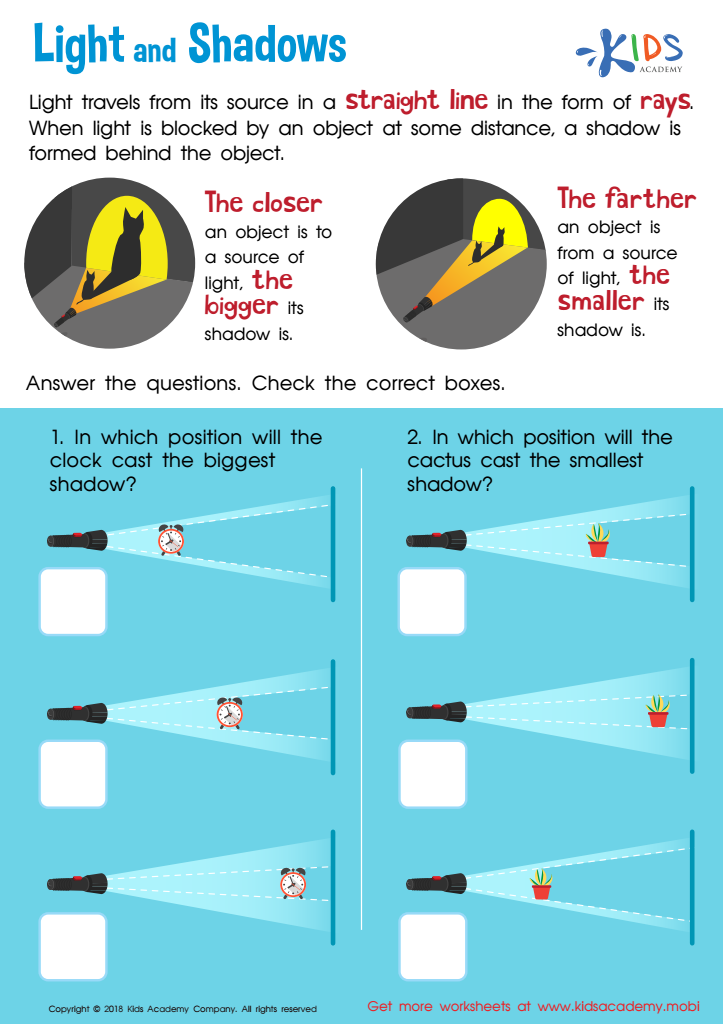
Light and Shadow Worksheet for Grade 3





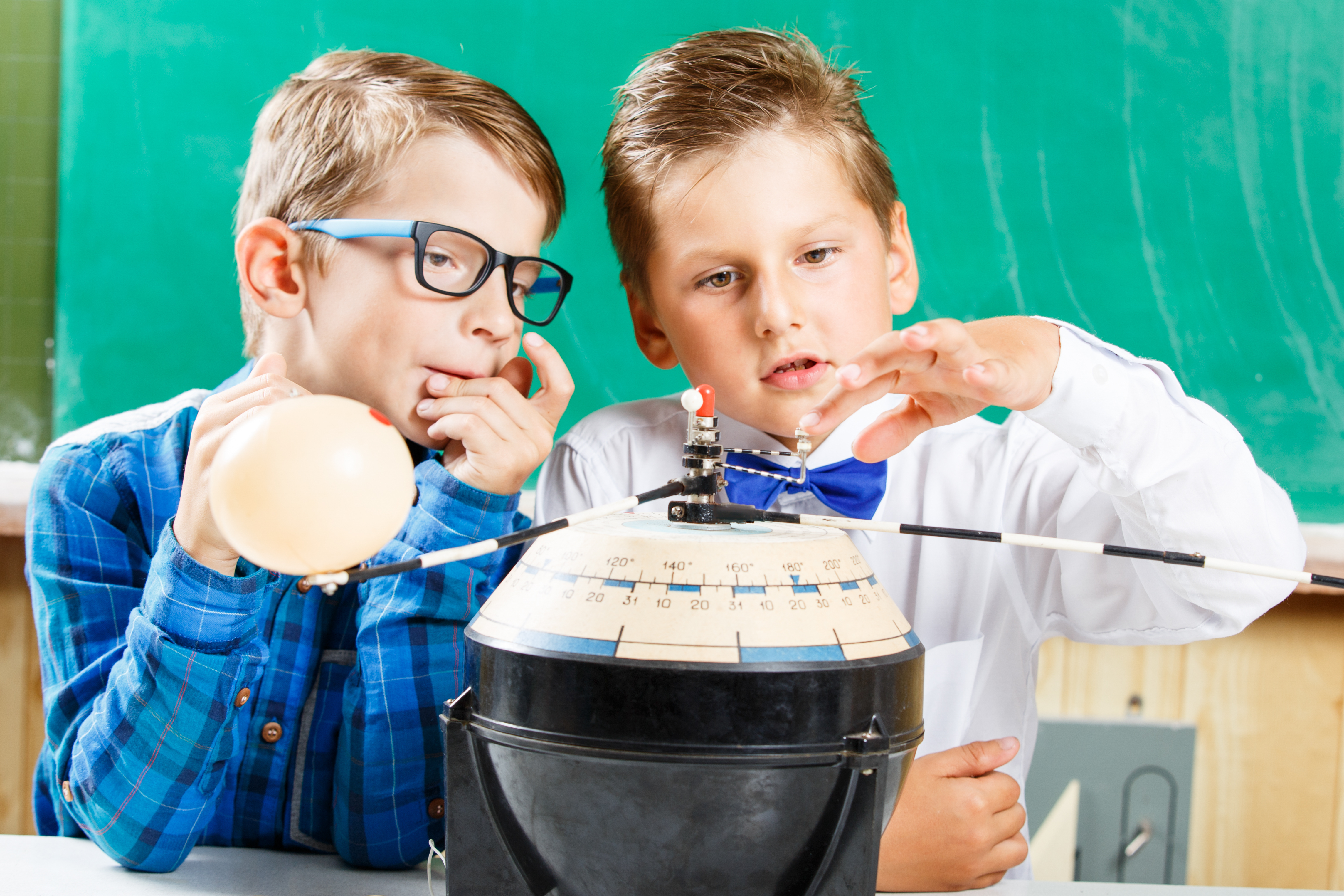


Understanding light sources is crucial for children aged 6-9 as it lays the foundation for comprehending more complex scientific concepts later. At this impressionable age, kids are naturally curious and eager to explore their surroundings. Introducing them to light sources—sunlight, lamps, flashlights—not only satisfies their curiosity but enhances their observational and critical thinking skills.
First, comprehending light sources helps children make sense of the world around them. They learn why the sun rises and sets, why their shadows change throughout the day, and the value of artificial lights. This understanding leads to a broader grasp of natural and human-designed environments.
Second, investigating light sources fosters hands-on learning and inquiry-based education. Activities like making shadows, coloring with sunlight, or exploring bulb procedures stimulate creativity and sensory development. These exercises can make learning more interactive and enjoyable, promoting better retention of knowledge.
Further, learning about light is important for safety. Knowing the basics of natural and artificial lights helps children navigate environments more confidently, understand the necessity of headlights when biking, or recognize the importance of specifically built lights like stoplights in traffic safety.
Altogether, understanding light sources not only builds a foundational scientific understanding but also practical life skills that serve children well as they grow.








