Number comparison Normal Math Worksheets for Ages 6-9
5 filtered results
-
From - To
Discover our engaging Number Comparison Normal Math Worksheets designed for kids ages 6-9. These printable worksheets make mastering number comparison fun and interactive, helping children develop essential math skills. Perfect for both classroom activities and at-home practice, the worksheets cover comparing greater than, less than, and equal to concepts through various exercises. Each worksheet is thoughtfully crafted to inspire confidence and build a strong foundation in math. Visit our page to download free worksheets and watch your child's numerical abilities soar! Ideal for teachers and parents aiming to enhance their children's learning experience.
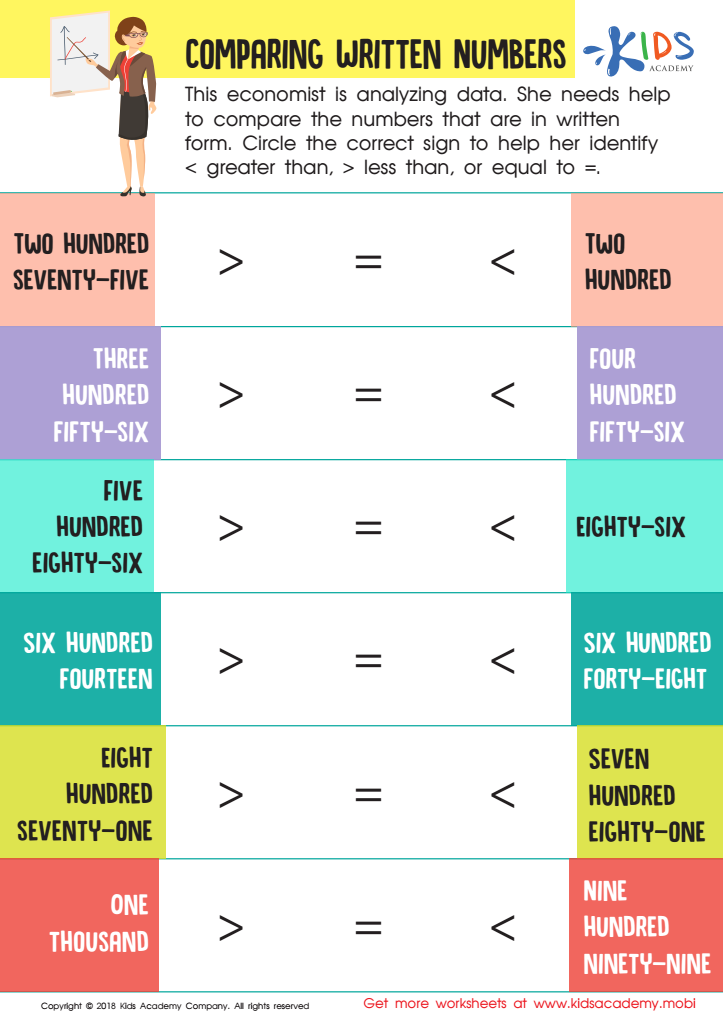
Comparing Written Numbers Worksheet
 Assign to My Students
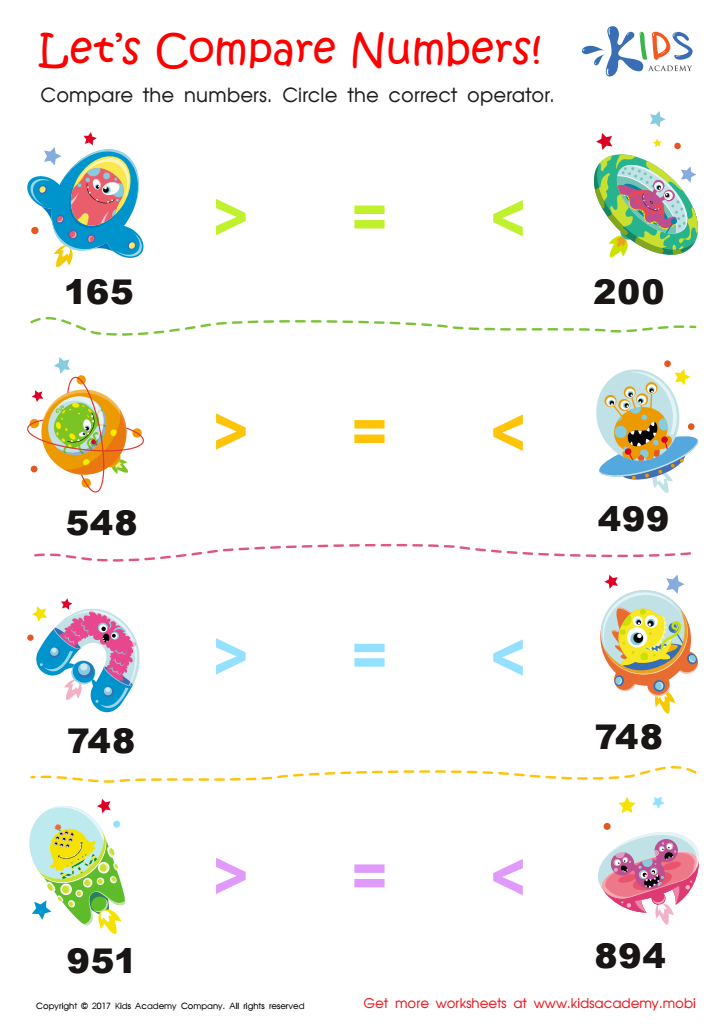
Comparing Numbers Worksheet for 2nd Grade
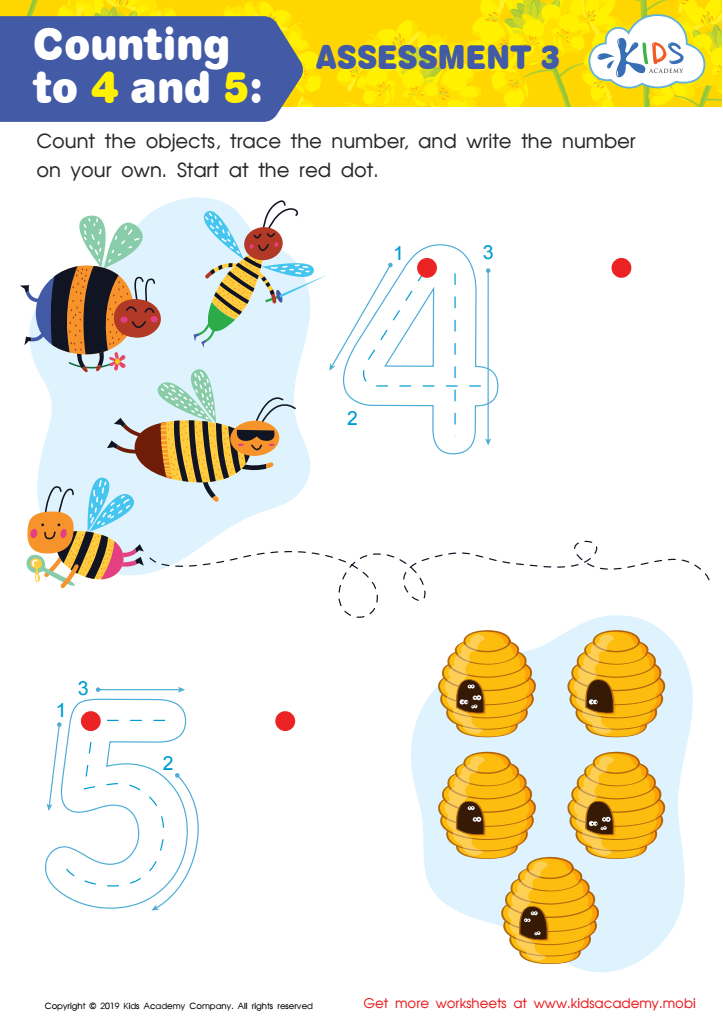
Counting to 4 and 5: Assessment 3 Worksheet
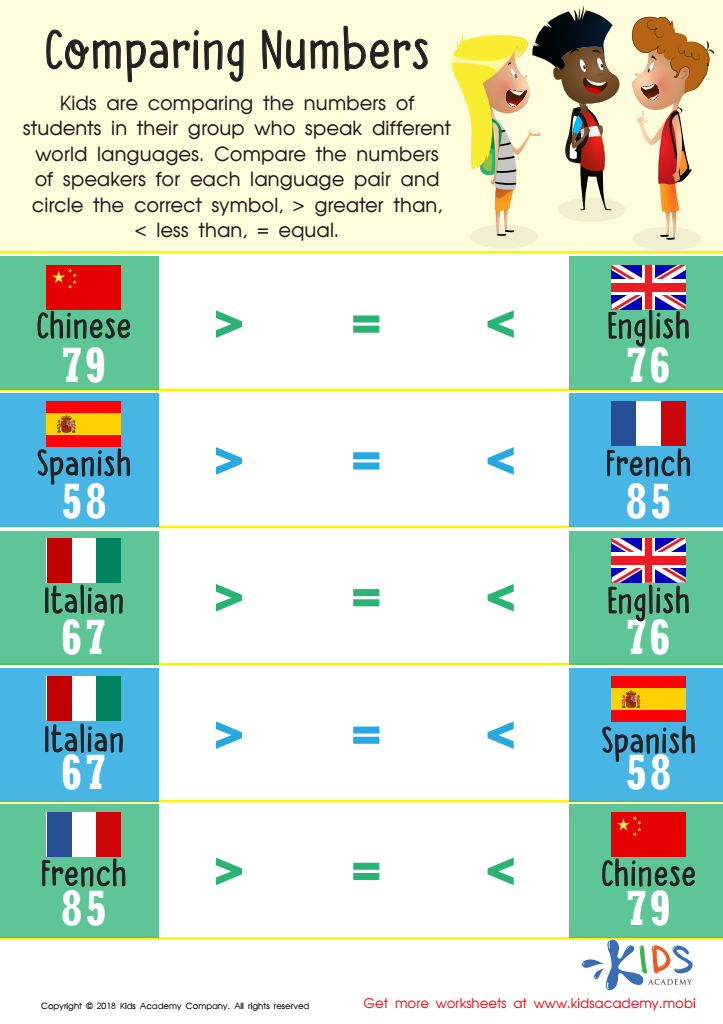
Comparing Numbers Worksheet for 1st Grade
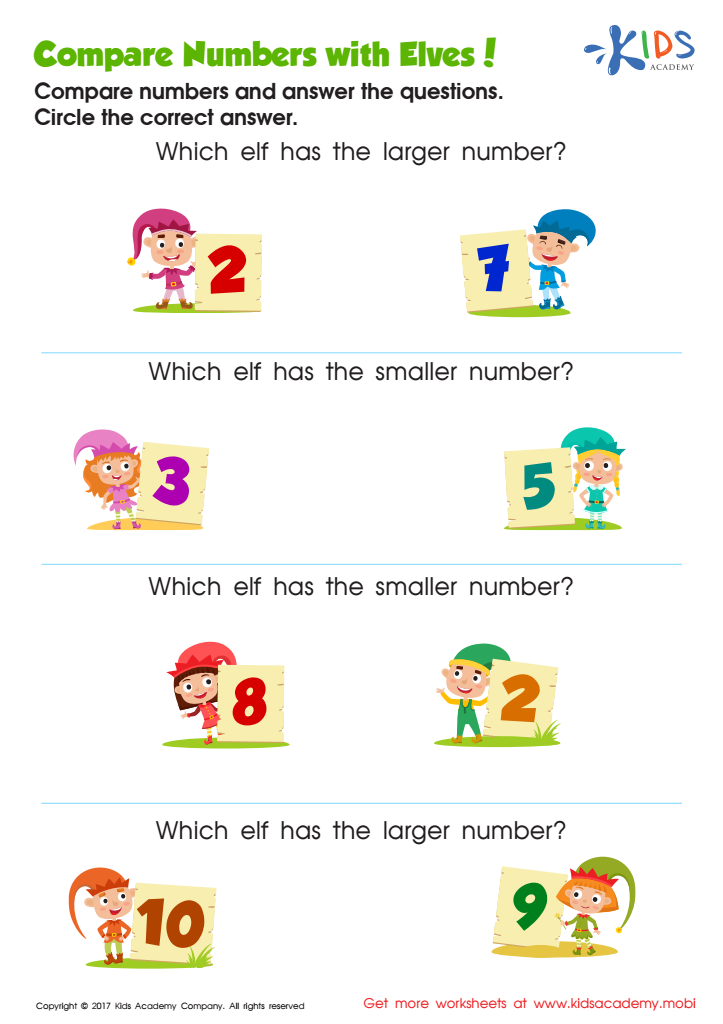
Comparing Numbers Worksheet for Kindergarten







Number comparison in normal math is vital for children aged 6-9 as it builds a fundamental understanding of numerical relationships and order. At this formative stage, children are beginning to grasp the concepts of greater than, less than, and equal to, which are crucial for their cognitive development and future mathematical learning.
Firstly, understanding number comparison helps children develop strong numerical literacy. It enables them to quickly identify and associate values, which is foundational for more complex arithmetic operations like addition, subtraction, multiplication, and division. This skill is not just confined to the classroom; it aids in everyday life situations, such as understanding quantities when sharing items or making sense of money and measurements.
Secondly, learning number comparison enhances problem-solving abilities. It requires analytical thinking as children compare different quantities, fostering logical reasoning and critical thinking, essential skills for academic success.
Additionally, mastering this skill boosts confidence in young learners. Success in understanding and applying number comparison leads to a sense of achievement, motivating children to tackle more challenging mathematical concepts in the future.
Lastly, early proficiency in number comparison aligns with educational standards and prepares children for academic assessments. Parents and teachers play a crucial role in providing the support and practice needed to master this essential skill, thus laying a strong mathematical foundation for the child's future.








