Understanding directions Normal Math Worksheets for Ages 6-9
3 filtered results
-
From - To
Discover our "Understanding Directions" math worksheets designed for children ages 6-9. These engaging worksheets help young learners grasp the essentials of following directions while enhancing their math skills. With activities focused on basic geometry, patterns, and coordinates, kids practice reading and understanding instructions accurately. Our resources emphasize critical thinking and spatial awareness, foundational aspects of early math education. Perfect for parents and teachers looking to support their students' learning at home or in the classroom, these worksheets make mastering directions fun and educational. Set your child up for success with interactive, effective learning tools from Kids Academy.
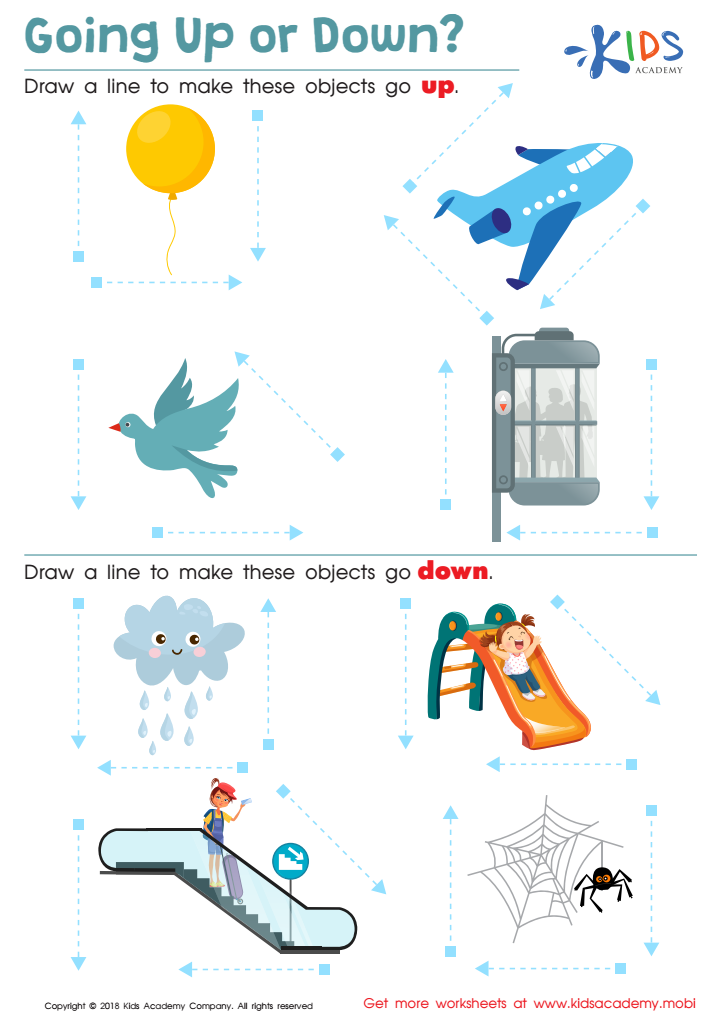
Going up or Down? Worksheet
 Assign to My Students
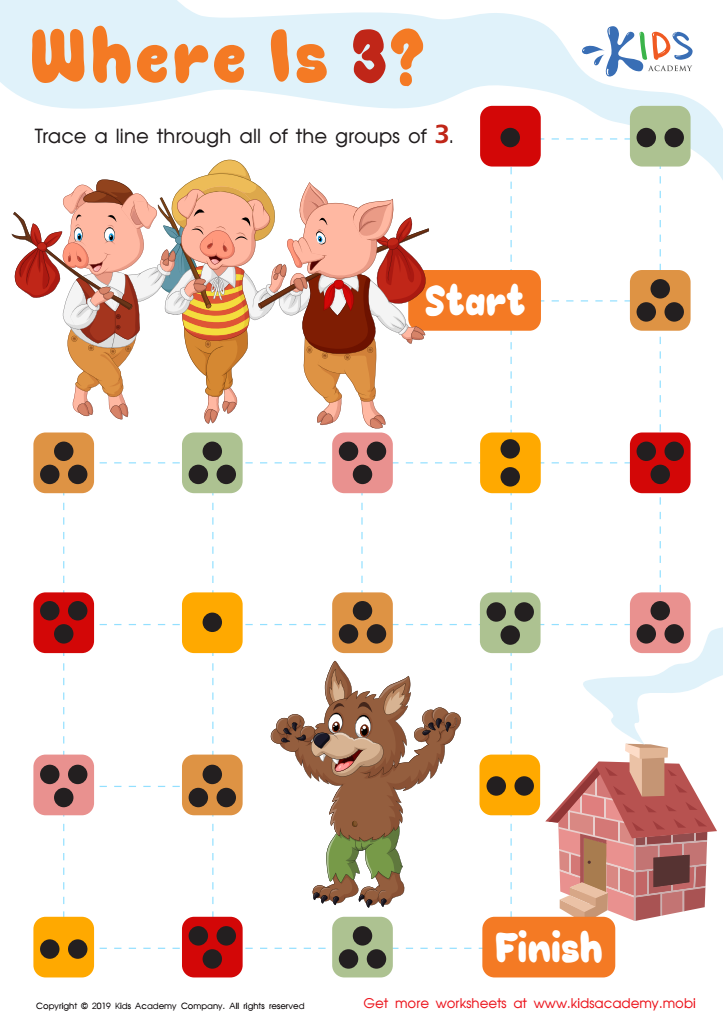
Where Is 3? Worksheet
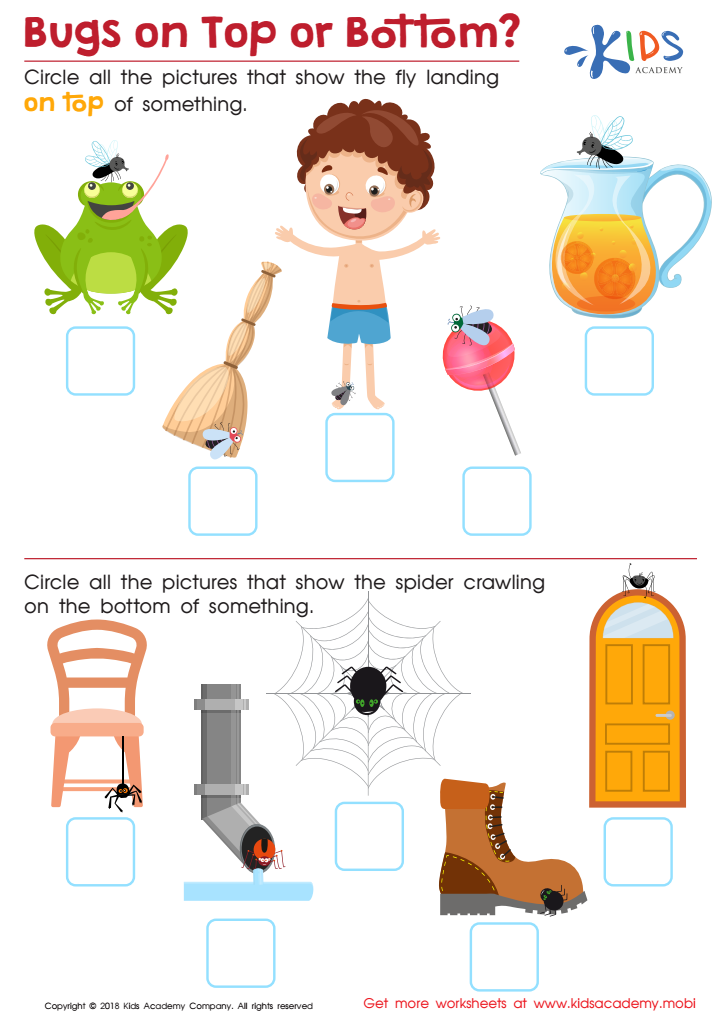
Bugs on Top or Bottom? Worksheet


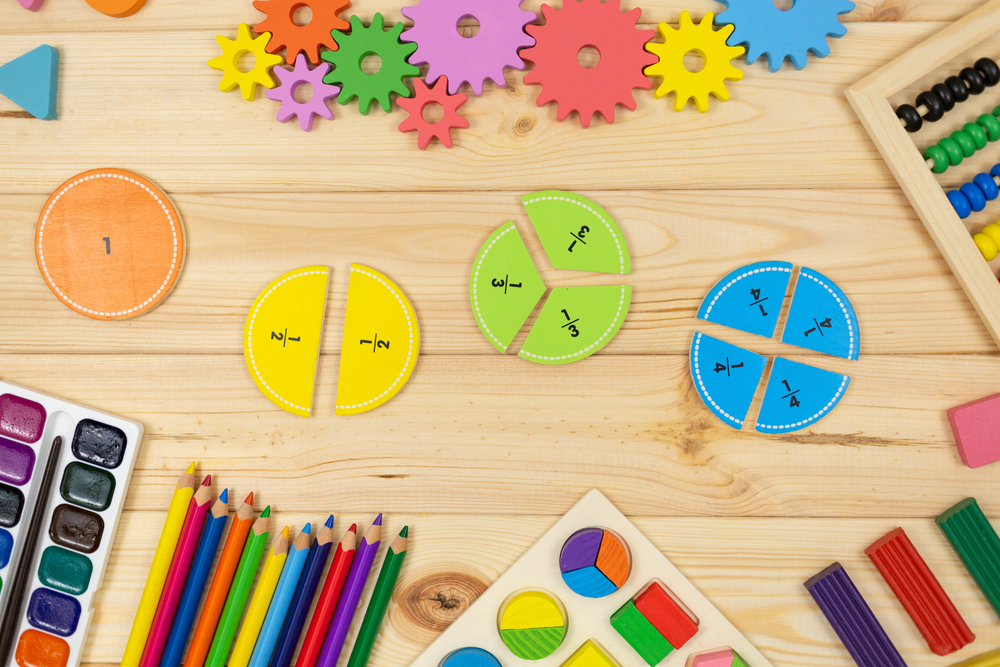





Understanding directions in early-grade math is crucial for children ages 6-9 because it builds the foundation for numerical literacy and problem-solving skills. When children can follow directions effectively, they enhance their ability to understand mathematical concepts, such as counting, addition, subtraction, and basic geometry. These skills are fundamental for future academic success and everyday decision-making.
Proper comprehension of directions allows children to accurately complete assignments, engage in classroom activities, and develop a sense of independence. It also aids in reducing frustration and boosting confidence, as clear instructions guide them through the problem-solving process.
Parents and teachers play a pivotal role in reinforcing these skills. By ensuring that directions are simple, clear, and age-appropriate, adults can help children master tasks more efficiently. Structured guidance also encourages kids to think logically and enhances their spatial awareness — for instance, understanding position and order, which are key for grasping more complex math later on.
Furthermore, fostering the ability to follow math directions home support, as parents can engage in educational activities that mirror classroom learning. Overall, investing time in understanding and teaching these instructions lays a sturdy groundwork, ensuring children are better prepared for advanced mathematical concepts and other academic challenges.








