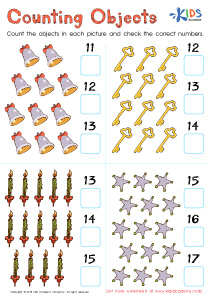
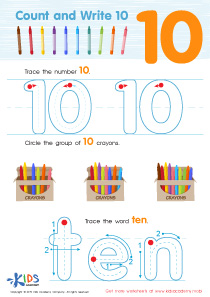
Handwriting practice Normal Numbers 0–10 Worksheets for Ages 6-9
3 filtered results
-
From - To
Empower your child's math and fine motor skills with our Handwriting Practice Normal Numbers 0–10 Worksheets, designed for ages 6-9. Our expertly crafted worksheets provide a hands-on approach to learning numbers and perfecting handwriting. Each sheet offers engaging activities and exercises that make mastering numbers 0-10 fun and rewarding. By tracing and writing, children build foundational skills that boost their confidence in math and writing. Tailored for young learners, these practice sheets foster a love for learning while supporting essential educational milestones. Turn practice into play with our innovative and educational resources at Kids Academy.
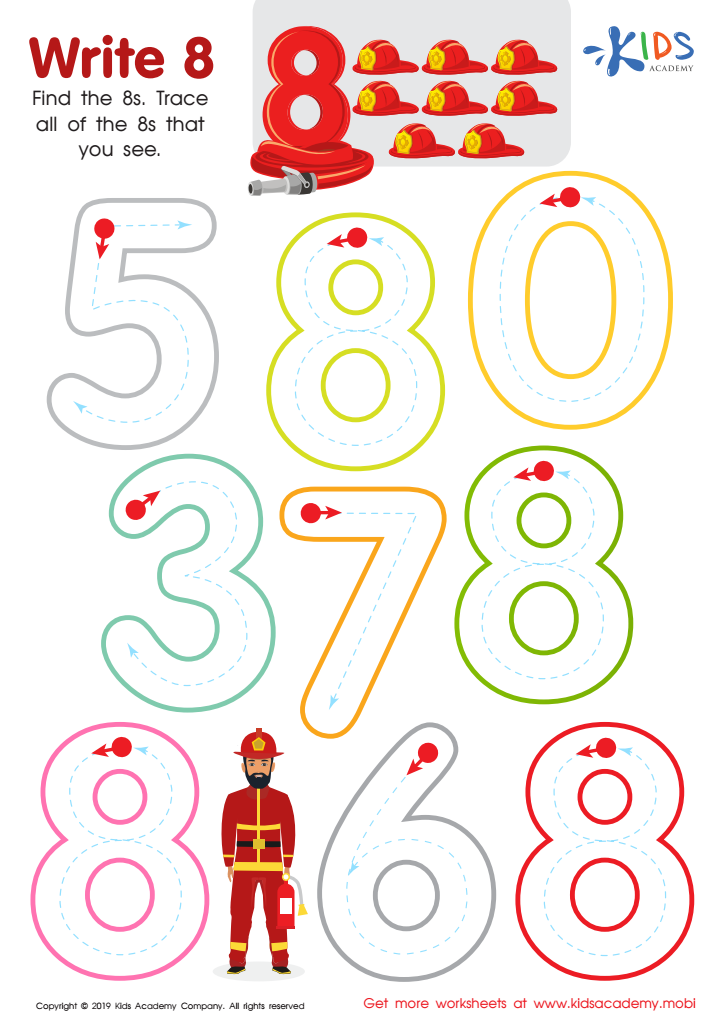
Write 8 Worksheet
 Assign to My Students
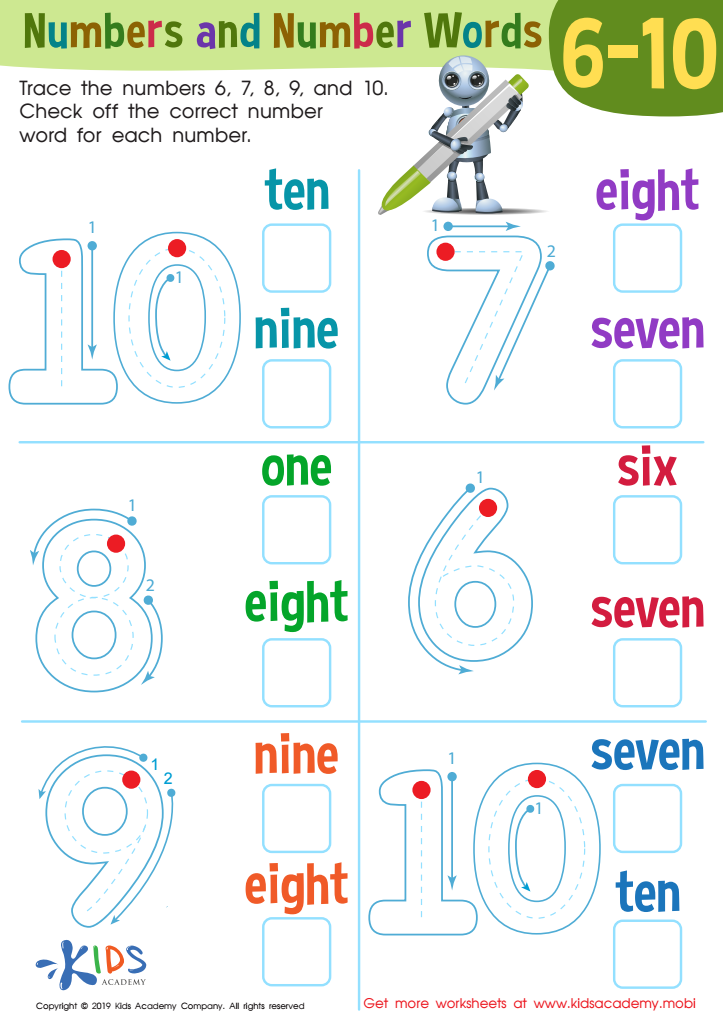
Numbers and Number Words 6–1 Worksheet
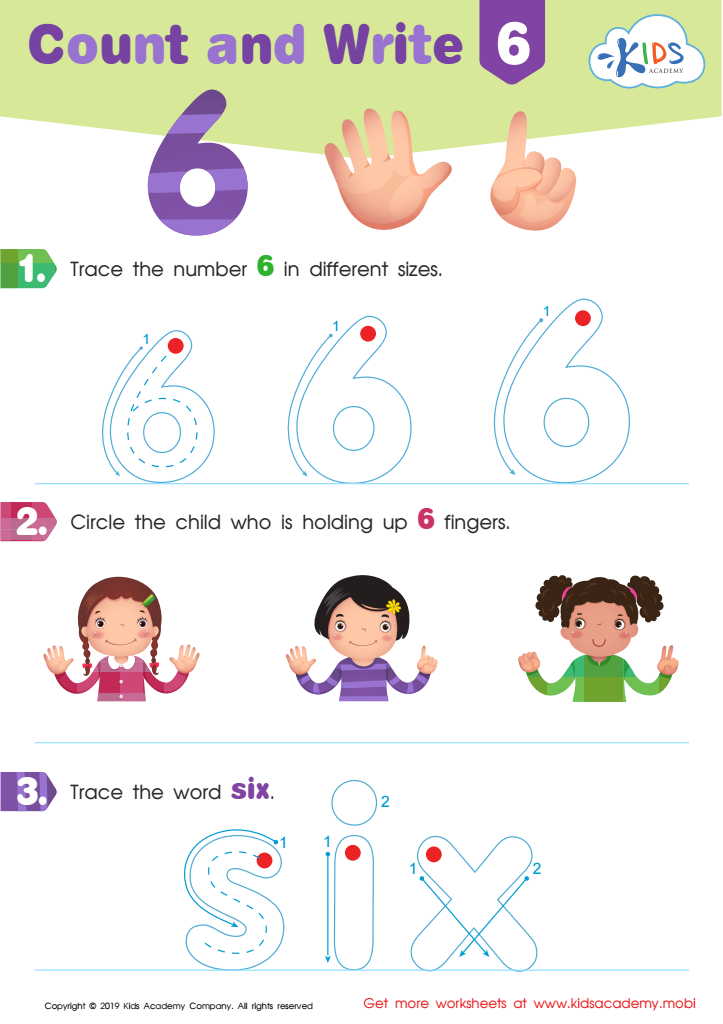
Count and Write 6 Worksheet








Handwriting practice for normal numbers 0-10 is crucial for children aged 6-9 because it lays a strong foundation for both academic success and essential life skills. At this developmental stage, fine motor skills are refined, and practicing number writing enhances hand-eye coordination and dexterity. Mastering these numbers aids in mathematical comprehension—as numbers are fundamental to more complex operations they will encounter later in their education.
Writing numbers clearly assists with fluency in mathematical procedures, including counting, basic addition, and subtraction, providing a tactile and visual method of reinforcement. It also instills the habit of precision, setting the groundwork for clear and legible writing habits pivotal not just academically but in practical daily activities like filling out forms or recording information.
Parents and teachers play an important role in fostering these skills, as their encouragement can significantly boost a child's confidence and enjoyment in learning. In essence, handwriting practice isn't just about neatness—it's about empowering children with the tools they need to succeed, both in school and beyond. Dedicated practice can cultivate a sense of discipline and accomplishment, vital characteristics that underpin lifelong learning and resilience. Thus, focusing on this early on creates building blocks for future educational and personal endeavors.