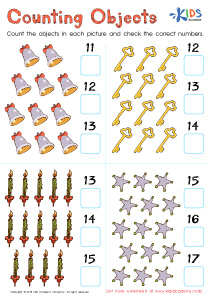
Number Recognition Normal Place Value Worksheets for Ages 6-9
8 filtered results
-
From - To
Our "Number Recognition Normal Place Value Worksheets for Ages 6-9" are expertly designed to boost young learners' understanding of numbers and their values. Perfect for children in early grades, these engaging worksheets cover essential concepts such as place value, counting, and identifying numbers. Interactive activities aim to reinforce children's skills in recognizing numerals and understanding their positions and significance in different number systems. With vibrant visuals and age-appropriate challenges, these worksheets foster a fun and effective learning experience, setting the foundation for future mathematical success. Ideal for classroom use or practice at home.
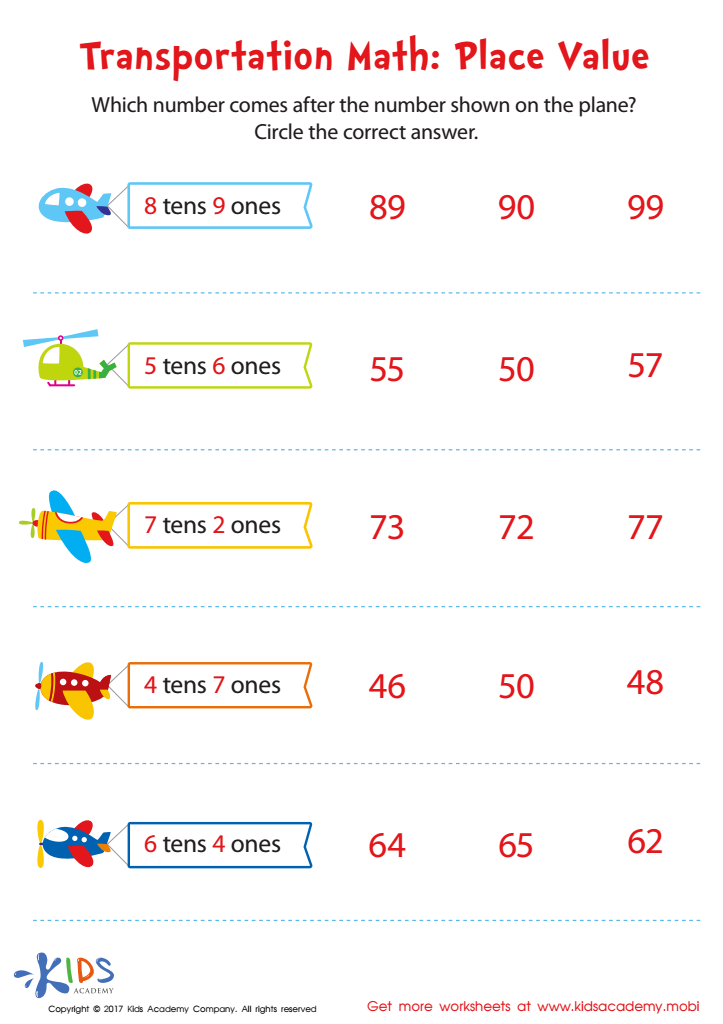
Transportation Math Printable
 Assign to My Students
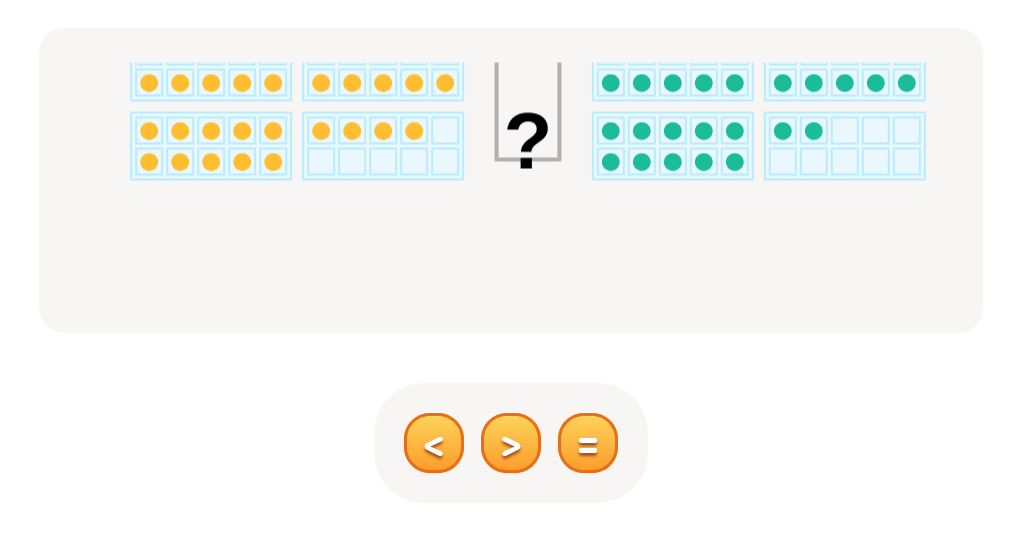

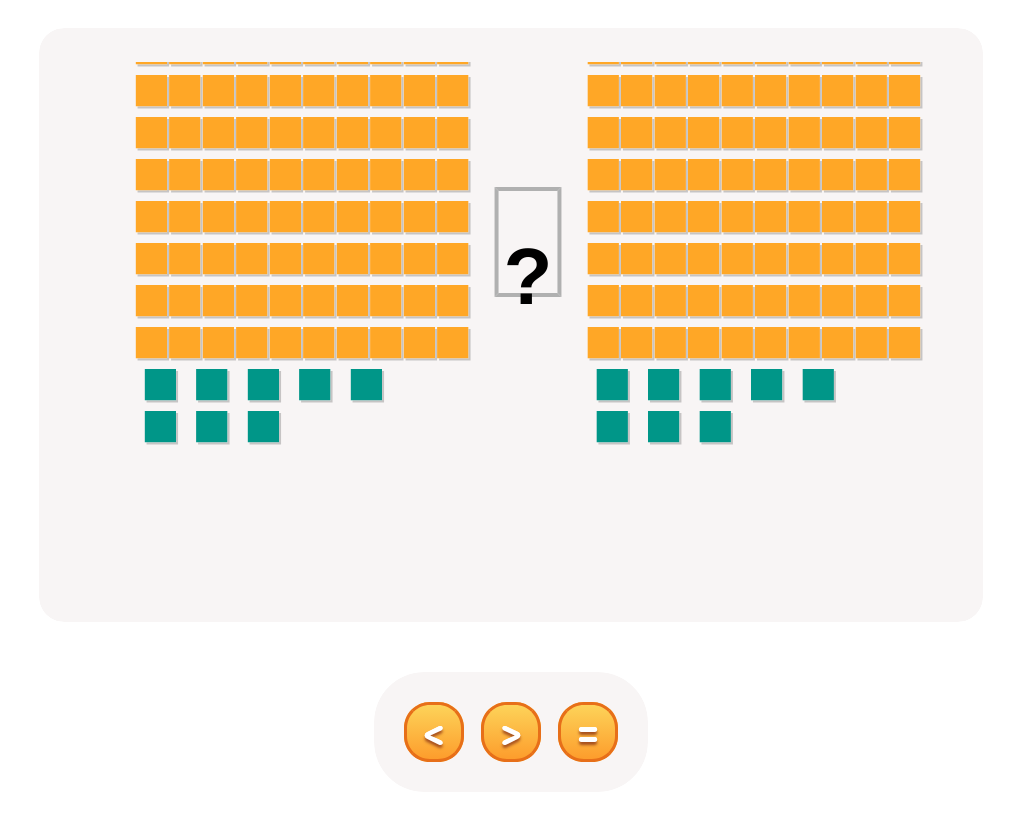
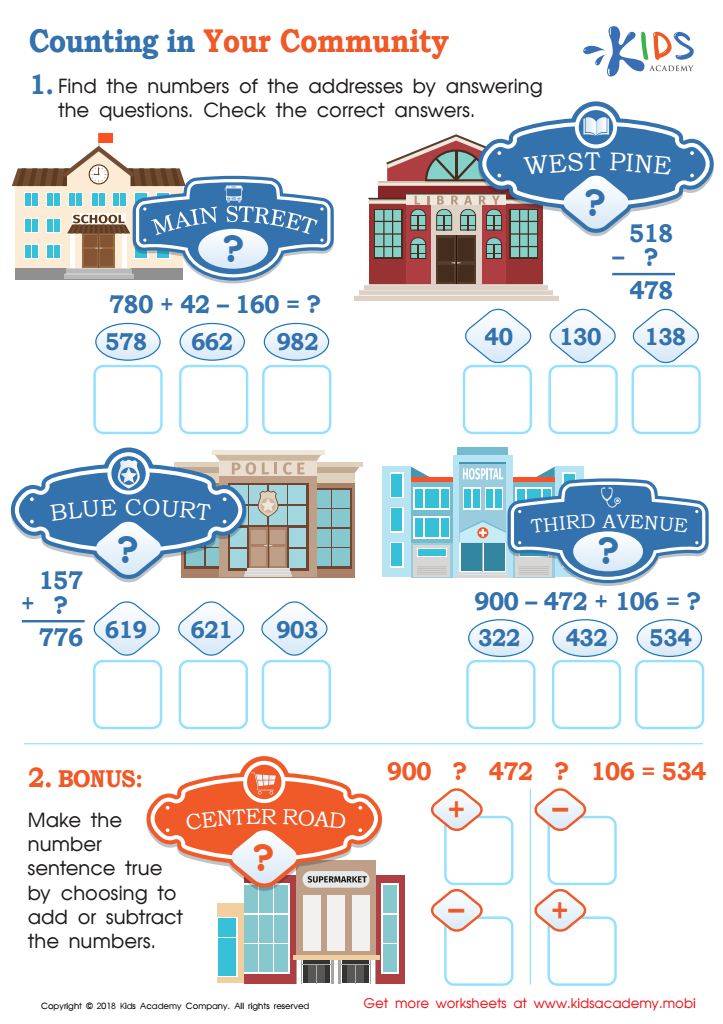
Counting in Your Community Worksheet
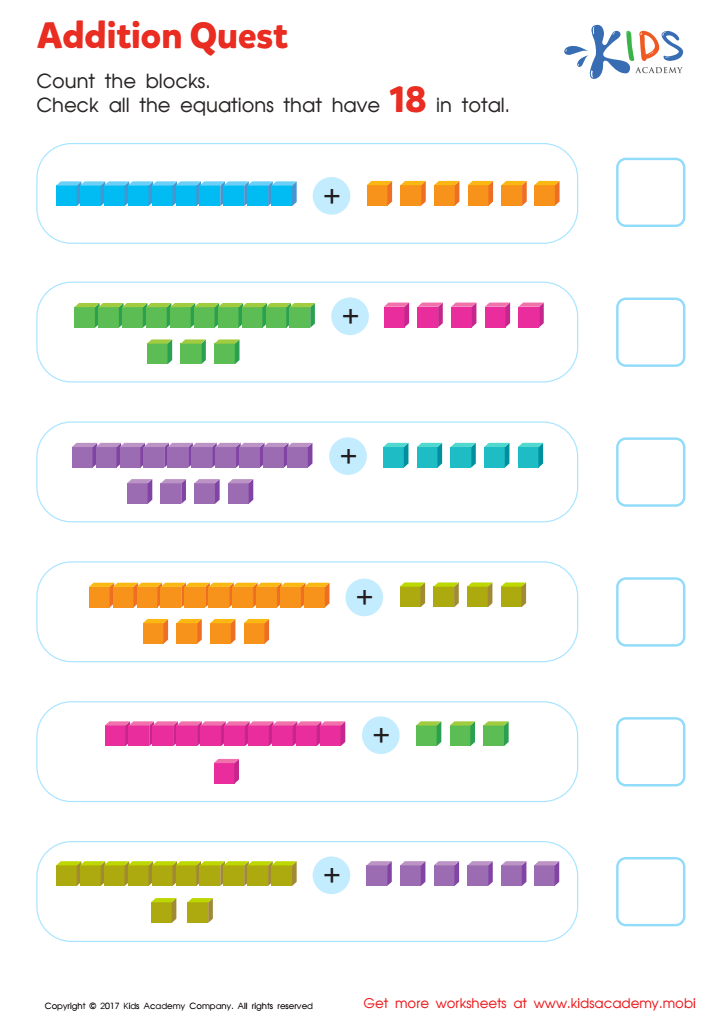
Addition Quest Worksheet: Part 2
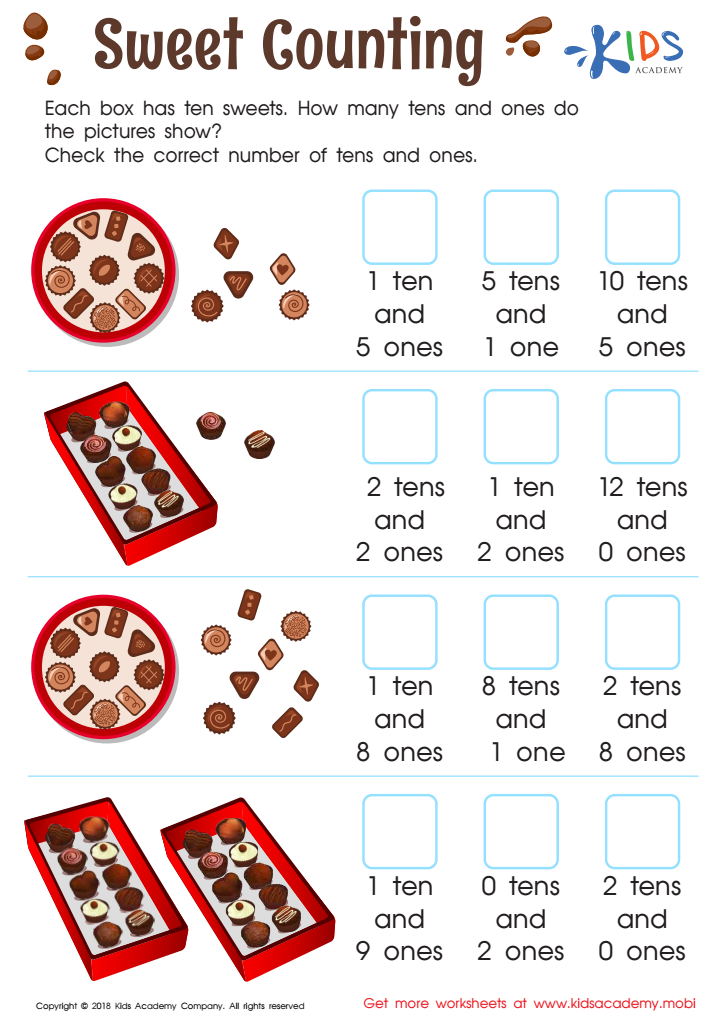
Sweet Counting - Part 2 Worksheet
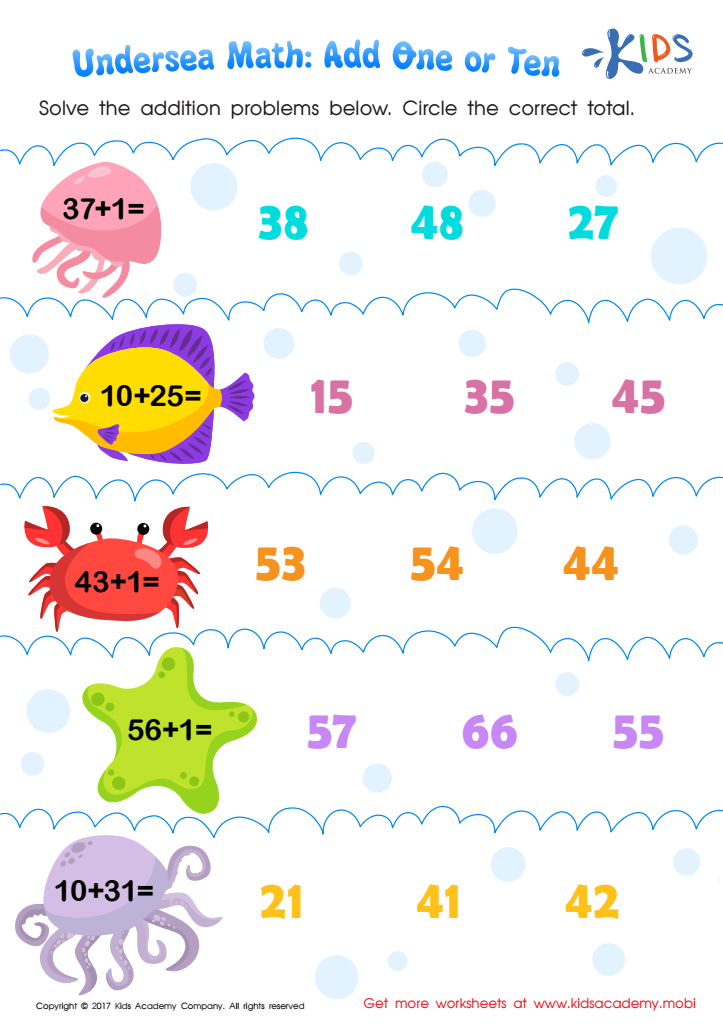
Undersea Math Worksheet
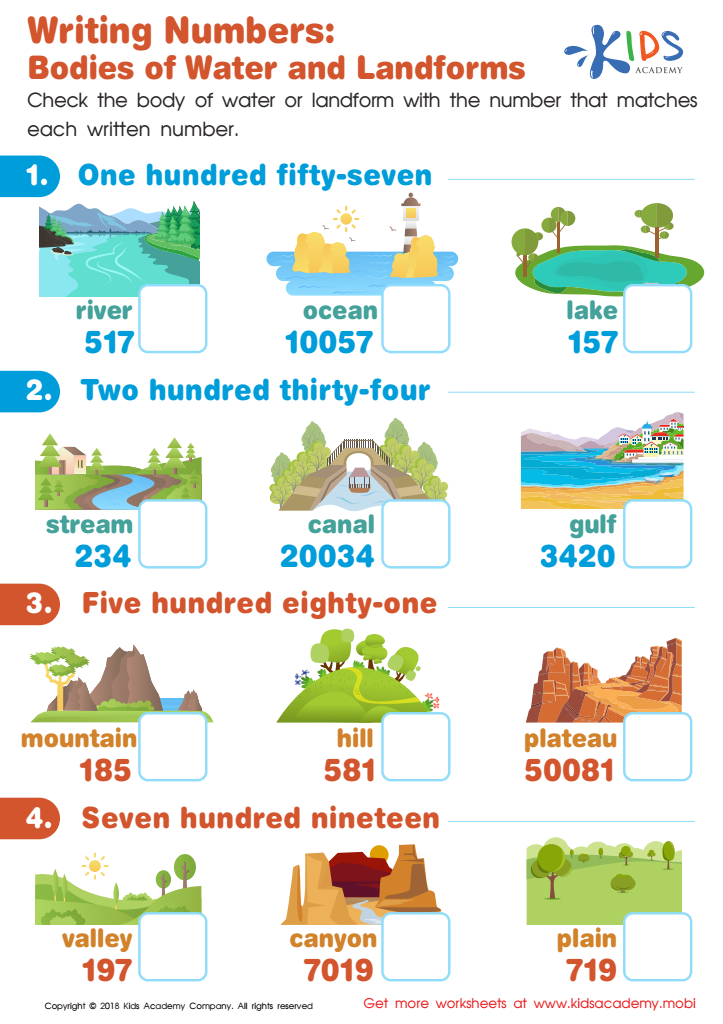
Bodies of Water and Landforms Writing Numbers Worksheet
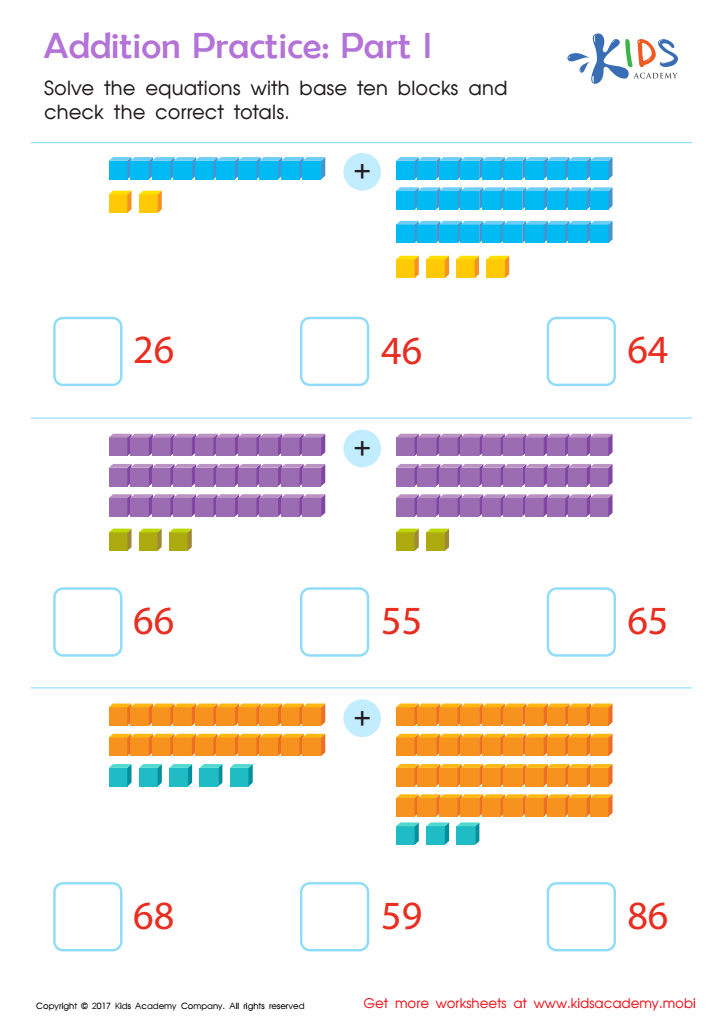
Addition Practice Sheet: Part 1
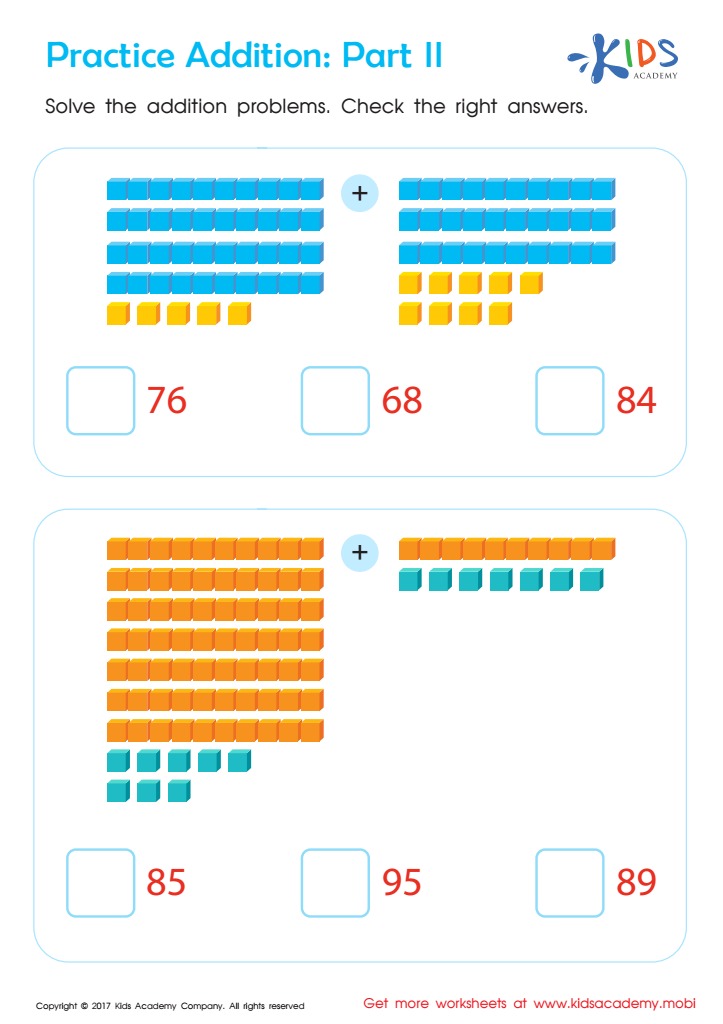
Practice Addition: Part 2 Worksheet








Number recognition and understanding place value are foundational skills for children aged 6 to 9 and are crucial for their future success in mathematics and everyday life. Parents and teachers should emphasize these concepts for several key reasons.
First, number recognition—knowing and identifying numbers—forms the basis for all other math learning. When children recognize numbers effortlessly, they can focus on learning more complex skills, such as addition, subtraction, and problem-solving. Bedrock number skills contribute to these future learning activities becoming less intimidating and more accessible.
Place value, understanding the value of digits based on their position within a number, is vital for grasping larger numbers and performing arithmetic operations effectively. For example, knowing that in the number 352, the digit 5 stands in the "tens" place and represents fifty, enables children to comprehend the magnitude of numbers more intuitively.
Moreover, strong number sense and place value concepts are applicable in daily life—like reading time, measuring ingredients, and managing money. These skills also correlate with overall academic performance, where confidence in math can uplift the enthusiasm for learning across other subjects.
Ultimately, fostering number recognition and place value understanding equips children with the critical thinking and numerical skills needed for academic success and practical problem solving in their everyday world.