Mental math skills Normal Subtraction Worksheets for Ages 6-9
3 filtered results
-
From - To
Boost your child's subtraction proficiency with our engaging Mental Math Skills Normal Subtraction Worksheets tailored for ages 6-9. Designed to enhance computational fluency, these worksheets encourage quick-thinking and problem-solving. Each worksheet features age-appropriate exercises that focus on subtraction without relying on calculators, fostering mental arithmetic abilities. Ideal for classroom use or at-home practice, these resources help reinforce core math concepts while keeping learning fun and interactive. Children will gain confidence as they master subtraction skills through creative exercises and challenging problems, setting the foundation for future mathematical success. Explore our collection and watch your young learners thrive!
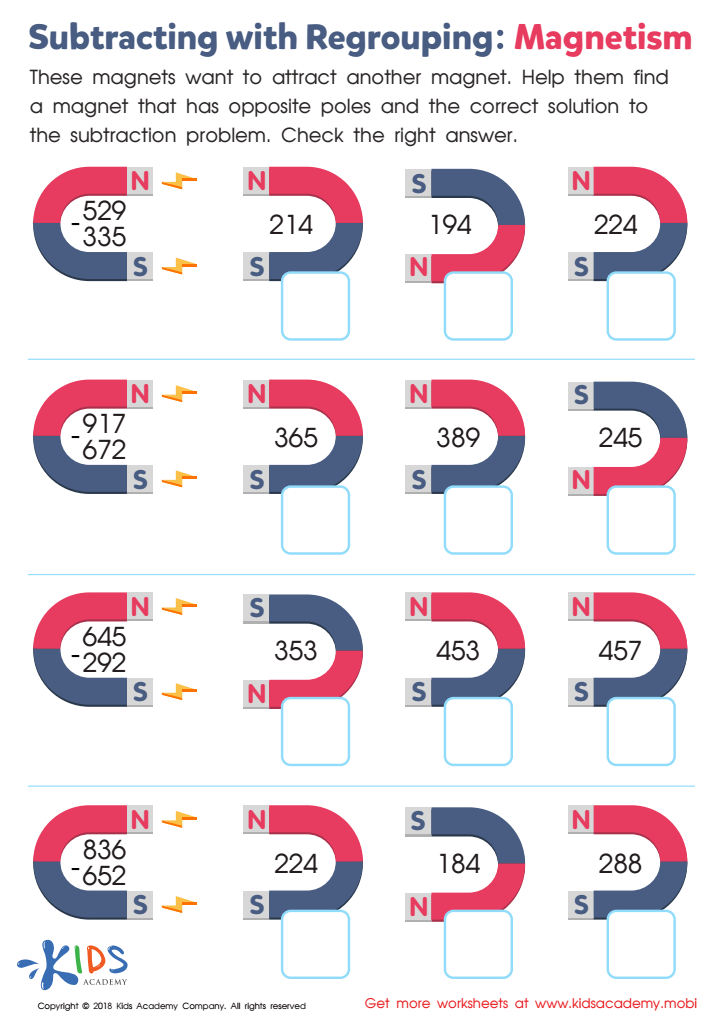
Subtracting with Regrouping: Magnetism Worksheet
 Assign to My Students
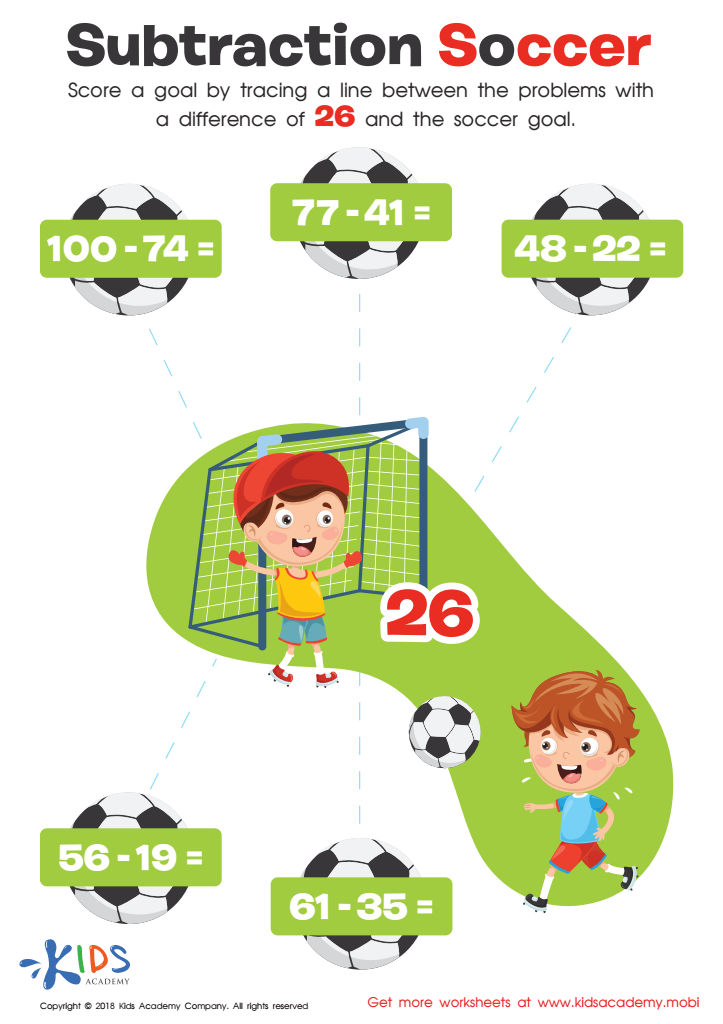
Subtraction Soccer Worksheet
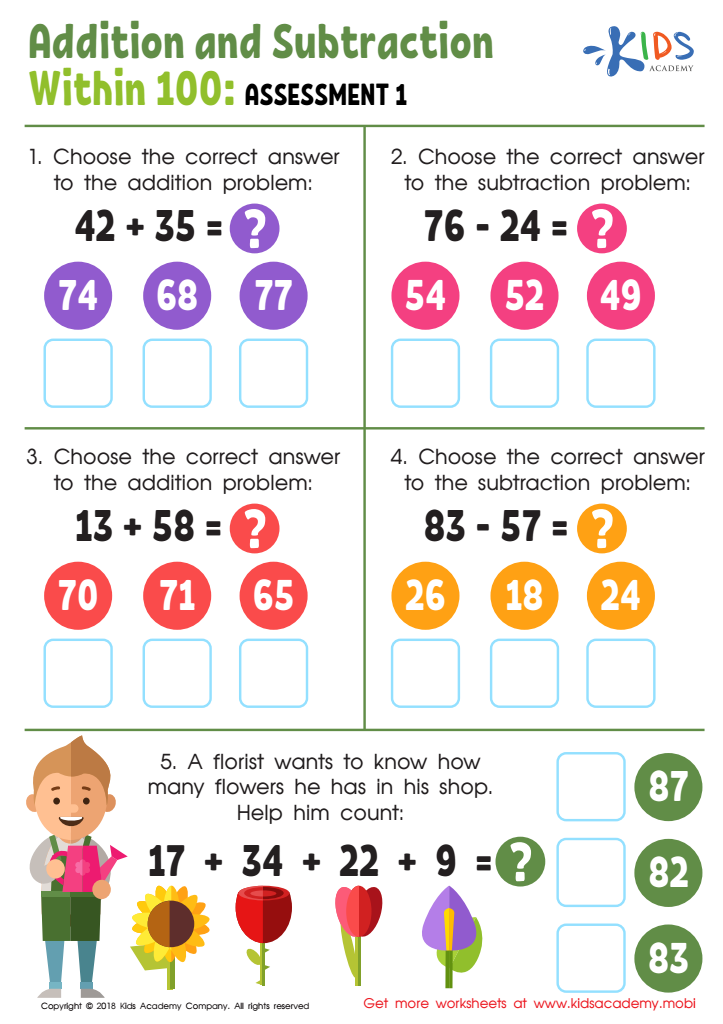
Addition and Subtraction Within 100 Worksheet








Mental math skills, especially normal subtraction, are crucial for children aged 6-9 as they serve as a foundation for later mathematical learning and overall cognitive development. At this age, children are still developing their ability to understand numbers and operations, making effective subtraction skills essential for building their confidence in math.
Parents and teachers play a vital role in nurturing these skills. Engaging children in mental subtraction helps enhance their problem-solving abilities and promotes a strong number sense. It encourages them to think critically and creatively, allowing them to approach mathematical problems with flexibility. Beyond academics, mastering mental subtraction enables children to handle everyday situations, such as calculating change or sharing resources, fostering independence and self-sufficiency.
Furthermore, practicing mental math can also improve children's performance in standardized tests. When parents and teachers emphasize these skills, they not only aid immediate learning but also equip children with lifelong mathematical competence. Consequently, nurturing mental subtraction skills can contribute significantly to a child’s academic success and confidence, creating a positive outlook towards mathematics as they progress into more advanced concepts. Ultimately, cultivating these skills supports the holistic development of children, promoting resilience and adaptability in an increasingly complex world.