
Comprehension skills Normal Building Vocabulary Worksheets for Ages 6-9
3 filtered results
Difficulty Level
Grade
Age
-
From - To
Subject
Activity
Standards
Enhance your child's reading abilities with our "Comprehension Skills Normal Building Vocabulary Worksheets" designed specifically for ages 6-9. These engaging worksheets focus on improving language comprehension through interactive activities that foster vocabulary expansion. Children will experience a variety of exercises, including word matching, reading comprehension questions, and fill-in-the-blank challenges, all aimed at reinforcing essential reading skills. By integrating fun and educational content, our resources help young learners build a solid foundation in language arts. Perfect for home or classroom use, these worksheets make learning enjoyable and effective, creating confident readers who can understand and appreciate texts better. Explore the joys of vocabulary building today!
Favorites
With answer key
Interactive
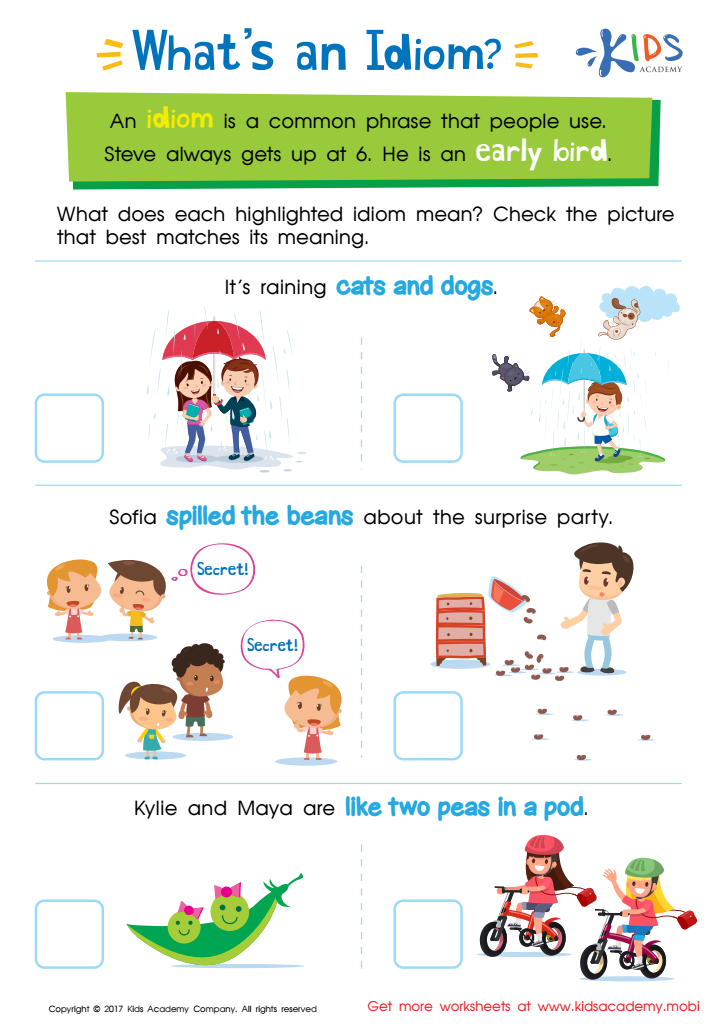
Idiom Worksheet
This idiom worksheet for 3rd grade is the answer.
Make learning idioms a breeze! Help your 3rd grader understand figurative language with a fun worksheet based on the common expressions they already know. Unlock the mystery behind these phrases and make learning fun!
 Assign to My Students
Idiom Worksheet
Worksheet











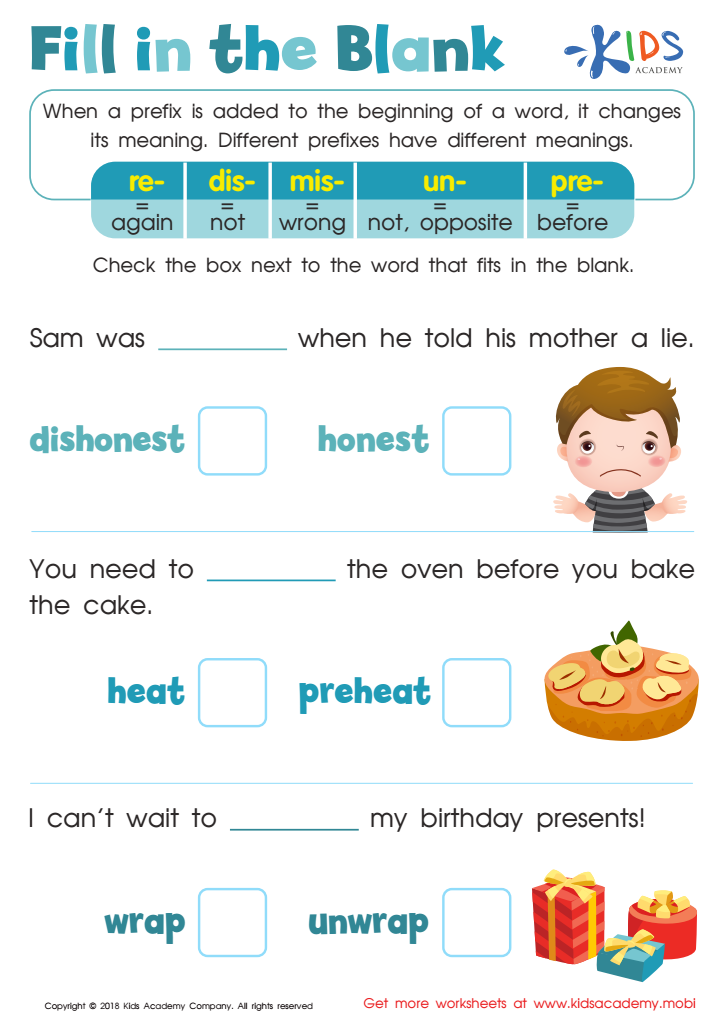
Reading: Fill in the Blank Worksheet
Students can practice understanding the meaning of common prefixes with this worksheet. They read sentences and pick the correct word with the appropriate prefix to complete it. Downloadable and a great addition to reading and vocabulary resources, this helps improve comprehension with mastery of the skill!
Reading: Fill in the Blank Worksheet
Worksheet
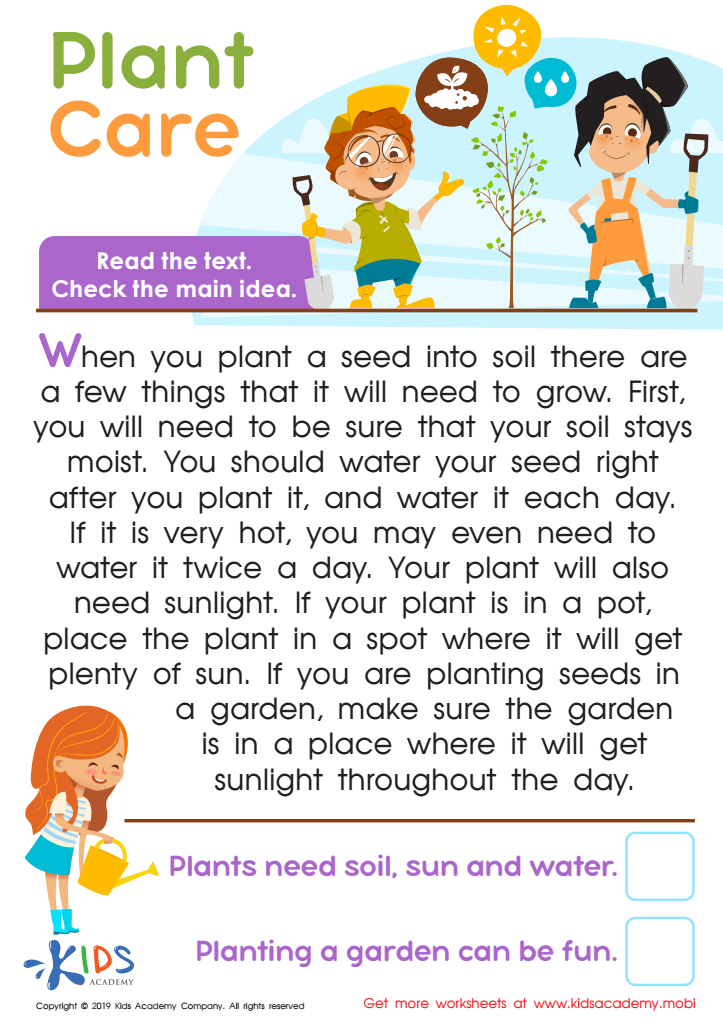
Plant Care Worksheet
Encourage your children to read by helping them practice. Print out the worksheet and read the text with them. Help them understand the words and find the main idea. This will improve their reading skills and prepare them for school.
Plant Care Worksheet
Worksheet
Join Kids Academy for Free
Who is primarily going to use this learning content?








Parents and teachers should prioritize comprehension skills and vocabulary building for children aged 6-9 because these foundations are critical for successful literacy development. At this age, children are transitioning from learning to read to reading to learn. Strong comprehension skills enable them to grasp meanings, draw inferences, and extract relevant information from texts across various subjects. When children have a robust vocabulary, they can better articulate their thoughts, express their ideas, and engage in meaningful conversations.
Building vocabulary during these formative years not only aids reading comprehension but also fosters academic success. A rich vocabulary enhances children’s ability to understand narratives, follow instructions, and participate in discussions, thereby boosting their confidence and enthusiasm for learning.
Moreover, vocabulary development is linked to overall cognitive growth. As children encounter new words, they expand their understanding of the world, enhancing critical thinking and problem-solving skills. Furthermore, a solid vocabulary empowers children to navigate social interactions effectively and understand the emotions and intentions of others.
In essence, fostering comprehension skills and building vocabulary in young learners cultivates enthusiastic, capable readers and lifelong learners, laying the groundwork for their future educational journeys and overall communication abilities.








