
Phonics practice Normal Building Vocabulary Worksheets for Ages 6-9
5 filtered results
Difficulty Level
Grade
Age
-
From - To
Subject
Activity
Standards
Discover our engaging Phonics Practice Normal Building Vocabulary Worksheets designed specifically for children ages 6-9. These interactive worksheets provide a fun and educational way to enhance your child’s reading skills and vocabulary development. Through a variety of exercises, kids will practice sound recognition, blending phonemes, and decoding words, which are crucial for reading proficiency. Our carefully crafted materials incorporate playful themes and colorful illustrations to keep young learners motivated and excited. Ideal for both classroom use and at-home learning, these worksheets serve as an excellent resource for reinforcing phonics and vocabulary skills in a supportive and stimulating environment.
Favorites
With answer key
Interactive
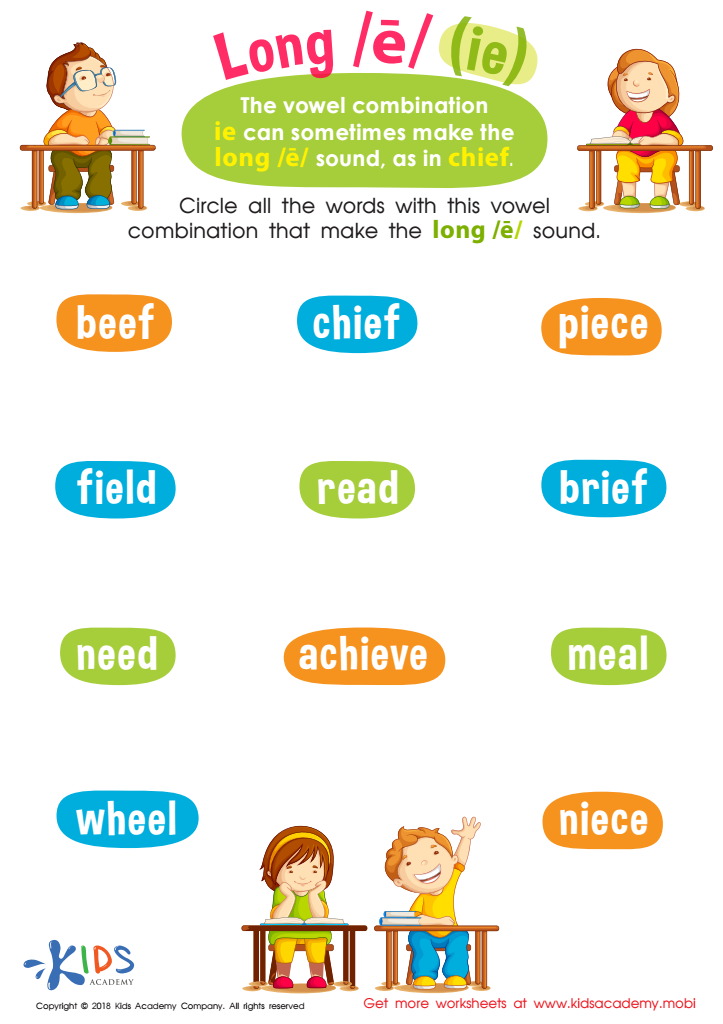
Reading: Long E and IE Worksheet
Ask your child to name some words with the long /e/ sound they hear every day. Then, read aloud all the words in the worksheet with them. Ask them to circle the words containing ie that make this sound.
 Assign to My Students
Reading: Long E and IE Worksheet
Worksheet











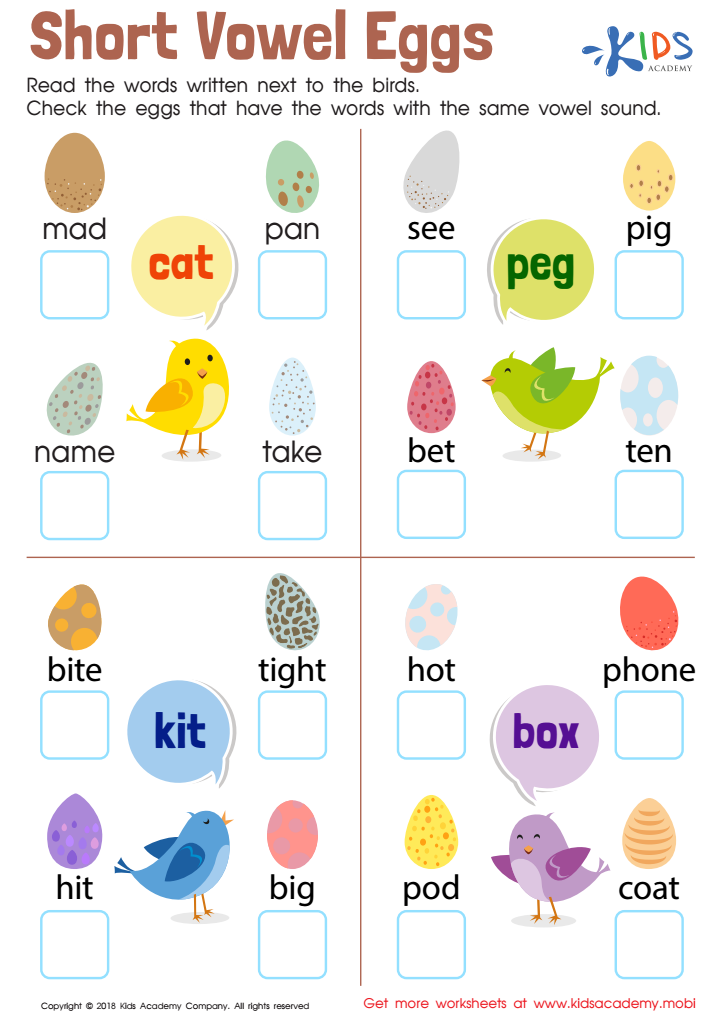
Short Vowel Eggs Worksheet
Your students will love helping these birdies pick the short vowel eggs! Have them read the words in the thought bubbles, then check off the boxes with the same short vowel sounds. The bright colors of this free Worksheet will draw them in and get them practicing their vowels!
Short Vowel Eggs Worksheet
Worksheet
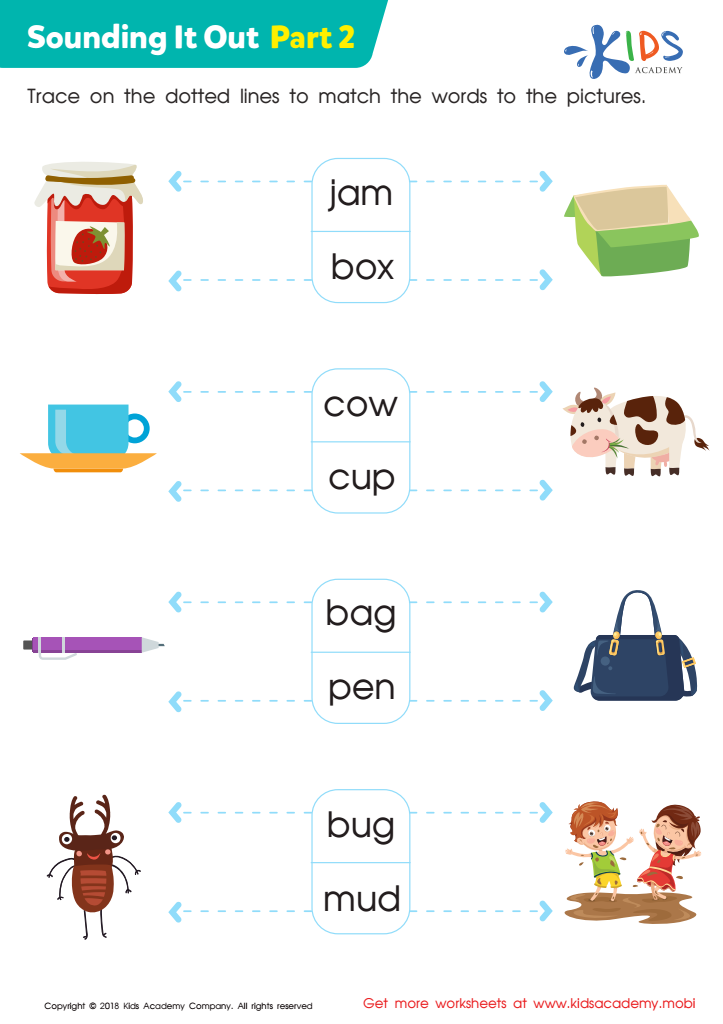
Sounding it Out: Part 2 Worksheet
Mastering phonics is key for kids to learn to read! This free worksheet uses fun pictures to help them sound out words. Ask them to name the images, then use the hints to say each word. Kids will become accomplished readers in no time!
Sounding it Out: Part 2 Worksheet
Worksheet
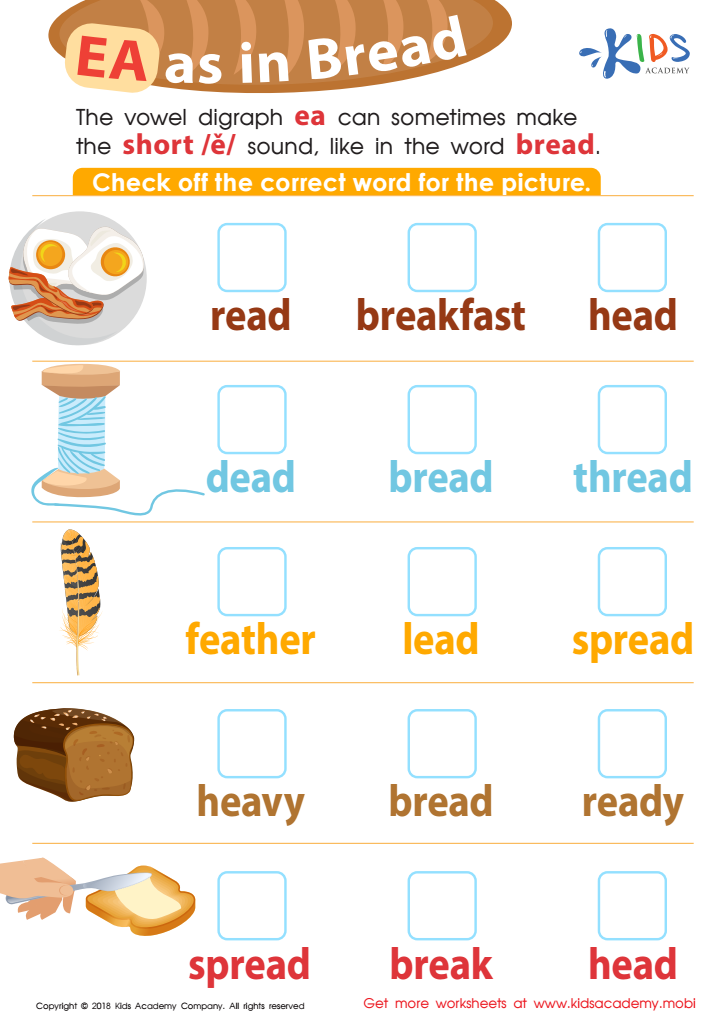
Reading: EA as in Bread Worksheet
The vowel digraph ea can be read in two ways. Examples of the long sound are "read" and "lead"; examples of the short sound are "bread" and "head". Ask your kids to give you more examples and then have them check off the correct word for the pictures on this worksheet. This will help them understand the ea sound.
Reading: EA as in Bread Worksheet
Worksheet
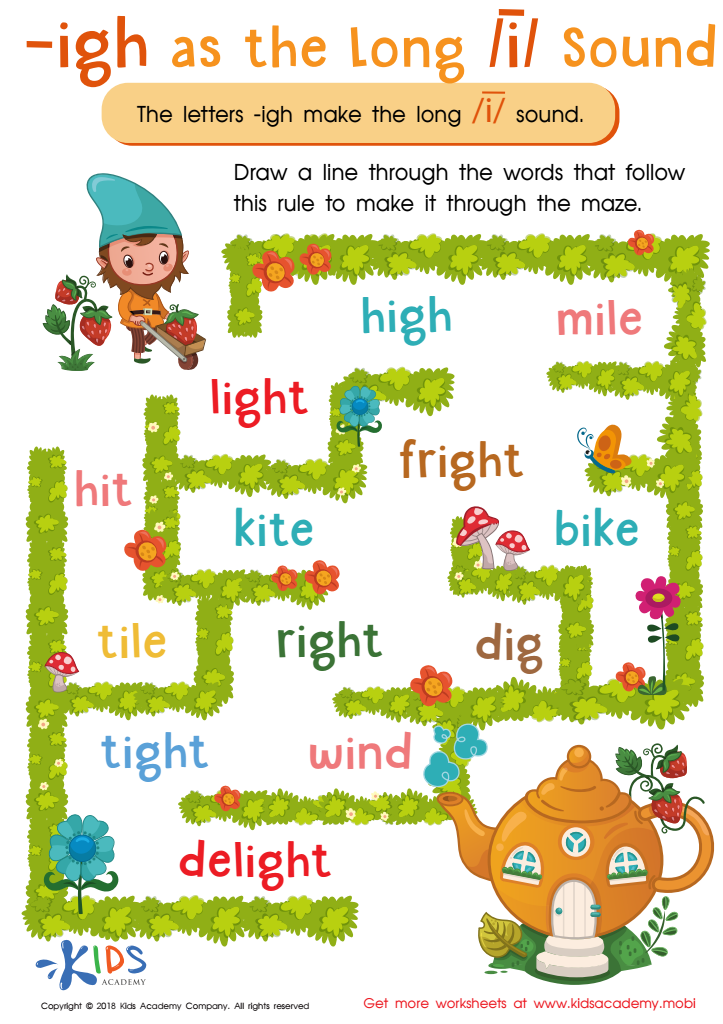
Reading: IGH as Long I Worksheet
Kids can have fun and learn with this maze! They'll look for and read words with the 'long I' sound spelled 'igh'. Most words ending with 'T' have this spelling. Decode words while learning about long vowel sounds and their spellings.
Reading: IGH as Long I Worksheet
Worksheet
Join Kids Academy for Free
Who is primarily going to use this learning content?




.jpg)



Phonics practice and vocabulary building are crucial components of early education, particularly for children aged 6-9. At this stage, children are developing foundational reading and writing skills that will impact their academic journeys. Phonics teaches kids the relationship between letters and sounds, enabling them to decode words independently. This skill boosts their confidence and encourages a love for reading. When children can read, they gain access to a wealth of knowledge and are better equipped to understand concepts across subjects.
Building vocabulary is equally important, as it enhances comprehension and expressive language skills. A rich vocabulary allows children to articulate their thoughts clearly and understand complex ideas. When teachers and parents engage in vocabulary-building activities, such as reading aloud and discussing new words, they stimulate cognitive development and encourage curiosity.
Moreover, strong phonics and vocabulary skills lead to improved literacy rates, which correlate with overall academic success. By prioritizing phonics practice and vocabulary building, parents and teachers foster a supportive learning environment that instills lifelong learning habits, paving the way for a child's future accomplishments. In short, parents and teachers play an essential role in laying the groundwork for successful communication and critical thinking skills in young learners.








