Understanding suffixes Normal Building Vocabulary Worksheets for Ages 6-9
3 filtered results
-
From - To
Enhance your child's language skills with our "Understanding Suffixes" worksheets designed for ages 6-9. These engaging activities focus on building vocabulary by exploring common suffixes, such as -ing, -ed, and -ful. Through fun exercises, children will learn how suffixes change the meaning of base words, enabling them to expand their vocabulary and improve reading comprehension. Perfect for early grade classrooms or at-home learning, our printable worksheets promote hands-on learning while making it enjoyable. Encourage your young learners to discover the power of suffixes and watch their language skills flourish with our thoughtfully crafted materials!
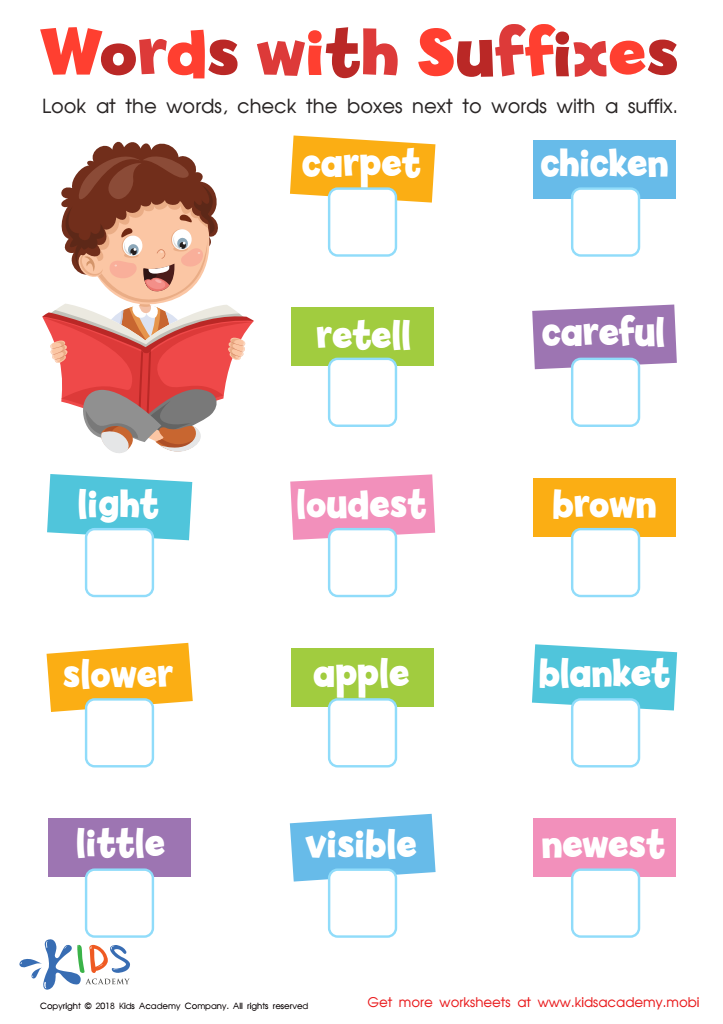
Reading: Words With Suffixes Worksheet
 Assign to My Students











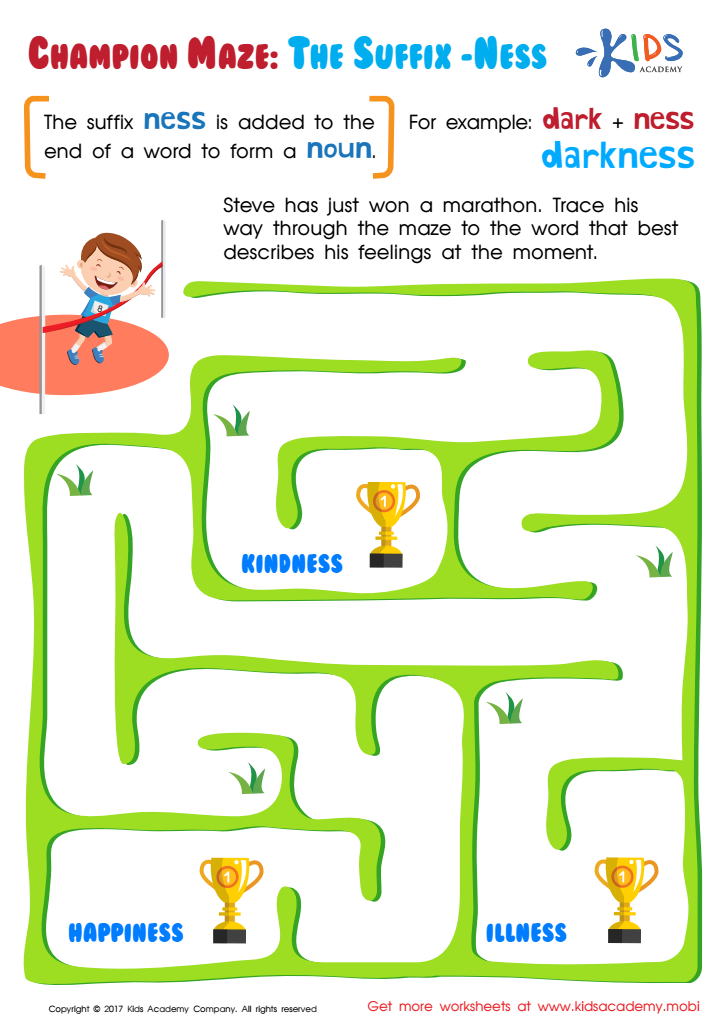
Suffix Ness Worksheet
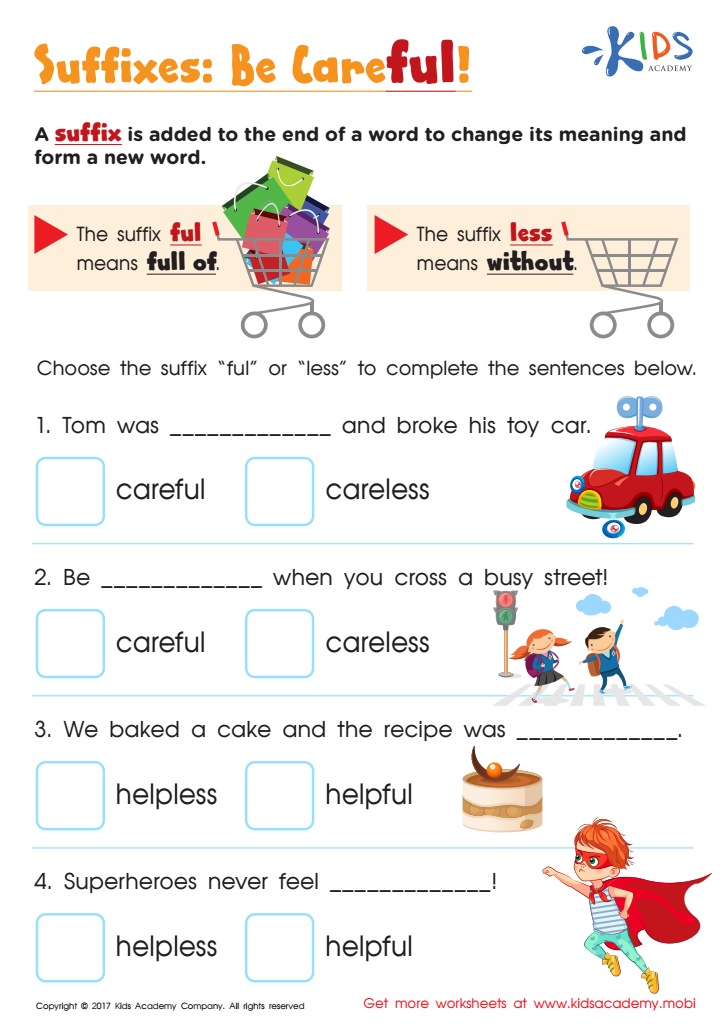
Suffixes Ful and Less Worksheet







.jpg)
Understanding suffixes is a crucial component of building vocabulary for children aged 6-9, and parents and teachers should prioritize this aspect of language learning. Suffixes are vital linguistic elements that modify the meaning of a word and often indicate grammatical functions such as tense, number, or part of speech. For instance, the suffix "-ing" can transform “play” into “playing,” signaling ongoing action.
By understanding suffixes, children enhance their decoding skills, making it easier for them to read unfamiliar words and discern meanings. This skill not only boosts their confidence in reading but also facilitates effective communication. Moreover, mastering suffixes allows children to expand their vocabulary creatively, as they can apply suffixes to root words to generate new terms. For example, knowing that “happy” can become “happiness” encourages a broader emotional vocabulary.
Incorporating suffix study into learning routines fosters critical thinking and linguistic flexibility, essential skills for future academic success. Ultimately, an emphasis on suffixes empowers children to navigate language more effectively, setting a strong foundation for lifelong literacy. Therefore, it is imperative for parents and teachers to support this area of vocabulary development to enhance children’s overall language proficiency and comprehension.








