Moral lesson understanding Normal Reading Worksheets for Ages 6-9
5 filtered results
-
From - To
Discover our engaging Moral Lesson Understanding Normal Reading Worksheets designed for children ages 6-9. These interactive resources help young learners develop essential reading skills while exploring important moral themes. Each worksheet features age-appropriate stories and activities that guide children in comprehending the morals behind each tale. By answering questions and participating in discussions, students enhance their critical thinking and empathy. Perfect for classroom use or at-home practice, our worksheets make learning both fun and meaningful. Instill valuable life lessons and boost reading confidence with our thoughtfully crafted materials, encouraging a love for reading and understanding of right and wrong in the world around them.
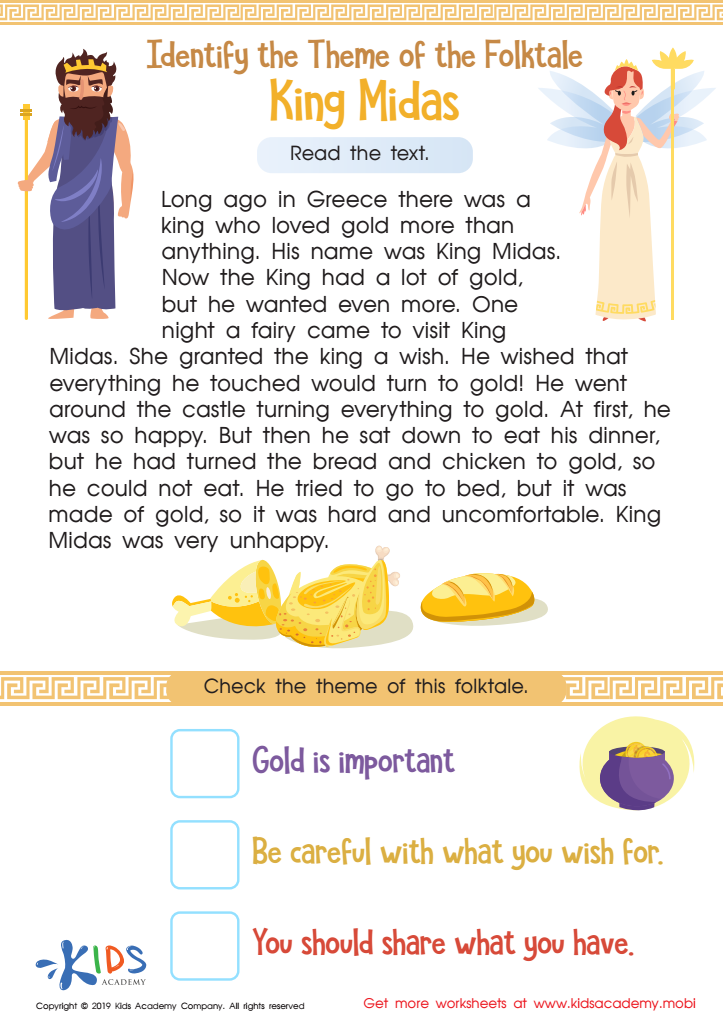
King Midas Worksheet
 Assign to My Students
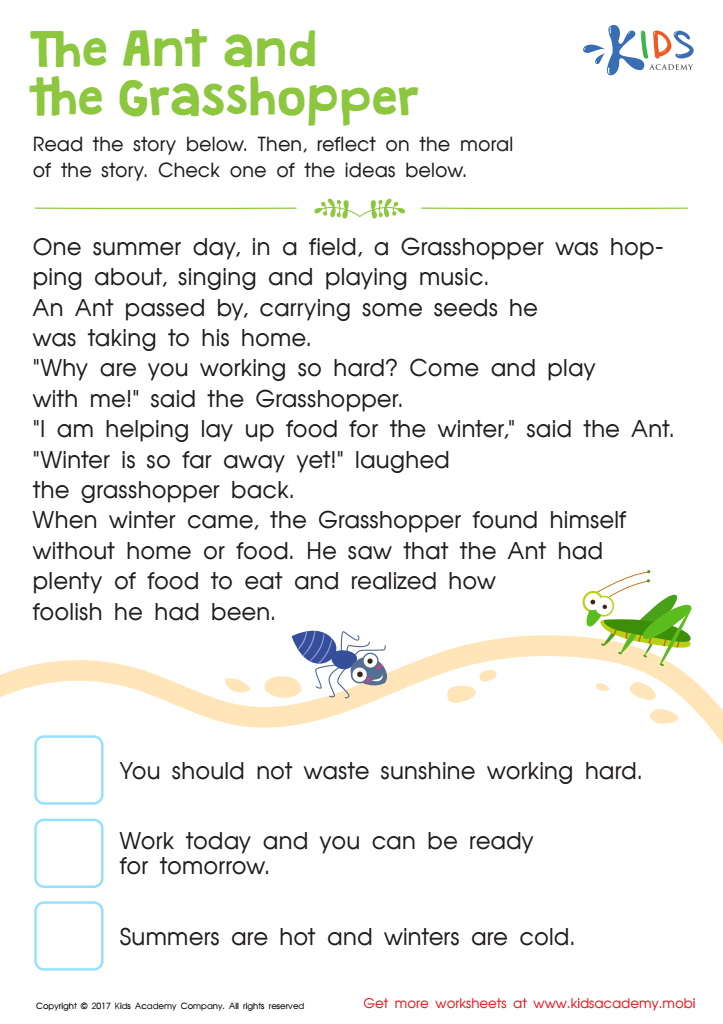
The Ant and The Grasshopper Printable
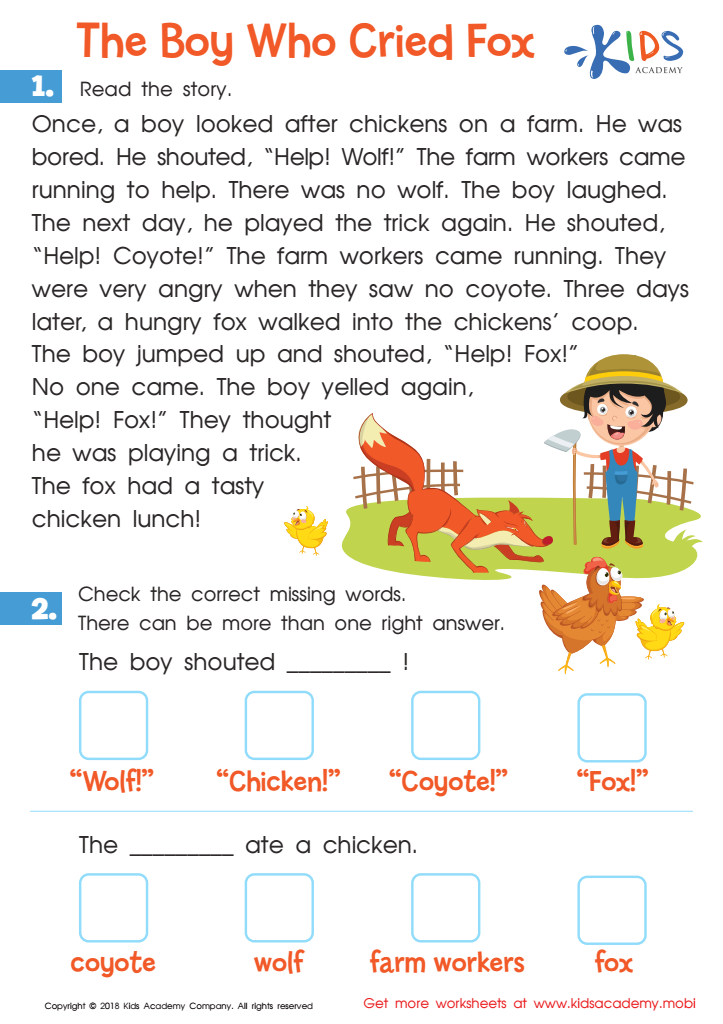
The Boy Who Cried Fox Worksheet
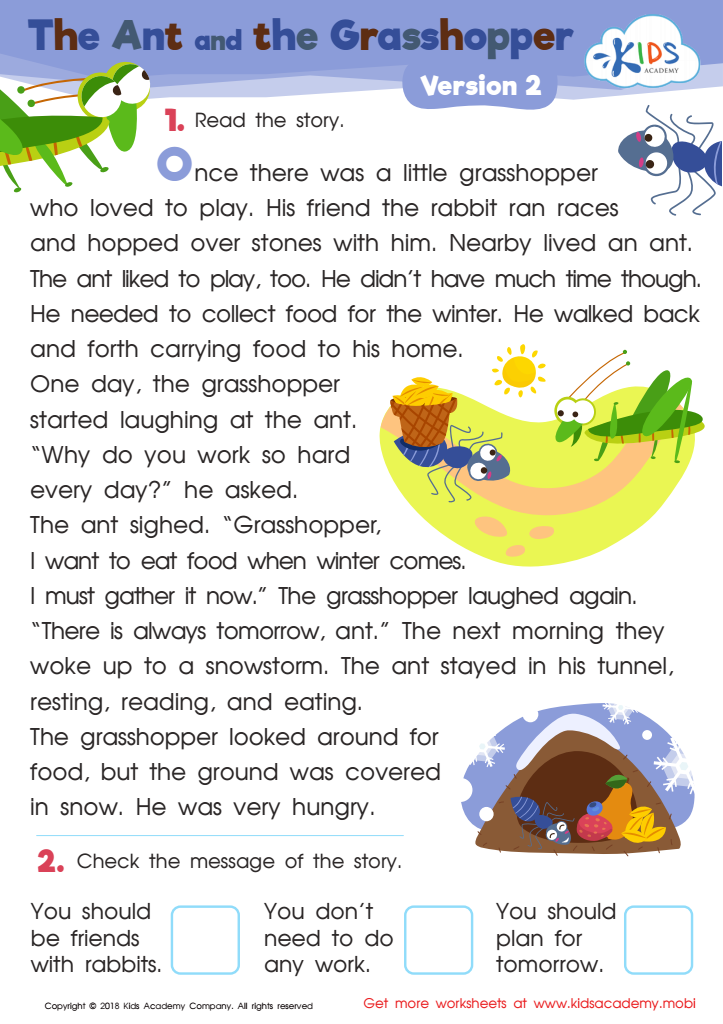
The Ant and The Grasshopper Version 2 Worksheet
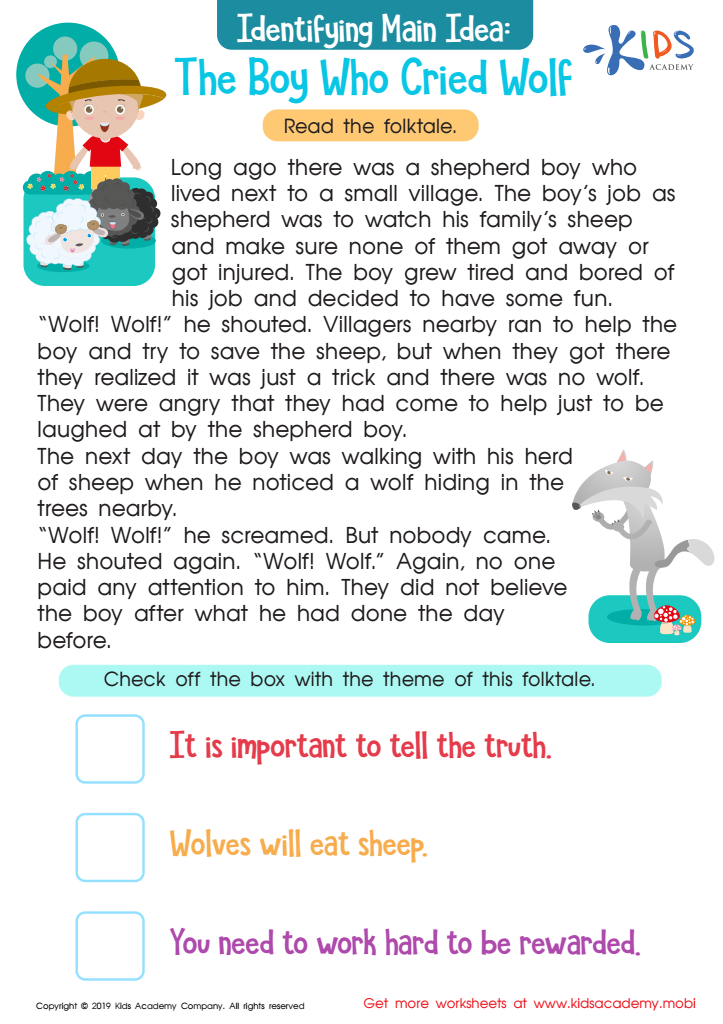
The Boy Who Cried Wolf Part 2 Worksheet








Understanding moral lessons in reading is crucial for children aged 6-9, and both parents and teachers play a significant role in this process. At this age, children are beginning to comprehend complex themes and emotions, making it an ideal time to introduce moral concepts through literature. Engaging with stories that emphasize values such as honesty, kindness, and empathy helps cultivate their moral compass and shape their character as they navigate social interactions.
By exploring moral lessons in reading, children learn to differentiate between right and wrong, understand the consequences of actions, and develop critical thinking skills. These lessons also facilitate discussions about ethical dilemmas in a safe environment, allowing children to voice their opinions and enhance their understanding of differing perspectives.
Additionally, books that address moral issues can strengthen emotional intelligence and foster compassion, making children more aware of how their actions affect others. When parents and teachers actively engage with moral lessons in reading, they reinforce these themes in everyday life, fostering a sense of responsibility and community.
In conclusion, focusing on moral lessons during reading not only enriches children’s literacy skills but also contributes to their development as thoughtful, caring individuals.








