Moral understanding Normal Reading Worksheets for Ages 6-9
5 filtered results
-
From - To
Discover our engaging Moral Understanding Normal Reading Worksheets designed specifically for children aged 6-9. These worksheets help young learners develop their ethical comprehension through age-appropriate stories and scenarios. Students will explore essential values such as empathy, respect, and kindness while practicing their reading skills. Our interactive exercises encourage critical thinking, enabling children to analyze situations and understand different perspectives. With colorful illustrations and captivating content, these worksheets make learning about morals fun and effective. Perfect for home or classroom use, they serve as an excellent resource for fostering strong moral character in early readers. Start your child's moral journey today!
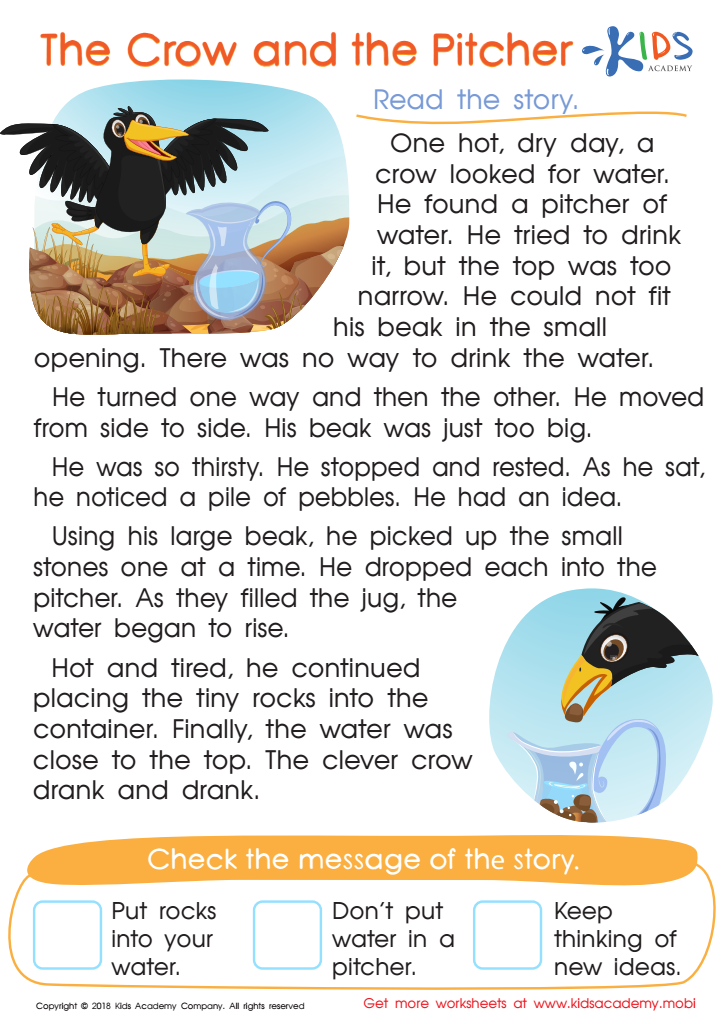
The Crow and the Pitcher Worksheet
 Assign to My Students
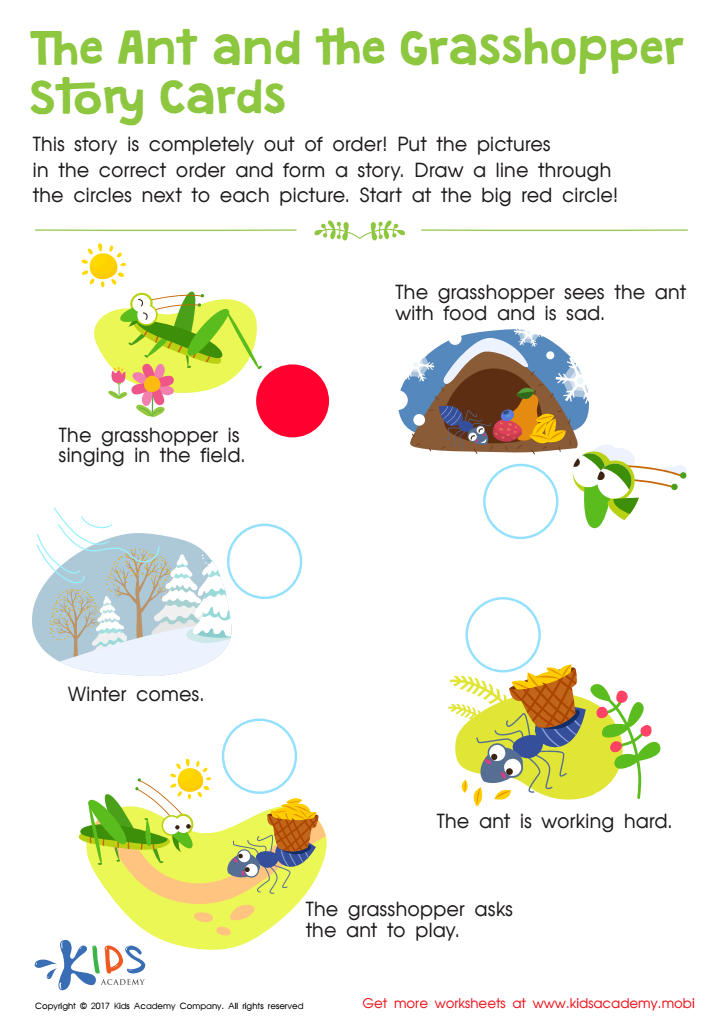
The Ant and The Grasshopper Worksheet
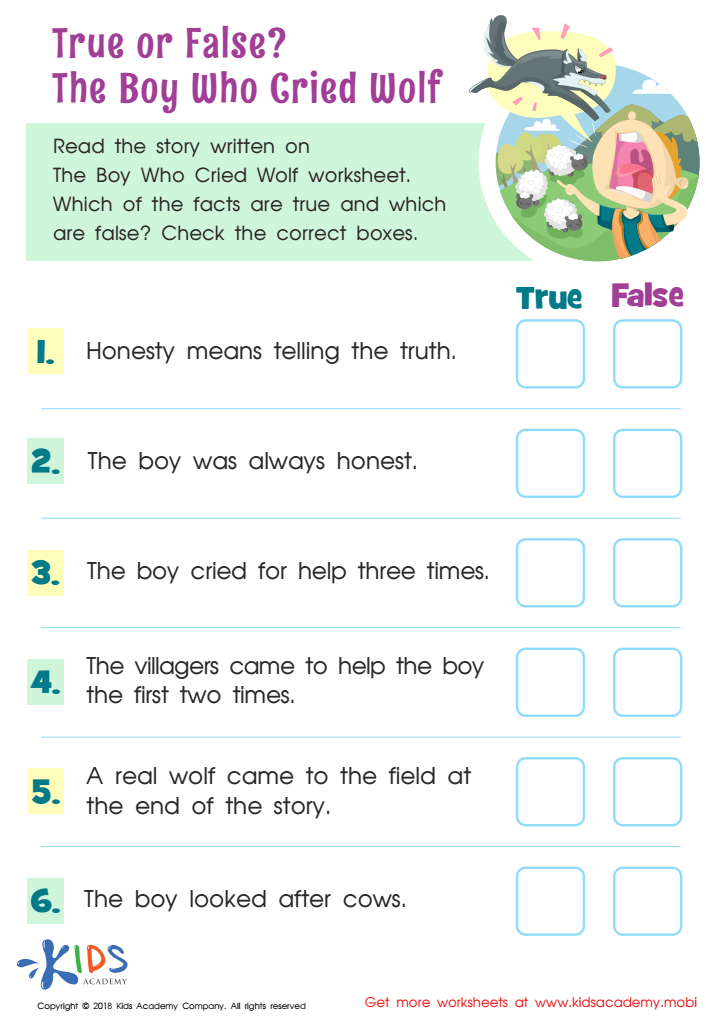
True or False? The Boy Who Cried Wolf Worksheet
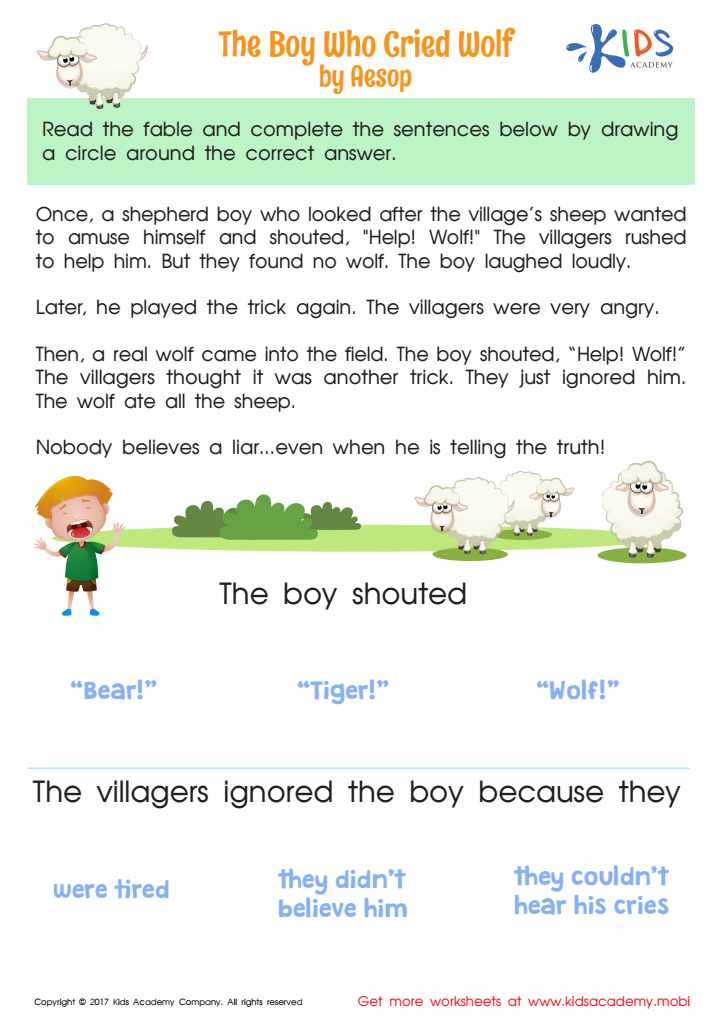
The Boy Who Cried Wolf Worksheet
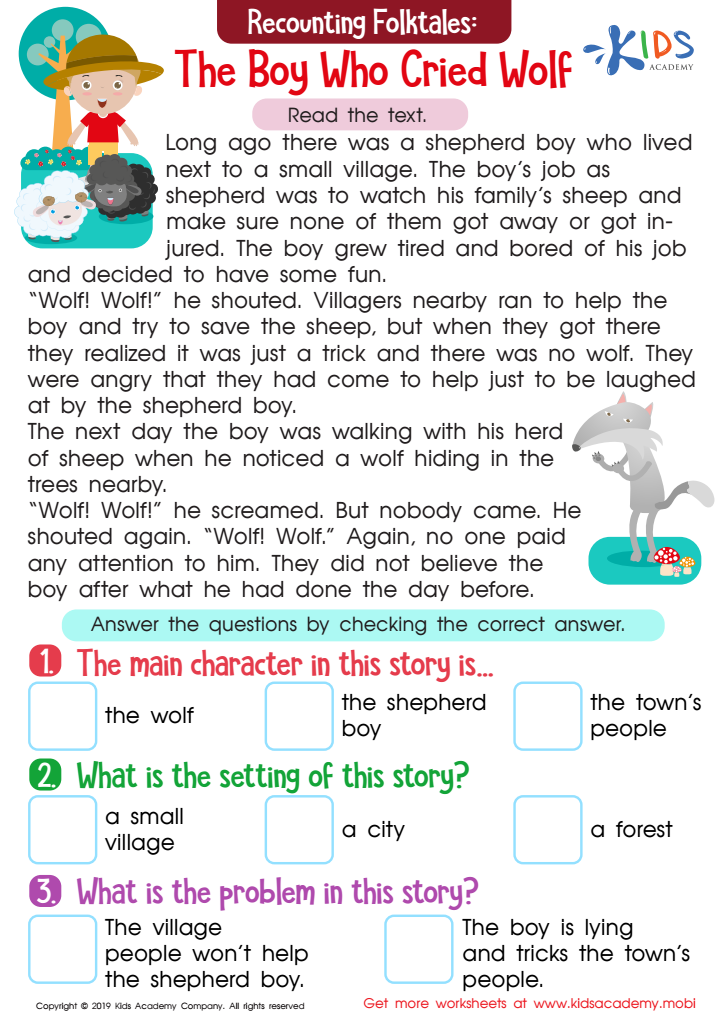
The Boy Who Cried Wolf Part 1 Worksheet





.jpg)

Moral understanding is crucial for children aged 6-9 as it lays the foundation for their social and emotional development. At this age, kids are beginning to navigate the complexities of relationships and learn right from wrong. When parents and teachers foster moral understanding, they equip children with essential skills such as empathy, compassion, and respect for others. These skills aid in creating a caring, inclusive environment where children feel safe and valued, promoting cooperation and reducing conflicts.
Moreover, engaging children in discussions about morals can help them comprehend diverse perspectives and the consequences of their actions. This understanding can lead to better decision-making as they encounter real-life challenges. When children grapple with moral dilemmas through literature or real-world situations, they develop critical thinking skills and the ability to reflect on their choices.
Teachers and parents can reinforce moral understanding by modeling ethical behavior and encouraging open communication about values and beliefs. This holistic development not only enhances character but also supports academic success, as emotionally intelligent children tend to be more focused and motivated learners. Ultimately, building moral understanding helps produce caring citizens who contribute positively to their communities.








