
Understanding suffixes Normal Reading Worksheets for Ages 6-9
3 filtered results
Difficulty Level
Grade
Age
-
From - To
Subject
Activity
Standards
Explore our "Understanding Suffixes" Normal Reading Worksheets, designed specifically for children aged 6-9. These engaging worksheets help young learners grasp the concept of suffixes, enhancing their vocabulary and reading skills. By adding various suffixes to root words, children will discover how meaning changes, making reading more fun and enriching. Tailored to promote learning through hands-on activities, our worksheets include vibrant illustrations and interactive exercises that keep students motivated. Perfect for classroom use or home practice, these resources support literacy development and strengthen understanding of word formation. Dive into the world of suffixes and watch your child's reading abilities soar!
Favorites
With answer key
Interactive
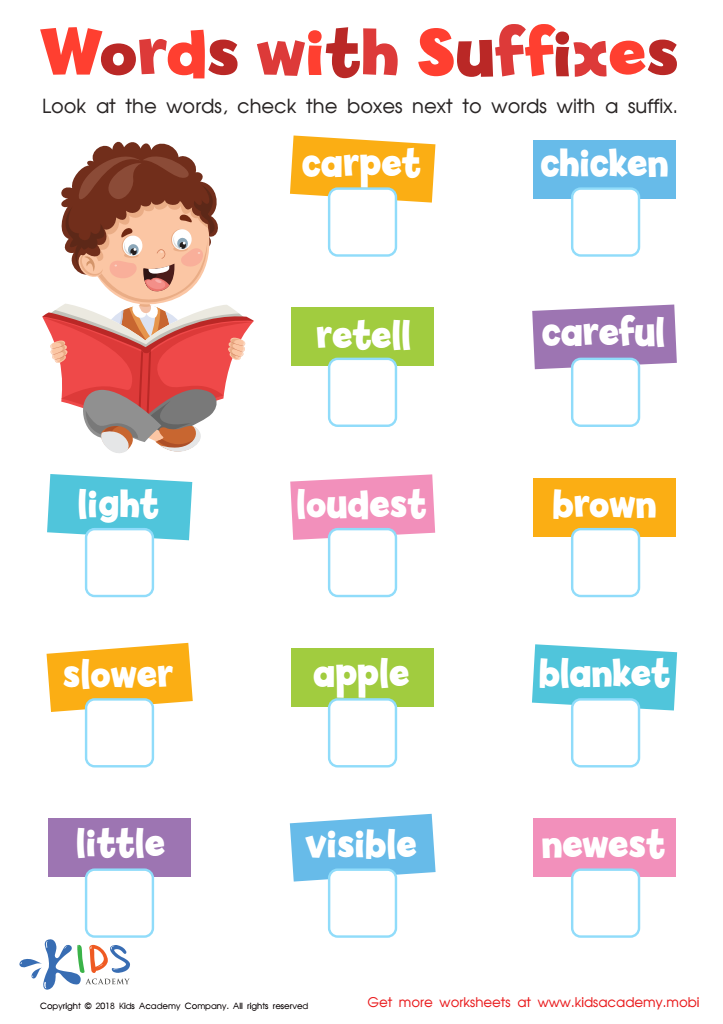
Reading: Words With Suffixes Worksheet
Help your students understand suffixes and build reading fluency with this worksheet. Have them read each word, then choose the ones with a suffix. Practicing this will lead to better comprehension and more confident reading. Save it for future use in language and reading classes.
 Assign to My Students
Reading: Words With Suffixes Worksheet
Worksheet
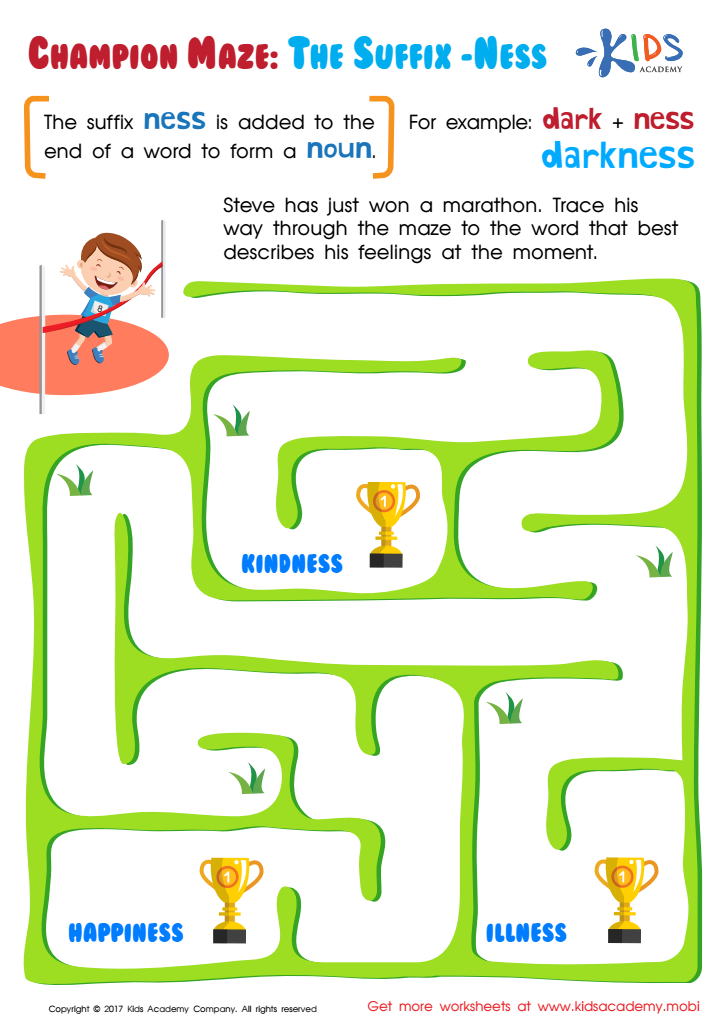
Suffix Ness Worksheet
Words are amazing! Add an ending and they can change part of speech. Make nouns out of adjectives with -ness. This worksheet has a fun maze to help learners increase vocabulary and language skills.
Suffix Ness Worksheet
Worksheet
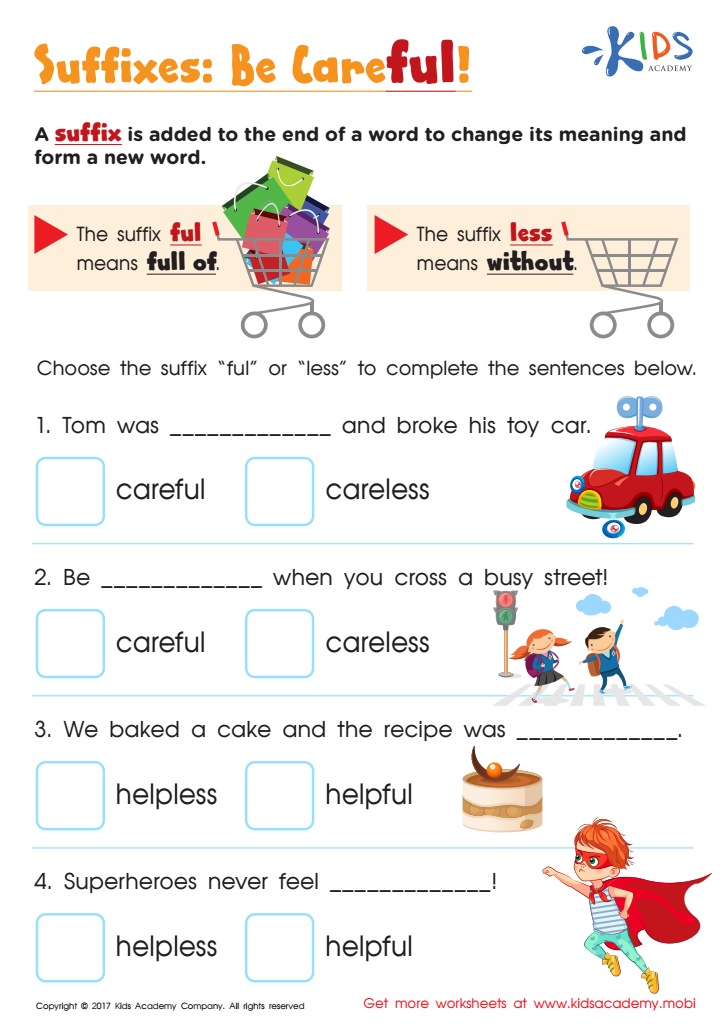
Suffixes Ful and Less Worksheet
Uh oh! Careful and careless might look similar, but have very different meanings. To avoid mix-ups, learn to spot and use the right suffixes. Use this suffixes ful and less worksheet to help your child master common suffixes!
Suffixes Ful and Less Worksheet
Worksheet
Join Kids Academy for Free
Who is primarily going to use this learning content?








Understanding suffixes is crucial for children aged 6-9 as it plays a significant role in their literacy development. Suffixes are word endings that modify a word's meaning or grammatical function, such as "-ing," "-ed," or "-ful." By focusing on suffixes, parents and teachers enhance children's vocabulary and comprehension skills.
When children grasp how suffixes change base words, they can decode unfamiliar words more easily, fostering confidence in reading. For instance, if a child knows the word "play," recognizing "playing" or "played" becomes intuitive. This understanding not only aids in pronunciation but also enriches their verbal and written expression.
Moreover, learning suffixes lays the groundwork for spelling mastery. Many spelling patterns are based on root words and their suffixes, which supports children in becoming proficient spellers. Additionally, as students become more fluent readers, they can engage with more complex texts, enhancing their educational experience.
Encouraging exploration of suffixes through fun activities and games can make this learning enjoyable, ensuring children approach reading as an engaging adventure. Therefore, parents and educators should prioritize the understanding of suffixes to fuel children's literacy, critical thinking, and a lifelong love of reading.








