Verb identification Normal Reading Worksheets for Ages 6-9
3 filtered results
-
From - To
Discover our engaging "Verb Identification Normal Reading Worksheets" designed for children ages 6-9! These worksheets provide a fun and interactive way for young learners to grasp the essential role verbs play in sentences. Each activity is tailored to build reading comprehension skills while emphasizing verb identification through colorful illustrations and relatable contexts. Perfect for classroom use or home practice, our resources support early literacy development and encourage kids to explore language creatively. Empower your students with the confidence to recognize and use verbs effectively, setting a firm foundation for their future reading and writing endeavors. Download now and ignite a love for learning!
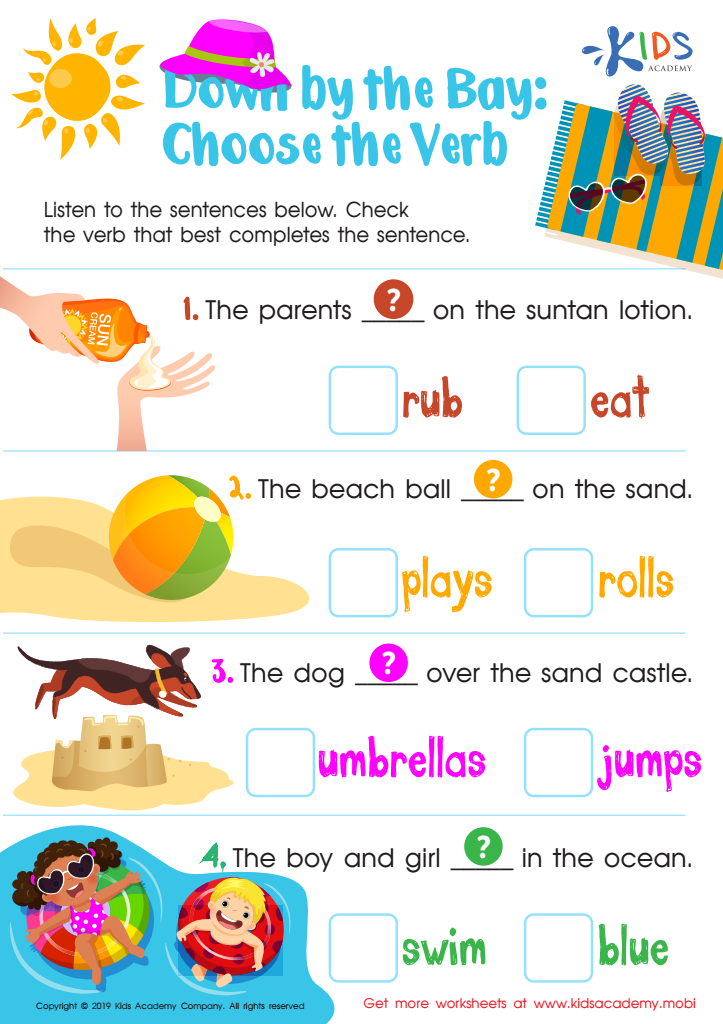
Down by the Bay: Choose the Verb Worksheet
 Assign to My Students
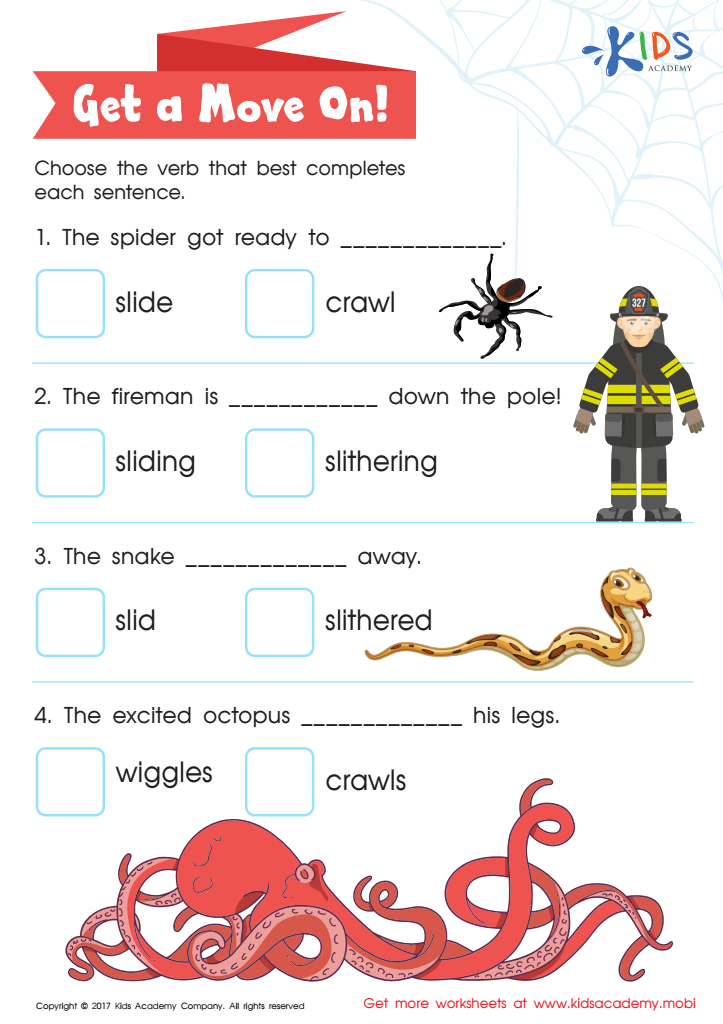
Verb Worksheet
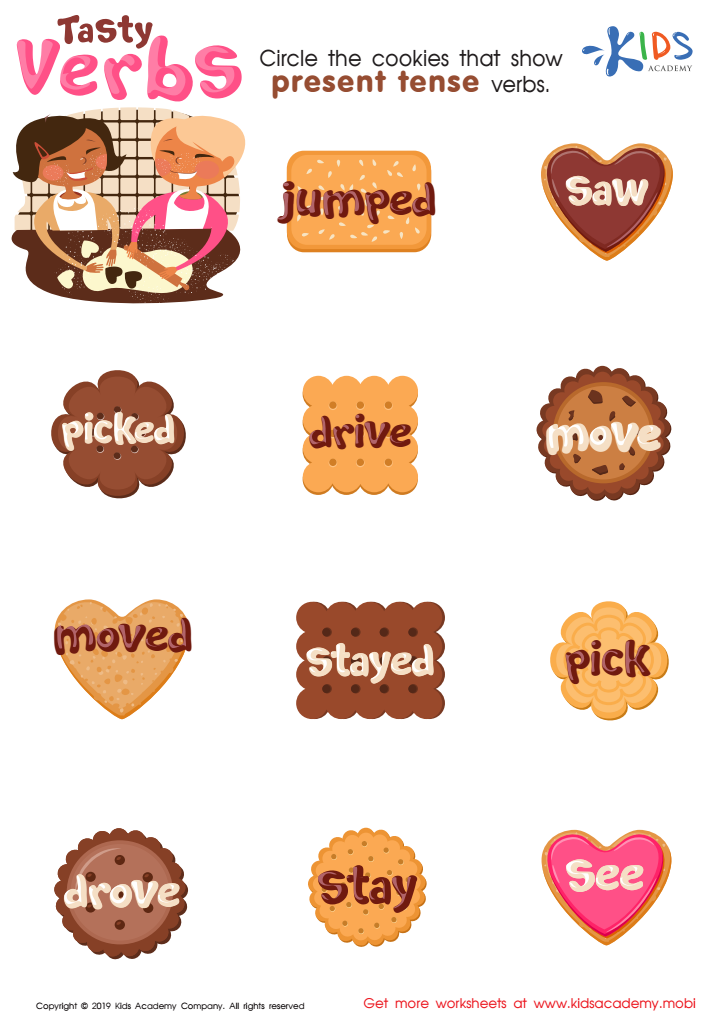
Tasty Verbs Worksheet








Verb identification is a crucial skill for children aged 6-9, and parents and teachers should prioritize promoting this competency. At this age, children are beginning to read more complex sentences and are developing foundational literacy skills. Verbs are action words that not only provide context and meaning to sentences but also make reading more engaging and dynamic.
Fostering verb identification can enhance comprehension skills, enabling children to understand the actions taking place in a story. This, in turn, supports fluency and critical thinking as kids learn to analyze the motivations behind actions and predict outcomes. Additionally, recognizing verbs plays a vital role in writing, allowing children to create more vivid narratives and articulate their thoughts effectively.
Moreover, understanding verbs is linked to grammar and syntax awareness, paving the way for better communication skills. As children's vocabulary grows, teaching them to identify and use verbs encourages them to express their ideas more clearly and confidently.
Ultimately, parents and teachers should care about verb identification because it lays the groundwork for successful reading, writing, and communication, which are essential skills for academic achievement and lifelong learning. Encouraging this skill at an early age can foster a love for language and learning in young readers.








