Understanding Sequences Normal Reading Comprehension Worksheets for Ages 6-9
3 filtered results
-
From - To
Unlock the potential of young readers with our "Understanding Sequences: Normal Reading Comprehension Worksheets for Ages 6-9." These expertly-designed worksheets help children develop critical thinking and comprehension skills by focusing on understanding the order of events in a story. Perfect for kids aged 6-9, each worksheet combines engaging texts with thought-provoking questions to reinforce learning. Foster your child's ability to recognize and recall sequences, enhancing their overall reading proficiency and enjoyment. Ideal for both classroom use and home practice, our resources make learning to read an exciting adventure. Explore our collection today to support your child's reading journey!
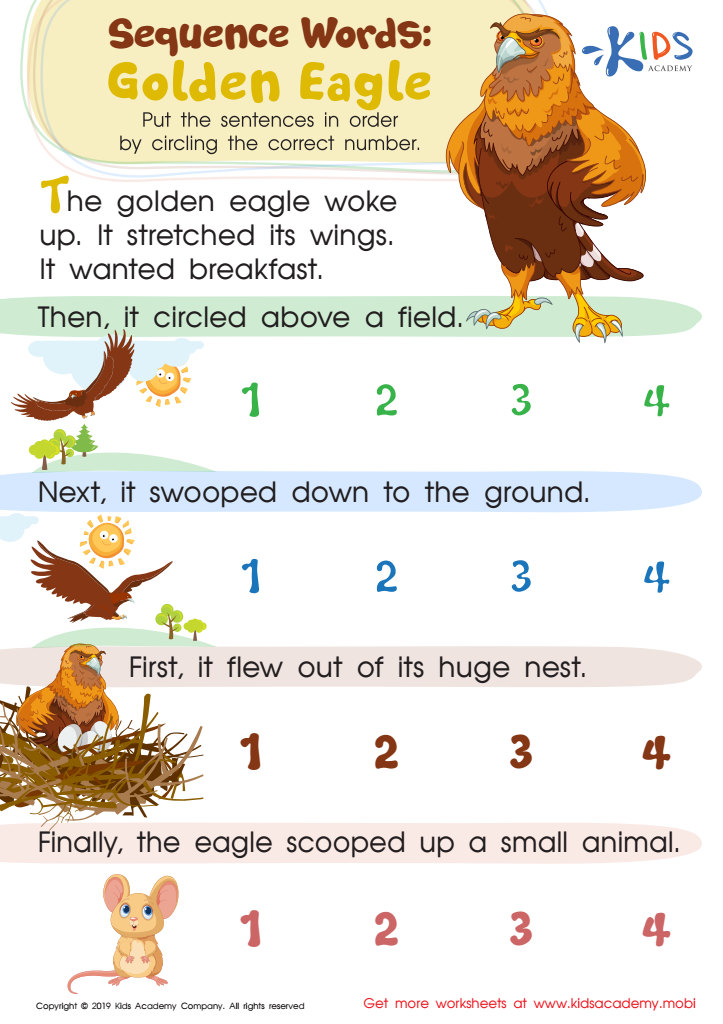
Sequence Word Eagle Worksheet
 Assign to My Students
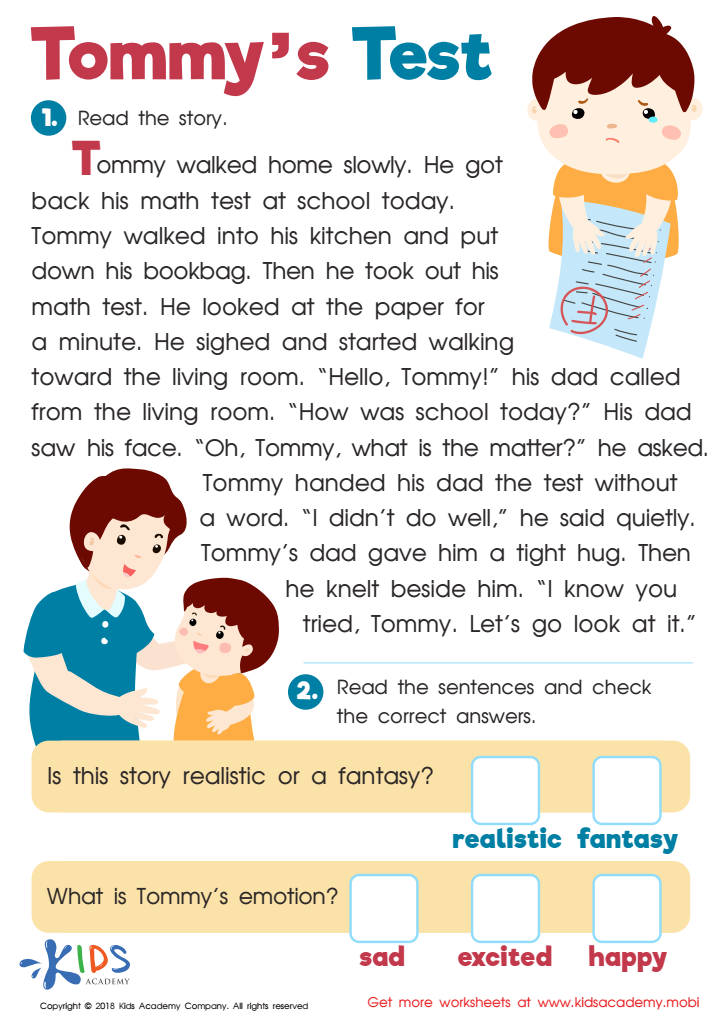
Tommys Test Worksheet
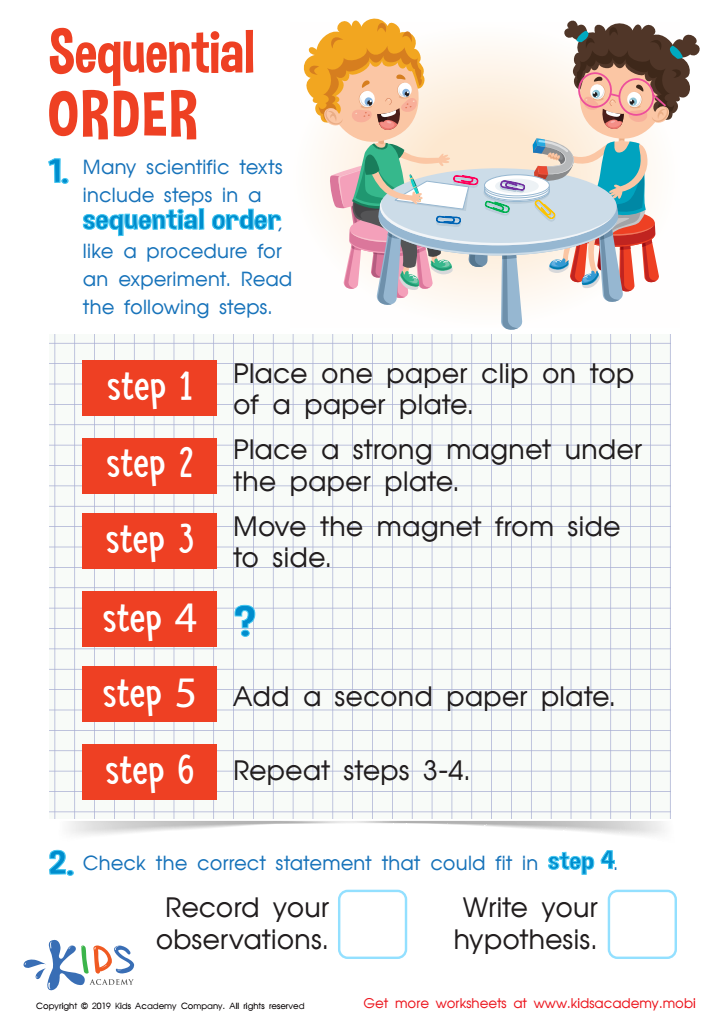
Sequencential Order Worksheet








Understanding sequences in reading comprehension is fundamental for children aged 6-9 because it lays the foundation for critical thinking and effective communication. At this developmental stage, children’s cognitive abilities are expanding rapidly, and grasping the concept of sequences aids in organizing thoughts, improving memory, and enhancing problem-solving skills.
For parents and teachers, fostering this skill is crucial as it directly influences a child's ability to understand and narrate stories, follow instructions, and recognize patterns in their everyday environment. When children understand sequences, they can predict what happens next in a story, making reading a more engaging and enjoyable activity. This reinforces a love for reading that can last a lifetime, promoting educational success.
Additionally, mastering sequences helps children with other academic areas, including mathematics, as it involves recognizing and applying logical order and sustains attention to detail. It promotes discipline and structure, vital qualities in academic commitment and overall personal development. By emphasizing the importance of sequences, parents and teachers can ensure children develop robust reading comprehension skills, which are essential for their academic progression and intellectual growth. Thus, it's pivotal not just for immediate improvements in literacy but also for long-term educational and cognitive benefits.








