Analytical thinking Normal Reading Fiction Worksheets for Ages 6-9
4 filtered results
-
From - To
Boost your child's analytical thinking skills with our tailored reading fiction worksheets designed for ages 6-9. These engaging resources encourage young readers to dive deeper into stories, fostering comprehension and critical thinking. Each worksheet includes thought-provoking questions and activities that help kids analyze characters, plot developments, and themes in familiar narratives. By promoting discussion and reflection, our worksheets nurture essential skills that lay the foundation for advanced literacy and cognitive growth. Perfect for teachers and parents alike, these fun exercises make learning enjoyable while enhancing your child's ability to think analytically about the world around them. Explore engaging content today!
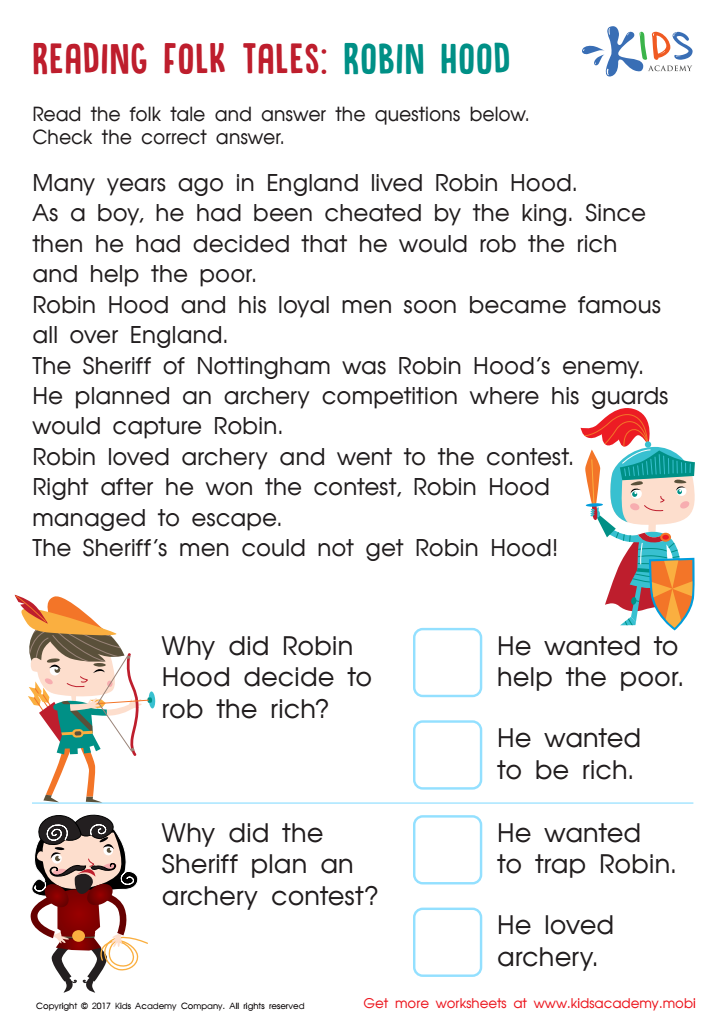
Robin Hood Folktale Worksheet
 Assign to My Students
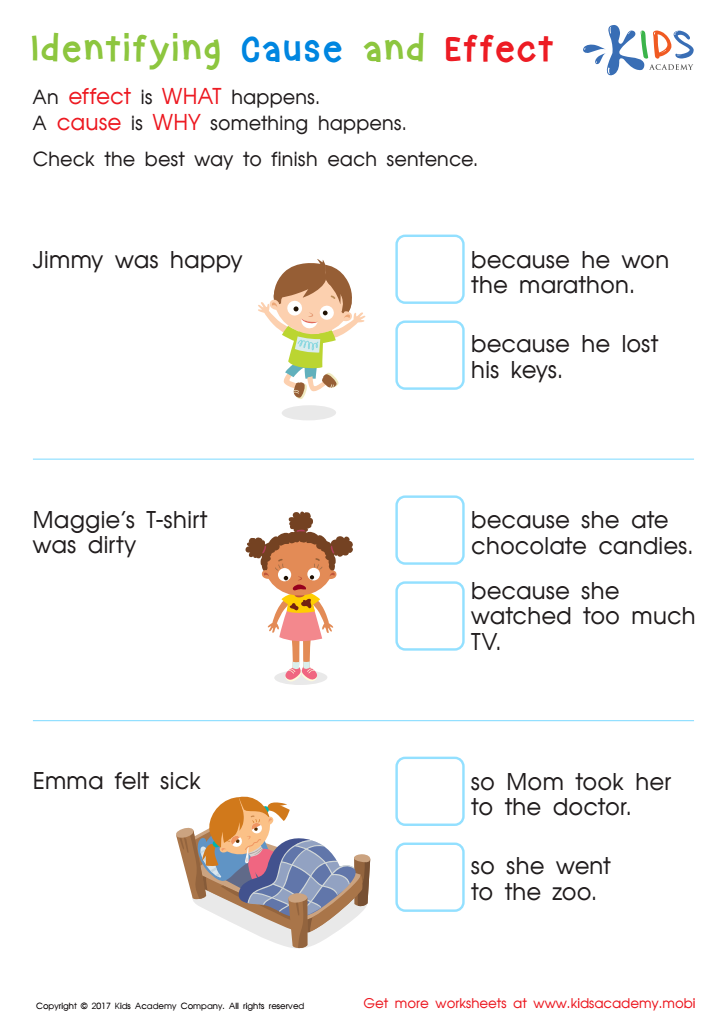
Indentifying Cause and Effect Worksheet
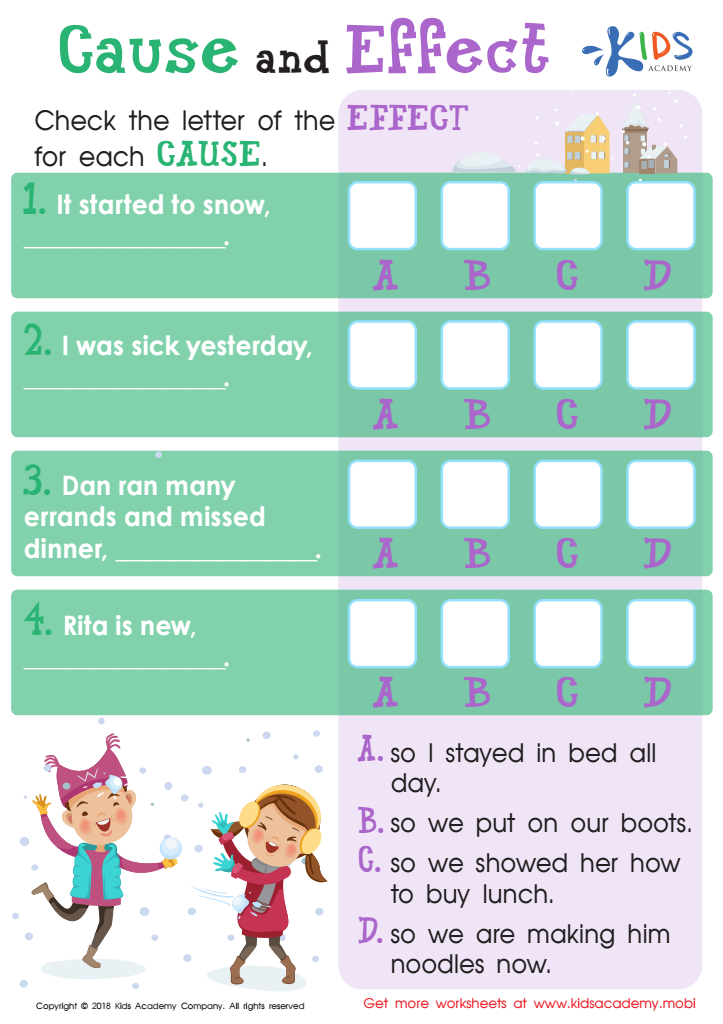
Cause and Effect Worksheet
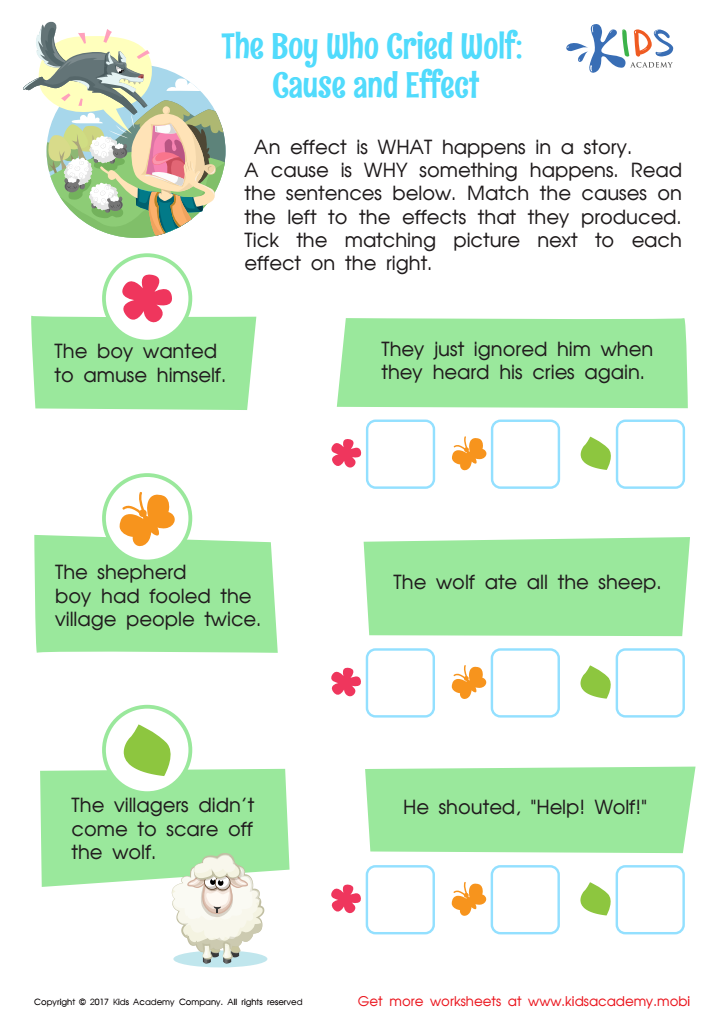
The Boy Who Cried Wolf: Cause and Effect Worksheet




.jpg)



Analytical thinking is a crucial skill that helps children ages 6-9 process information, assess situations, and make informed decisions. When it comes to reading fiction, analytical thinking enables young readers to critically engage with stories, enhancing their comprehension and enjoyment. By analyzing characters, plot developments, and themes, children learn to infer motives and predict outcomes, which deepens their understanding of narrative structures.
Parents and teachers should care about fostering analytical thinking in young readers because it builds a solid foundation for academic success. As children develop these skills, they become more adept at exploring complex ideas, solving problems, and making connections across different subjects—from literature to science and beyond.
Moreover, storytelling often reflects real-life situations, allowing children to navigate social dynamics and ethical dilemmas through diverse character experiences. Engaging with fiction analytically equips them with the empathy and insight needed to empathize with others, fostering their emotional intelligence.
In a world that demands critical thinking, promoting analytical skills through literary exploration instills lifelong learning habits and prepares children for future challenges. Ultimately, nurturing these competencies will empower children to articulate their thoughts and opinions, thus becoming more confident and capable individuals.







