Logical Reasoning Normal Reading Fiction Worksheets for Ages 6-9
5 filtered results
-
From - To
Unlock your child's potential with our Logical Reasoning Normal Reading Fiction Worksheets for Ages 6-9. These engaging worksheets are designed to enhance children's reading comprehension and critical thinking skills through fun and relatable stories. Perfect for young readers, each worksheet provides stimulating exercises that challenge kids to think logically, make inferences, and draw conclusions from fictional texts. Crafted by education experts, these printables not only foster a love for reading but also build a strong foundation in problem-solving, ensuring your child excels academically. Explore our diverse range and give your child the tools they need for success.
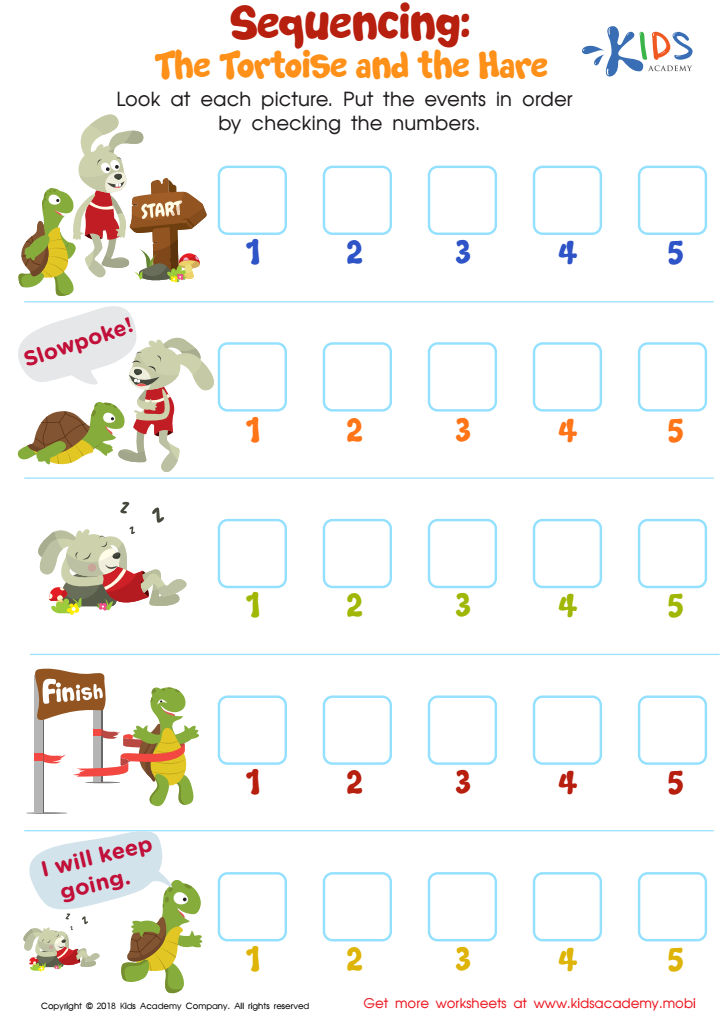
Sequencing: The Tortoise and the Hare Worksheet
 Assign to My Students
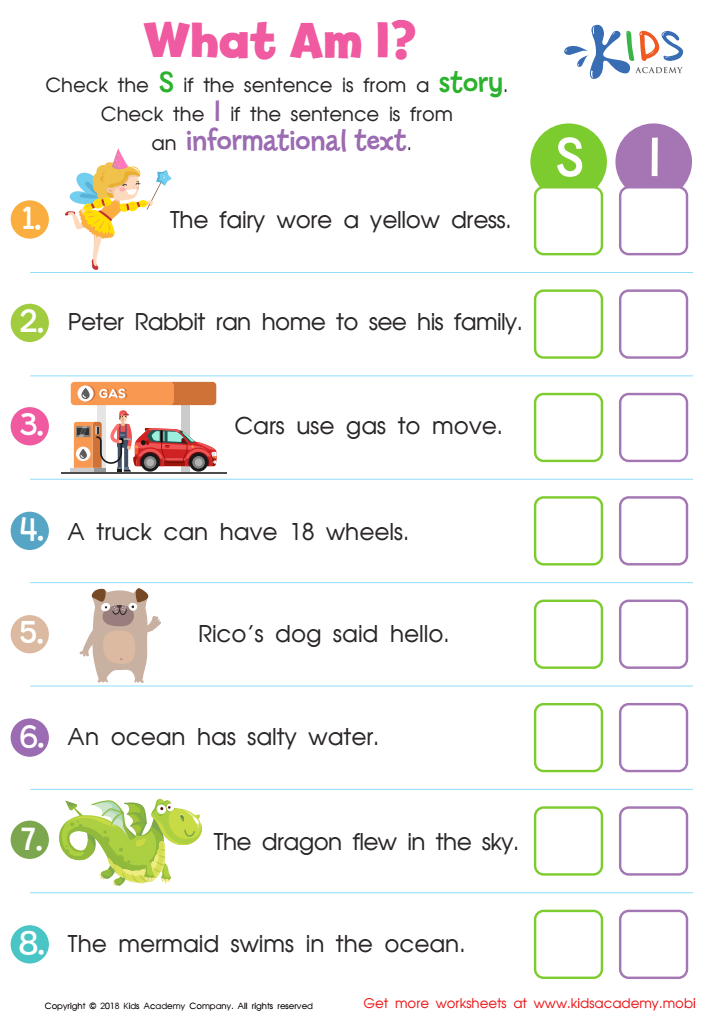
What Am I? Worksheet
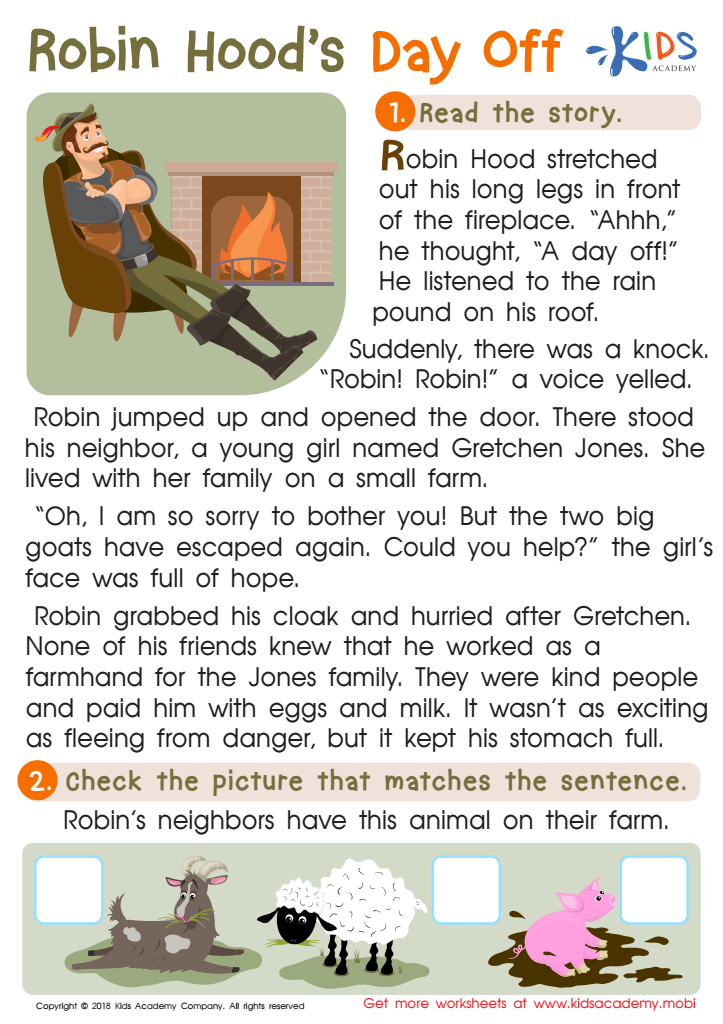
Robin Hood's Day Off Worksheet
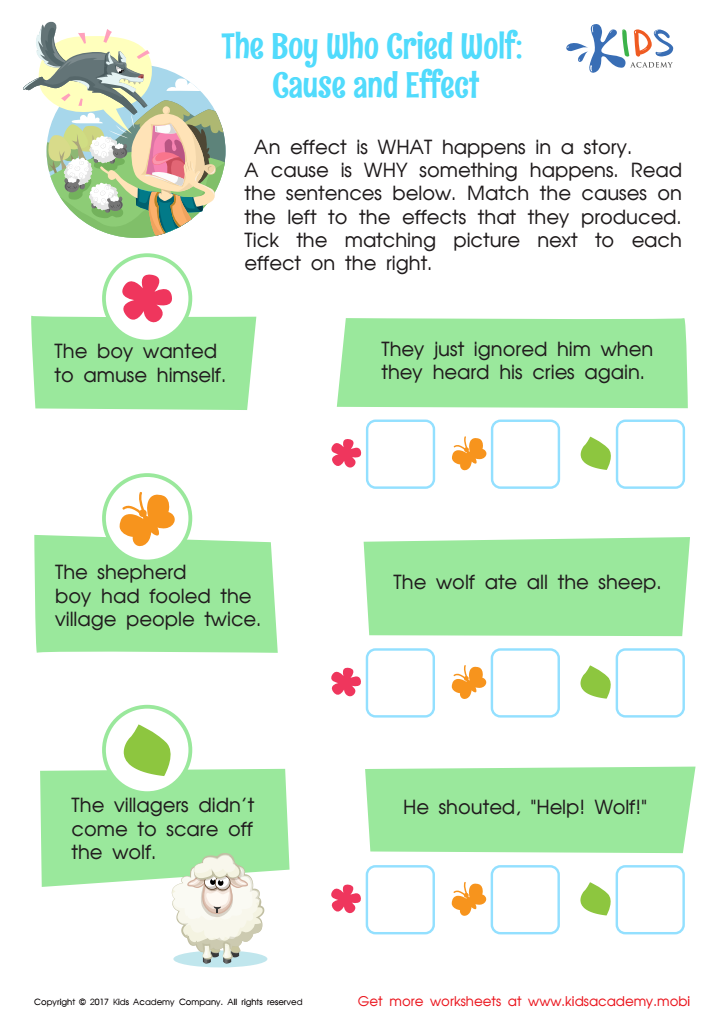
The Boy Who Cried Wolf: Cause and Effect Worksheet
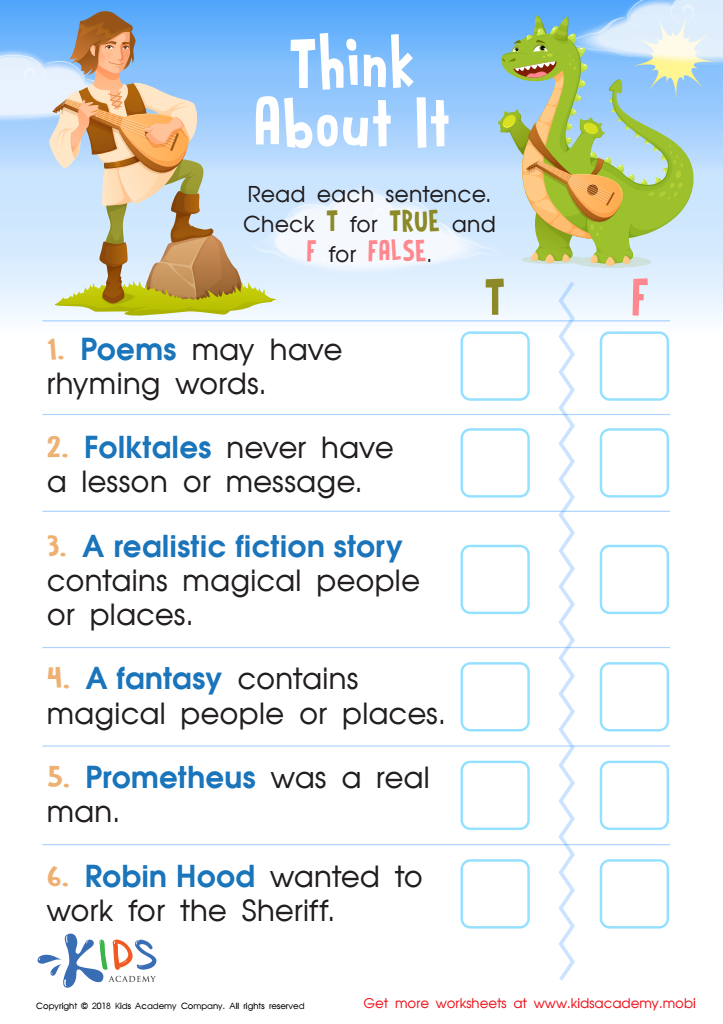
Think About It: Assessment Worksheet






Parents and teachers should prioritize logical reasoning and normal reading of fiction for children aged 6-9 because these activities are foundational for cognitive and emotional development. At this age, children's brains undergo significant growth; engaging them in activities that stimulate logical reasoning helps to develop critical thinking skills that will be essential throughout their lives. Logical reasoning activities can include puzzles, games, and problems that require them to think systematically, enhancing their ability to analyze situations and make reasoned decisions.
Normal reading fiction is equally important as it enriches children’s vocabulary, improves comprehension, and fosters imagination. Fictional stories expose children to different perspectives and scenarios, helping them to understand complex human emotions and social situations. This engagement with storytelling aids in developing empathy and emotional intelligence. Moreover, consistent reading practice bolsters their academic skills, making them proficient in understanding and processing written information, which is crucial for their overall educational journey.
The synergy between logical reasoning and reading fiction equips children not just for academic success, but also for personal growth, making them well-rounded individuals who can think critically, empathize with others, and creatively solve problems. Therefore, instilling a habit of engaging in these activities from an early age is invaluable for a child's holistic development.







