Moral lesson understanding Normal Reading Fiction Worksheets for Ages 6-9
5 filtered results
-
From - To
Discover engaging Moral Lesson Understanding Normal Reading Fiction Worksheets designed for children aged 6 to 9. These worksheets encourage young readers to explore essential morals conveyed through captivating stories. They help develop critical thinking skills, enabling kids to identify and reflect on life lessons embedded within fiction. Each worksheet is thoughtfully crafted to enhance reading comprehension while fostering a deeper understanding of values such as kindness, honesty, and empathy. Perfect for teachers and parents seeking to support literacy development and moral education. Start your child's journey to becoming a thoughtful reader with these interactive and enjoyable exercises today!
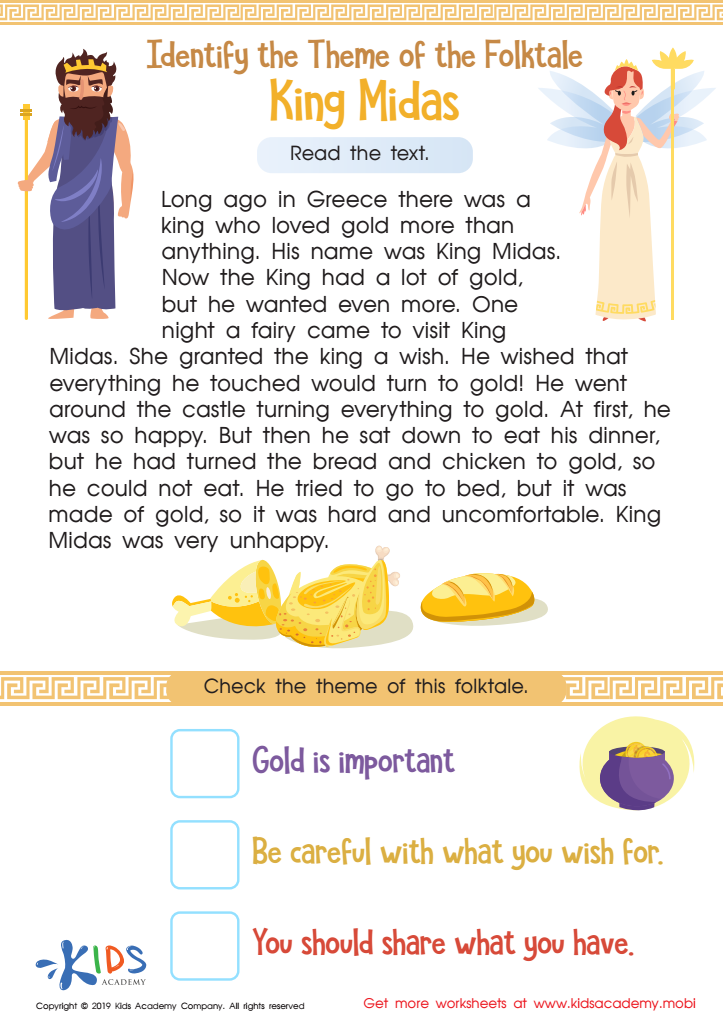
King Midas Worksheet
 Assign to My Students
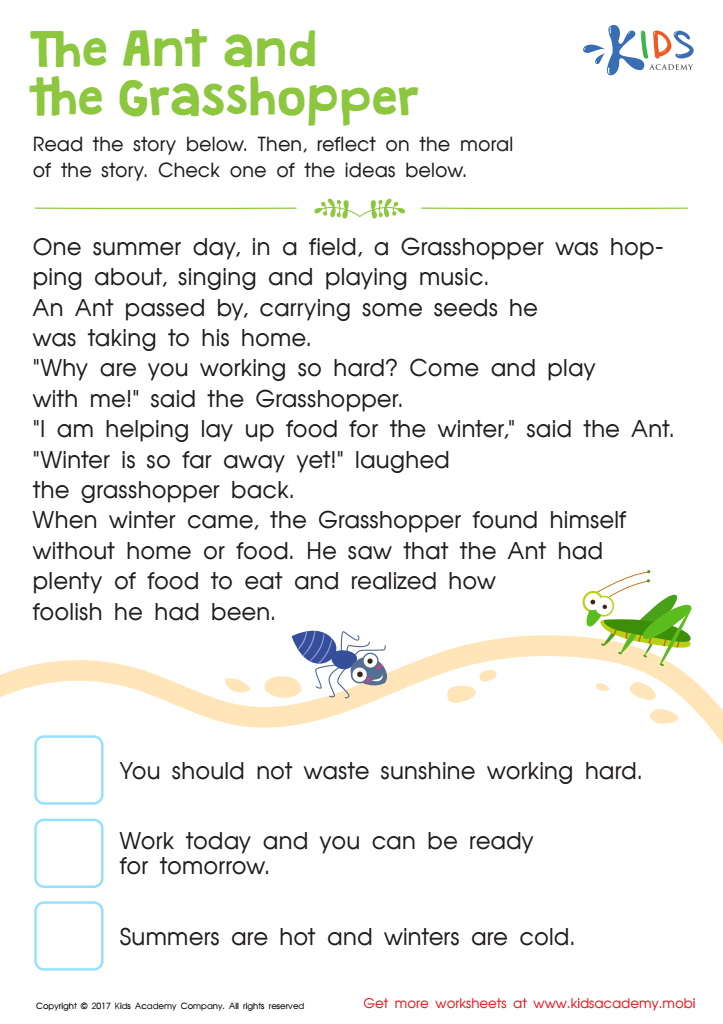
The Ant and The Grasshopper Printable
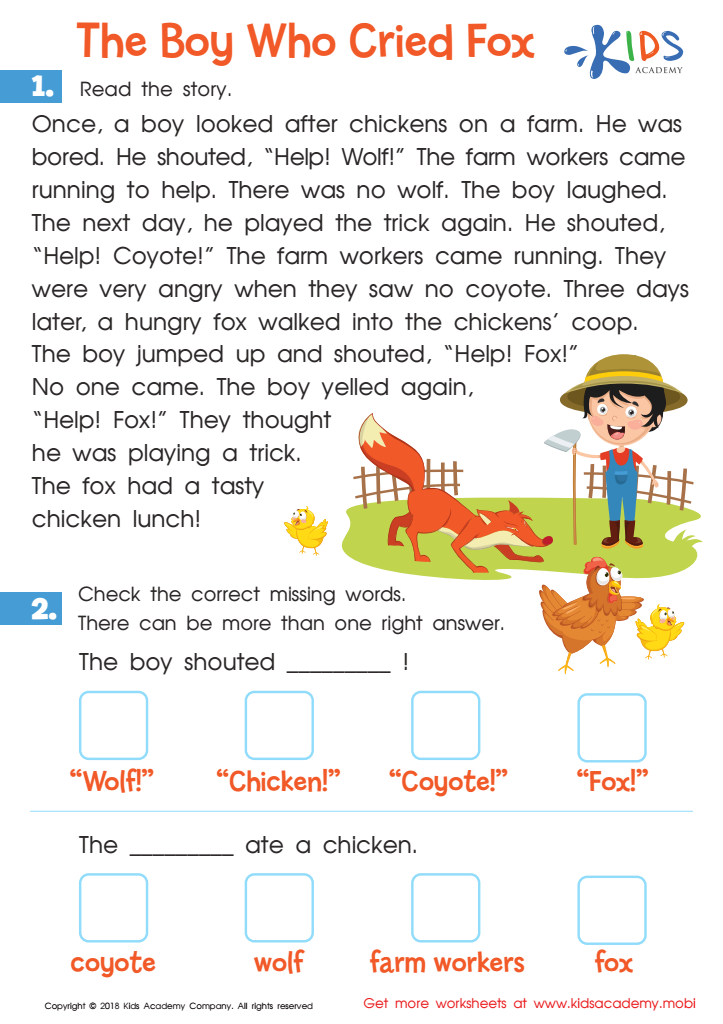
The Boy Who Cried Fox Worksheet
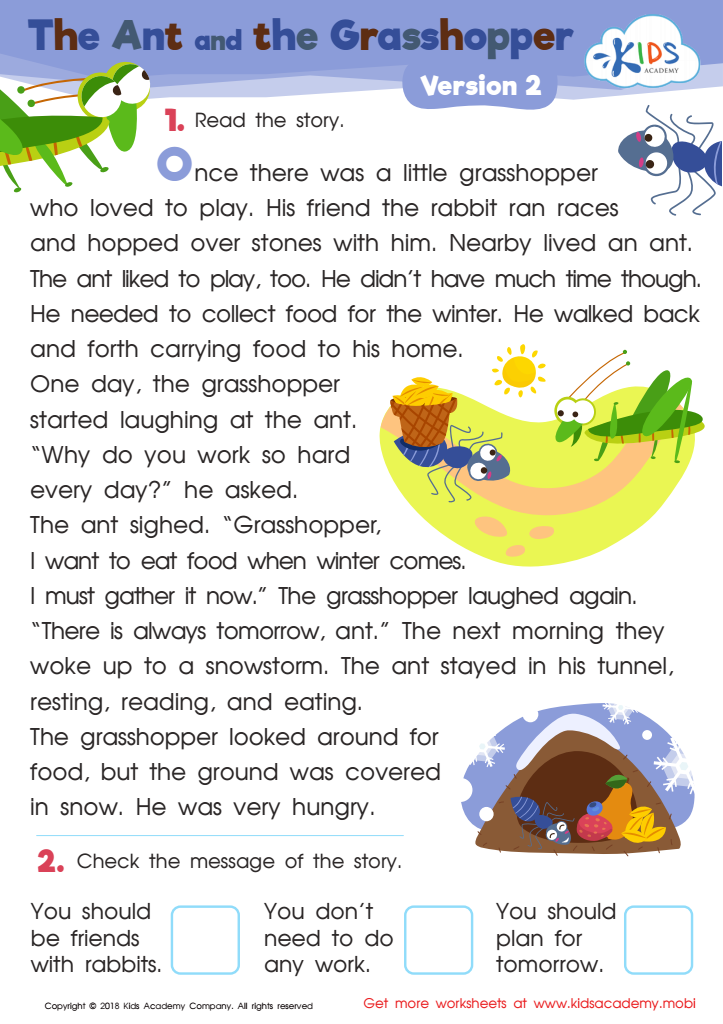
The Ant and The Grasshopper Version 2 Worksheet
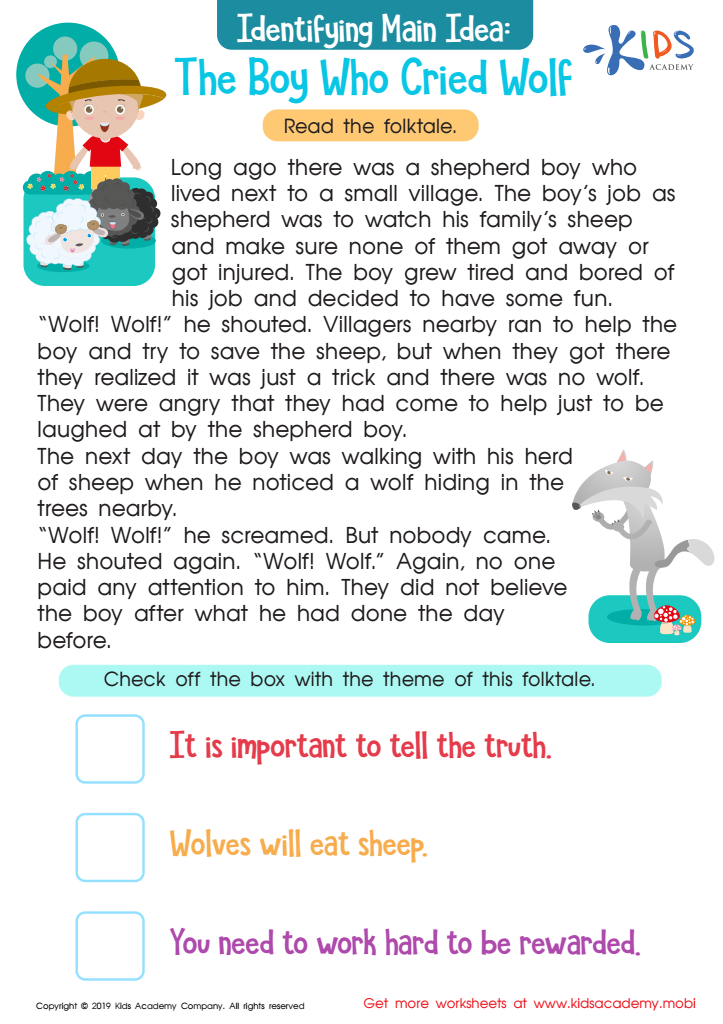
The Boy Who Cried Wolf Part 2 Worksheet


.jpg)





Parental and teacher involvement in fostering moral lesson understanding through normal reading fiction for children aged 6-9 is essential for their holistic development. At this age, children are particularly receptive to stories that reflect real-life situations and ethical dilemmas. Engaging them in reading fiction not only stimulates their imagination but also helps them understand complex values like kindness, empathy, cooperation, and honesty.
These stories act as mirrors and windows—mirrors reflecting their own experiences and emotions, and windows into the diverse lives of others. When adults guide discussions around these stories, children learn to articulate their thoughts and feelings, enhancing communication skills. It also nurtures critical thinking as they analyze characters' choices and consequences, fostering a sense of responsibility.
Moreover, moral lessons woven into narratives promote social-emotional learning, which is crucial for developing resilience and navigating relationships. This understanding can lead to better behavioral choices, as children become more empathetic and aware of others' feelings. By prioritizing the moral dimension of reading fiction, parents and teachers equip children with the ethical framework needed to thrive in their communities and contribute positively to society. Enhancing children's moral compass at this tender age lays a strong foundation for their character development.







