
Story analysis Normal Reading Fiction Worksheets for Ages 6-9
3 filtered results
Difficulty Level
Grade
Age
-
From - To
Subject
Activity
Standards
Discover our engaging "Story Analysis Normal Reading Fiction Worksheets" designed specifically for children ages 6-9. These worksheets foster critical thinking and comprehension skills by encouraging young readers to delve into stories, analyze characters, settings, and plot elements. Each worksheet provides creative and interactive activities, perfect for enhancing literacy skills in a fun and supportive way. Ideal for both classroom and home use, these resources help children grasp storytelling fundamentals while developing their ability to interpret narratives. Inspire a love for reading and boost analytic skills with our thoughtfully crafted story analysis worksheets! Explore the joy of understanding stories today!
Favorites
With answer key
Interactive
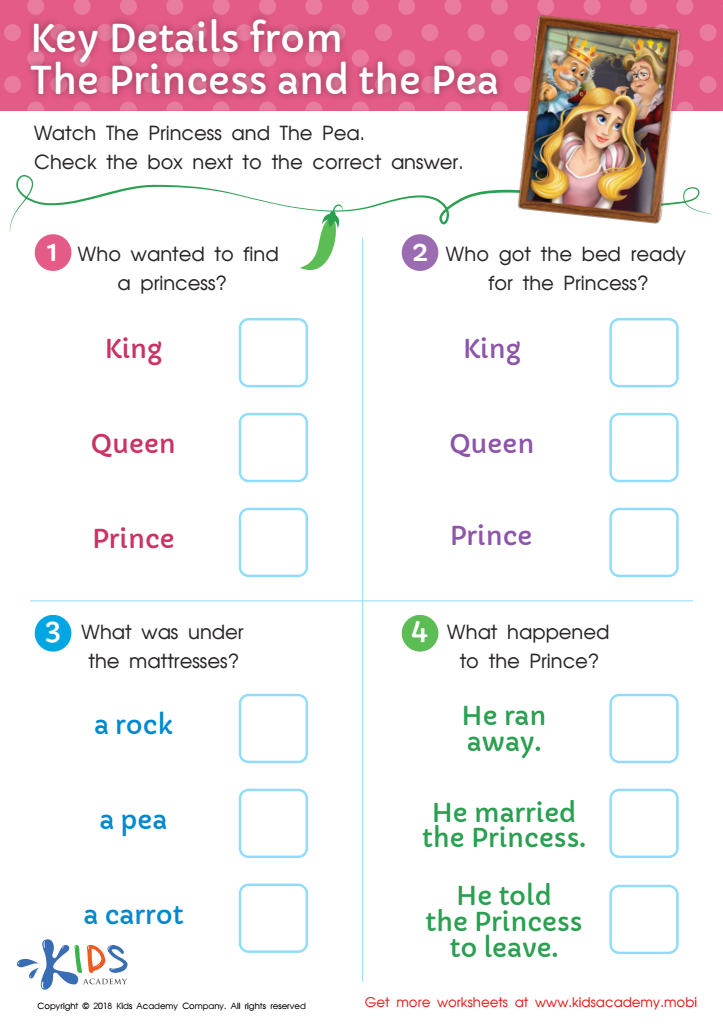
Key Details from the Princess and the Pea Worksheet
After reading The Princess and the Pea, ask your students questions to assess their comprehension of the story. Check their knowledge of key details. This printable can be used to help evaluate their understanding. Encouraging the recall of story events helps build important reading skills.
 Assign to My Students
Key Details from the Princess and the Pea Worksheet
Worksheet
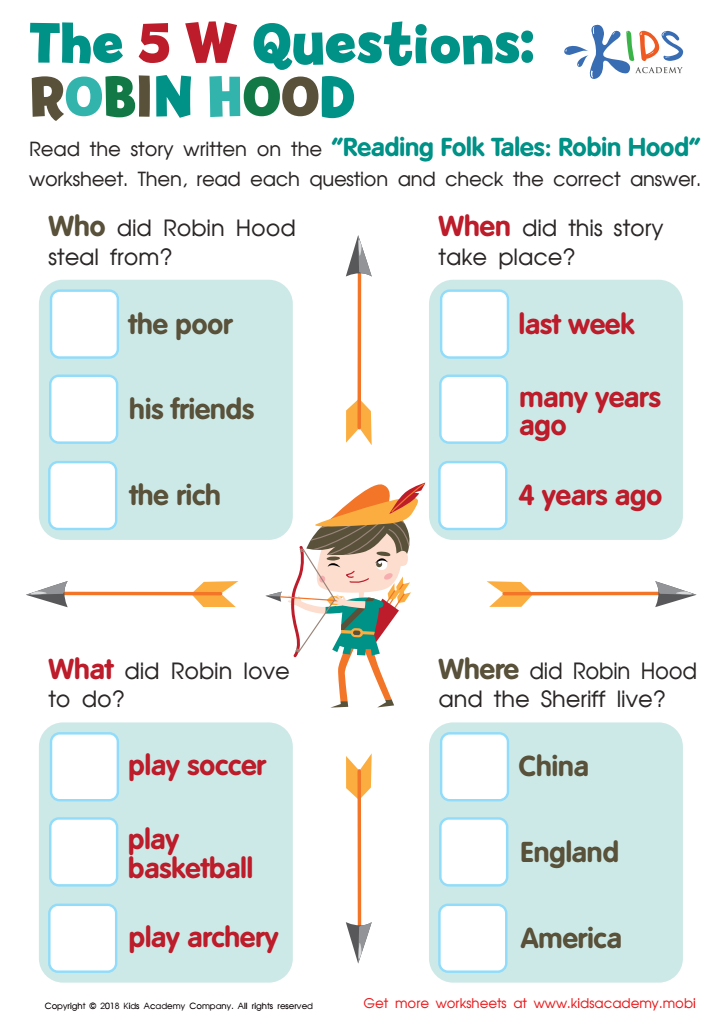
The 5 W Questions: Robin Hood Worksheet
Before embarking on this Robin Hood adventure, ensure your child reads and comprehends the 'Reading Folk Tales: Robin Hood' worksheet. Have them consider the story's lessons, and observe the details. Read the questions and help your kids select the correct answers.
The 5 W Questions: Robin Hood Worksheet
Worksheet
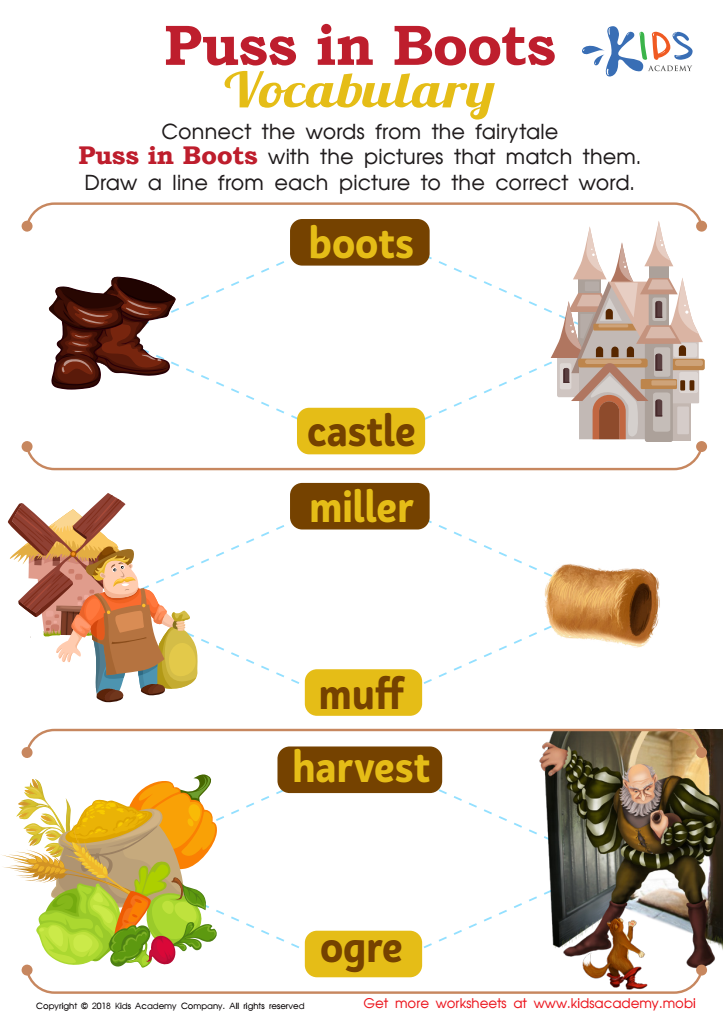
Puss in Boots Vocabulary Worksheet
Let your kids enjoy story-telling while learning at the same time. Help them learn from the fairytale, Puss in Boots, by connecting words from the worksheet with the matching pictures. Ask them to draw a line between each picture and corresponding word to build their vocabulary.
Puss in Boots Vocabulary Worksheet
Worksheet
Join Kids Academy for Free
Who is primarily going to use this learning content?







.jpg)
Parents and teachers should prioritize story analysis in normal reading fiction for ages 6-9 for several compelling reasons. At this stage, children are not only developing their literacy skills but also their critical thinking and comprehension abilities. Analyzing stories helps them to delve deeper into text, encouraging them to consider plot, character motivations, themes, and moral lessons. This enhances their understanding and retention of what they read, transforming reading into an engaging, interactive process rather than a passive one.
Moreover, story analysis fosters creativity and imagination, as children explore different perspectives and outcomes. It enables them to articulate their thoughts and feelings, enhancing their communication skills. When children analyze characters' choices and dilemmas, they start to make connections to their own lives, nurturing empathy and emotional intelligence.
Furthermore, story analysis serves as a foundation for academic success in later grades. Understanding narrative structures and literary elements will support more complex reading and writing tasks in the future. By encouraging story analysis in young readers, parents and teachers empower them to be thoughtful, creative learners who appreciate literature's richness, ultimately contributing to their lifelong love of reading and learning.







