Historical Knowledge Normal Reading Non-Fiction Worksheets for Ages 6-9
5 filtered results
-
From - To
Discover our engaging "Historical Knowledge Normal Reading Non-Fiction Worksheets" designed for children aged 6-9. These worksheets provide young learners with fun, age-appropriate materials that help cultivate a love for history. Focusing on essential historical concepts, our resources encourage curious minds to explore significant events, notable figures, and cultural milestones. Each worksheet promotes critical thinking and enhances reading comprehension skills through lively stories and thought-provoking questions. Perfect for classroom or at-home use, these worksheets serve as a valuable tool for fostering a deeper understanding of the world’s history while developing essential literacy skills. Start your child's learning journey today!
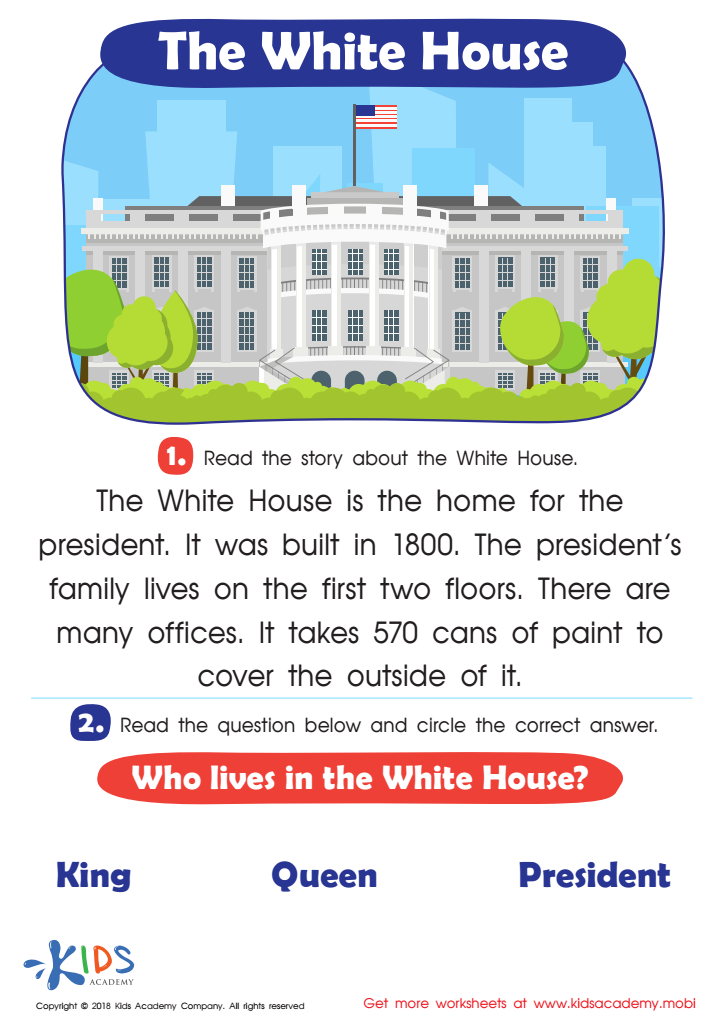
White House Worksheet
 Assign to My Students
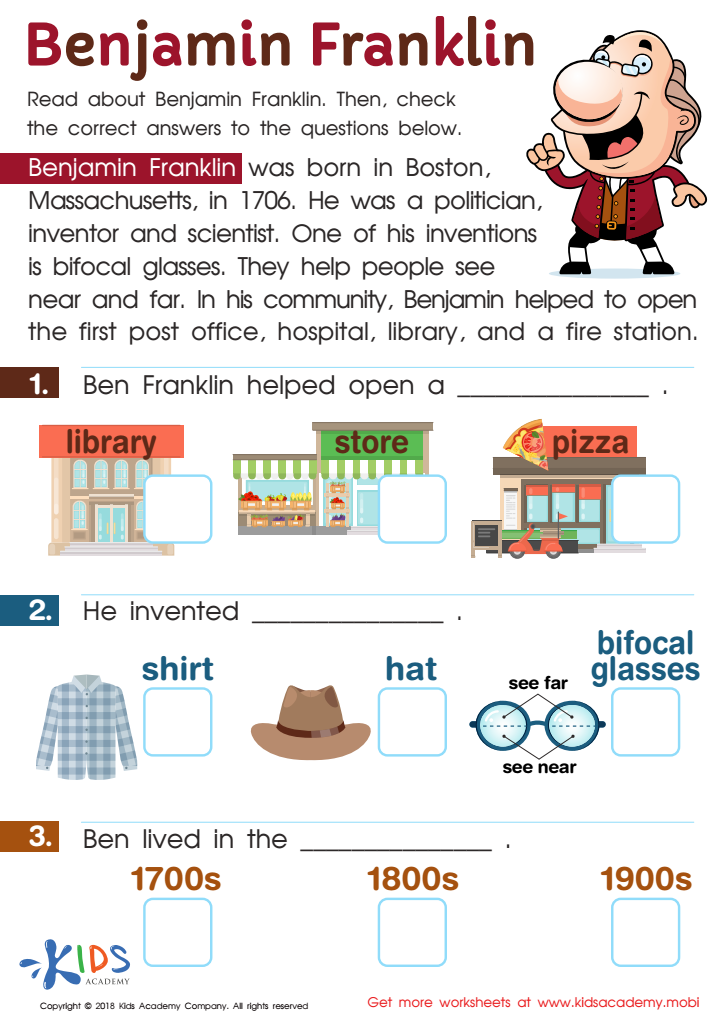
Benjamin Franklin Worksheet
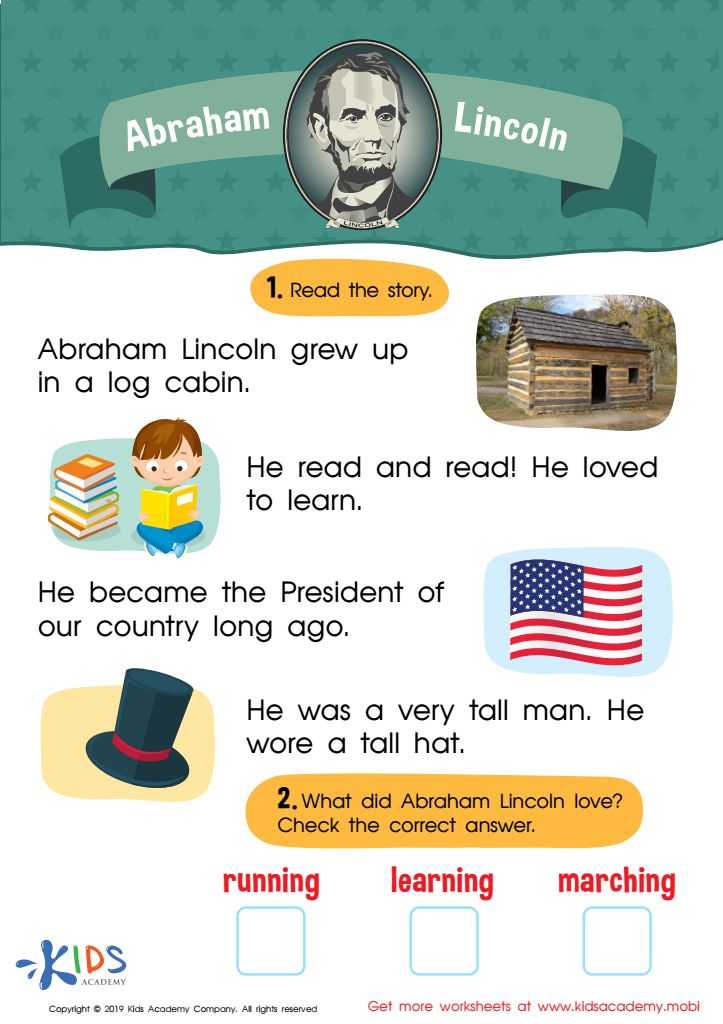
Abraham Lincoln Worksheet
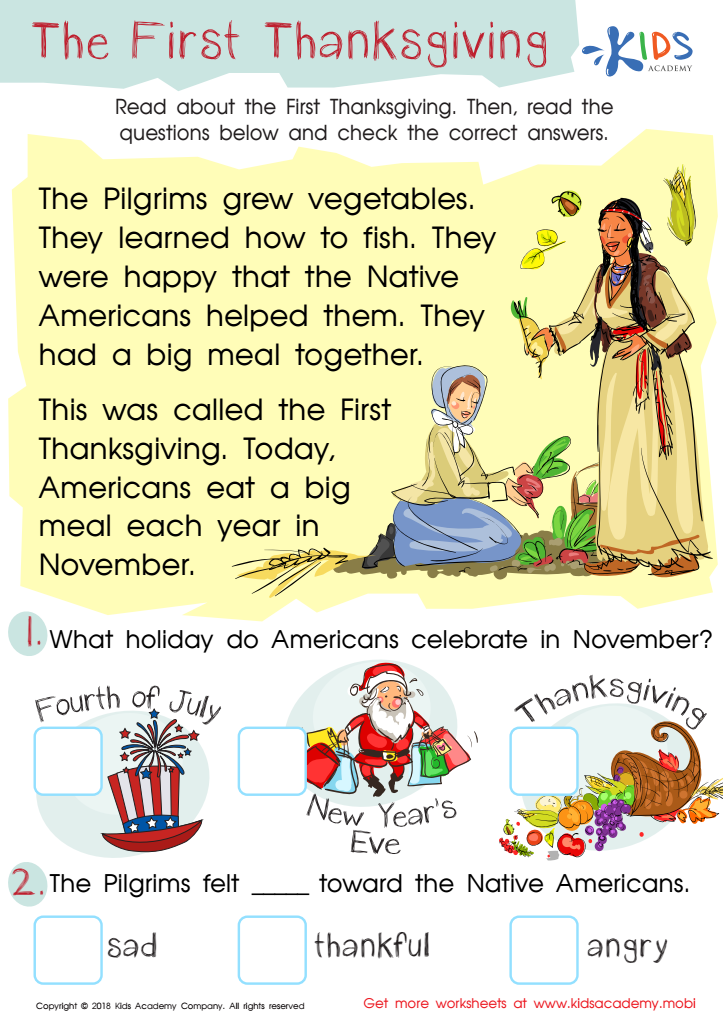
Assessment: First Thanksgiving Worksheet
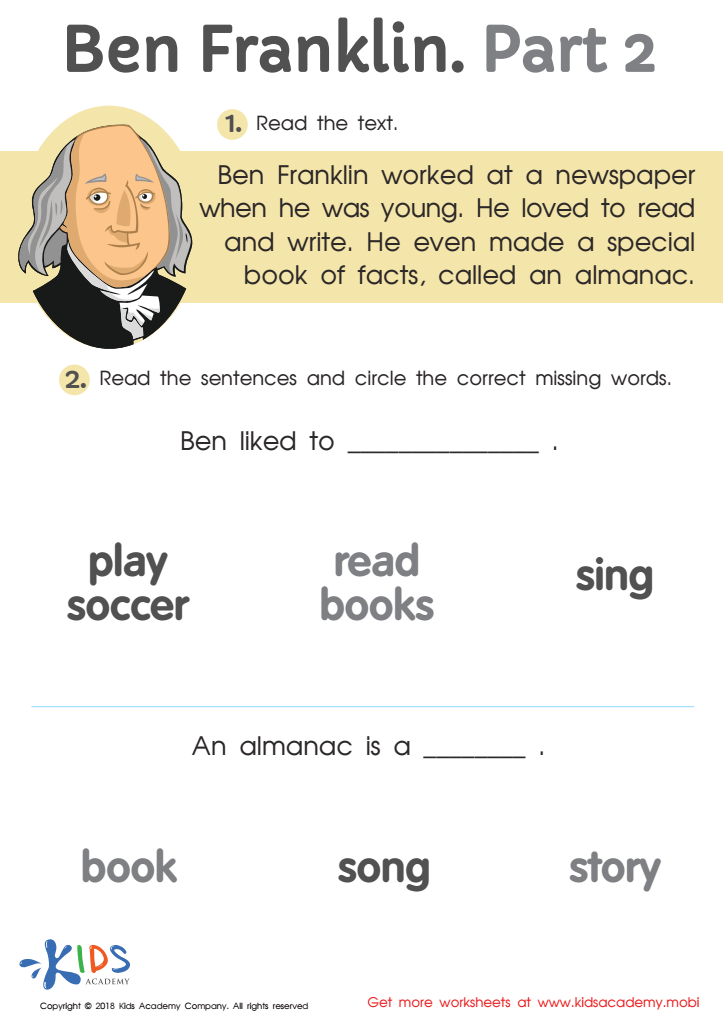
Ben Franklin Part 2 Worksheet








Parents and teachers should care about historical knowledge in reading non-fiction for ages 6-9 because it lays a foundation for a well-rounded education. At this age, children are naturally curious and eager to explore the world around them. Introducing them to historical content fosters an understanding of their own identity and the diverse cultures that shape our societies.
Reading non-fiction about historical events, figures, and innovations helps children develop critical thinking skills as they learn to ask questions, make connections, and discern fact from fiction. It cultivates a sense of empathy and awareness about past challenges, accomplishments, and the evolution of societies, enhancing their social and emotional development.
Moreover, historical knowledge enriches vocabulary and improves reading comprehension, providing children with tools to better express their ideas and understand the context of what they read. Engaging children with interactive and relatable content at this age can ignite a lifelong passion for history and learning.
By prioritizing historical non-fiction, parents and teachers empower children to respect the past and understand how it influences the present and future, ultimately shaping informed and engaged citizens who contribute positively to society.