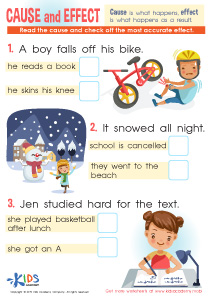
Vocabulary Building Normal Reading Non-Fiction Worksheets for Ages 6-9
3 filtered results
-
From - To
Enhance your child's language skills with our Vocabulary Building Normal Reading Non-Fiction Worksheets for ages 6-9. These engaging, age-appropriate sheets target critical vocabulary development through captivating non-fiction content. Designed to expand young learners’ word comprehension, each worksheet stimulates curiosity while teaching new terms in real-world contexts. By exploring topics relevant to their interests, students build a robust vocabulary foundation essential for academic success. Perfect for both classroom and at-home learning, our worksheets provide a fun, educational experience tailored to stimulate young minds and foster a love for reading. Unlock your child's potential today with Kids Academy’s expertly crafted resources.
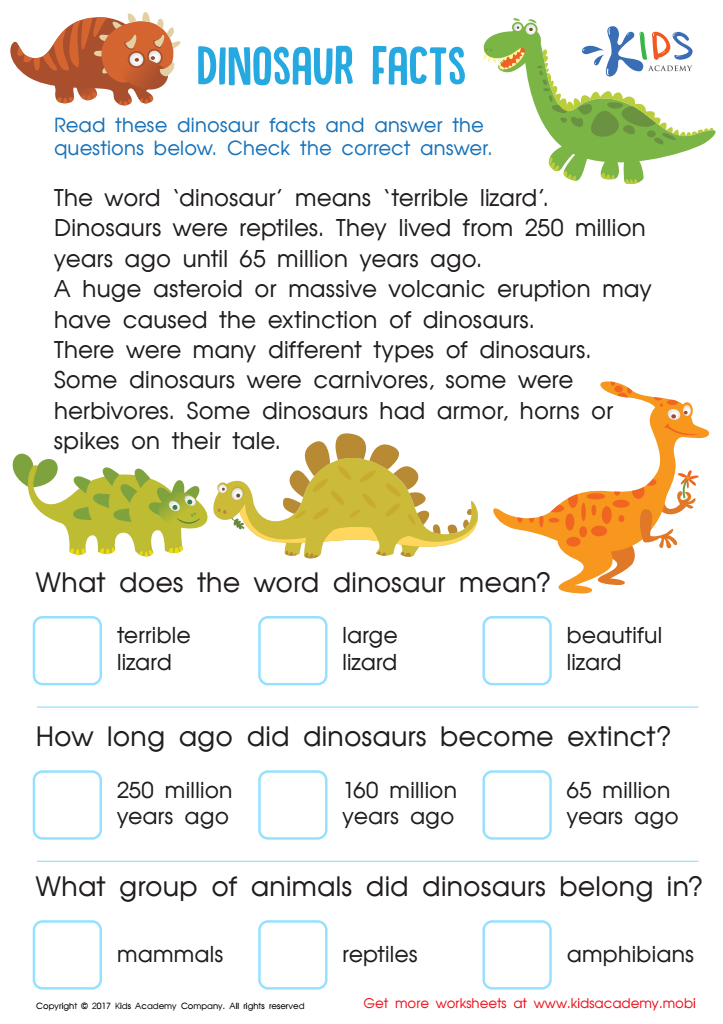
Dinosaur Facts Worksheet
 Assign to My Students
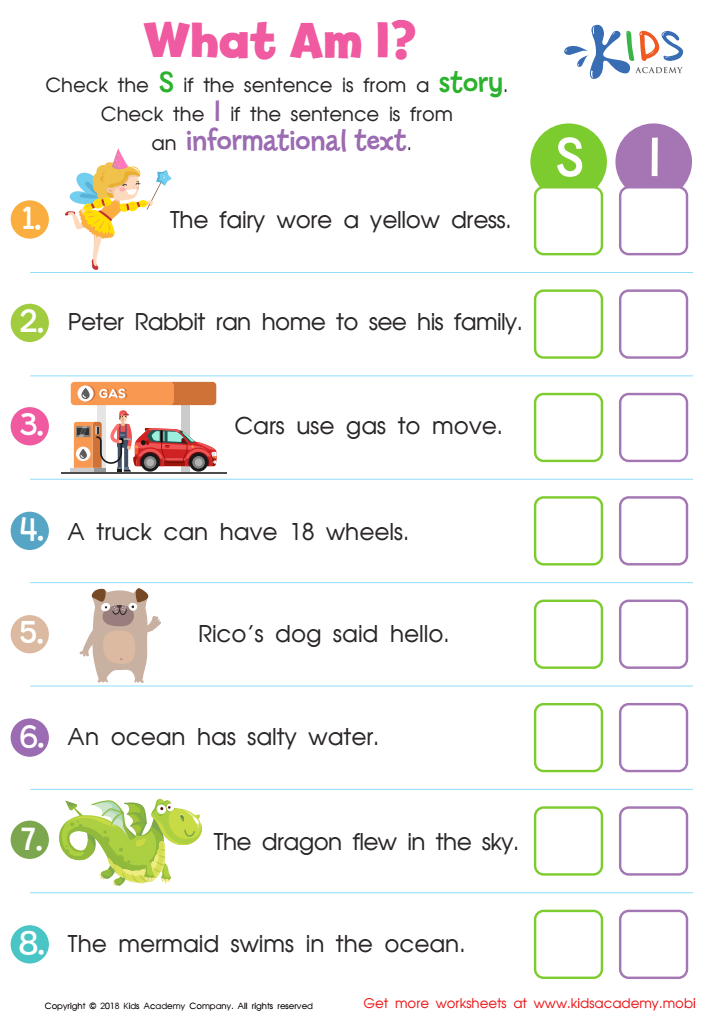
What Am I? Worksheet
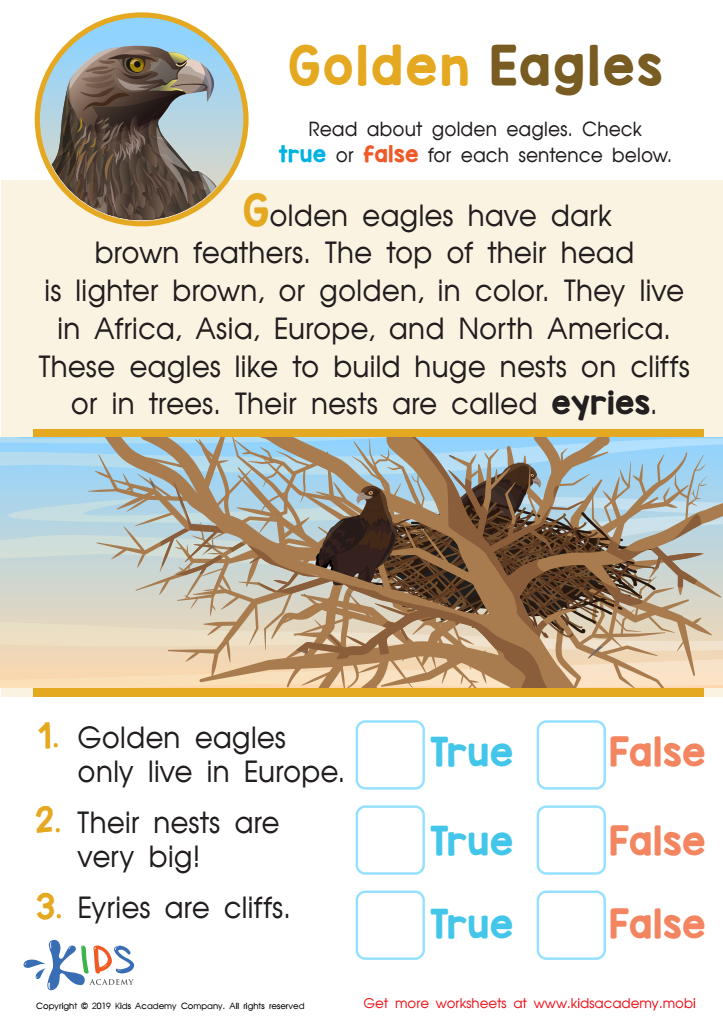
Golden Eagles Worksheet








Parents and teachers should place significant emphasis on vocabulary building through normal reading of non-fiction for children aged 6-9 because it establishes a solid foundation for future learning and cognitive development. During these formative years, children's brains are particularly receptive to learning new words and concepts. By introducing non-fiction reading materials, young learners are exposed to factual information about the world, which can greatly expand their general knowledge and understanding.
Non-fiction books cover a wide range of subjects such as science, history, technology, and nature, providing children with the vocabulary and context needed to grasp complex ideas as they progress in their education. It enhances their ability to comprehend and retain information, which is crucial for academic success across all subjects. Moreover, a rich vocabulary enhances communication skills, enabling children to express themselves more clearly and effectively in both speaking and writing.
Reading non-fiction also stimulates curiosity, encouraging a lifelong interest in learning and critical thinking. When children encounter new words and concepts, they ask questions and seek to understand the world around them. Therefore, prioritizing vocabulary building through regular non-fiction reading is essential for intellectual development and for nurturing well-rounded, knowledgeable individuals.