Rhyming skills development Normal Rhyming Words Worksheets for Ages 6-9
3 filtered results
-
From - To
Transform your child's reading journey with our Rhyming Skills Development Worksheets, designed specifically for children ages 6-9. These printable resources help young learners master the concept of rhyme through engaging activities and exercises. By identifying normal rhyming words, children enhance their phonemic awareness, vocabulary, and reading fluency. Our worksheets promote creativity and language skills while keeping learning enjoyable. Ideal for classroom use or at-home practice, these materials are the perfect stepping stone to solidifying essential literacy skills. Explore our collection today and watch your child's confidence soar as they play with sounds and words!

Rhyming Words Rhyming Worksheet
 Assign to My Students
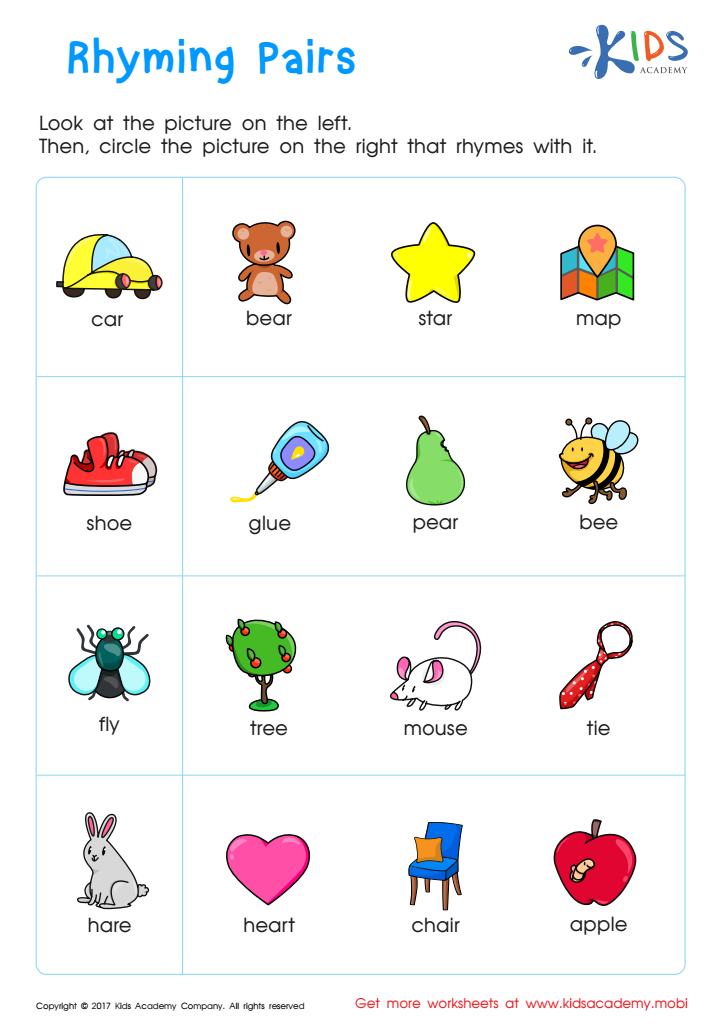

First Words: Picture Rhymes Worksheet








Rhyming skills are a crucial aspect of early literacy development, particularly for children aged 6 to 9. During these formative years, children are honing their reading and writing abilities, and rhyming plays a significant role in this process. Parents and teachers should be attentive to rhyming skills for several reasons.
Firstly, rhyming facilitates phonemic awareness, which is the ability to hear and manipulate phonemes in words. This ability lays the groundwork for reading fluency, spelling, and vocabulary development. When children can recognize rhyming patterns, they become more adept at decoding words and understanding their relationships.
Moreover, rhyming enriches language development and comprehension. Through playful engagement with rhymes, children learn to experiment with language and enhance their expressive capabilities. This also fosters creativity and imagination as they create their own rhymes and engage with poetry, songs, and stories.
These skills further support memory retention, as catchy rhymes are easier to remember. Therefore, parents and teachers should prioritize rhyming activities—such as nursery rhymes, word games, and storytelling—to create a strong foundation for literacy, making reading a more enjoyable and fulfilling experience for children. Overall, nurturing rhyming skills is integral to fostering lifelong learners.








