Sight words recognition Normal Sight Words Worksheets for Ages 6-9
3 filtered results
Difficulty Level
Grade
Age
-
From - To
Subject
Activity
Standards
Enhance your child's reading skills with our "Sight Words Recognition Normal Worksheets" tailored for ages 6-9. These worksheets are designed to help young learners identify and recognize essential sight words, fostering reading fluency and confidence. Engaging activities and colorful illustrations make learning exciting, enabling children to practice word recognition in dynamic ways. Perfect for home or classroom use, these resources encourage independent learning and repetition, key components in developing literacy. Build a solid foundation for a lifelong love of reading with our expertly crafted sight words worksheets, ensuring that your child thrives in their reading journey. Start exploring today!
Favorites
With answer key
Interactive
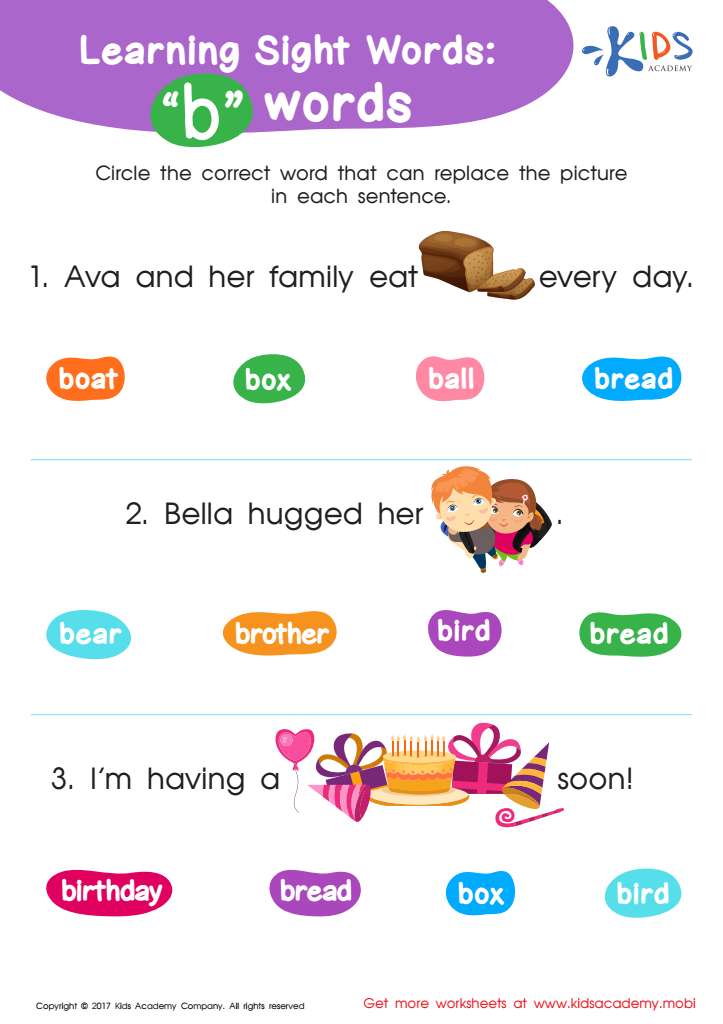
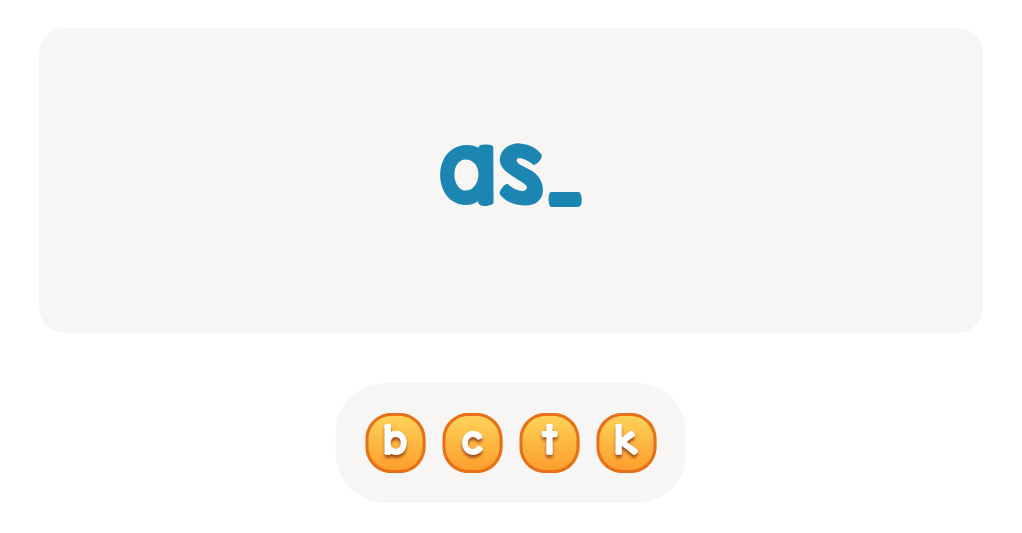
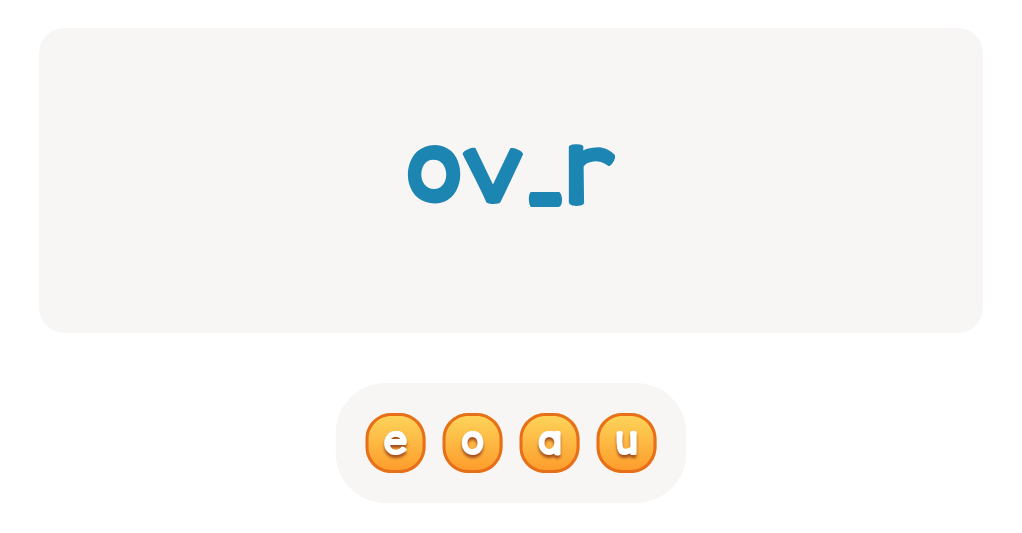
Sight Words Free Worksheet – B Words
This free 2nd grade sight words worksheet – b words – is a great way to help your child expand their sight word repertoire. They can read through each sentence, using the context and illustrations as clues to pick the right answer. Offer your child a quick practice session for even more learning!
 Assign to My Students
Sight Words Free Worksheet – B Words
Worksheet
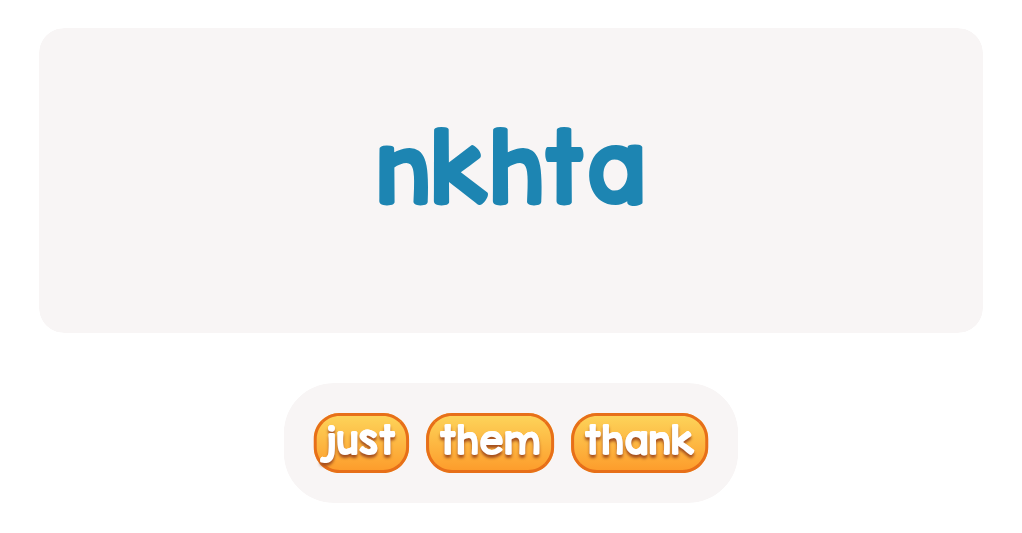




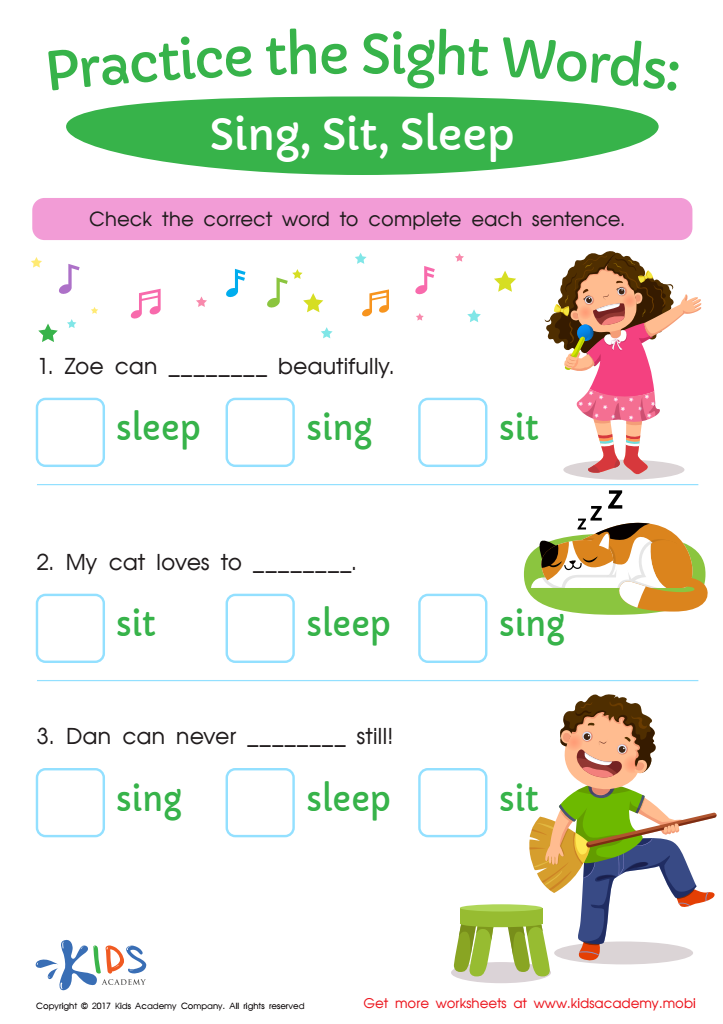
Sing, Sit, Sleep Sight Words Worksheet
Practice sight words with this printable worksheet featuring sing, sit, sleep! Confusing at first, these words can be mastered with the help of simple sentences and fun illustrations.
Sing, Sit, Sleep Sight Words Worksheet
Worksheet
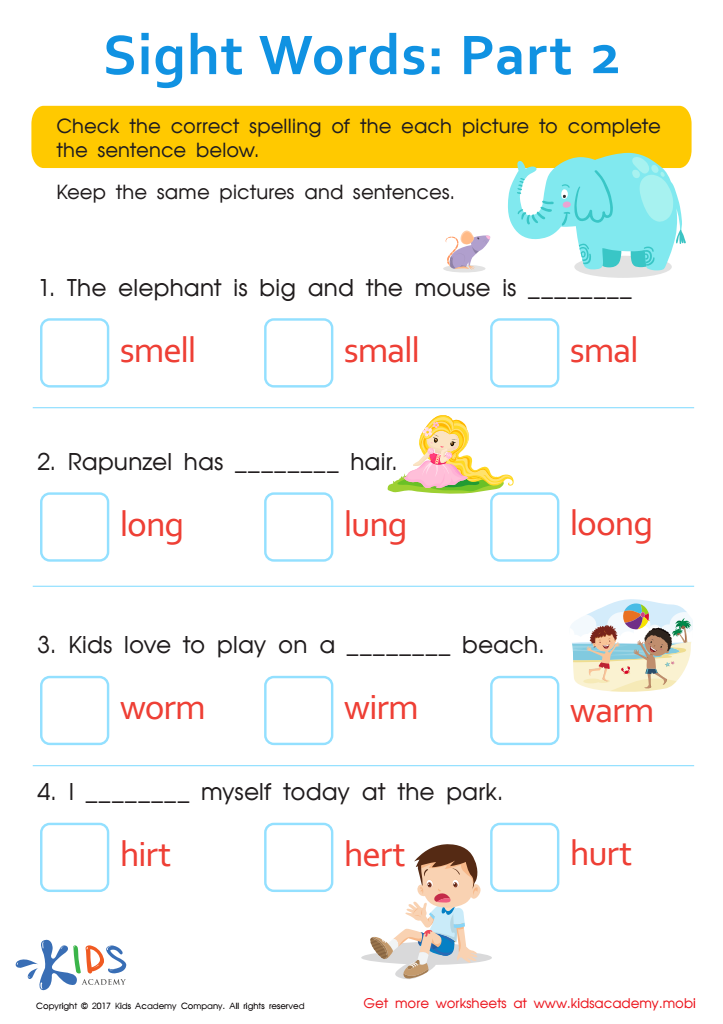
Sight Words Worksheet
This 3rd grade worksheet strengthens fluency and spelling in just a few minutes! Kids will read a sentence and fill in each blank with the correct sight word. Enjoy watching their skills grow!
Sight Words Worksheet
Worksheet
Join Kids Academy for Free
Who is primarily going to use this learning content?







Parents and teachers should prioritize sight word recognition for children aged 6-9 because it lays the foundation for reading fluency and comprehension. Sight words, commonly used words that children are encouraged to recognize instantly, account for a significant portion of written text. Mastery of these words allows young readers to progress from decoding individual letters and sounds to reading phrases and sentences smoothly.
At this developmental stage, children are transitioning from learning to read to reading to learn. A solid grasp of sight words enhances their reading confidence and enjoyment, helping them engage more effectively with books and learning materials. Additionally, when students can effortlessly recognize sight words, they can focus on understanding the content rather than struggling with pronunciation.
Moreover, sight word recognition is linked to overall academic success. As children encounter these words frequently in various subjects, their understanding deepens, facilitating better communication skills necessary for writing and discussions. It’s also important for building a strong literacy foundation, which is crucial for lifelong learning. Therefore, reinforcing sight word recognition should be an integral part of parents' and teachers' strategies, enriching children's educational experiences and promoting literacy skills essential for their future.