Categorizing animals Normal Science Worksheets for Ages 6-9
3 filtered results
-
From - To
Explore the fascinating world of animal classification with our "Categorizing Animals Normal Science Worksheets" designed for children ages 6-9! These engaging worksheets encourage young learners to identify and categorize animals based on various characteristics, such as habitat, diet, and physical traits. Crafted to spark curiosity and enhance critical thinking skills, our resources provide a fun way for children to explore biodiversity. Ideal for classroom or home use, each worksheet is filled with vibrant illustrations and interactive activities to make learning about the animal kingdom a delightful experience. Dive into the adventure of life sciences and nurture your child's love for discovery today!
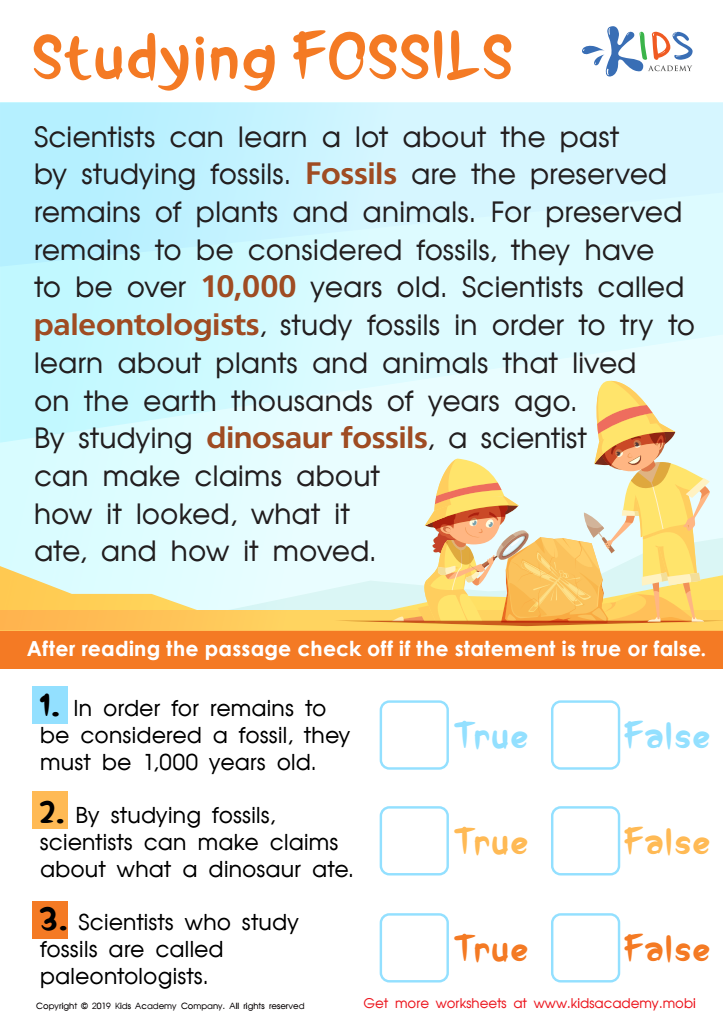
Studying Fossils Worksheet
 Assign to My Students
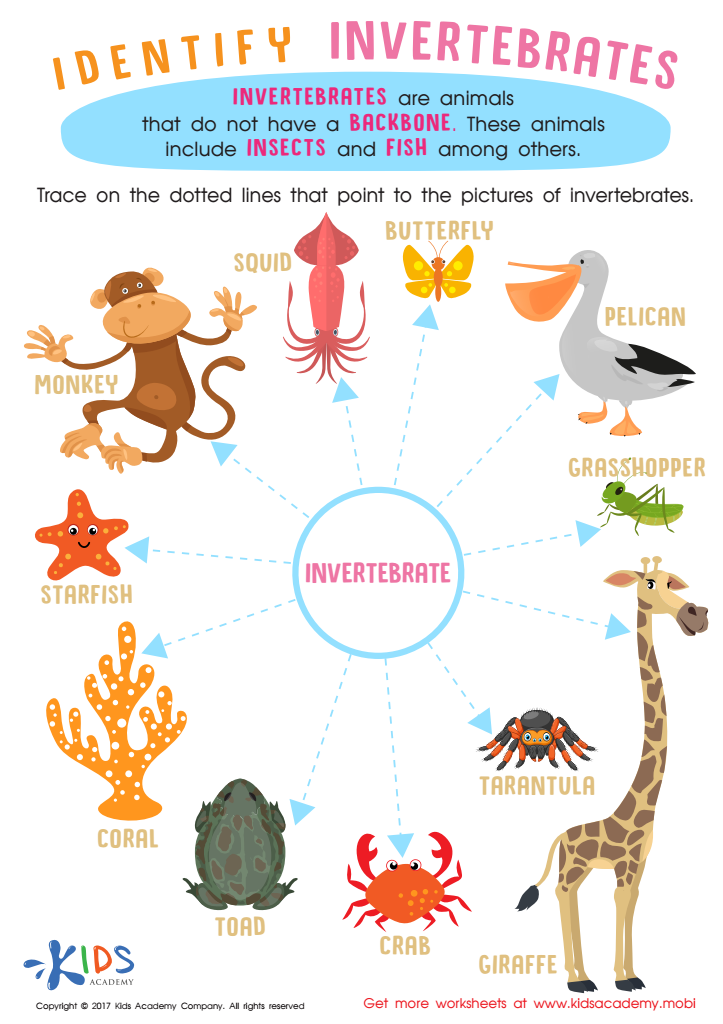
Invertebrates Worksheet for Grade 3
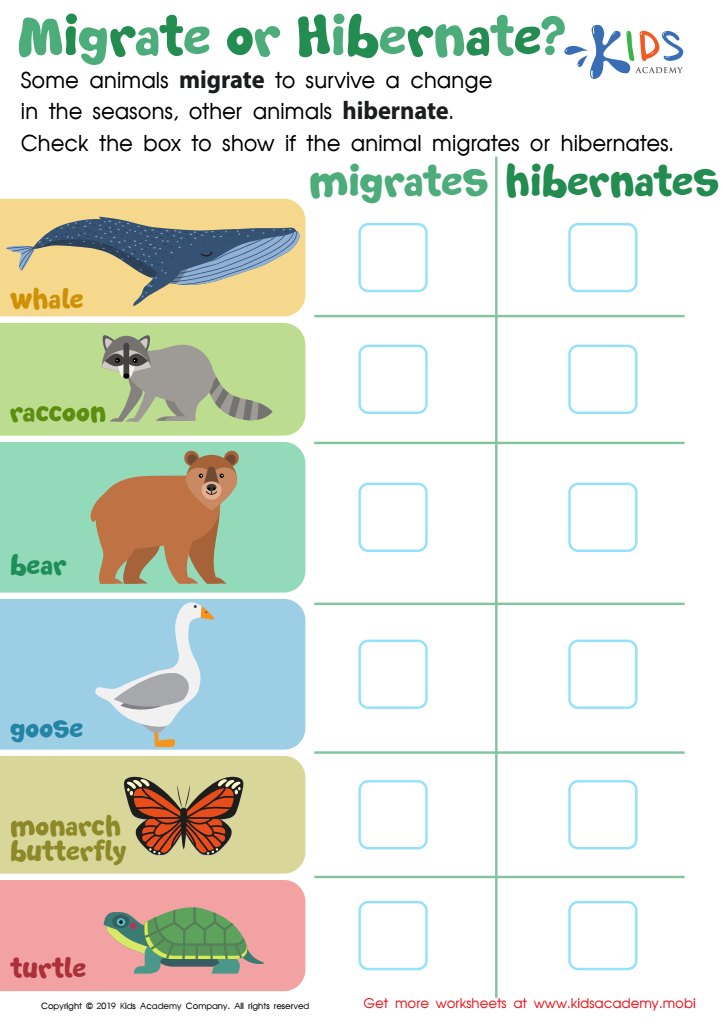
Migrate or Hibernate? Worksheet




.jpg)


Categorizing animals is a fundamental concept in early science education that promotes critical thinking and observation skills among children aged 6-9. Parents and teachers should care about this topic because it lays the groundwork for a child's understanding of the natural world. By learning to categorize animals, children explore various characteristics, such as size, habitat, diet, and behavior, fostering an appreciation for biodiversity.
This activity encourages curiosity as children discover the diversity of life. They develop classification skills through hands-on experiences, such as sorting animals into groups like mammals, birds, reptiles, or aquatic animals. Engaging with animal types not only enhances cognitive skills but also stimulates language development as children describe their findings and ask questions.
Additionally, understanding animal categories helps children grasp ecological relationships and the importance of habitat preservation. Emphasizing this knowledge nurtures a sense of responsibility for the environment.
Moreover, by integrating categorization into their learning, educators can link science to other subjects, like math (counting, measuring) and art (illustrating animals). In this way, weaving together various aspects of learning anchors their engagement and provides a holistic educational experience. Ultimately, categorizing animals enriches children's intellectual and emotional development, making it a crucial focus for parents and teachers alike.







