Reading thermometers Normal Science Worksheets for Ages 6-9
3 filtered results
-
From - To
Help your child master the essential skill of reading thermometers with our engaging Normal Science Worksheets designed for ages 6-9. These activities teach young learners how to read, interpret, and understand temperature changes using both Celsius and Fahrenheit scales. Perfect for nurturing budding scientists, our worksheets include colorful illustrations and real-life applications to make learning fun and effective. Encourage curiosity in measuring weather conditions, human body temperature, and more. Equip your child with the tools to excel in science and everyday life. Download now to turn temperature learning into an exciting adventure!
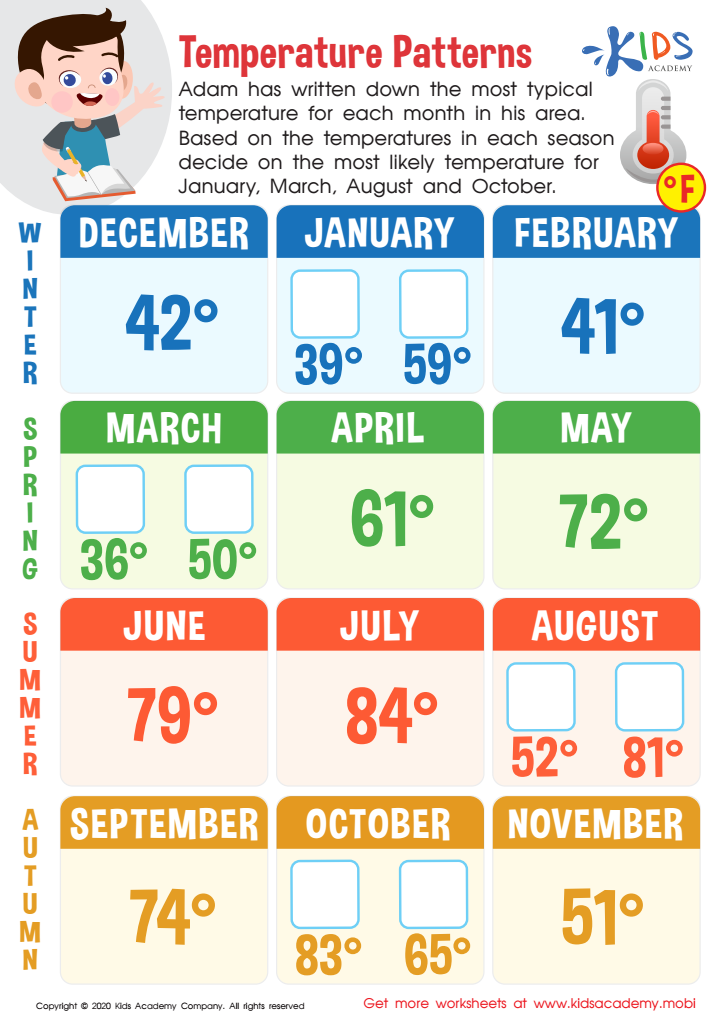
Temperature Patterns Worksheet
 Assign to My Students
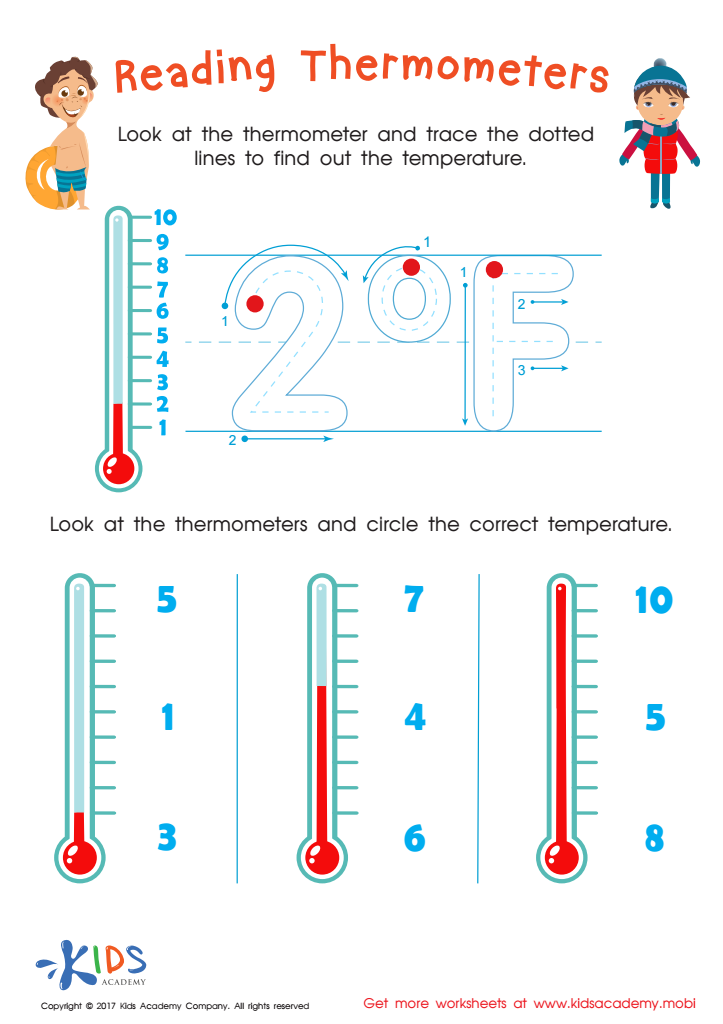
Reading Thermometers Printable
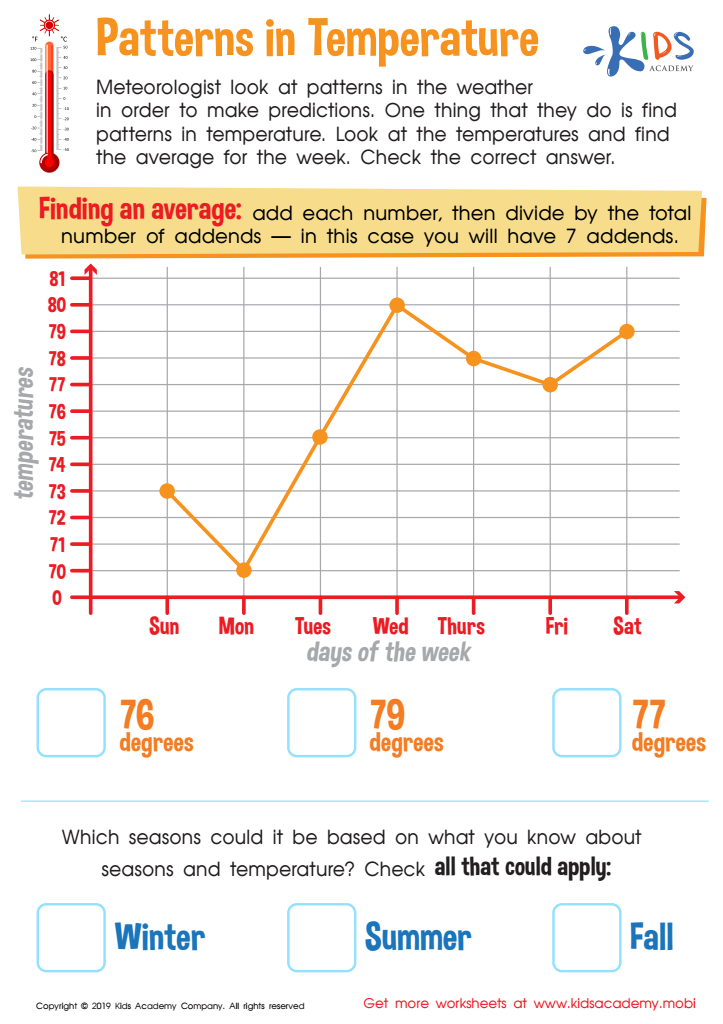
Patterns in Temperature Worksheet






Reading thermometers is an essential skill that parents and teachers should emphasize for children aged 6-9 because it is foundational for both scientific literacy and everyday practicality. By understanding how to read thermometers, children can grasp basic concepts about temperature, an integral part of science curricula. This knowledge supports learning in subjects like weather, seasons, and plant and animal behaviors—all of which are often part of early science education.
Learning to read thermometers is not just about understanding numbers; it introduces children to important principles of measurement and accuracy. Being able to interpret temperature readings fosters critical thinking skills necessary for hypothesizing and observing patterns.
Moreover, practical skills like these empower children to make sense of the world around them. Awareness of temperature impacts common experiences, such as dressing appropriately for the weather or safely assessing whether food is properly cooked. This knowledge also fosters a sense of responsibility and independence.
Early mastery of such a vital, everyday skill builds confidence in young learners. It affirms the idea that science is not just a subject in school but is interwoven into daily life. Through engaging activities and thoughtful guidance, parents and teachers can help children develop a lifelong appreciation and understanding of science.







