Shape Recognition Normal Science Worksheets for Ages 6-9
3 filtered results
-
From - To
Introducing our "Shape Recognition Normal Science Worksheets for Ages 6-9"! Designed to blend fun and learning, these engaging worksheets help young learners hone their shape recognition skills through hands-on activities. Perfect for kids ages 6-9, these worksheets include colorful illustrations and interactive tasks that stimulate critical thinking and observational skills. Ideal for both classroom and home use, our tools align with educational standards and make learning shapes an exciting adventure. Start your child’s journey toward science excellence and visual understanding today with our expertly crafted shape recognition worksheets!
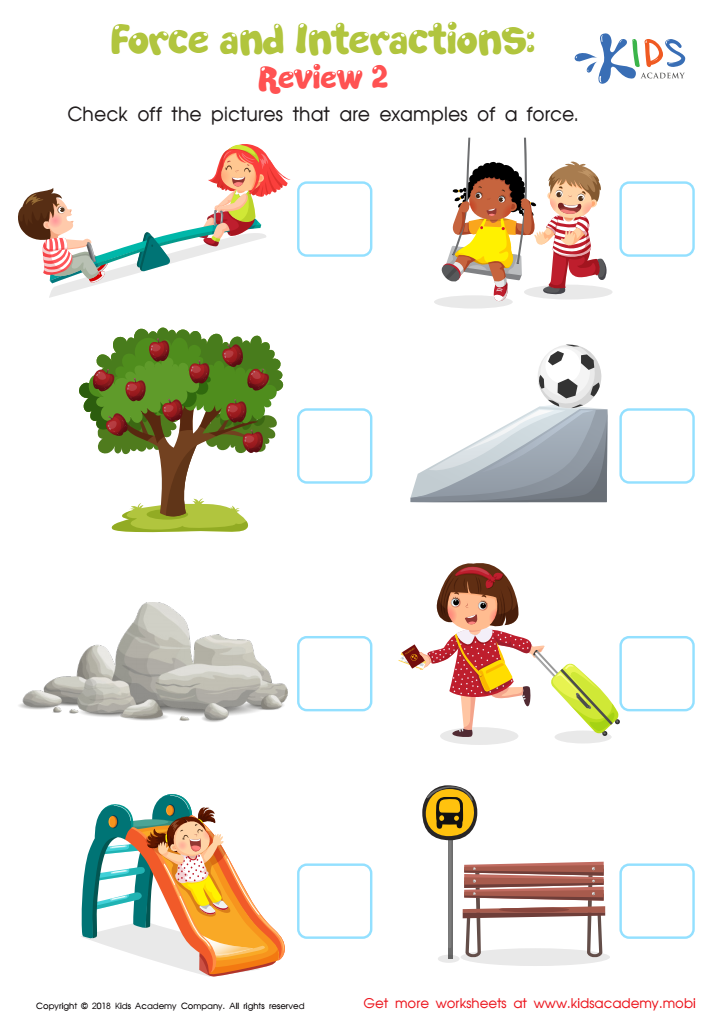
Force and Interactions: Review 2 Worksheet
 Assign to My Students
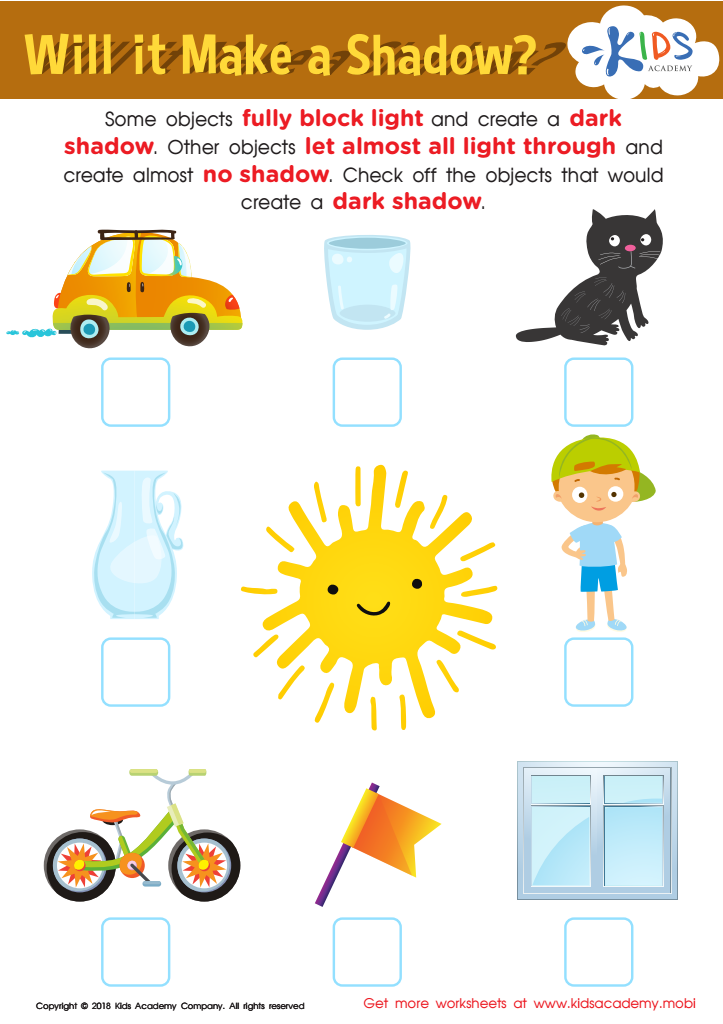
Will It Make a Shadow? Worksheet
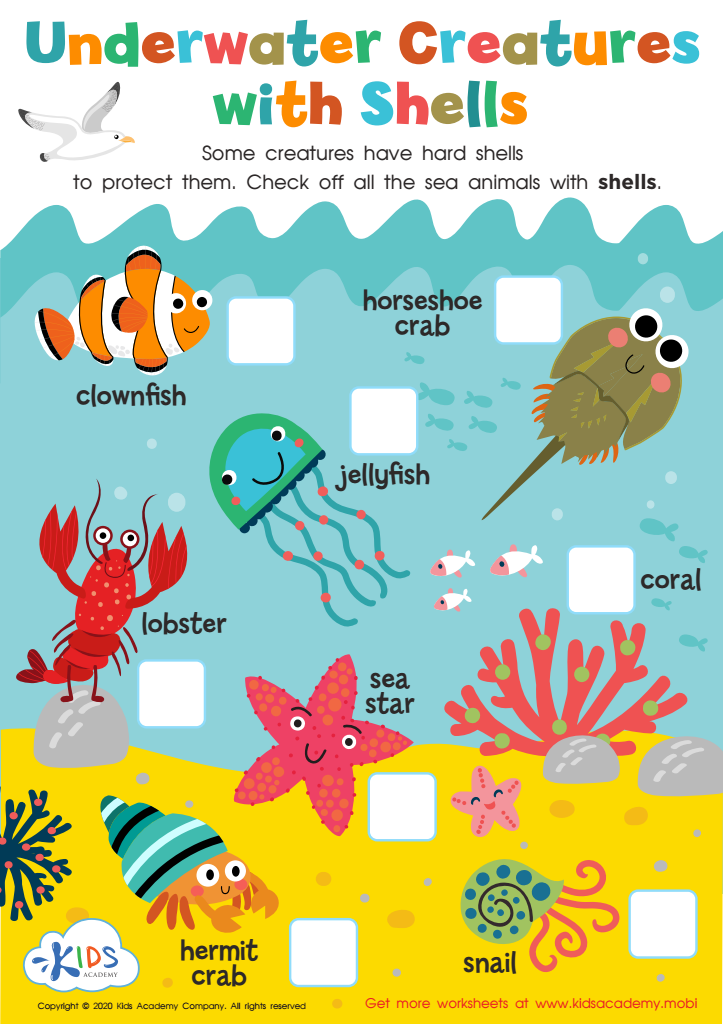
Underwater Creatures with Shells Worksheet


.jpg)





Shape recognition is a foundational skill in early childhood development that parents and teachers should prioritize for children aged 6-9. This concept underpins crucial aspects of cognitive and perceptual development.
Firstly, shape recognition aids in developing mathematical skills. Understanding shapes helps children grasp basic geometry, spatial awareness, and visual discrimination, which are essential for higher-level math concepts. For instance, recognizing the difference between a square and a rectangle can lead to understanding perimeters and areas.
Secondly, shape recognition is integral to literacy. Distinguishing letters and numbers relies heavily on recognizing shapes. For example, the difference between 'b' and 'd' is discerned through their shapes. Consequently, strong shape recognition can enhance reading and writing skills.
Furthermore, it impacts everyday problem-solving and reasoning abilities. Children learn to classify objects based on shape, fostering logical thinking and categorization skills. These abilities are applicable in various scenarios, from completing puzzles to understanding patterns and sequences.
Lastly, shape recognition can improve fine motor skills. Activities like drawing and tracing shapes improve hand-eye coordination and precision, which are essential for tasks like handwriting.
Overall, fostering shape recognition in children aged 6-9 sets a strong foundation for academic success and practical life skills, making it a crucial area of focus for both parents and teachers.







