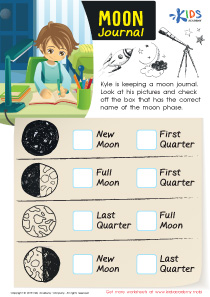
Critical Thinking Normal Life Science Worksheets for Ages 6-9
4 filtered results
Difficulty Level
Grade
Age
-
From - To
Subject
Activity
Standards
Our "Critical Thinking Normal Life Science Worksheets for Ages 6-9" are expertly designed to engage young learners in exploring the wonders of life science. These worksheets foster essential critical thinking skills such as observation, analysis, and problem-solving. Combining fun activities with educational content, our worksheets cover various life science topics, encouraging kids to ask questions and think deeply about the natural world. Perfect for home or classroom use, these resources will inspire curiosity and a love for science while developing crucial cognitive abilities. Download today at Kids Academy to enhance your child's learning journey!
Favorites
With answer key
Interactive
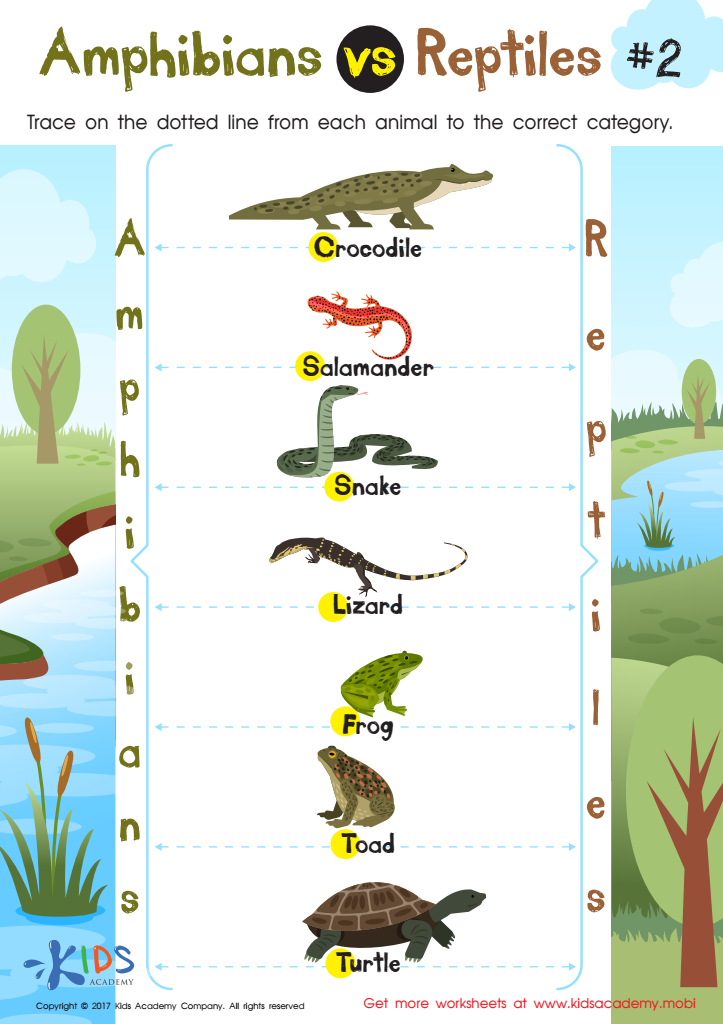
Amphibians vs Reptiles Worksheet for 3rd Grade
Let your 3rd grader challenge themselves and have fun by distinguishing between reptiles and amphibians. With this cool worksheet, they'll explore vivid pictures and learn about these fascinating creatures!
 Assign to My Students
Amphibians vs Reptiles Worksheet for 3rd Grade
Worksheet
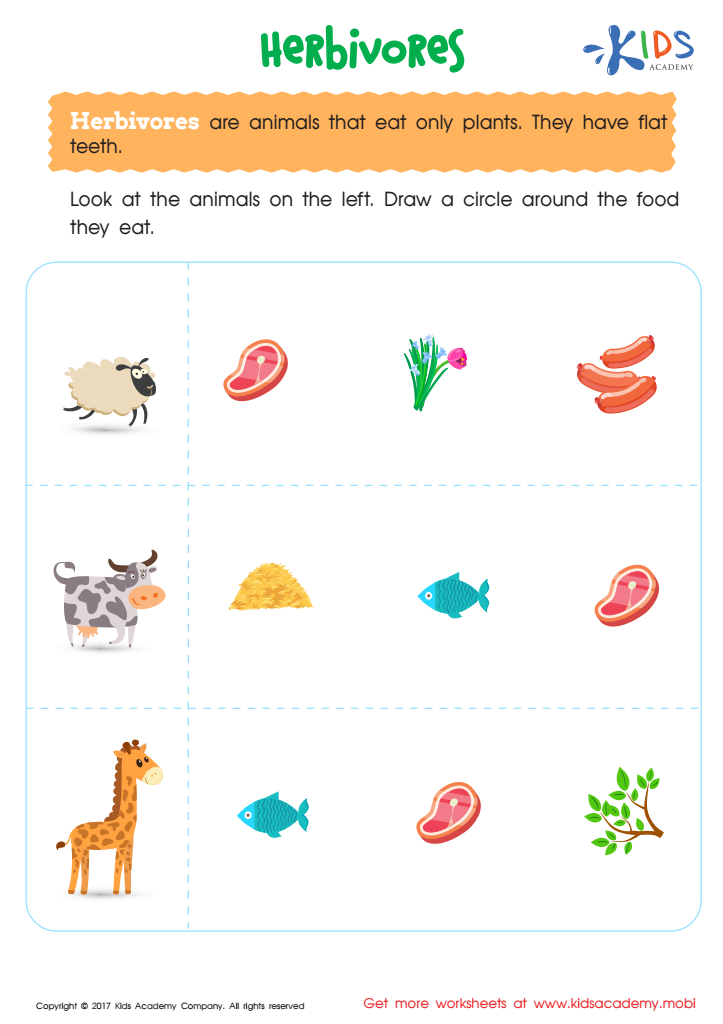
Herbivores Printable
Strengthen their vocab with these fascinating creatures, as they explore an intriguing aspect of beloved animals.
Herbivores Printable
Worksheet
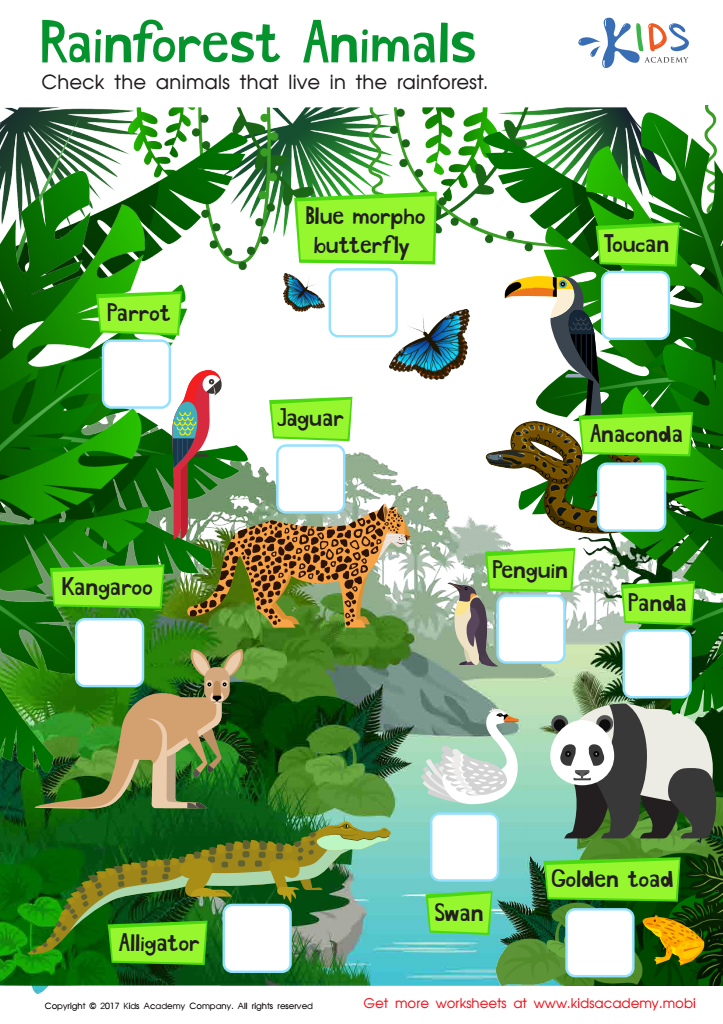
Rainforest Animals Worksheet
Kids love the bright, vivid pics of rainforest animals in this worksheet. It fuels their interest in life science and brings joy to their learning. It encourages them to study these animals in detail.
Rainforest Animals Worksheet
Worksheet
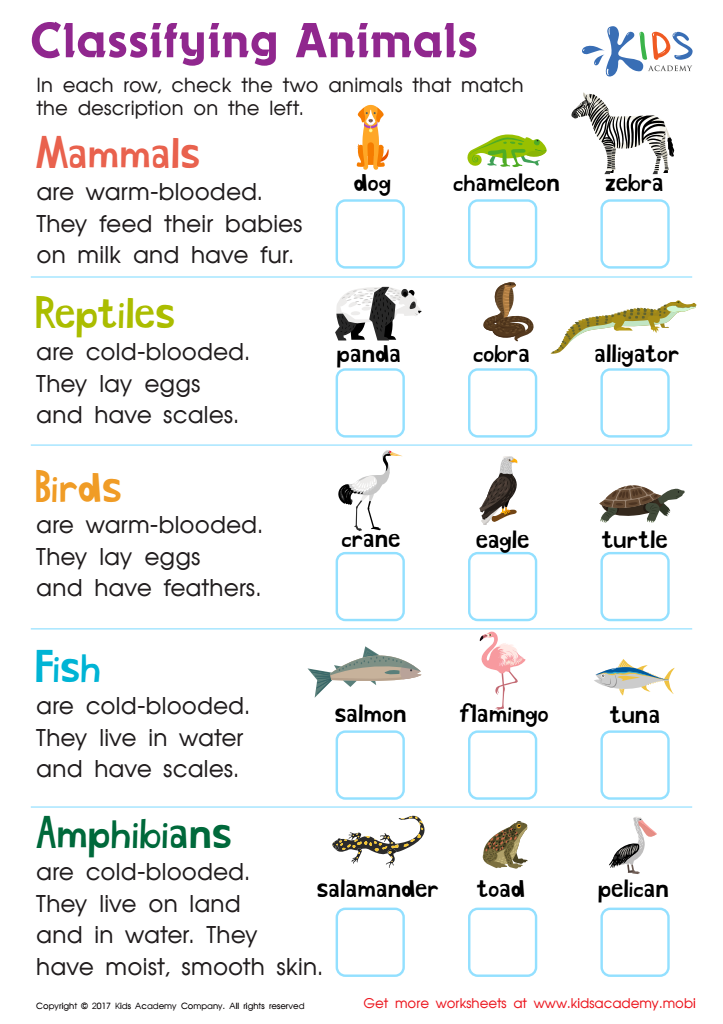
Classifying Animals Worksheet
Print the 2nd grade animal classification worksheet and help kids study the differences between mammals, reptiles, birds, fish and amphibians. Let them pick two examples from the options given.
Classifying Animals Worksheet
Worksheet
Join Kids Academy for Free
Who is primarily going to use this learning content?








Parents and teachers should care about critical thinking in normal life science for ages 6-9 because this foundational period shapes children's cognitive development and their understanding of the world around them. At this stage, children’s brains are incredibly receptive to new ideas and practices that encourage problem-solving, curiosity, and analytical thinking. Introducing critical thinking in life sciences fosters a natural interest in biology, ecology, and environmental science, sparking long-term academic interest and engagement.
When children learn through critical thinking, they're encouraged to ask questions, make observations, and think about cause and effect. For instance, by studying the life cycles of plants or the behavior of animals, they learn to form hypotheses, conduct basic experiments, and draw conclusions. This approach boosts logical thinking, enhances creativity, and improves decision-making skills.
Moreover, critical thinking in normal life science nurtures the ability to process information methodically and determine credible sources. These skills are invaluable, not only academically, but also in daily decision-making and navigating a world saturated with information. Fostering these abilities early on helps children become independent thinkers and problem-solvers, equipping them with essential capabilities for future academic and life success. Building these skills aids them in better understanding, residing, and positively interacting with their environment.