Enhancing observation skills Normal Physical Science Worksheets for Ages 6-9
3 filtered results
-
From - To
Enhancing observation skills is vital for young learners in understanding the world around them. Our Normal Physical Science Worksheets for ages 6-9 are designed to nurture curiosity and critical thinking through engaging activities. Each worksheet encourages children to observe, compare, and analyze various physical science concepts, promoting hands-on learning. With fun illustrations and interactive tasks, these worksheets make science exciting and accessible. Perfect for classroom settings or at-home learning, they help children develop essential observation and analytical skills. Foster a love for discovery and empower your students to explore the wonders of physical science in a creative, stimulating environment!
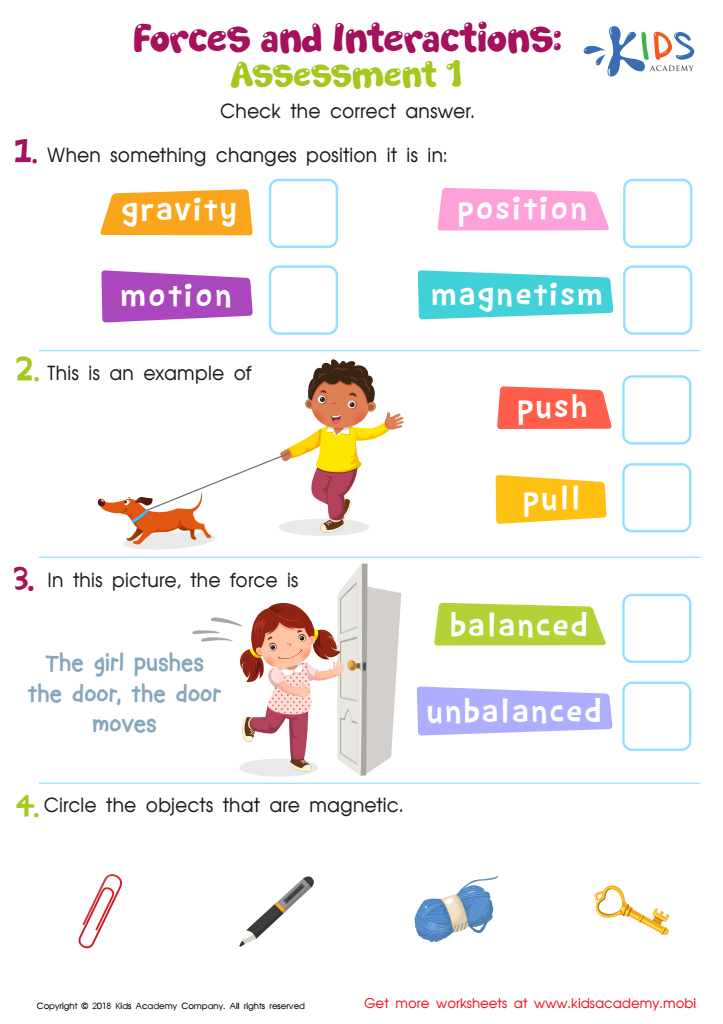
Forces and Interactions Printable
 Assign to My Students
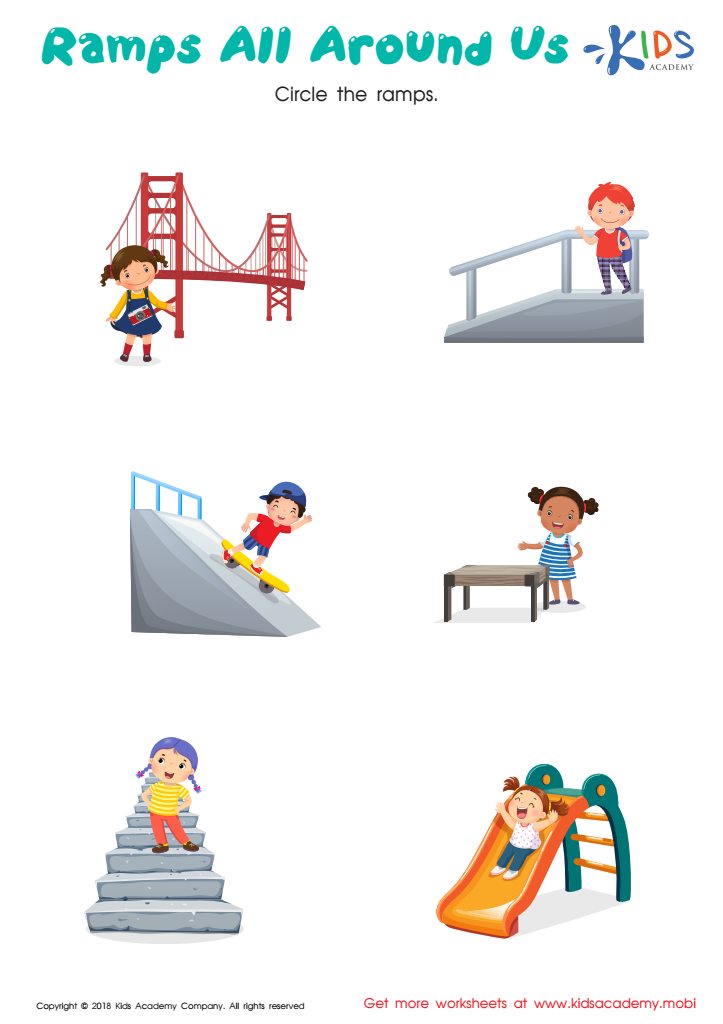
Ramps All Around us Worksheet
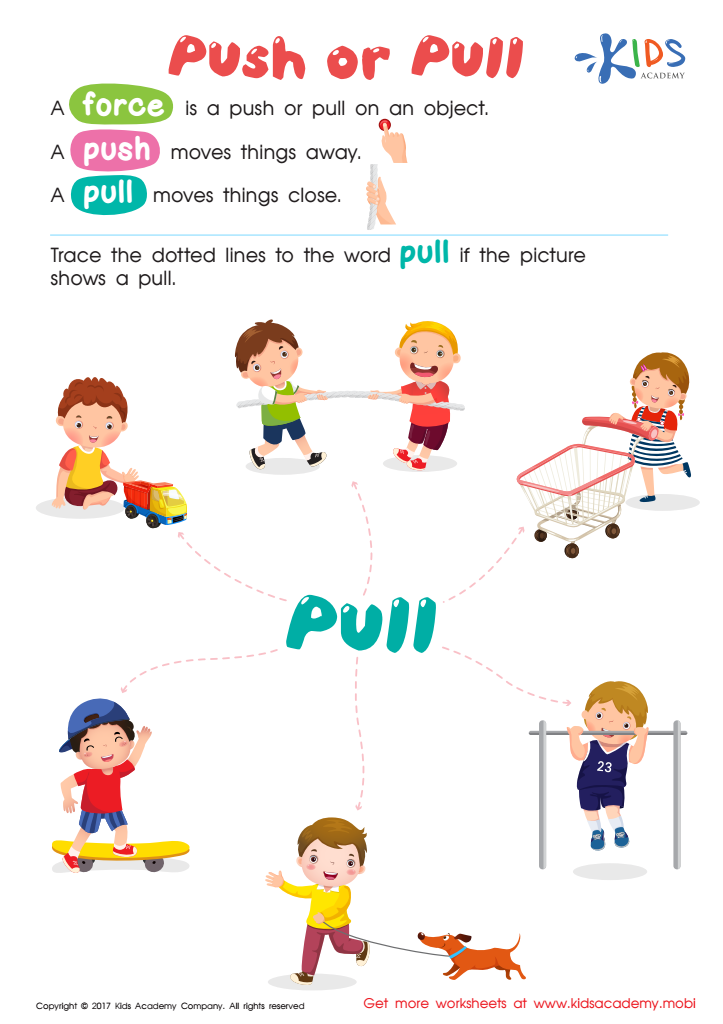
Pull or Push Worksheet








Enhancing observation skills in young learners, particularly in Normal Physical Science, is crucial for several reasons. First, observation serves as the foundation of scientific inquiry. Children aged 6-9 are naturally curious and often express their interest in the world around them. By refining their observational skills, parents and teachers can help them make connections between everyday phenomena and scientific concepts, fostering a deeper understanding of the natural world.
Secondly, strong observation skills promote critical thinking. When children learn to carefully observe and analyze their surroundings, they develop problem-solving abilities that strengthen their cognitive skills. This empowers them to ask questions, form hypotheses, and draw conclusions, essential components of the scientific method.
Moreover, encouraging observation helps to nurture a lifelong love for learning. Engaging in hands-on activities and experiments allows young learners to explore, discover, and engage with science in a fun, meaningful way, which builds confidence and encourages further inquiry.
Lastly, strong observational skills can positively impact overall learning. They enhance literacy by improving listening and interpretation skills, enabling children to express and communicate their understandings effectively. Therefore, fostering observation skills in early education is vital for holistic development in both science and critical thinking.







