Observational skills Normal Physical Science Worksheets for Ages 6-9
4 filtered results
-
From - To
Discover an engaging set of Observational Skills worksheets designed for young scientists aged 6-9 at Kids Academy! These meticulously crafted worksheets aim to enhance children's natural curiosity and observational abilities in physical science. Each printable activity encourages learners to carefully notice, record, and analyze details in their surroundings, honing essential scientific skills. Through fun illustrations and interactive exercises, youngsters will build a strong foundation in identifying patterns, differences, and scientific phenomena. Perfect for classroom or at-home learning, these worksheets make science exploration accessible and enjoyable. Equip your child with crucial observation skills to spark a lifelong love for science!
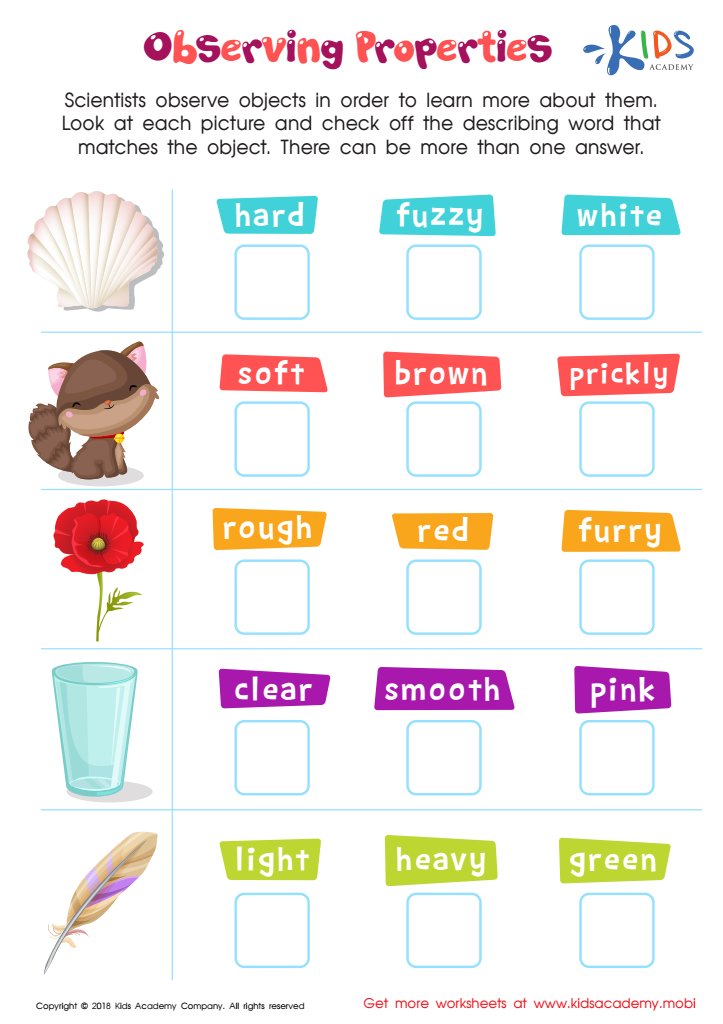
Observing Properties Worksheet
 Assign to My Students
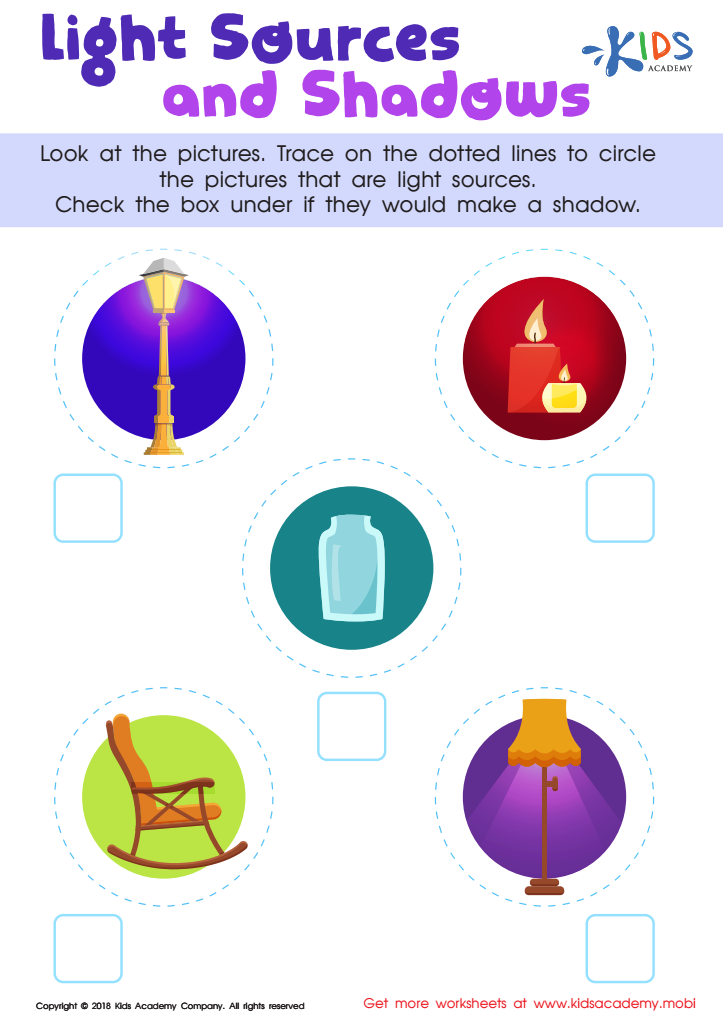
Light Sources and Shadows Worksheet
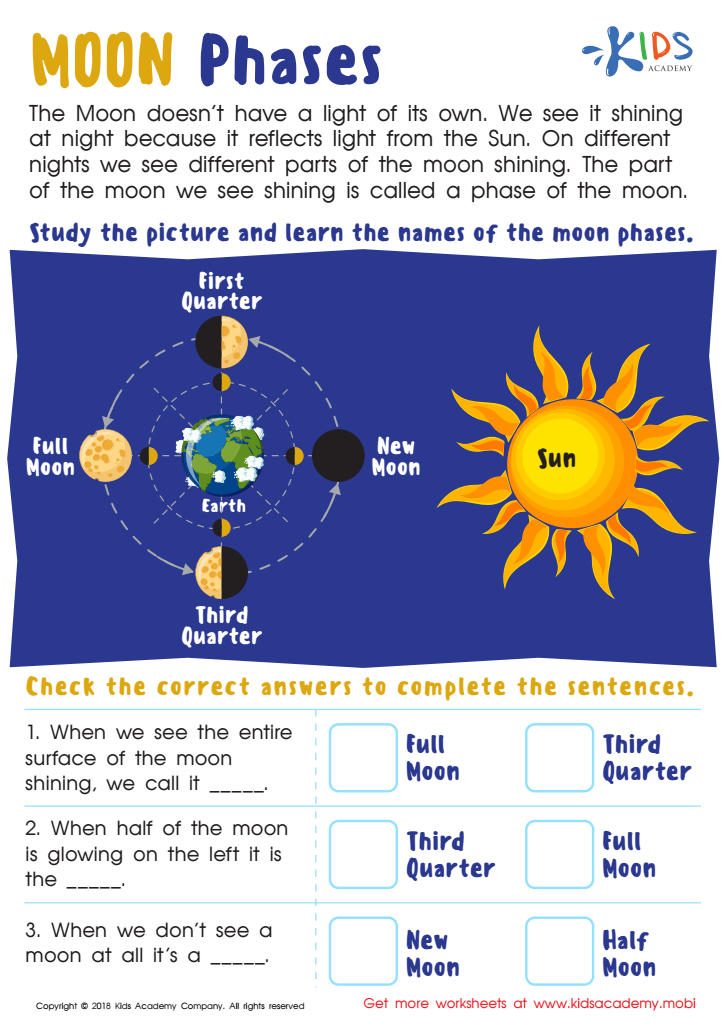
Moon Phases Worksheet
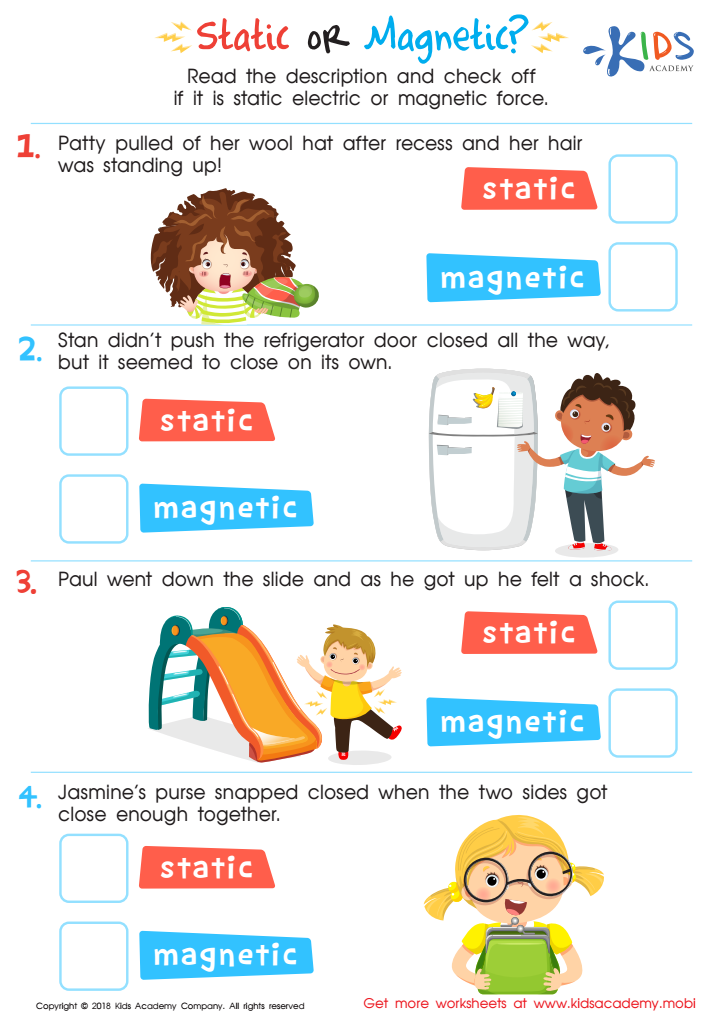
Static or Magnetic Printable Worksheet



.jpg)



Observational skills play a foundational role in the development of scientific thinking for children ages 6-9. At this stage, young learners are naturally curious and eager to explore their surroundings. By encouraging these skills in the context of physical science, parents and teachers can help children cultivate a keen eye for detail and foster a deeper understanding of the world around them.
In the realm of physical science, observation is the first step in the scientific method. Children learn to notice and describe properties, such as the texture of a rock, the movement of clouds, or the behavior of light and shadows. These small yet significant observations help them develop critical thinking and analytical skills.
Through structured and guided observational activities, children also build vocabulary and language skills as they describe and discuss their findings. Additionally, learning to observe patiently enhances attention spans and mindfulness, valuable for everything from academic achievement to personal development.
Observational skills are also integral to fostering a lifelong interest in science and learning. By mastering these skills early, children become more adept at formulating questions, conducting experiments, and engaging in hands-on learning experiences. Ultimately, attentive encouragement from parents and teachers in developing observational skills empowers young minds to explore, question, and understand their world scientifically.







