Understanding forces Normal Physical Science Worksheets for Ages 6-9
6 filtered results
-
From - To
Unearth the fascinating world of physics with our "Understanding Forces" worksheets, tailor-made for curious minds aged 6-9! Designed to ignite a passion for physical science, these engaging resources cover essential concepts such as gravity, friction, and more. Each worksheet combines vibrant illustrations with hands-on activities to make learning both fun and effective. Thoughtfully crafted by educational experts, these exercises foster critical thinking and problem-solving skills. Give your young scientists the foundation they need to understand the forces around them and inspire a lifelong love for discovery. Perfect for enhancing classroom lessons or supplementing home education!
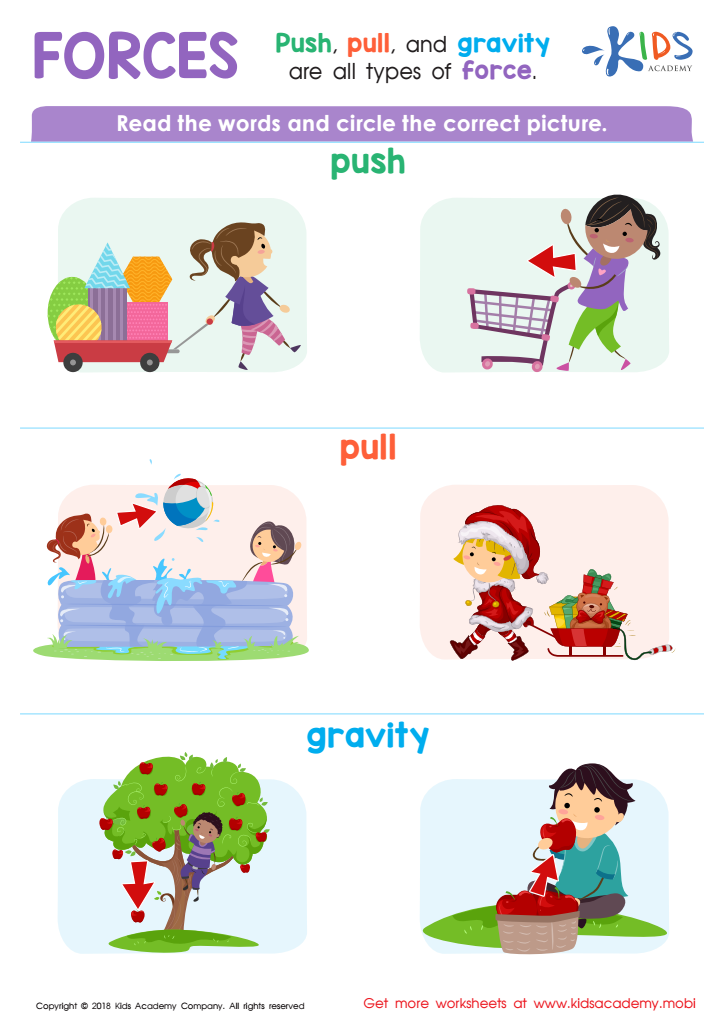
Forces Worksheet
 Assign to My Students
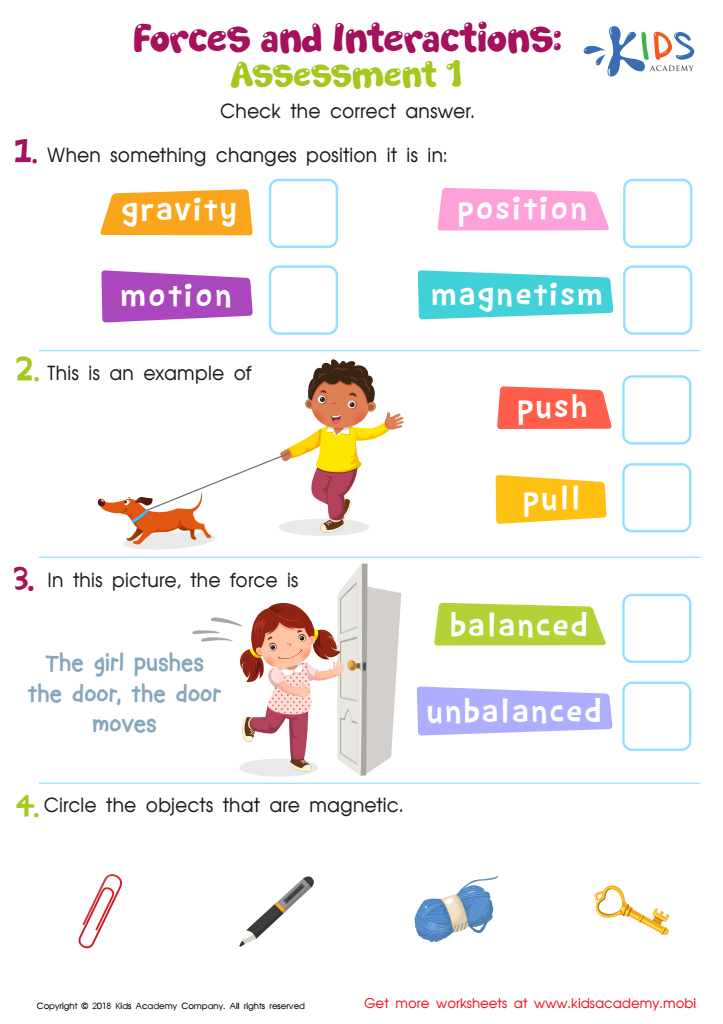
Forces and Interactions Printable
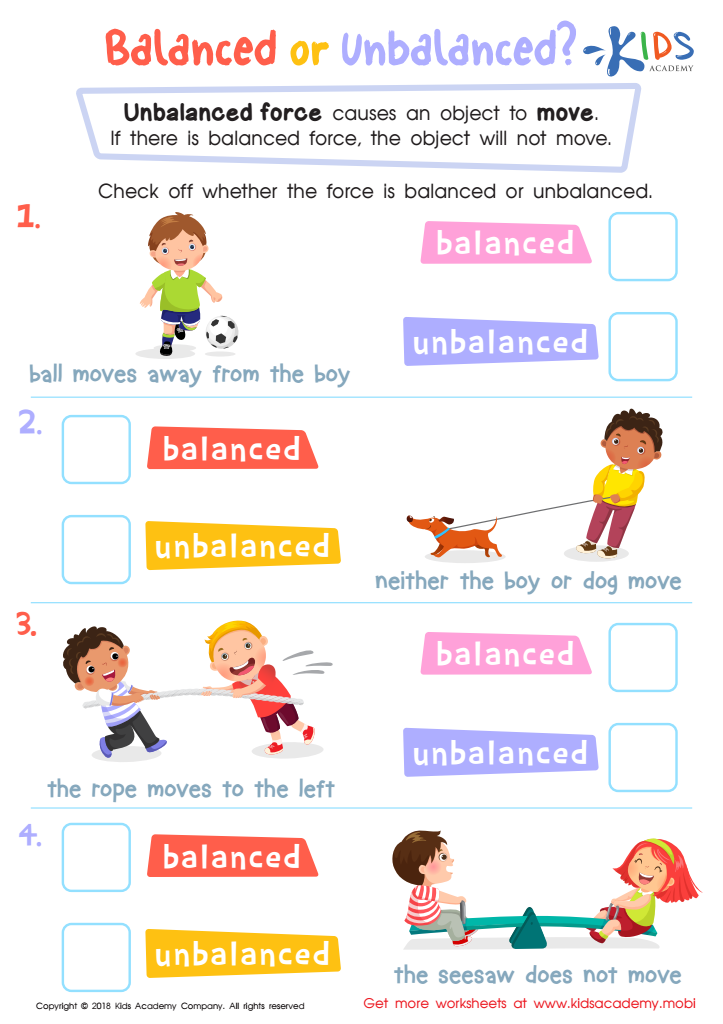
Balanced or Unbalanced Science Worksheet
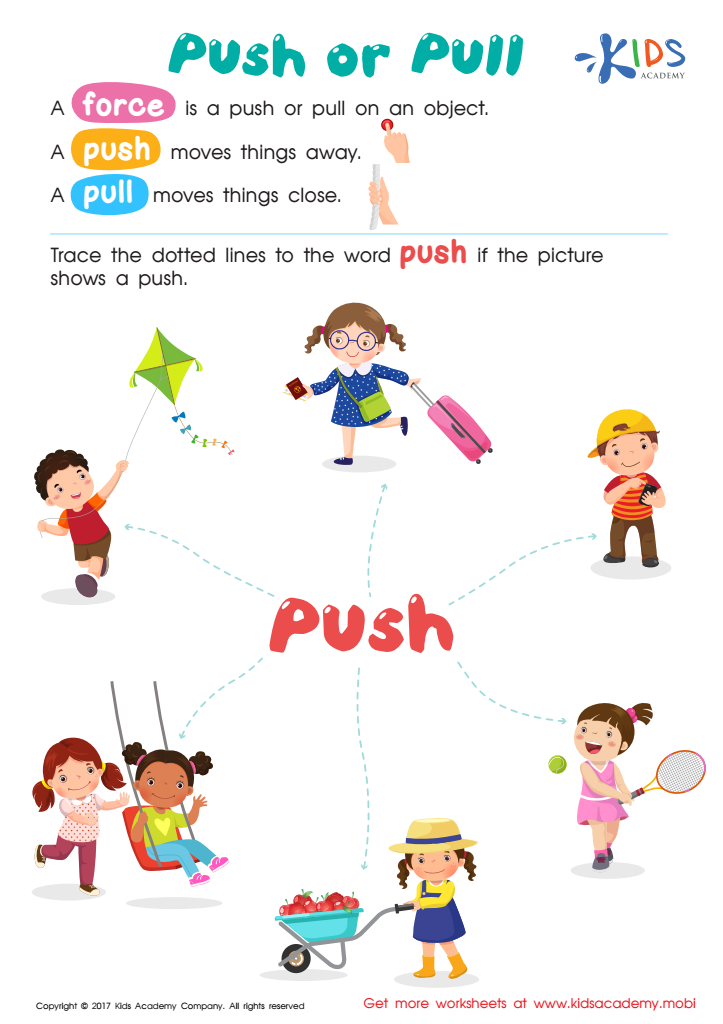
Push or Pull Worksheet
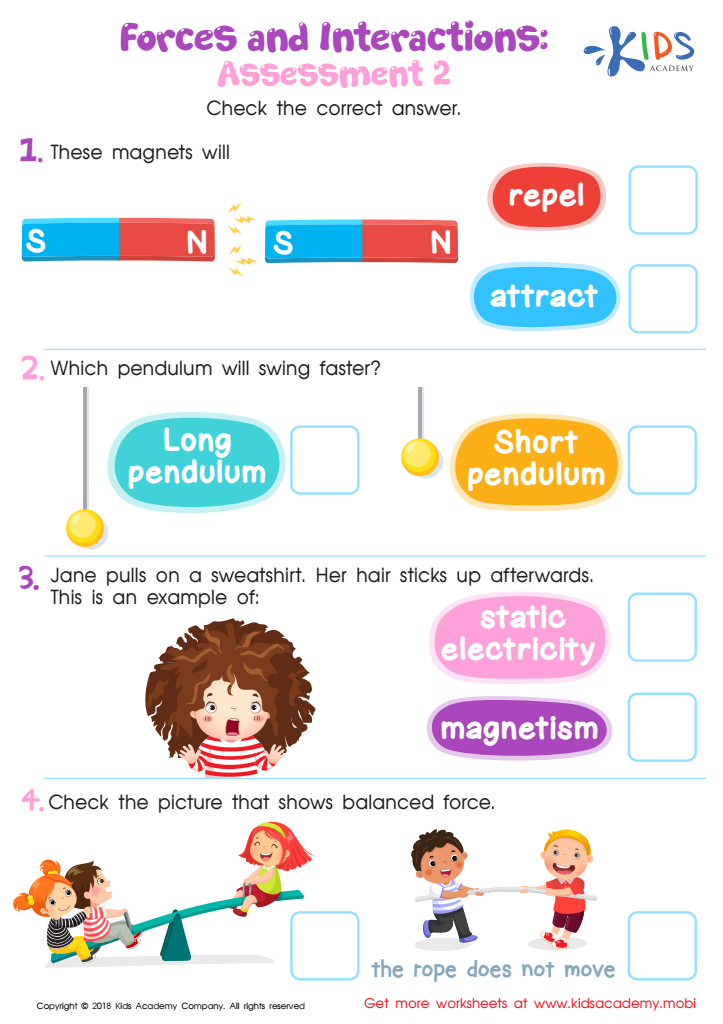
Forces and Interactions Worksheet For 3rd Grade
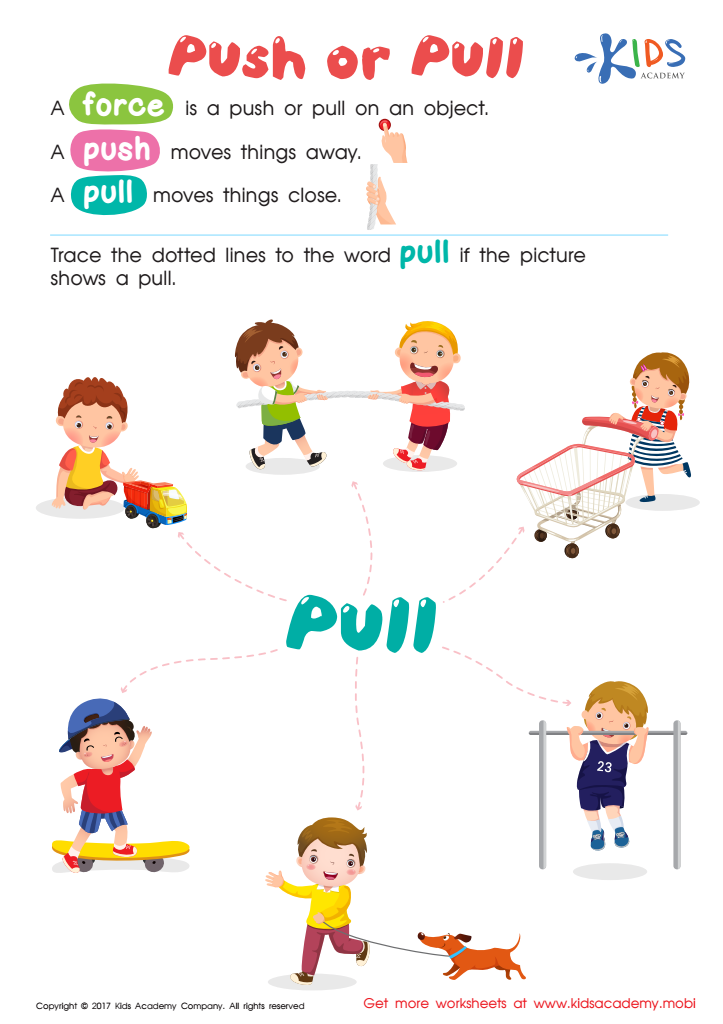
Pull or Push Worksheet



.jpg)




Understanding forces and physical science concepts is fundamental for children aged 6-9 because these subjects form the basis for comprehending the world. At a young age, children are naturally curious and their minds are primed for exploring how things work. By introducing them to forces, such as gravity, friction, and magnetism, parents and teachers can nurture this curiosity and help children develop critical thinking skills.
Learning about forces provides children with basic knowledge they can build upon as they advance in their education. For example, understanding gravity helps in comprehending why things fall, while learning about friction explains why objects stop sliding. These concepts can be tied to real-world experiences, making science tangible and relatable, which fosters a deeper interest and better retention.
Moreover, early exposure to physical science entices children to ask questions, make predictions, and test their ideas, cultivating a scientific mindset from a young age. It also encourages problem-solving and enhances analytical skills, aiding overall cognitive development.
Incorporating fun experiments and interactive learning can make these scientific principles accessible and engaging for young children. This approach can also boost their confidence, making them more enthusiastic about pursuing science-related subjects in the future, thereby laying a strong foundation for lifelong learning and curiosity.







