Categorization skills Normal Plants and Animals Worksheets for Ages 6-9
4 filtered results
-
From - To
Unlock your child's potential with our Categorization Skills Normal Plants and Animals Worksheets, designed specifically for ages 6-9. These engaging worksheets help young learners develop essential categorization skills as they explore the incredible diversity of plants and animals. Children will enjoy sorting, grouping, and identifying various species while reinforcing their understanding of ecosystems. Perfect for in-class or at-home practice, our worksheets foster critical thinking and observation skills essential for their academic growth. With vibrant illustrations and clear instructions, kids will have fun while mastering this important scientific concept. Begin your child's exploration of the natural world today!
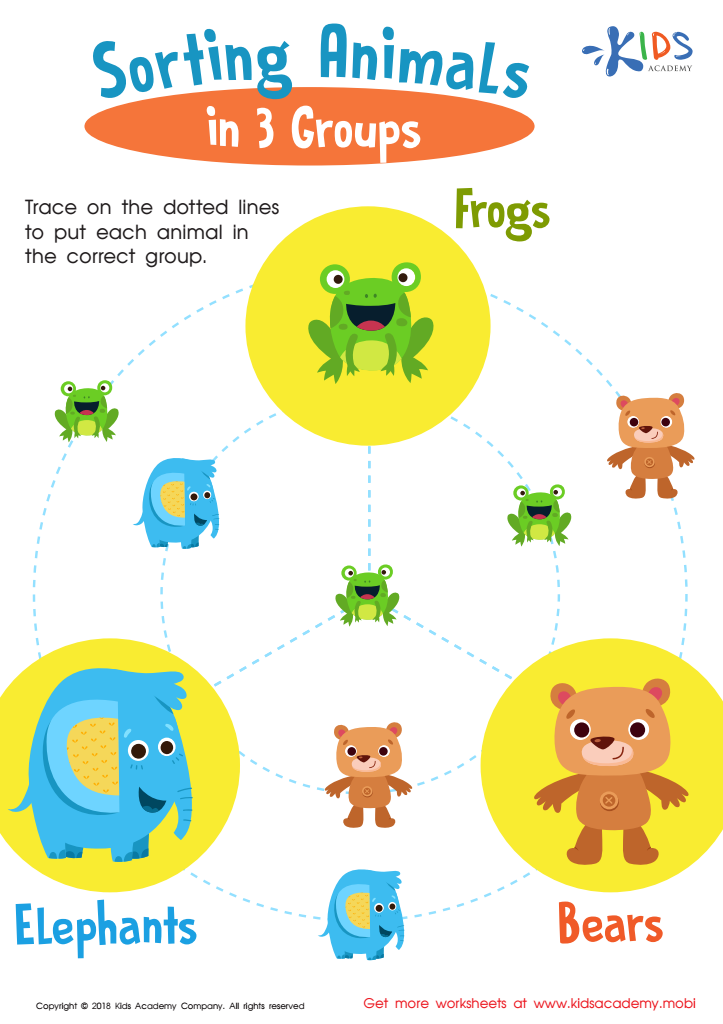
Sorting Animals in 3 Groups Worksheet
 Assign to My Students











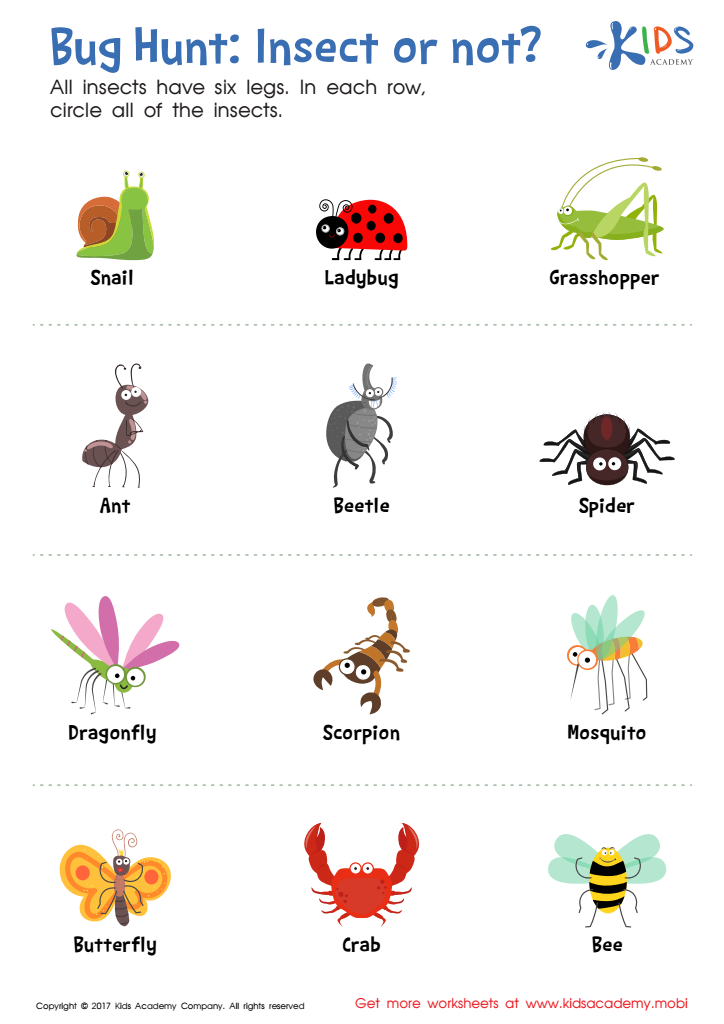
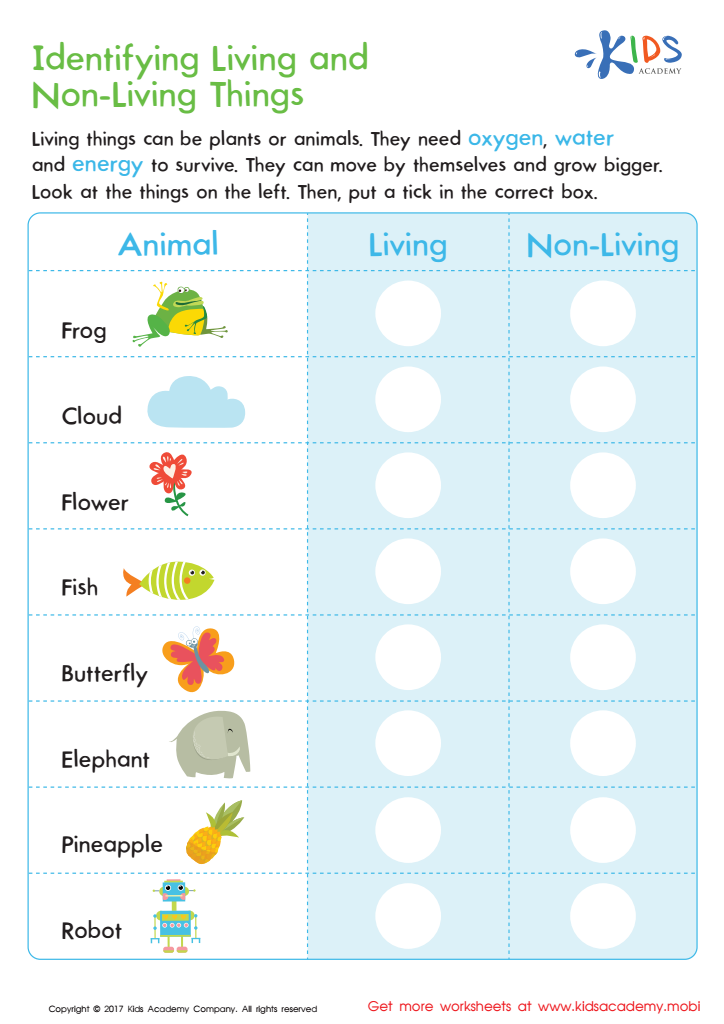
Identifying Living or Non–living Worksheet
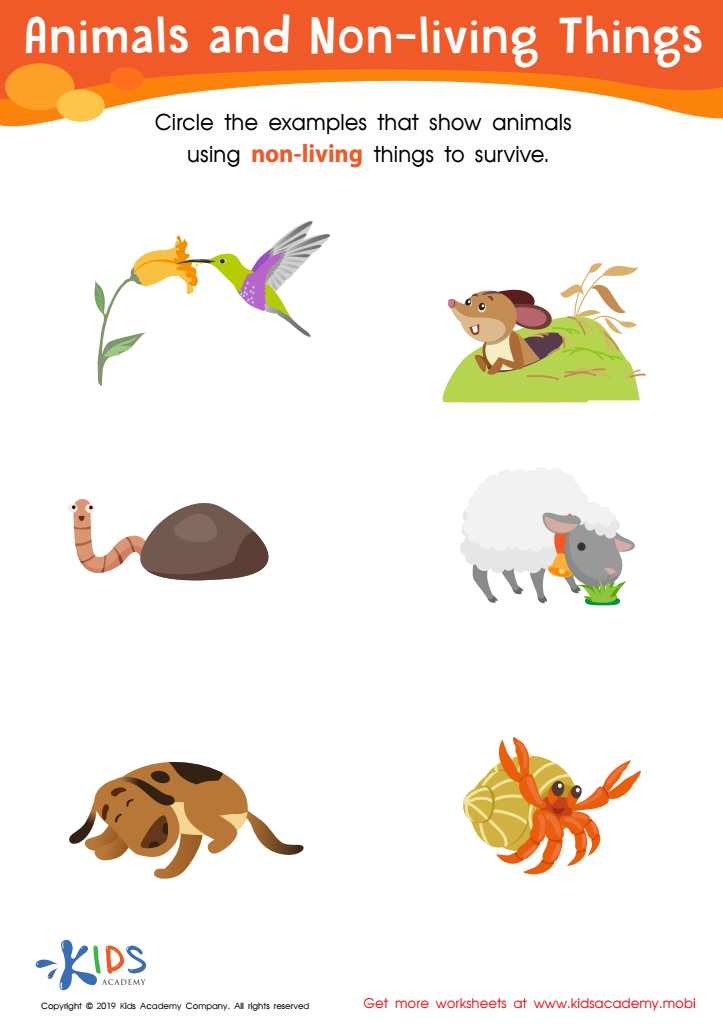
Animals and Non-Living Things Worksheet








Categorization skills are fundamental for children aged 6-9, particularly when it comes to understanding normal plants and animals. At this developmental stage, children are naturally curious and eager to explore the world around them. Teaching them how to categorize plants and animals fosters critical thinking and helps them make sense of their complex environment.
First, categorization aids in observation skills. When children learn to classify organisms based on characteristics like habitat, appearance, or behavior, they become keen observers of nature, encouraging a deeper appreciation for biodiversity. This understanding promotes environmental stewardship from a young age.
Furthermore, categorization enhances vocabulary development. As children learn specific terms associated with different categories—like mammals, reptiles, or flowering plants—they expand their language skills and understanding of scientific concepts. This vocabulary is foundational for future learning in science.
In addition, categorizing plants and animals encourages problem-solving and decision-making skills. Children learn to hypothesize based on observable traits and compare them against established categories, a process that lays groundwork for scientific reasoning.
Ultimately, nurturing these skills in young learners fosters both an intellectual curiosity and respect for the natural world, preparing them for lifelong learning and responsible citizenship.







