
Division practice Normal Plants and Animals Worksheets for Ages 6-9
4 filtered results
Difficulty Level
Grade
Age
-
From - To
Subject
Activity
Standards
Discover our Division Practice Worksheets designed specifically for children ages 6-9, featuring engaging activities that explore the fascinating world of plants and animals! These worksheets provide a fun and interactive way for young learners to reinforce their division skills while connecting mathematics to the natural world. Each thoughtfully crafted exercise encourages critical thinking, problem-solving, and enhances their understanding of both division concepts and the biology of various plants and animals. Ideal for classroom use or home study, our printable resources promote hands-on learning that keeps kids motivated and excited. Get started today and watch your child's confidence soar in both math and science!
Favorites
With answer key
Interactive
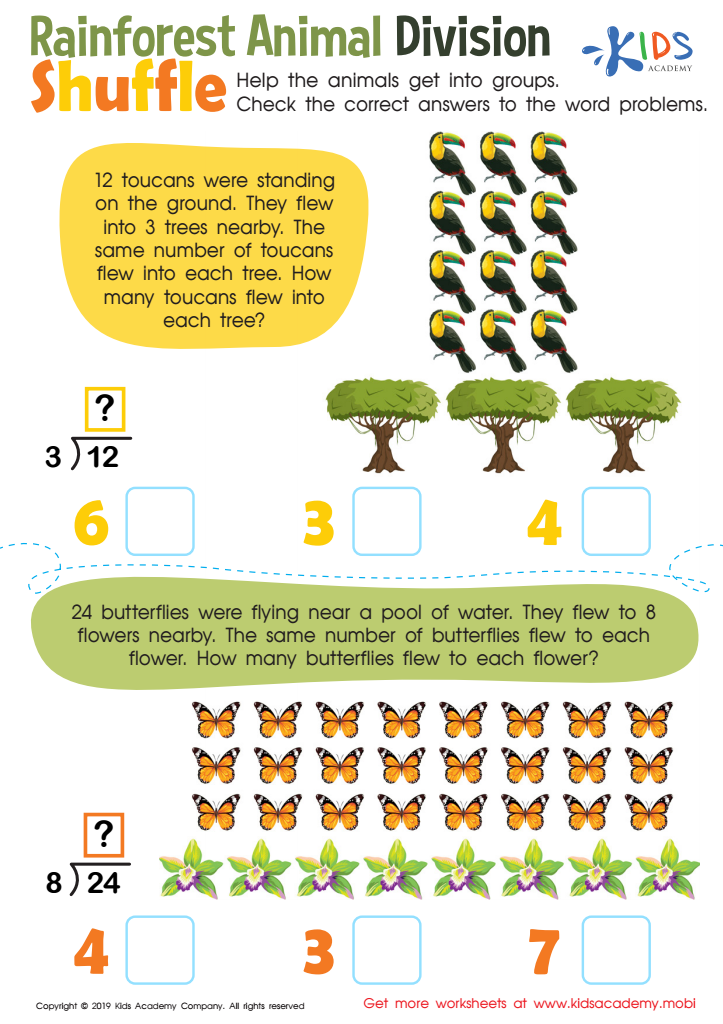
Rainforest Animal Division Worksheet
Children can save the rainforest and learn about division with this worksheet! It helps kids understand that division involves creating equal groups of specific numbers, and with its visual representation, they can grasp the concept more easily. They'll have fun learning about their place in the world and their role in protecting the environment.
 Assign to My Students
Rainforest Animal Division Worksheet
Worksheet











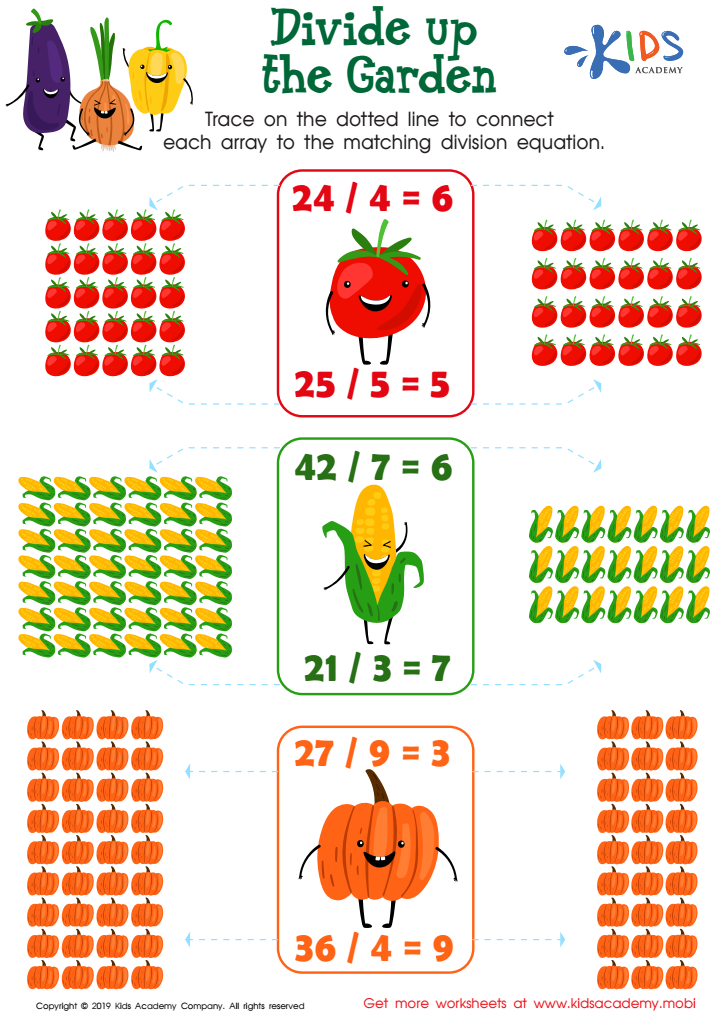
Divide up the Garden Worksheet
Dividing is simply grouping items into equal sets. This worksheet helps kids see division problems in array form. They'll match each equation with a picture group, using the lines provided. It's a great way for beginners to understand division more concretely.
Divide up the Garden Worksheet
Worksheet
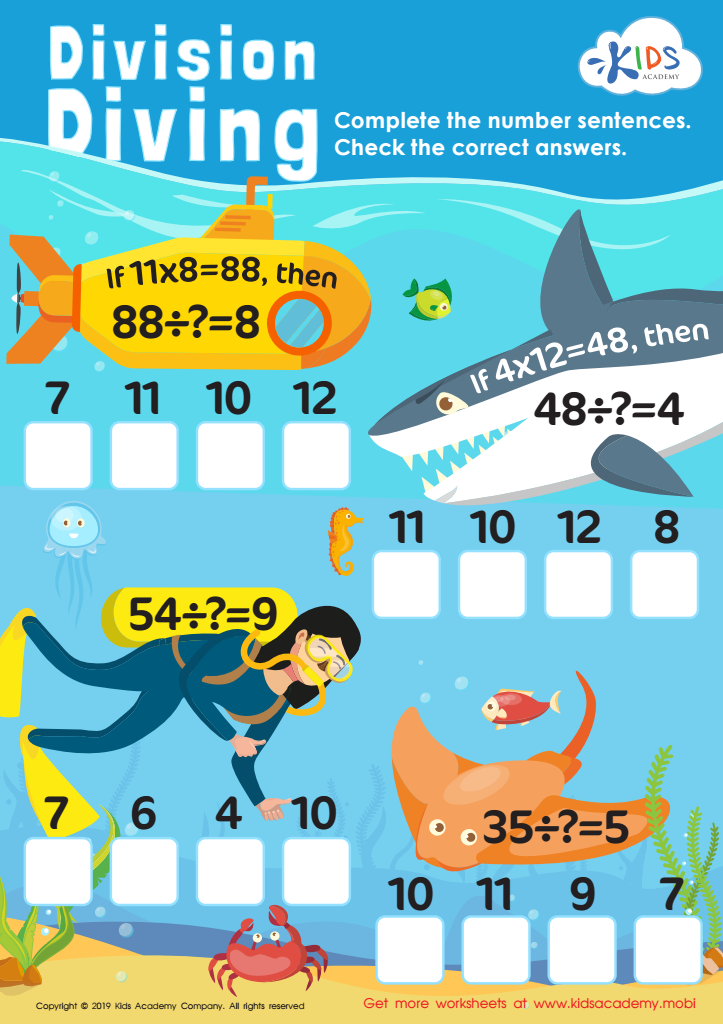
Division Diving Worksheet
Kids love exploring water and this free PDF worksheet is a great way to bring the fun and math together! Kids can help the underwater friends with number sentences, and use their fact family knowledge to solve for the missing number, then choose the correct answer. This worksheet is an enjoyable way for them to practice division!
Division Diving Worksheet
Worksheet
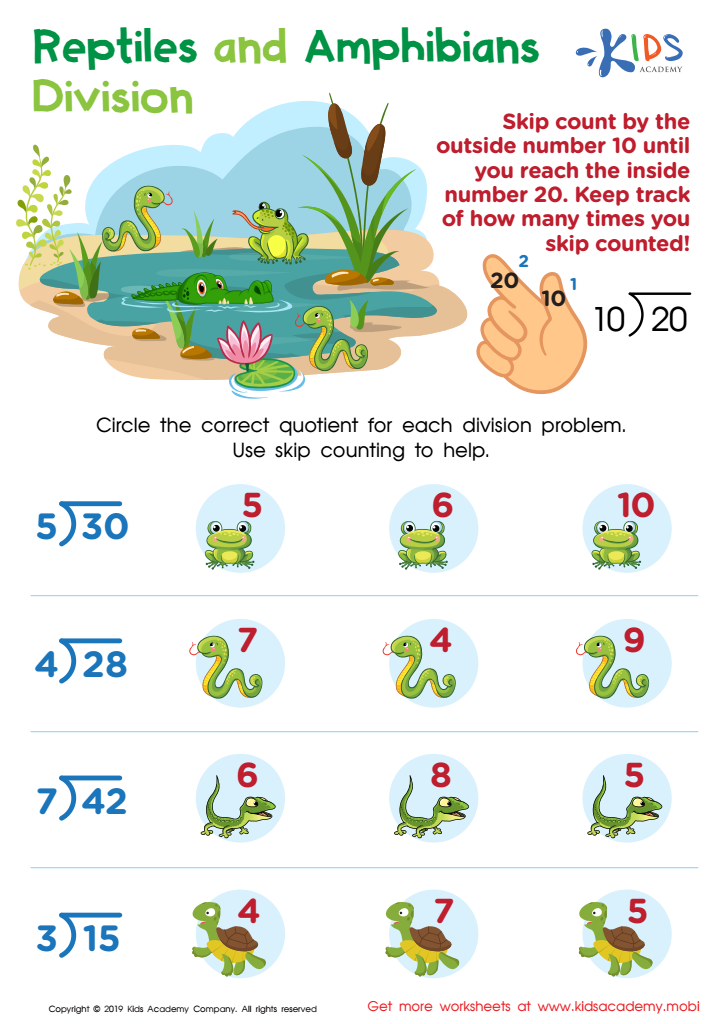
Reptile and Amphibians Division Worksheet
Skip counting is key in division. This PDF worksheet helps children practice this skill with fun reptile and amphibian friends. They must circle the right quotient among the choices given to reinforce their pattern recognition. Perfect for mastering division!
Reptile and Amphibians Division Worksheet
Worksheet
Join Kids Academy for Free
Who is primarily going to use this learning content?







Parents and teachers should care about division practice involving normal plants and animals for children ages 6-9 because it intertwines mathematical concepts with real-world applications, enhancing both understanding and engagement. Division is a fundamental math skill that supports problem-solving and critical thinking. By incorporating relatable topics like plants and animals, learners can visualize division in action, making abstract concepts more concrete.
Using familiar examples helps children grasp the significance of division in nature. For instance, dividing a group of animals by their species or distributing seeds for planting encourages questioning and exploration about their environments. This thematic approach fosters curiosity and awe for the natural world while recapitulating mathematical principles.
Moreover, engaging with this context promotes discussions about conservation, ecosystems, and biology, aligning with broader educational goals. It nurtures a holistic learning environment where math and science intersect, exemplifying interdisciplinary teaching.
Additionally, activities related to division can enhance fine motor skills—like sorting or measuring plants and animals—making learning more dynamic. Ultimately, division practice with natural themes lays a groundwork for math literacy, critical thinking, and deepens young learners' connection to the environment, which is crucial for their overall development.







