Understanding constellations Normal Space Worksheets for Ages 6-9
3 filtered results
-
From - To
Unlock the wonders of the night sky with our "Understanding Constellations" Normal Space Worksheets designed for ages 6-9. These engaging printables guide young learners through the magical world of constellations, teaching them to identify major star patterns like the Big Dipper and Orion. Through a mix of fun activities and educational exercises, kids develop both science and fine motor skills while exploring the cosmos. Each worksheet is expertly crafted to stimulate curiosity and make learning about space interactive and enjoyable. Ideal for classroom use or at-home enrichment, these worksheets make astronomy accessible and exciting for young minds.
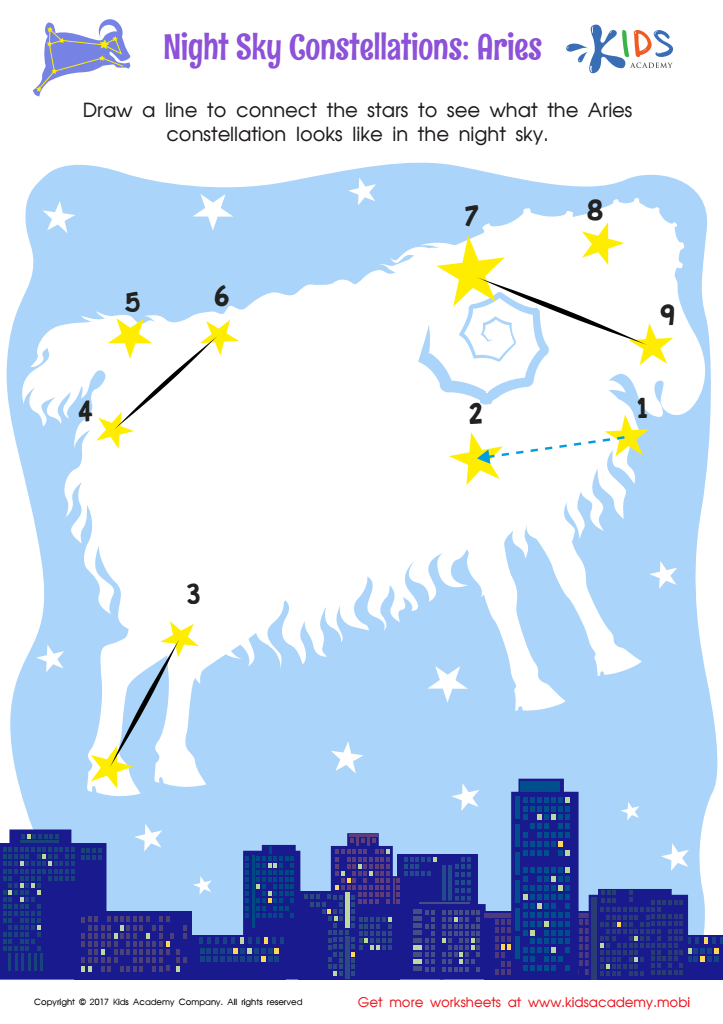
Night Sky Constellations: Aries Worksheet
 Assign to My Students
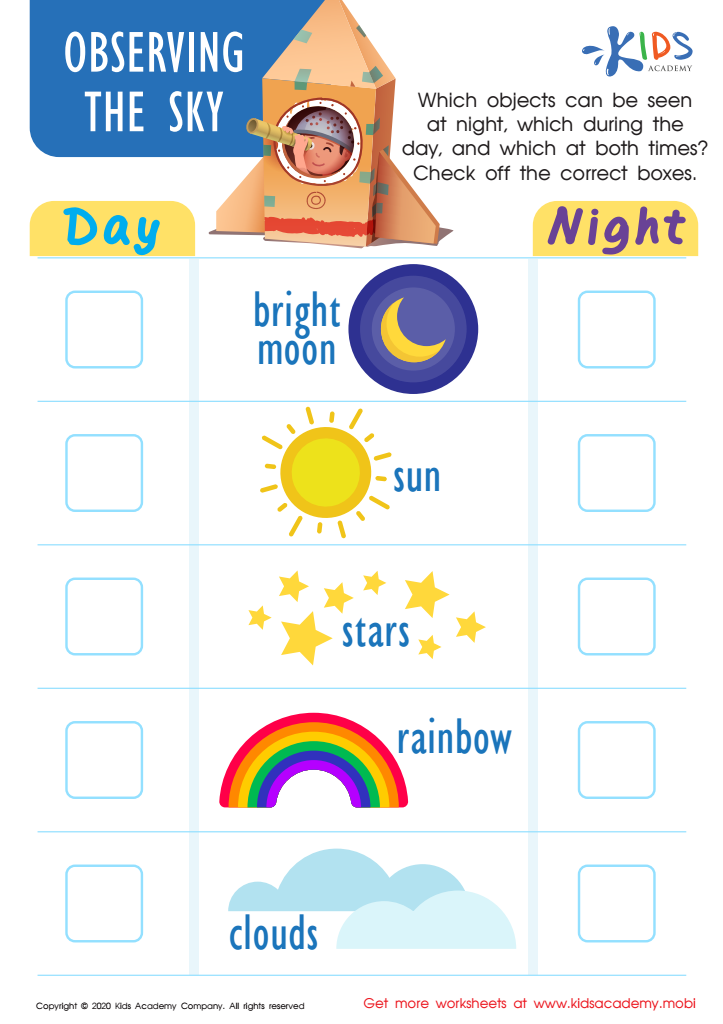
Observing the Sky Worksheet
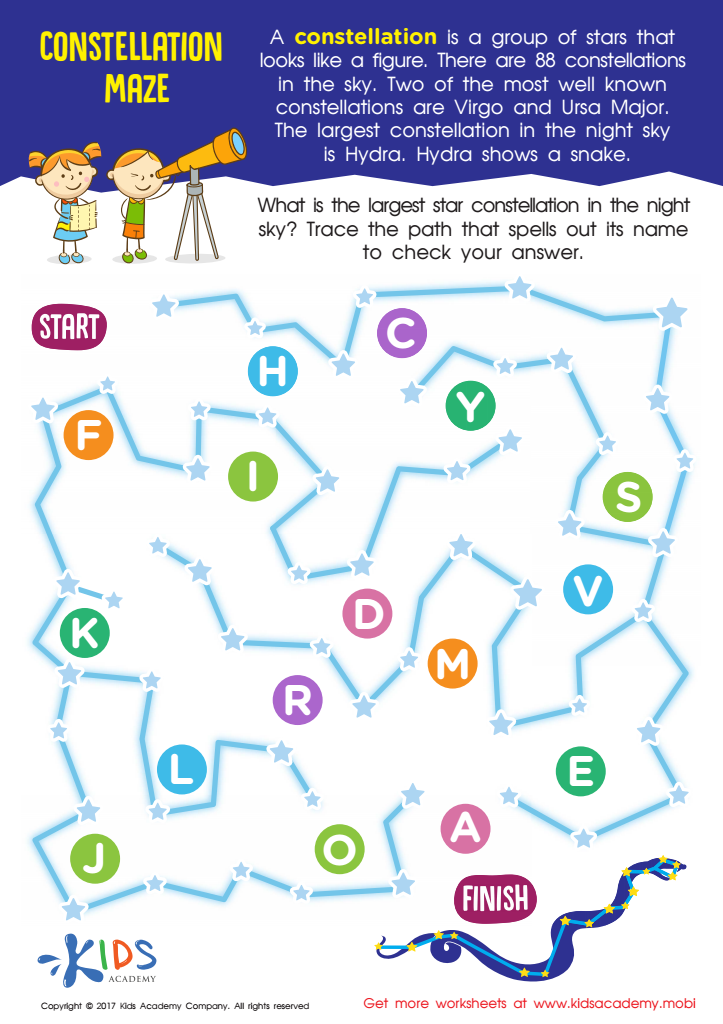
Constellations Worksheet







Understanding constellations can be incredibly beneficial for young children aged 6-9, both in terms of educational value and developmental growth. For parents and teachers, incorporating lessons about constellations into educational activities can ignite curiosity about the natural world and the universe, fostering a lifelong interest in science and astronomy.
Constellations provide a fun and engaging way to introduce basic concepts of astronomy, such as stars, planets, and the arrangement of celestial bodies. This not only enhances their knowledge but also develops critical thinking and observation skills. Children can learn to identify different constellations, understand their historical significance, and even learn some mythology associated with them. This multidisciplinary approach can enhance language skills, storytelling, and cultural awareness.
Furthermore, stargazing can be an enjoyable bonding activity that encourages outdoor exploration and can inspire a sense of wonder and imagination. It promotes patience and attention to detail as children learn to find patterns in the night sky. Encouraging an interest in constellations can also help develop spatial awareness and geometry skills since identifying star patterns requires understanding shapes and distances.
By fostering an early interest in constellations, parents and teachers help build foundational science literacy, critical thinking, and an appreciation for the vastness and beauty of our universe.







