Geography skills Normal Geography Worksheets for Ages 6-9
3 filtered results
Difficulty Level
Grade
Age
-
From - To
Subject
Activity
Standards
Explore our engaging Geography Skills Worksheets, specifically designed for children ages 6 to 9. These fun, printable resources help young learners develop essential geography concepts with interactive activities tailored to their level. From identifying countries and continents to understanding maps and symbols, each worksheet fosters critical thinking while building foundational knowledge. Our geography worksheets promote exploration and discovery, encouraging students to connect with the world around them. Perfect for classroom use or at-home learning, these resources make geography lessons enjoyable and effective. Let your child's curiosity soar as they become budding geographers, equipped with the skills to navigate the world confidently!
Favorites
With answer key
Interactive
 Assign to My Students
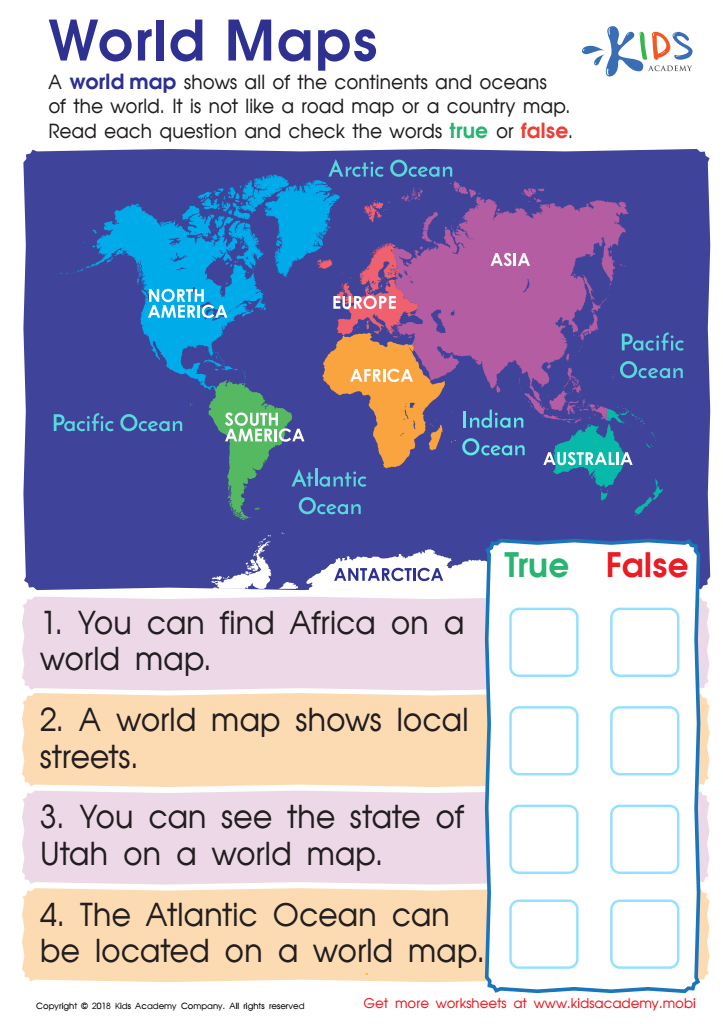
World Maps Worksheet
Help your young geographer learn about world maps. Show them that it displays all the oceans, continents and is distinct from other maps. Challenge them to answer the true/false questions on this free worksheet, and help them become a global citizen who understands the purpose of world maps.
World Maps Worksheet
Worksheet
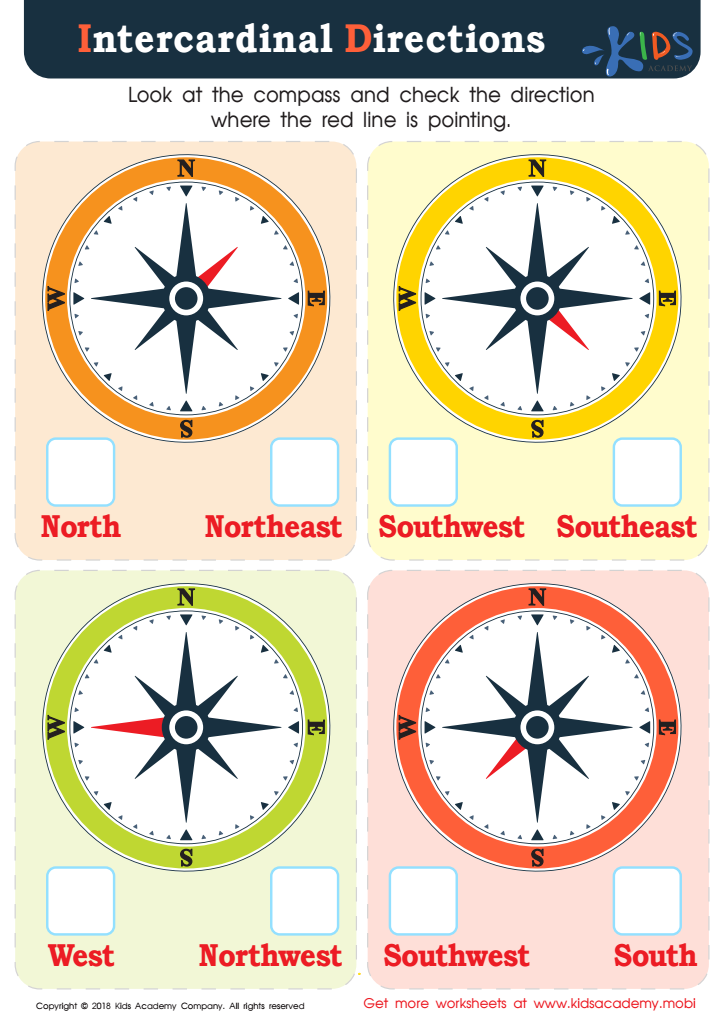
Intercardinal Directions Worksheet
Young students often don't get to practice cardinal and intercardinal directions in the digital age, but it's an important social studies and geography concept to learn. This PDF provides colorful compasses for them to practice with, giving them a real-world skill for common curriculum and independent living.
Intercardinal Directions Worksheet
Worksheet
Join Kids Academy for Free
Who is primarily going to use this learning content?




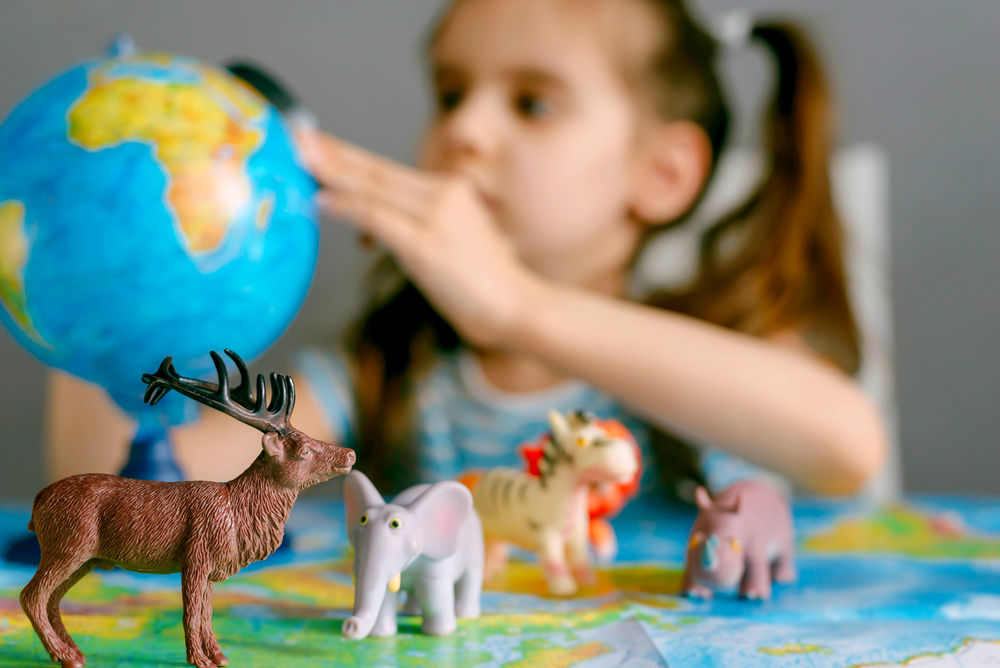

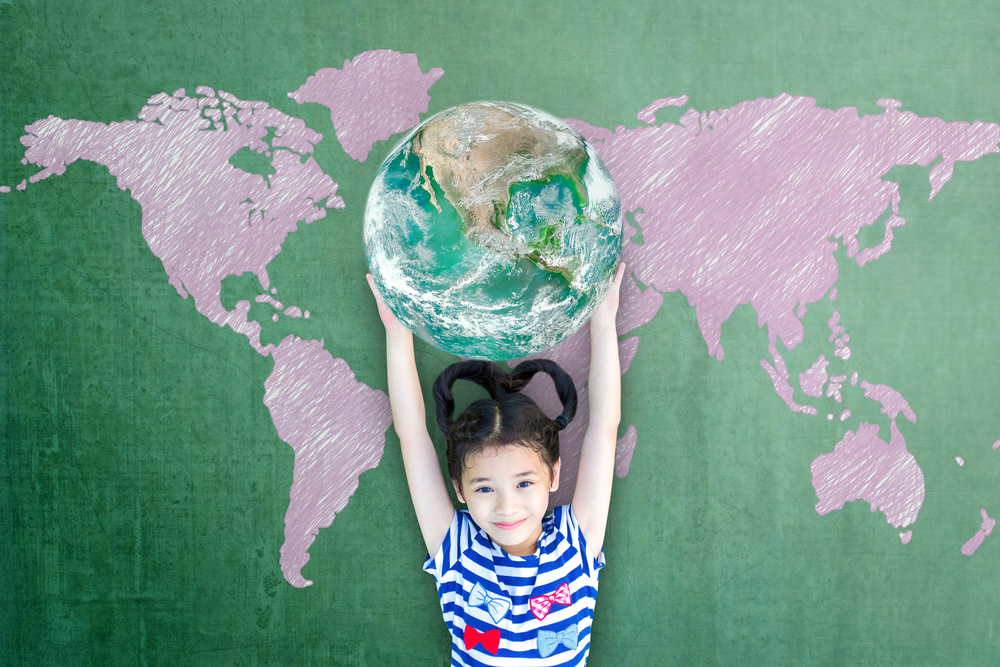
Parents and teachers should prioritize Geography skills for children aged 6-9 because these foundational skills set the stage for lifelong learning and awareness. Understanding geography helps children develop a sense of place and identity, fostering an appreciation for their own community and the world at large. By learning about different countries, cultures, and environments, children cultivate empathy and respect for diversity, essential traits in today’s global society.
Moreover, Geography skills enhance critical thinking and problem-solving abilities. When children explore maps, they learn to interpret information spatially, develop analytical skills, and make connections between global events and local realities. This understanding is vital in a world facing issues such as climate change, migration, and economic interdependence.
Additionally, Geography encourages curiosity and exploration, skills that drive a love for learning and discovery. Engaging with Geography through interactive activities like field trips, storytelling, or technology-driven exploration can make learning exciting and relevant.
In summary, fostering Geography skills in young children enriches their education, encourages positive social values, and equips them with the cognitive tools to understand and navigate the complexities of a diverse and interconnected world.