Geography skills Normal Social Studies Worksheets for Ages 6-9
3 filtered results
-
From - To
Our "Geography Skills Normal Social Studies Worksheets" for ages 6-9 offer a fun and interactive way to explore the world! Designed to build foundational map-reading, spatial awareness, and cultural understanding, these worksheets are perfect for young learners. They'll journey through continents, countries, and cities, gaining knowledge about landmarks, climate, and more. Each worksheet is crafted to align with educational standards, ensuring that children are on the right path in their learning journey. Ideal for both classroom and at-home activities, these resources make geography engaging and accessible for early grade students. Start exploring today!
 Assign to My Students
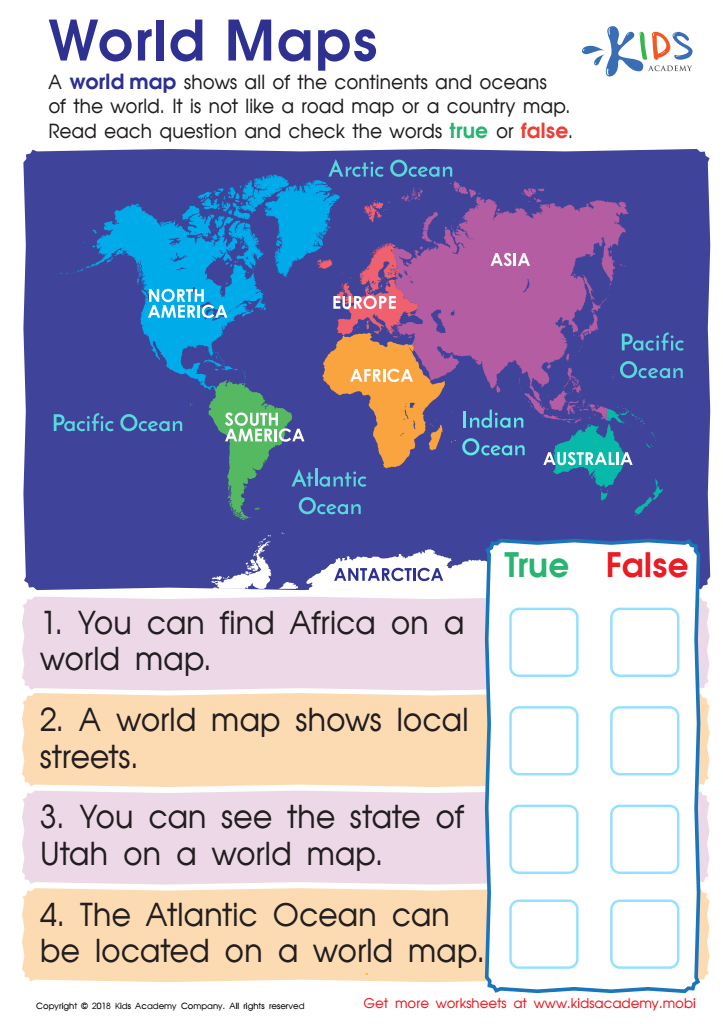
World Maps Worksheet
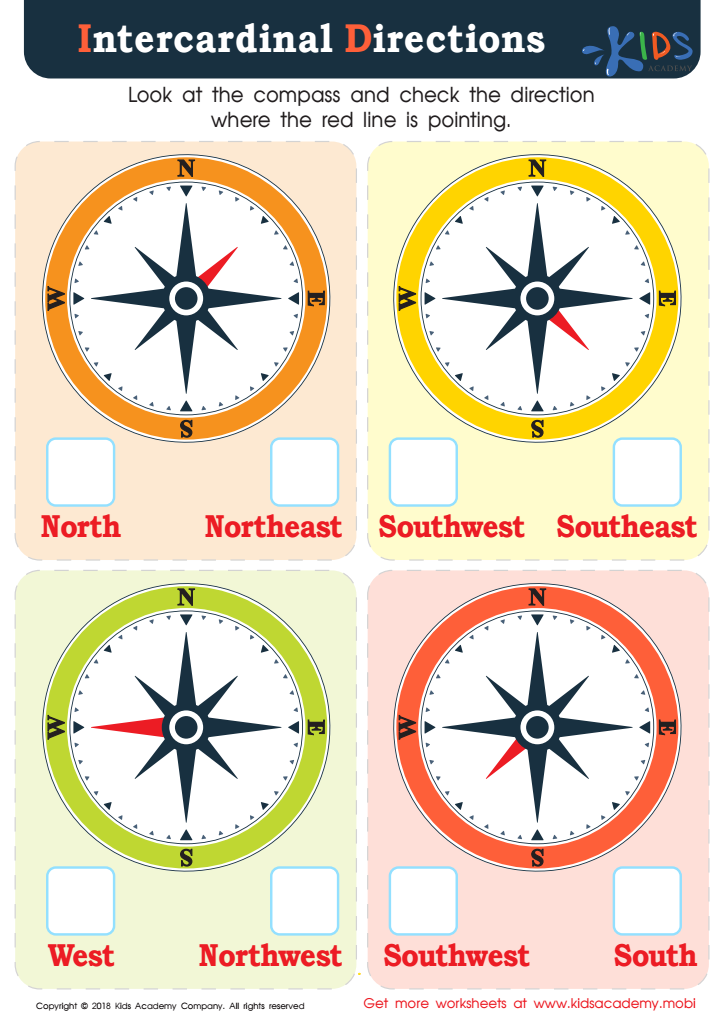
Intercardinal Directions Worksheet






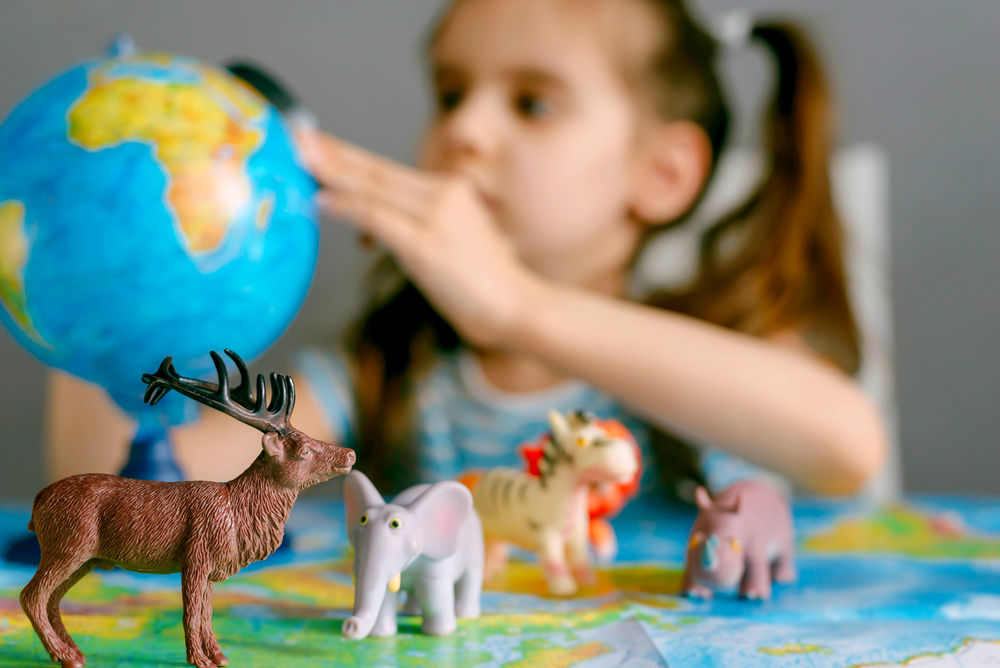
Teaching geography to children aged 6-9 is crucial for several reasons. Firstly, it enhances their spatial awareness and helps them understand the world around them. Recognizing continents, countries, and major cities provides a foundation for connecting with global cultures and environments. This understanding fosters an appreciation for diversity and encourages openness to various customs, traditions, and ways of life.
Geography also supports other academic areas. For example, discussing different regions can enhance linguistic and cognitive skills as children learn new place names and geographical terms. Maps and globes improve mathematical abilities by teaching concepts like scale, direction, and distance. Moreover, exploring physical geography, including landforms and weather, introduces basic concepts of Earth science.
Emotionally, understanding geography can instill a sense of responsibility and stewardship towards the planet. Teaching children about different regions’ ecosystems and climate challenges can inspire them to take an interest in environmental conservation.
Additionally, geography helps children develop critical thinking and problem-solving skills. For instance, understanding the geographical factors that influence human settlement patterns or economic activities builds a child's capability to analyze and interpret real-world situations.
In summary, incorporating geography in early education makes learning holistic and nuanced, creating informed, responsible, and intellectually versatile individuals capable of contributing positively to our global society.